The Urban Cowboy’s New Frontier: Bringing the Wild West to the Heart of New York Harbor

For the jaded urbanite, the concept of "getting away" usually necessitates a multi-hour pilgrimage to the Catskills or a flight out of the tri-state area. However, a new collaboration between hospitality innovator Collective Retreats and the design-forward Urban Cowboy brand is challenging that paradigm. Located just an eight-minute ferry ride from the concrete canyons of Lower Manhattan, the new "Urban Cowboy Tent" on Governors Island offers a radical departure from the standard glamping experience, injecting a dose of rugged, maximalist soul into the city’s most accessible outdoor oasis.
The Convergence of Two Hospitality Titans
Since its inception in 2018, Collective Retreats has transformed six acres of Governors Island into a seasonal sanctuary, bridging the gap between raw nature and refined hospitality. By providing luxury amenities within the shadow of the Statue of Liberty, they have long appealed to New Yorkers who crave the aesthetic of camping without the logistical burden of gear and setup.
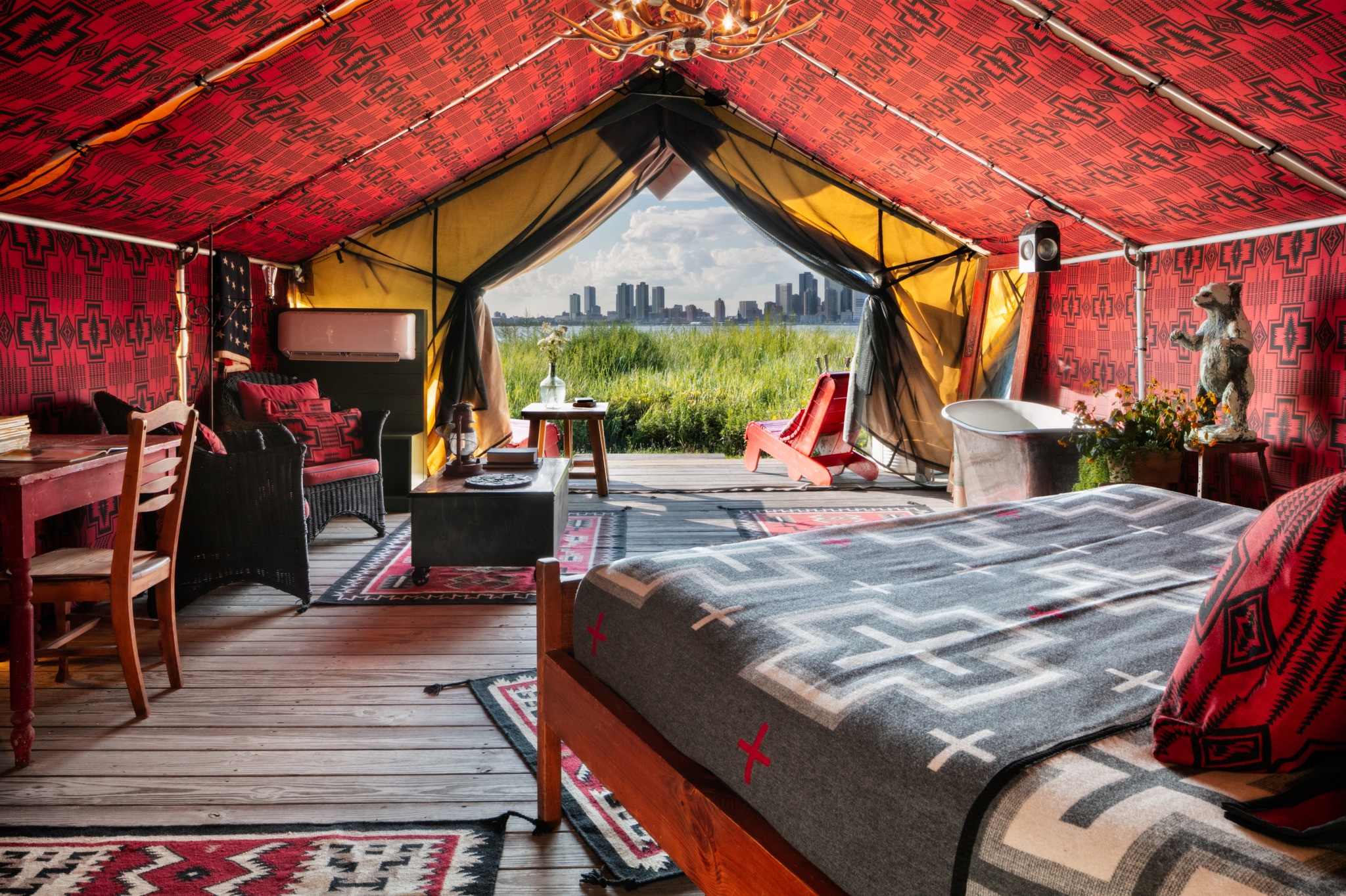
This year, the site has reached a new level of narrative depth through a partnership with Lyon Porter, the creative force behind the Urban Cowboy hospitality group. Porter, known for his ability to craft spaces that feel simultaneously lived-in and meticulously curated, has brought the "Urban Cowboy" ethos to the waterfront. The result is an immersive, 325-square-foot tent that feels less like a temporary lodging and more like a curated stage set for a modern-day pioneer.
A Chronology of the Cowboy Aesthetic
The story of this collaboration is rooted in a long-standing creative synergy between Porter and Dovetail + Co., the parent group behind Collective Retreats.
- 2014: Lyon Porter establishes the Urban Cowboy brand, prioritizing "soulful design" and authentic hospitality.
- 2018: Collective Retreats launches its Governors Island site, introducing the concept of luxury urban glamping to New Yorkers.
- 2020: The relationship is solidified with the opening of the Urban Cowboy Lodge in the Catskills, which quickly becomes a destination for those seeking a rustic, design-conscious retreat.
- 2026: The partnership expands to the urban waterfront, as the two entities collaborate to install the Urban Cowboy Tent on Governors Island, marking a pivot toward more personalized, thematic luxury.
This progression reflects a broader shift in the hospitality industry: the move away from sterile, uniform hotel rooms toward "experiential lodging" that tells a story through material and history.
Anatomy of the Space: Curated Nostalgia
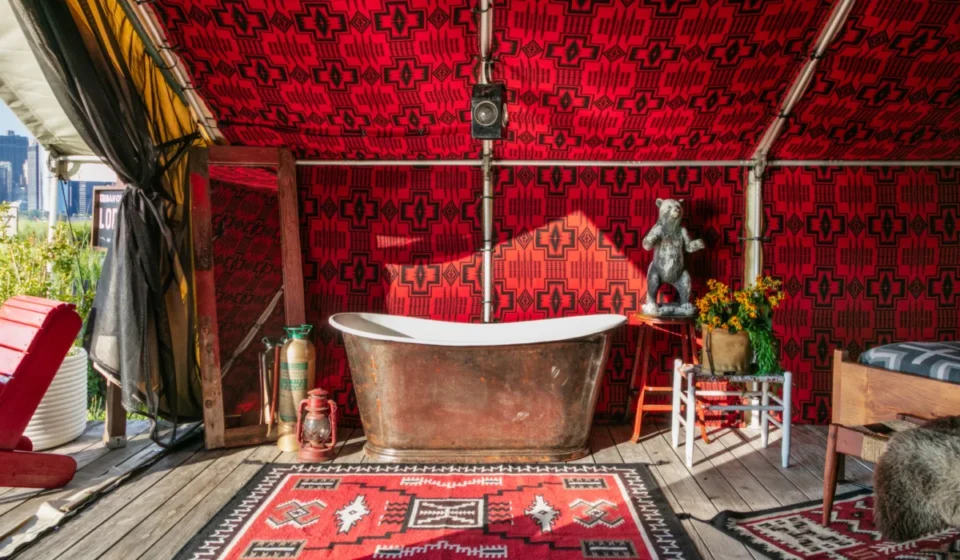
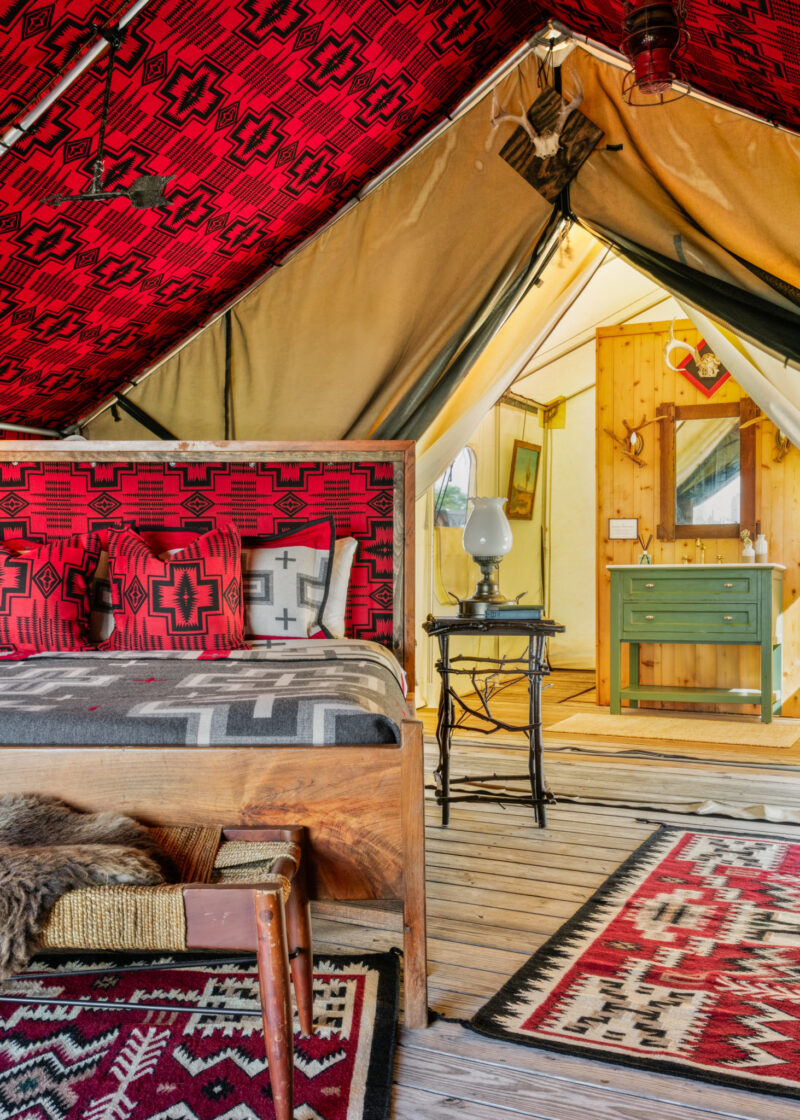
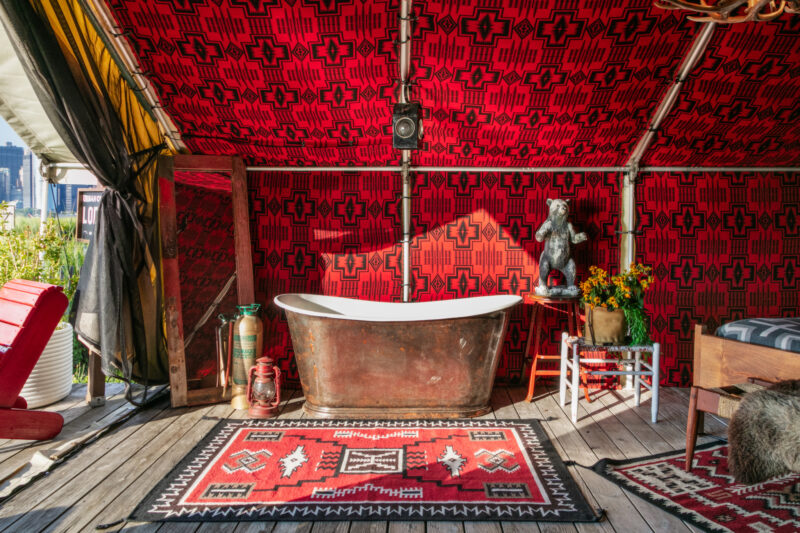
Stepping into the Urban Cowboy Tent, one is immediately struck by the tactile richness of the environment. Unlike the minimalist, "scandi-chic" aesthetic that has dominated the glamping industry, this space leans into maximalism. The floor is covered in authentic El Paso Saddle Blanket rugs, and the bed is dressed in classic Pendleton textiles, creating a visual language of Americana.
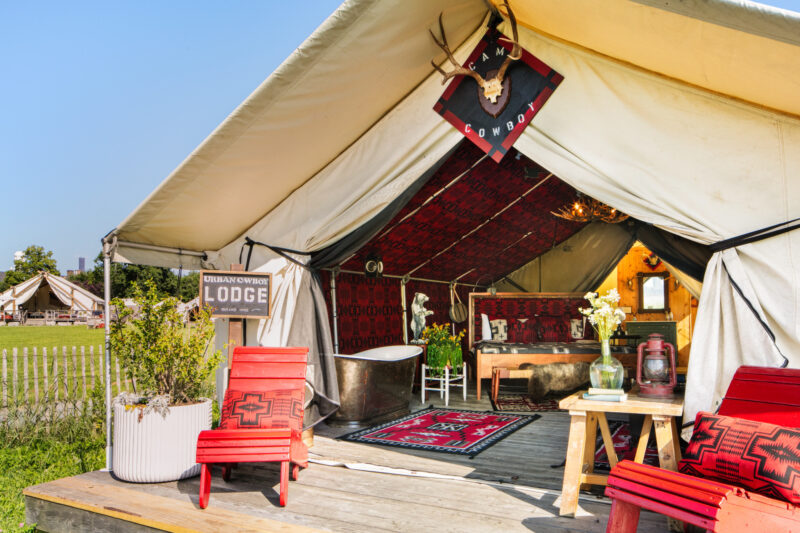
The tent is a testament to the "found object" philosophy. Porter, working alongside Kevin Jacob Design, has sourced materials from iconic treasure troves like the Beacon Flea Market and Elephant Trunk. The interior features repurposed boat oars, antique artwork, and a vintage radio that feels as if it were plucked from a bygone era. Custom hand-painted stencils and deer antler accents, created specifically for this installation, tie the aesthetic together, ensuring that every corner of the tent serves as a point of visual interest.
Technical Infrastructure and Modern Comforts
While the aesthetic is rooted in the past, the infrastructure is firmly modern. The challenge of glamping—managing temperature fluctuations—is mitigated by a high-efficiency HVAC unit, ensuring that guests remain comfortable regardless of the season.
The ensuite bathroom is perhaps the most impressive feat of the installation. Eschewing the portable, utilitarian facilities often associated with outdoor retreats, this unit features a full standing shower and high-end fixtures. The centerpiece, however, is a 500-pound French cast-iron tub.
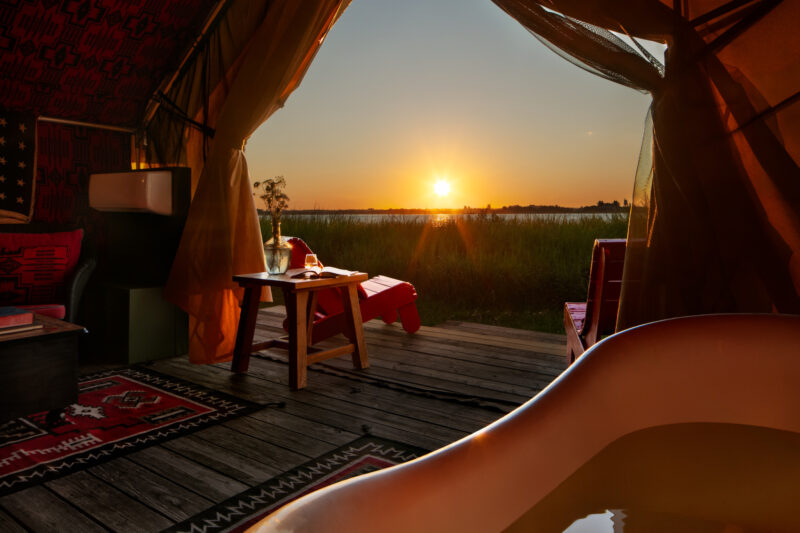
"An antique tub like this can typically cost around $11,000, but we found one for $400 that was just sitting in a Connecticut mansion’s yard," Porter notes. The tub, which carries the marks of its previous life, has been refurbished with modern plumbing and positioned specifically to frame the harbor sunsets. It is an exercise in contrast: the heavy, patinated iron against the light, ephemeral canvas of the tent, all set against the backdrop of the New York City skyline.
Official Perspectives: The Philosophy of "Transportive" Design
Lyon Porter describes the project not just as a room to sleep in, but as a "tactile alternative" to the digital fatigue that plagues modern city dwellers.
"An authentic Urban Cowboy experience is meant to be transportive," Porter explains. The goal of the design is to force a recalibration of the senses. By filling the space with interesting textures—rough wood, soft wool, cold iron—and removing the distractions of a typical hotel room, the guest is invited to inhabit the present moment.
For the team at Collective Retreats, this collaboration serves as a proof-of-concept for how urban spaces can be re-imagined. By leaning into the "cowboy" theme, they are not merely decorating a tent; they are creating an atmosphere that encourages guests to slow down. In a city defined by the speed of the subway and the height of the skyscrapers, the slow, deliberate pace of life inside the tent provides a necessary counter-narrative.
Implications for the Future of Urban Tourism
The success of the Urban Cowboy Tent signals a broader trend in the travel industry: the "hyper-local" escape. As travelers become increasingly conscious of the environmental and personal costs of long-distance air travel, the demand for high-quality, high-design retreats within the metropolitan periphery is growing.
- Sustainable Design: By repurposing vintage items and antiques, the project demonstrates that luxury does not have to be synonymous with mass-produced new materials.
- Cultural Integration: The tent proves that "wilderness" experiences can be successfully integrated into the urban fabric, turning neglected or seasonal areas like Governors Island into vibrant, income-generating cultural hubs.
- The "Third Place" Evolution: The tent serves as a "third place"—a social and aesthetic environment outside of home and work—that facilitates a temporary identity shift for the guest.
Conclusion: A Temporary Sanctuary
The Urban Cowboy Tent is, by its nature, ephemeral. With bookings available only through the end of November 2026, the installation leans into the beauty of impermanence. It is a reminder that New York City, for all its permanence and granite, is a city of constant change.
For those who secure a reservation, the experience offers a rare opportunity: the chance to wake up in a space that feels like a rugged lodge in the mountains, only to step outside and see the Statue of Liberty greeting the sunrise. It is a fusion of the frontier spirit and the urban reality, wrapped in wool, wood, and iron. As the city continues to densify, these small, curated pockets of "elsewhere" will likely become the most sought-after commodities in the metropolitan experience.
Those interested in experiencing this intersection of design and nature can find booking information and availability at collectiveretreats.com. In a city that never sleeps, the Urban Cowboy Tent offers something even better: a place to slow down, look at the horizon, and listen to the quiet.