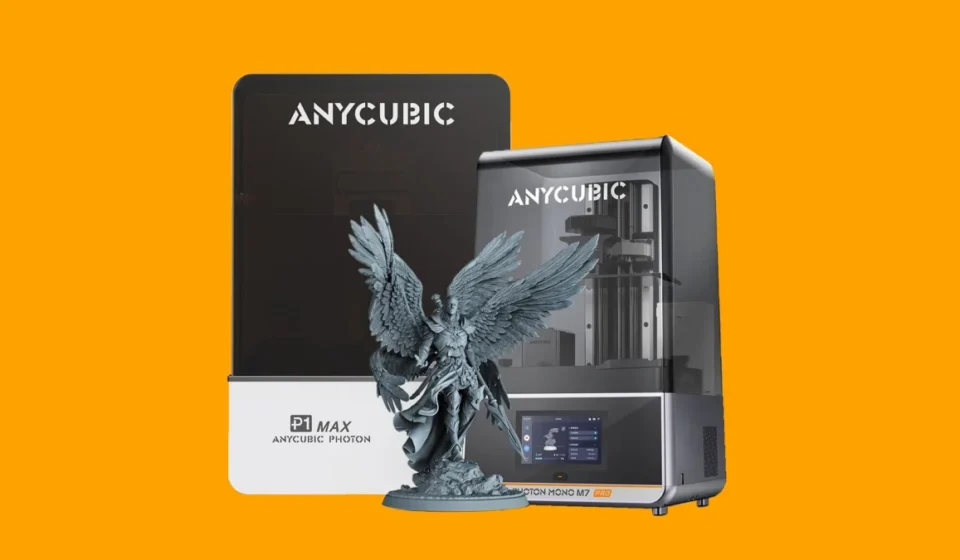
Amazon Early Prime Day Deals: Save Big on High-Performance Anycubic 3D Printers

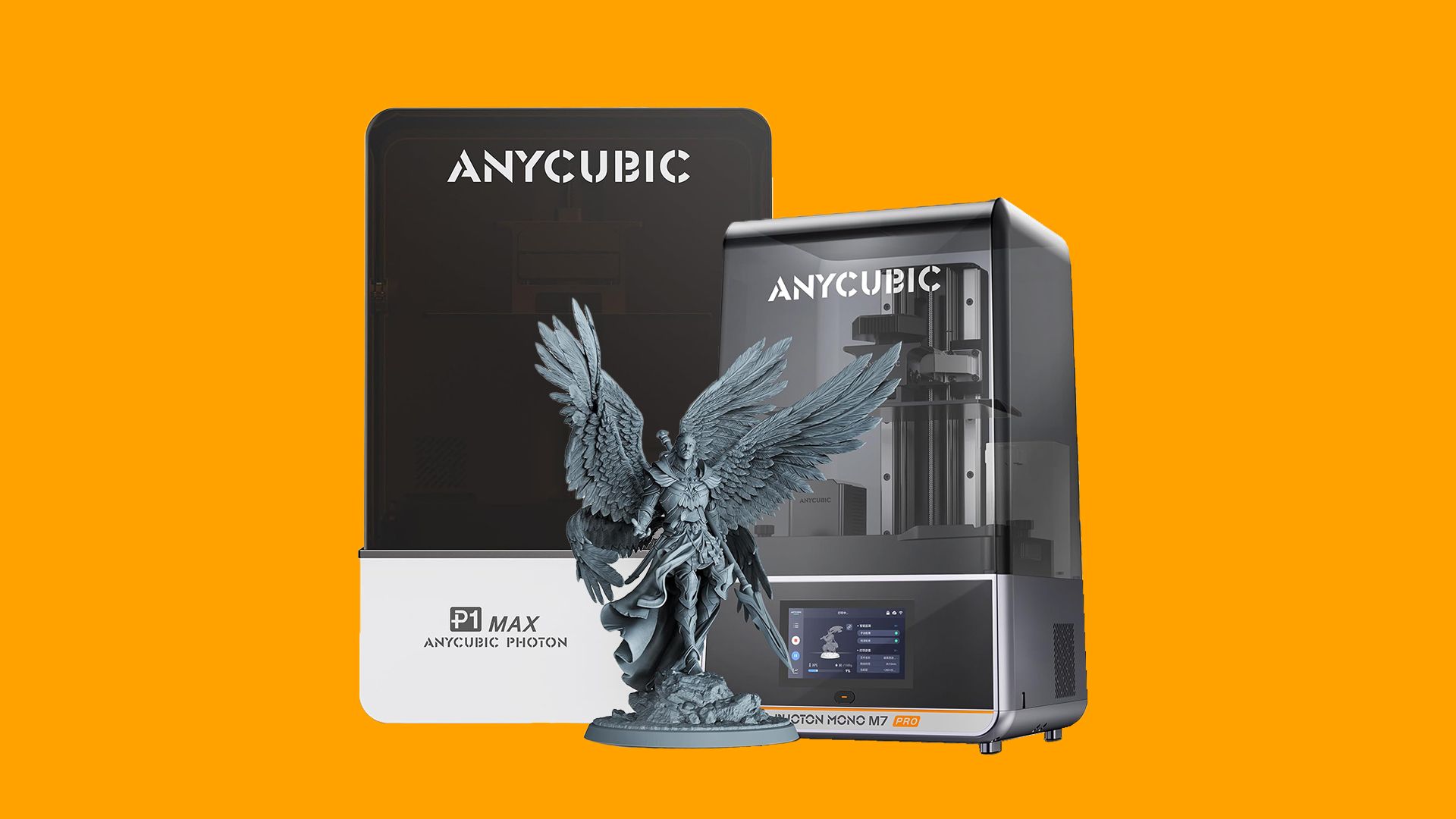
The landscape of desktop manufacturing is undergoing a rapid transformation, and Amazon’s early "Big Deal Days" event has signaled a prime opportunity for creators, engineers, and hobbyists to upgrade their hardware. As part of the retail giant’s lead-up to its official October Prime Day, significant price slashes have been applied to two of Anycubic’s most lauded resin 3D printers: the Photon Mono M7 Pro and the Photon P1 Max.
These discounts represent more than just a seasonal price drop; they reflect a strategic push by major manufacturers to make high-fidelity, industrial-grade printing capabilities accessible to the home user. Whether you are a professional designer prototyping intricate components or a hobbyist looking to scale up production, these machines offer distinct advantages that cater to vastly different workflows.
The Main Facts: Breaking Down the Offers
Amazon’s current promotion centers on two distinct tiers of resin printing technology, each targeting a specific niche within the additive manufacturing market.
1. Anycubic Photon Mono M7 Pro: The Speed and Precision Specialist
Currently available with a $130 discount, the Photon Mono M7 Pro is engineered for those who prioritize output quality and efficiency. In the world of resin printing, "speed" is often the enemy of "detail," yet the M7 Pro has gained a reputation for bridging that gap. Utilizing advanced optical systems, it is designed for rapid iteration, making it the ideal candidate for miniatures, jewelry design, and high-detail mechanical prototypes.
2. Anycubic Photon P1 Max: The Large-Format Workhorse
For projects requiring scale, the $230 discount on the Photon P1 Max is arguably the more compelling value proposition for small-business owners. The P1 Max addresses the traditional "size bottleneck" of resin printing. With its expansive build volume and 4:3 aspect ratio, it allows for the printing of larger, structural components in a single session—a task that previously required either multiple prints or expensive industrial-grade machinery.
Note: These discounts are exclusive to Amazon Prime members. For those not currently subscribed, Amazon offers a 30-day free trial, allowing access to these flash deals without an immediate financial commitment.
Chronology: The Evolution of Accessible Additive Manufacturing
To understand the significance of these discounts, one must look at the trajectory of the desktop 3D printing industry over the last five years.
- 2019–2021: The Rise of Consumer Resin: Resin printing—or Stereolithography (SLA/MSLA)—was once relegated to high-cost industrial labs. Anycubic was among the pioneers that brought this technology to the consumer level, albeit with small build plates and slow, tedious print times.
- 2022: The Reliability Pivot: The industry shifted focus from "just getting it to print" to "getting it to print reliably." During this period, Anycubic focused on leveling mechanisms and screen durability.
- 2023–2024: The Speed and Scale Era: The launch of the M7 Pro and P1 Max represents the current zenith of this evolution. The M7 Pro introduced high-speed algorithms that significantly reduced print times, while the P1 Max challenged the notion that large-format resin printers had to be prohibitively expensive or complex to calibrate.
The current "Early Prime Day" event is the latest chapter in this story, signaling that the market for high-performance, semi-professional 3D printers has matured to the point where aggressive discounting is now a standard tool for market penetration.
Supporting Data: Why These Models Stand Out
When selecting a 3D printer, the choice between the M7 Pro and the P1 Max should be governed by the specific technical requirements of your project.
Technical Performance Metrics
- Resolution vs. Throughput: The M7 Pro is calibrated for high-resolution output. Its pixel density allows for the capture of fine surface details, which is critical for artistic modeling. Conversely, the P1 Max utilizes its large-format screen to maximize the number of parts produced per hour, prioritizing throughput for production-focused environments.
- Aspect Ratios and Build Geometry: The P1 Max’s 4:3 aspect ratio is specifically designed to accommodate a wider variety of industrial parts, minimizing the need for orientation adjustments that could otherwise lead to support-mark defects.
Market Context
Industry analysts observe that resin printing is increasingly replacing traditional molding techniques for short-run production. The availability of these machines at discounted price points lowers the barrier to entry for small businesses to transition from manual manufacturing to automated, digital-first production workflows.
Official Responses and Manufacturer Intent
Anycubic has maintained a consistent narrative throughout the lead-up to these sales: the goal is "democratization." In recent statements regarding their product strategy, company representatives have emphasized that the "M" and "P" series lines are designed to eliminate the common friction points that prevent creators from finalizing projects.
"Our objective is to remove the ‘tech-support’ aspect of 3D printing," an Anycubic representative stated in a recent product briefing. "By integrating advanced leveling, auto-resin feeding, and optimized heating systems, we are moving the industry toward a ‘plug-and-play’ experience that doesn’t sacrifice the professional-grade output required by our users."
The alignment with Amazon for the Prime Big Deal Days is a calculated move to capture the "prosumer" demographic—individuals who are likely to purchase these machines to launch small businesses, custom design shops, or advanced educational initiatives.
Implications: What This Means for the Creative Sector
The broader implications of these discounts extend beyond the hardware itself. As high-performance 3D printers become more affordable, we are likely to see several shifts in the creative economy:
1. The Decentralization of Manufacturing
With machines like the P1 Max capable of producing high-quality, large-scale parts at home, the reliance on third-party print bureaus decreases. Creators can maintain complete control over their IP and production timelines, fostering a more agile creative process.
2. Advanced Prototyping in Education
Educational institutions often struggle with the cost of equipment that bridges the gap between "toy-grade" and "industrial-grade." These price reductions allow schools and design colleges to equip labs with professional-tier machinery, better preparing students for the realities of modern manufacturing.
3. The Sustainability Factor
Resin printing has historically been criticized for its material waste. However, the latest Anycubic models include features like precise resin pumping and optimized support structures, which reduce material failure rates. As these machines become more common, the industry is seeing a secondary effect: more efficient material usage through improved software and hardware integration.
Conclusion: How to Choose Your Machine
As you navigate the Amazon Early Prime Day listings, consider the following guide:
- Choose the Photon Mono M7 Pro if: Your work involves small, intricate designs such as miniatures, intricate jewelry, dental models, or high-precision mechanical parts where detail is the primary metric of success.
- Choose the Photon P1 Max if: Your priority is volume. If you are printing large enclosures, custom automotive parts, or running a small-batch manufacturing operation where time-per-part and build area are the deciding factors, the P1 Max is the superior investment.
For those still undecided, it is highly recommended to consult a comprehensive guide on the best 3D printers to understand how these machines compare against the broader market.
The current window of opportunity provided by Amazon is transient, but the tools acquired during this period have the potential to significantly enhance your creative output for years to come. Whether you are a seasoned engineer or a hobbyist on the cusp of starting your first business, the convergence of high-performance hardware and reduced pricing makes this an optimal time to invest in the future of your craft.