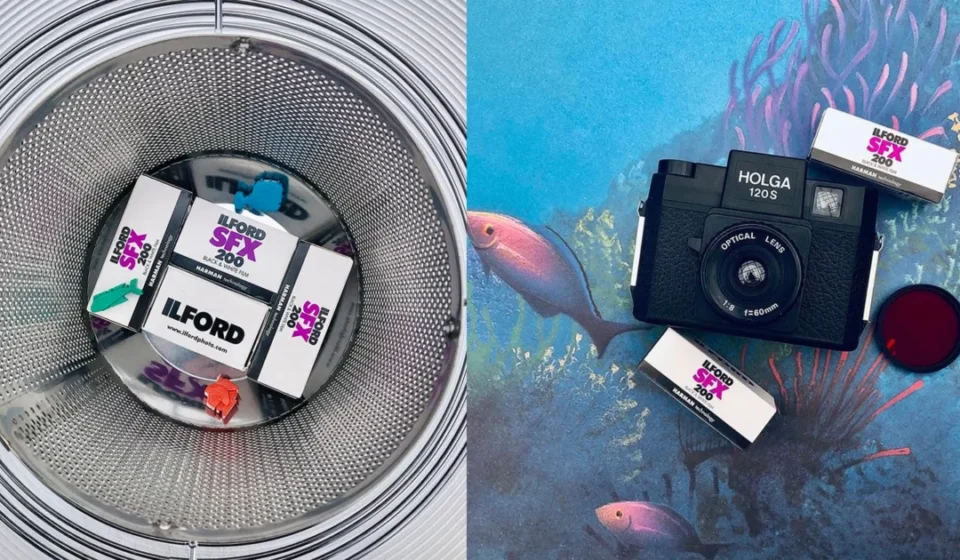
Unlocking the Invisible World: A Deep Dive Into Ilford SFX 200 Superpanchromatic Film

Main Facts: The Intersection of Tradition and the Near-Infrared Spectrum
In the ever-evolving landscape of analog photography, where emulsion choices fluctuate with supply chain shifts and shifting consumer tastes, certain stocks remain cult favorites for their specialized capabilities. Among these is Ilford SFX 200, an ISO 200 black-and-white film that occupies a unique space in the photographic market. Officially classified as a "superpanchromatic" film, SFX 200 is engineered not only to record the standard visible spectrum of light—just like traditional black-and-white emulsions—but also to extend its sensitivity into the near-infrared (NIR) spectrum.
While it can be loaded into any 35mm or 120 medium-format camera and shot straight out of the box with predictable, high-contrast results, SFX 200 truly transforms when paired with colored glass filters. By utilizing a heavy red filter (such as a Wratten 25 or 29) or a true infrared cutoff filter (like the Hoya R72), photographers can suppress visible wavelengths and allow the film to render a surreal, dreamlike vision of the world. Foliage glows with a brilliant, snow-like luminescence, skies turn an ominous, near-midnight black, and portraits take on a haunting, ethereal quality.
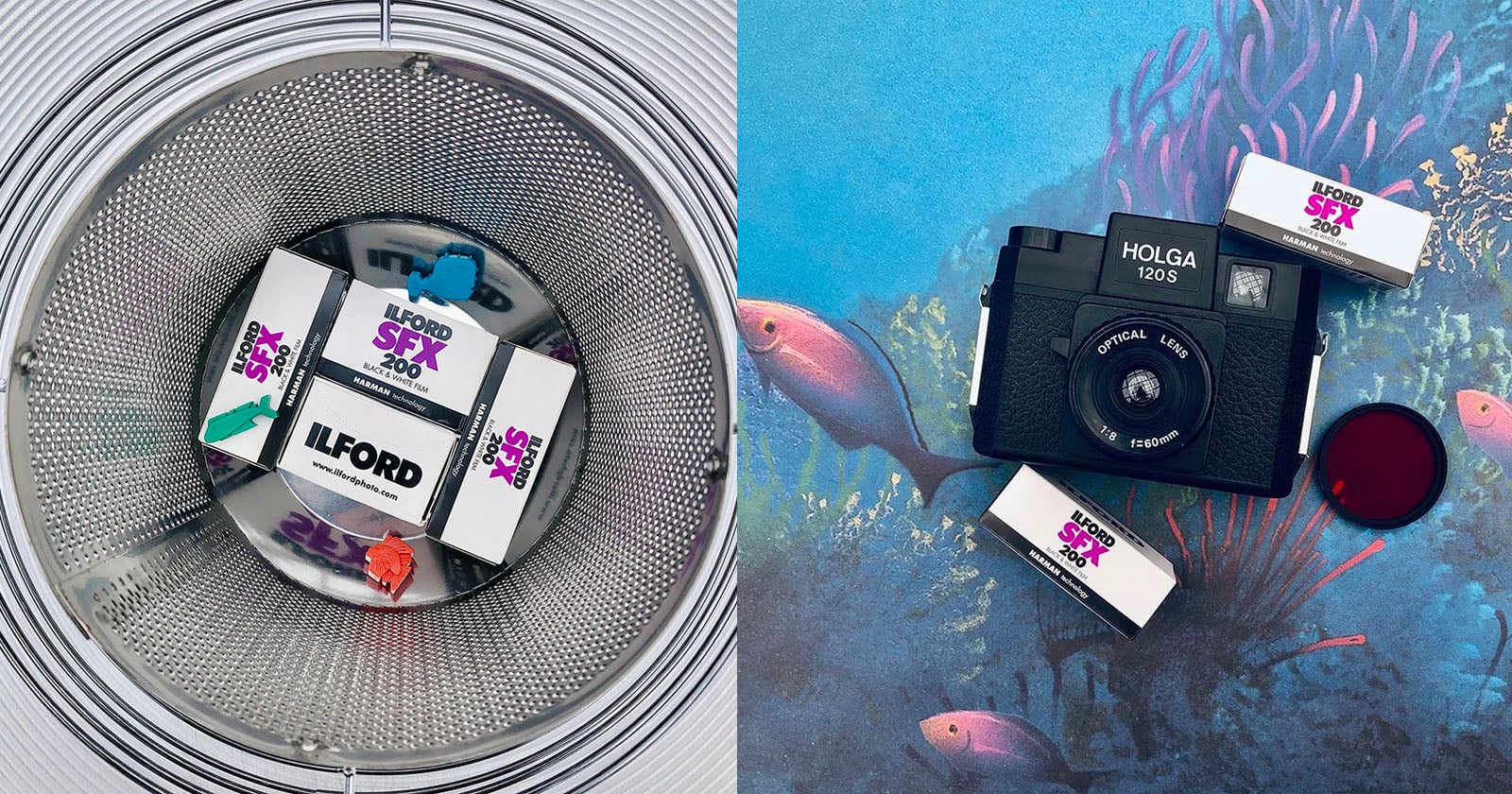
Available in multiple formats—making it a versatile choice for everything from pocketable rangefinders to chunky medium-format toy cameras like the Holga—Ilford SFX 200 stands out as one of the most accessible entry points into experimental and infrared-adjacent analog photography.
Chronology: From the Brink of Extinction to a Modern Cult Classic
The history of Ilford SFX 200 is tightly bound to the turbulent financial history of its manufacturer, Harman technology (operating under the historic Ilford Photo name).
- The Late 1990s to Early 2000s: Ilford introduced SFX 200 to cater to photographers seeking creative contrast control and near-infrared effects following the decline and eventual discontinuation of legendary specialty emulsions like Kodak’s High Speed Infrared (HIE) film. However, during this period, the broader photography industry was in a state of panic as digital cameras began eating into market share.
- The Early 2000s Restructuring: Facing severe financial headwinds, Ilford underwent corporate restructuring. During this lean period, several niche products in the catalog were temporarily put on ice, and SFX 200 vanished from store shelves, leading many to believe it was gone for good.
- The "Zombie Film" Revival: Emerging from financial restructuring under new ownership, Harman technology revived several legacy products, bringing SFX 200 back from the dead. Because of this resurrection, the film has playfully earned the moniker of a "zombie film"—making it a seasonal favorite for photographers heading out on autumn shoots leading up to Halloween.
- The Contemporary Renaissance: Today, amid the broader analog renaissance driven by younger generations discovering film, SFX 200 has transitioned from a misunderstood specialty stock into a celebrated creative tool. Supported by specialty labs and retailers like Portland, Oregon’s Blue Moon Camera and Machine, the film continues to find a devoted audience eager to push the boundaries of silver halide chemistry.
Supporting Data: Understanding Speeds, Filters, and Technical Behavior
Working with a superpanchromatic film requires a solid grasp of how light interacts with specialized chemistry. To get the most out of Ilford SFX 200, photographers must understand its sensitivity curves, grain structure, and the mechanics of optical filtration.
1. The Light Spectrum: What is "Near-Infrared"?
Visible light ranges roughly from 400 nanometers (nm) (violet) to 700 nm (red). True infrared begins past 750 nm and extends upward. SFX 200 is sensitive up to roughly 750–800 nm, placing it firmly in the near-infrared category. Photographers sometimes mistakenly believe that "near-infrared" means "not quite infrared." In practice, when paired with the right filter, SFX 200 delivers unmistakable infrared characteristics.

2. Choosing the Right Filter
- No Filter (The Baseline): Without a filter, SFX 200 acts as a very punchy, high-contrast ISO 200 black-and-white film. It features deep blacks and bright whites, making it visually "loud" compared to smoother, more tonal emulsions like Ilford HP5+ or Delta 100.
- Red 25 Filter: The gold standard for beginners. Readily available and affordable, it requires a light loss compensation of roughly 2.5 stops. It darkens blue skies and boosts contrast dramatically while keeping through-the-lens (TTL) composition and metering relatively straightforward.
- Red 29 Filter: A slightly deeper red than the 25. It demands an extra half-stop of exposure compensation and yields an incrementally more dramatic contrast curve, though the visual difference from a Red 25 is subtle.
- R72 Infrared Filter: For those wanting an authentic infrared aesthetic, an R72 filter blocks almost all light below 700 nm. Because this filter is nearly opaque to the human eye, composition and metering must be handled with care.
3. Grain Structure and Exposure Math
Photographers should note that SFX 200 is exceptionally grainy. Its grain structure is noticeably coarser than standard ISO 400 films, leaning into a gritty, aggressive texture.
When shooting through an opaque R72 filter, internal camera light meters are effectively blinded. Photographers must meter without the filter (or use a handheld meter/light app) and calculate the filter factor manually. Experienced shooters often recommend bracketing exposures aggressively—such as overexposing by +6 to +8 stops—to ensure adequate shadow detail in the infrared spectrum, treating the extra exposure as chemical insurance.

Official Perspectives and Industry Insights
Industry veterans and specialty processing labs have long championed SFX 200 as a masterclass in creative experimentation. According to technical advisors at major analog institutions like Blue Moon Camera and Machine, the primary barrier to entry for most photographers is not the film’s cost or availability, but rather the intimidation factor surrounding filter math and focusing shifts.
Specialized optics behave differently in the invisible infrared spectrum than they do in visible light. Because infrared wavelengths focus at a slightly different focal plane than visible light, shooting wide open (at apertures like f/2 or f/2.8) requires minor focus adjustments. Fortunately, many vintage manual-focus lenses include a small red dot or line engraved on the barrel specifically to indicate the infrared focus shift.

Industry advocates emphasize that once photographers overcome these minor technical hurdles, SFX 200 unlocks a playground of creative freedom. It forces the shooter to slow down, mount the camera on a tripod, calculate filter factors manually, and anticipate how everyday landscapes will look when translated through a completely different segment of the electromagnetic spectrum.
Implications: Why Superpanchromatic Film Matters in the Digital Age
In an era where digital sensors can replicate almost any retro aesthetic with a few software clicks or algorithmic presets, the enduring appeal of physical emulsions like Ilford SFX 200 highlights a deeper cultural shift within photography.

1. The Value of Tactile Constraint
Digital infrared photography requires specialized sensor conversions—often permanent, expensive modifications to a digital camera body. By contrast, Ilford SFX 200 allows any mechanical film camera, from a plastic-bodied Holga toy camera to a high-end Leica M6 or Hasselblad 500C, to shoot infrared imagery simply by swapping the film roll and screwing a glass filter onto the lens. This democratization of experimental techniques keeps traditional mechanical photography engaging, unpredictable, and deeply tactile.
2. Embracing Imperfection and Surprise
SFX 200 rejects clinical perfection. Its aggressive grain structure, extreme contrast, and unpredictable infrared bleeding remind photographers of the physical nature of light-sensitive silver halides. In a world saturated with hyper-clean digital files, the grit, grain, and ghostly skies of SFX 200 offer a distinct artistic signature that cannot be completely faked in post-processing.

Ultimately, Ilford SFX 200 serves as a bridge between the familiar world we see with our naked eyes and the invisible, mysterious landscapes hidden just beyond our normal perception. For film shooters willing to experiment with a roll and a red filter, it proves that the analog world still holds plenty of magic left to uncover.