
In the ever-shifting landscape of modern consumerism, the markers of social status are increasingly unpredictable. Not long ago, the pinnacle of aspirational accessory culture was the oversized Stanley tumbler, a hydration vessel that became a ubiquitous fixture of gym culture and suburban commutes. Before that, it was the peculiar, aesthetic charm of Labubu dolls clipped to designer handbags. Today, however, the object of desire is far more pedestrian: a $3 canvas tote bag from the American grocery chain Trader Joe’s.
What began as a functional, low-cost item has mutated into a global cultural phenomenon. From the bustling streets of Amsterdam to the high-fashion districts of Tokyo, Seoul, and Singapore, the simple, pocketed canvas bag has become an inadvertent badge of honor. As the lines between essential goods and luxury commodities blur, the Trader Joe’s tote represents a new frontier in "grocery tourism," where the mundane artifacts of American supermarket life are transformed into high-demand artifacts of international pop culture.
The Anatomy of a Craze: How a Grocery Staple Became a Global Icon
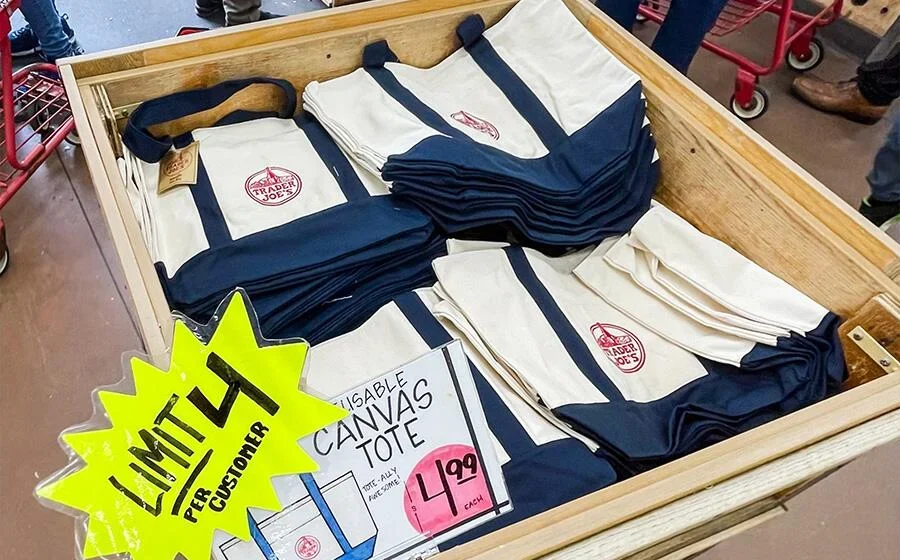
Trader Joe’s has been selling reusable bags since the 1970s, long before sustainability became a mainstream marketing pillar. Yet, the recent surge in demand for their mini-tote bags is unprecedented. Constructed of sturdy canvas with functional side pockets and a minimalist aesthetic, the bags are objectively useful. However, their utility is no longer the primary driver of their popularity.
The current frenzy surrounding the mini-tote suggests a psychological shift in consumer behavior. The bags are sold for a modest $3, yet they have appeared on secondary markets like eBay and Vinted with price tags ranging from $50 to as much as $3,000. This disparity between retail price and secondary valuation is the hallmark of a "hype-driven" economy, one typically reserved for limited-edition sneakers or high-end electronics.
A Chronology of the Hype
- The Pre-Viral Era (Pre-2023): Trader Joe’s bags were viewed strictly as functional, environmentally conscious alternatives to plastic. They were staples for the average American shopper, prized for their durability and modest price point.
- The Social Media Catalyst (2023–2024): As TikTok and Instagram influencers began highlighting the "American grocery experience," the brand’s unique product mix—the snacks, the frozen meals, and the aesthetic packaging—became a focal point for international travelers.
- The Mini-Tote Explosion (2025): The release of the limited-edition mini-tote served as a spark in a room full of gasoline. Store managers reported customers lining up before dawn, mimicking the chaotic scenes of Black Friday sales.
- The Secondary Market Surge (2026): As supply chain constraints and artificial scarcity took hold, the bags began appearing on global marketplaces. The scarcity turned a $3 item into a speculative asset, with reports of physical altercations in stores as shoppers fought over the final units in stock.
The Psychology of the Queue: Why We Crave the Inaccessible
The desire for the Trader Joe’s tote is inextricably linked to the psychology of the "cultural moment." As the author of this phenomenon noted, there is a distinct, visceral joy in participating in a collective, hard-to-acquire experience. Whether it is securing tickets to the French Open, waiting for a viral food item, or camping out for a limited-edition pocket watch, the difficulty of acquisition acts as a multiplier for the reward.
Psychologists often refer to this as "effort justification." When a consumer invests time, energy, and physical discomfort into acquiring an object, they psychologically inflate the value of that object to justify the effort expended. When that experience is shared with millions of others on social media, it creates a sense of community and belonging. The tote is not just a bag; it is a ticket to a global club of "in-the-know" consumers.
Grocery Tourism and the "American Look"
For many international consumers, particularly in Asia, the Trader Joe’s bag carries a specific semiotic weight. It is a signifier of the "American experience." In cities like Tokyo and Seoul, carrying a Trader Joe’s bag is a way of signaling that one has traveled to the United States or is deeply connected to its pop culture. It is a chic, accessible accessory that bridges the gap between the mundane act of grocery shopping and the aspirational act of global travel.
This trend is a byproduct of what sociologists call "grocery tourism." As global retail chains become more homogenized, the unique, regional character of stores like Trader Joe’s becomes a tourist destination in its own right. Travelers view the grocery store as a place of worship—a site where they can interact with the authentic, day-to-day products that define a foreign culture.

The Role of Influencer Culture and Social Media
The virality of the tote bag cannot be separated from the mechanics of modern social media. Influencers, by their nature, seek out items that are "aesthetic" and easily recognizable. The tote’s simple, clean design makes it a perfect canvas for flat-lay photography and "What’s in my bag" videos.
However, this virality has a dark side. When a product becomes a status symbol, it often leads to anti-social behavior. The reported instances of shoppers being shoved or punched in the aisles of Trader Joe’s stores are a stark reminder of the toxicity that can arise when consumer desire is artificially stimulated by social media algorithms. The trend has moved beyond harmless consumption into a realm of aggressive, and sometimes violent, competition.
Official Responses and Corporate Strategy
Trader Joe’s, known for its notoriously guarded corporate communications, has remained largely stoic regarding the madness. While they have implemented purchase limits—often restricting customers to one or two bags—they have not publicly embraced the "hype beast" marketing model.
In many ways, this silence adds to the mystique. By not overproducing the bags to meet the massive, temporary demand, the company inadvertently sustains the scarcity. From a business perspective, the frenzy has provided the brand with millions of dollars in free global advertising. However, the store’s core identity—as a friendly, neighborhood grocer—is at odds with the chaotic, aggressive scenes occurring in their aisles.
The Implications for Future Consumerism
The Trader Joe’s tote phenomenon serves as a case study for the fragility of modern value. If a $3 bag can command a $3,000 price point, what does that say about our relationship with material objects?
- Artificial Scarcity as a Tool: Brands are learning that by keeping inventory low during peak interest, they can generate massive engagement.
- The Death of the "Local": As the world becomes more interconnected, even the most local, mundane products are subject to global speculation.
- The Sustainability Paradox: While the tote is marketed as an environmentally friendly alternative to plastic, the rapid, fad-driven consumption of these bags—where thousands are bought and discarded or left unused—creates a new form of waste.
Conclusion: Is It Worth the Wait?
For those who simply want a durable, stylish canvas bag, the market is saturated with alternatives. Brands like 99 Ranch offer functionally identical products, yet they lack the "cult" status of the Trader Joe’s logo.
Ultimately, the craze for the Trader Joe’s tote is a reflection of a society that is constantly searching for meaning in the material. It is a harmless fad until it isn’t—until the pushing, the shoving, and the absurd secondary market prices take over. For the casual observer, it is a fascinating, if slightly unsettling, look at how easily we can be convinced that a $3 piece of fabric is worth fighting for. As for the rest of us, there are always museum totes—and, perhaps, a jigsaw puzzle or two to carry home in them.