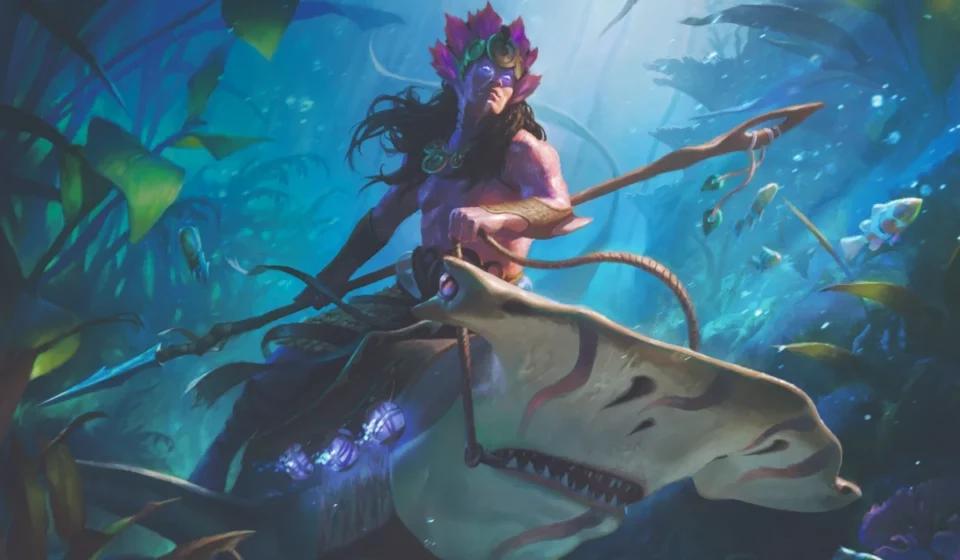

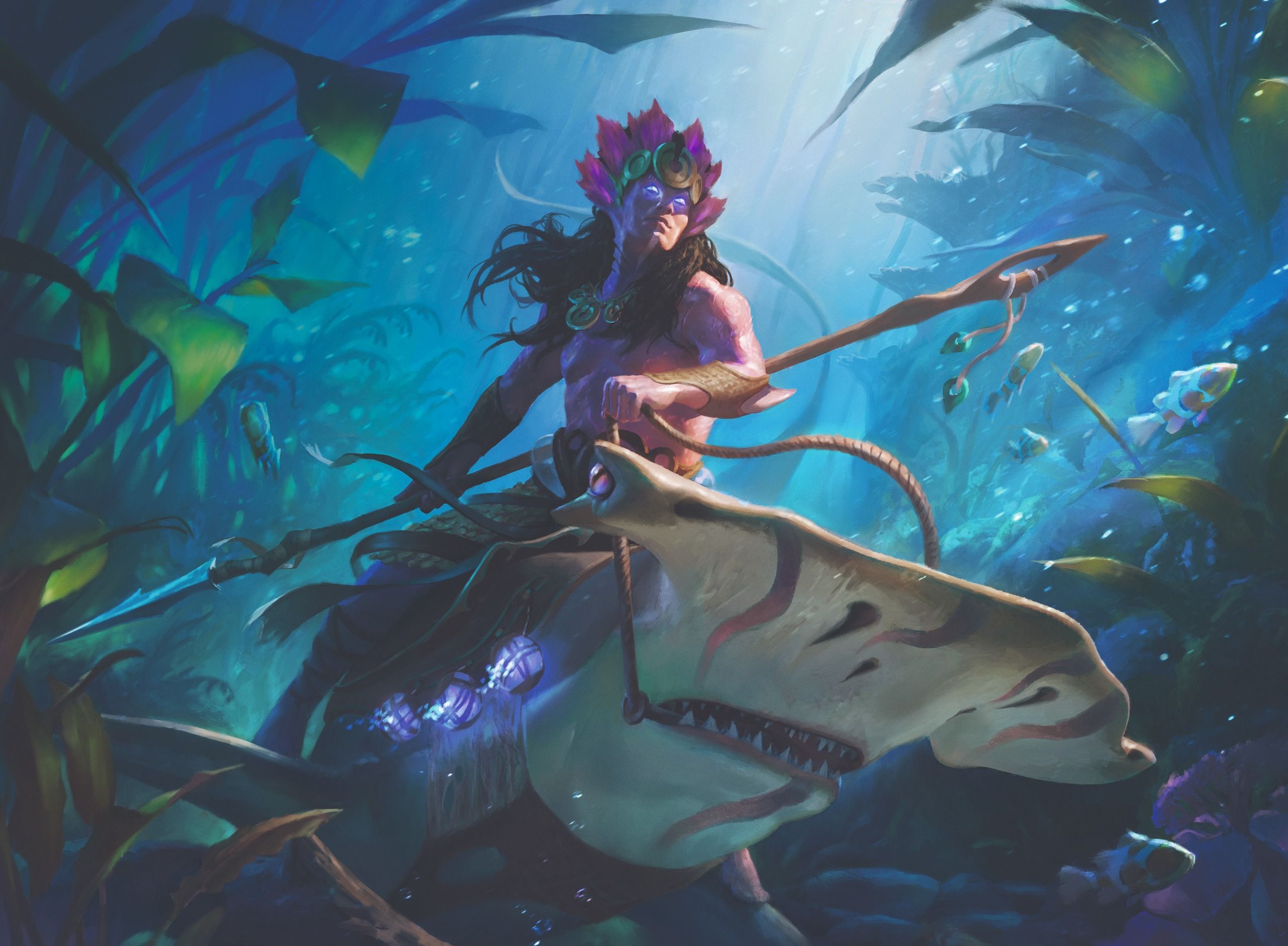
The art of "imaginative realism" lies in the delicate balance between the impossible and the tactile—creating worlds that feel as though they could exist just beyond our reach, grounded in the physics and lighting of our own reality. In 2025, during the "Mastering Imaginative Realism" workshop led by acclaimed artist Paul Scott Canavan, attendees were challenged to bridge this gap. Among the notable outputs from this intensive program is a striking piece featuring a merfolk-type figure riding a shark companion, locked in a hunt for elusive jellyfish leviathans.
Beyond the visual spectacle of the final render, the project serves as a masterclass in modern digital workflows, illustrating how a fusion of traditional storytelling, 3D prototyping, and meticulous digital painting can produce high-fidelity concept art.
The Narrative Foundation: Why Story Must Precede Structure
For many digital artists, the temptation to jump straight into the canvas is overwhelming. However, the 2025 workshop emphasized a fundamental truth: before a single pixel is placed, there must be a narrative anchor. In this specific project, the jellyfish leviathans—while not explicitly depicted in the final composition—serve as the "invisible engine" of the work.
By developing a rich background story, the artist ensures that every subsequent decision, from the curve of the shark’s fins to the specific lighting of the water’s surface, remains consistent with the established world. This narrative-first approach acts as a creative compass. When an artist knows exactly what their subject is hunting and why they are in this specific environment, the "what" and "how" of the illustration become clear. This avoids the common pitfall of "technique for technique’s sake," ensuring that every brushstroke serves the broader intent of the story.
Chronology of Creation: A Step-by-Step Breakdown
The creation of the piece followed a rigorous, three-stage developmental pipeline that mirrors professional studio standards.
Phase 1: The Art of the Scribble
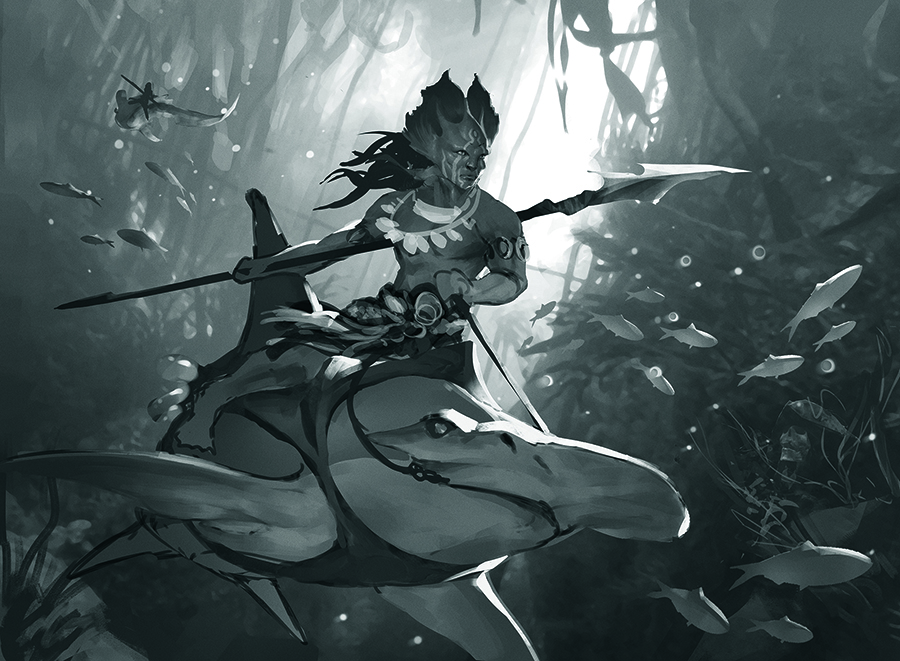
"Drawing is, for me, thinking out loud on the canvas," the artist explains. The initial phase is intentionally low-fidelity. By engaging in rapid-fire thumbnailing and concept sketching, the artist is able to externalize dozens of fleeting ideas. This process is essential for "filtering out the bad ideas" early in the development cycle.
During this phase, the focus is purely on composition and silhouette. By producing multiple variations, the artist can assess which framing best captures the intensity of a hunt. Once the strongest composition is identified, it is bolstered by an extensive reference board. Collecting images of biological textures, shark anatomy, and underwater light refraction ensures that when the artist moves into the rendering phase, they have a grounding in reality to lean upon.
Phase 2: Blending into 3D Space
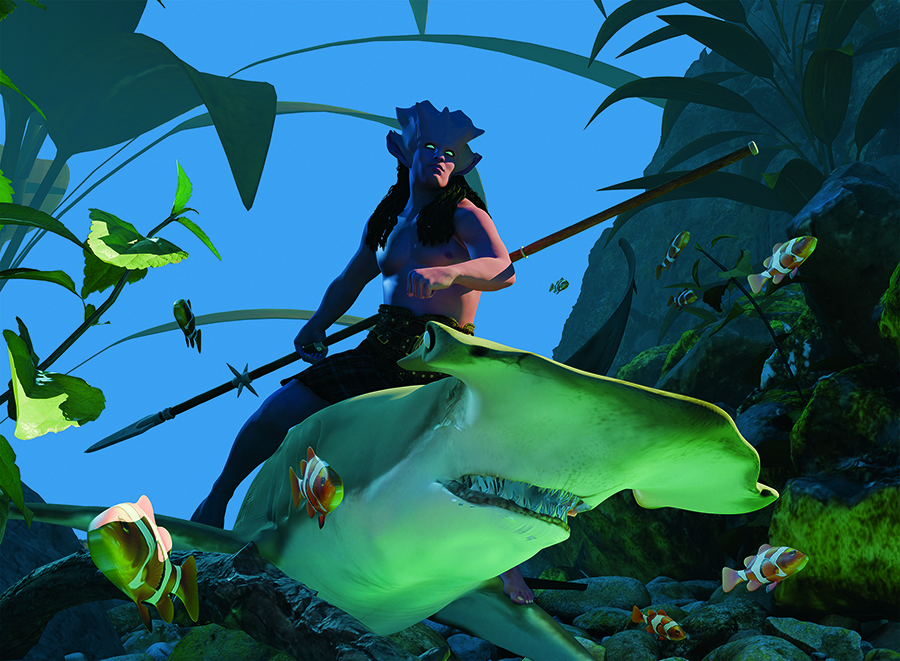
Perhaps the most significant shift in modern digital illustration is the integration of 3D software into the 2D pipeline. For this piece, the artist utilized Daz Studio to pose the primary figure, providing an anatomically accurate base that would be difficult to achieve through freehand sketching alone.
Once the pose was locked, the scene was imported into Blender. Using the Blender Kit library, the artist populated the environment with assets that provided depth and scale. This is where the technical heavy lifting occurs: adjusting lighting, setting the camera angle, and performing basic sculpting to ensure the environment felt immersive. The primary advantage of this stage is the ability to pivot. If the composition feels off, the artist can manipulate the 3D scene rather than having to repaint an entire perspective from scratch.
Phase 3: The Overpainting Process
With the 3D render acting as a robust foundation, the artist transitioned to Photoshop for the final overpainting. This is where the "realism" of imaginative realism truly takes hold.
The goal here is not to hide the 3D base but to elevate it. The artist pays close attention to color harmony, atmospheric values, and the "language" of the lighting. By controlling contrast, the artist effectively guides the viewer’s eye, ensuring that the hunt—the focal point of the narrative—remains the clear center of interest. The 3D render provides the logic, but the painting provides the soul.
Technical Infrastructure: The Tools of the Trade
Success in digital artistry is rarely achieved without the right hardware. For artists looking to replicate this workflow—which involves resource-heavy tasks like real-time rendering, high-resolution painting, and 3D sculpting—the barrier to entry often lies in the hardware.
As the industry moves toward more complex hybrid workflows, the demand for high-performance drawing tablets and mobile workstations has surged. Industry standards now suggest that a professional-grade setup must include:
- Pressure-sensitive displays: These are critical for the nuance required during the overpainting phase.
- GPU-accelerated laptops: Essential for running software like Blender without significant latency.
- Calibrated color monitors: To ensure that the values established during the painting phase are accurately represented for the end-user.
For those looking to build or upgrade their own studio, professional guides to the best drawing tablets and best laptops for drawing are essential resources that provide data-driven insights into which devices can handle 3D rendering and complex layering.
Implications for the Future of Concept Art
The workflow utilized in the "Mastering Imaginative Realism" workshop highlights a broader trend in the professional art world: the convergence of disparate disciplines. No longer is an illustrator strictly a 2D artist; they are now a director, a 3D modeler, and a lighting technician.
This hybrid approach has significant implications for the industry:
- Efficiency: By utilizing 3D assets, artists can significantly reduce turnaround times for high-detail concept art.
- Scalability: As shown in this project, once an asset is created (like the shark companion), it can be repurposed across different angles or scenes, providing a consistent visual language for a larger narrative project.
- Accessibility: Tools like Blender and Daz Studio have democratized the ability to create complex scenes, allowing artists to bypass years of technical drawing training by leveraging 3D proxies.
Expert Perspective: The Role of Education
Reflecting on the success of the workshop, industry experts note that while software is the tool, education remains the primary driver of quality. Paul Scott Canavan’s workshop does not simply teach software buttons; it teaches the philosophy of composition.
"Having a solid story idea really helps at all stages and keeps you focused on what’s important," the artist notes. This sentiment is echoed across the field of concept art. Whether an artist is working on a blockbuster film, a triple-A video game, or a standalone illustration, the ability to synthesize narrative, technology, and traditional artistic principles is what distinguishes a competent technician from a master artist.
As the industry continues to evolve, the tools will undoubtedly change. We may see the further integration of AI-assisted generation or VR-sculpting in the pipeline. However, the fundamental pillars established in this workshop—narrative intent, structural planning, and iterative refining—will likely remain the cornerstones of the discipline.
For those eager to keep pace with these shifts, publications such as ImagineFX continue to serve as vital repositories of knowledge, documenting the evolving methodologies of the world’s leading creatives. By staying connected to these communities and embracing the technical evolution of the craft, the next generation of artists will be well-equipped to turn their most imaginative concepts into tangible, breathtaking realities.