The Telephoto Revolution in Landscape Photography: Why Wide-Angle Lenses Are Staying in the Bag

NEW ENGLAND — As the autumn foliage season reaches its vibrant peak across New England, a quiet shift is taking place in the camera bags of outdoor photographers. While traditional landscape photography has long been synonymous with sweeping ultra-wide vistas—panoramas captured at 14mm, 20mm, or 24mm—a growing contingent of visual artists is abandoning convention. Leading this charge is photographer Jeremy, who made headlines in outdoor creator circles following a weekend excursion to New Hampshire’s White Mountains, where his wide-angle glass spent nearly the entire trip zipped securely inside his backpack.
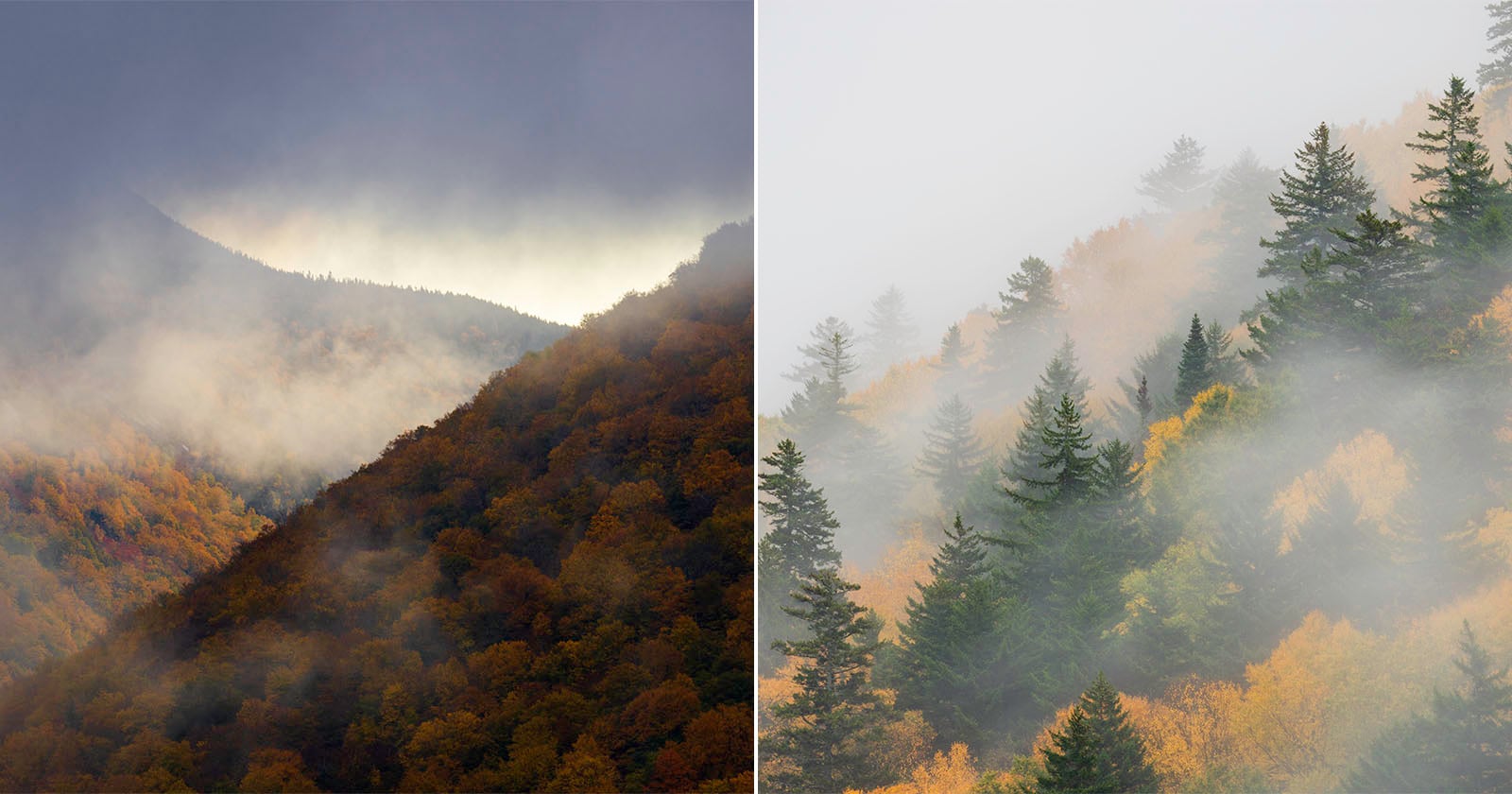
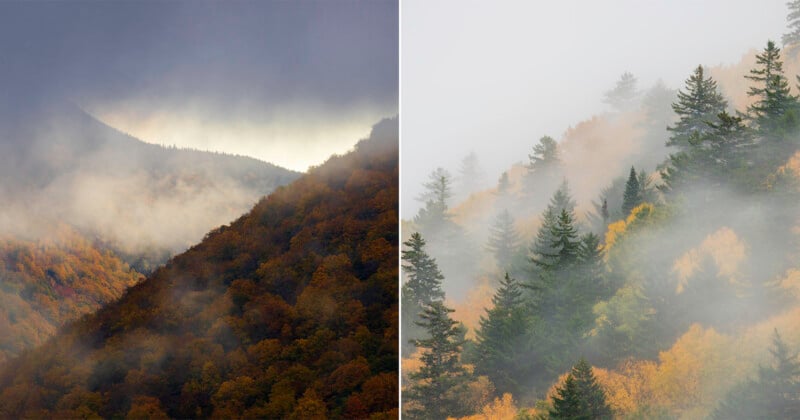
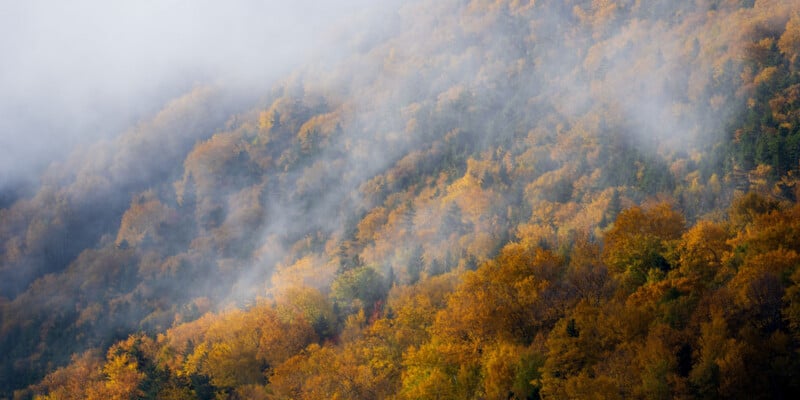
Instead, Jeremy relied almost exclusively on a telephoto setup, pairing the newly released Sony a7R VI high-resolution camera with the featherlight Sony FE 400mm f/4.5 GM OSS lens. The results speak volumes about a broader artistic trend: out of 134 frames captured during the outing, Jeremy narrowed his selects down to 20 final images for post-processing—a remarkably high hit rate. Of those 20 images, 16 were shot at 400mm, while the remaining four were captured using a modest 24-105mm zoom at focal lengths stretching from 43mm to 105mm. The wide-angle end of the spectrum was completely shut out.
This phenomenon raises critical questions about modern field craft, gear selection, and how photographers perceive the natural world. Far from being an isolated personal preference, Jeremy’s experience underscores a growing philosophy among professionals: when it comes to impactful landscape imagery, less is frequently more, and telephoto lenses are rapidly claiming the title of ultimate landscape tools.
Chronology of a Predawn Ascent: From Crowd Chaos to Focused Intimacy
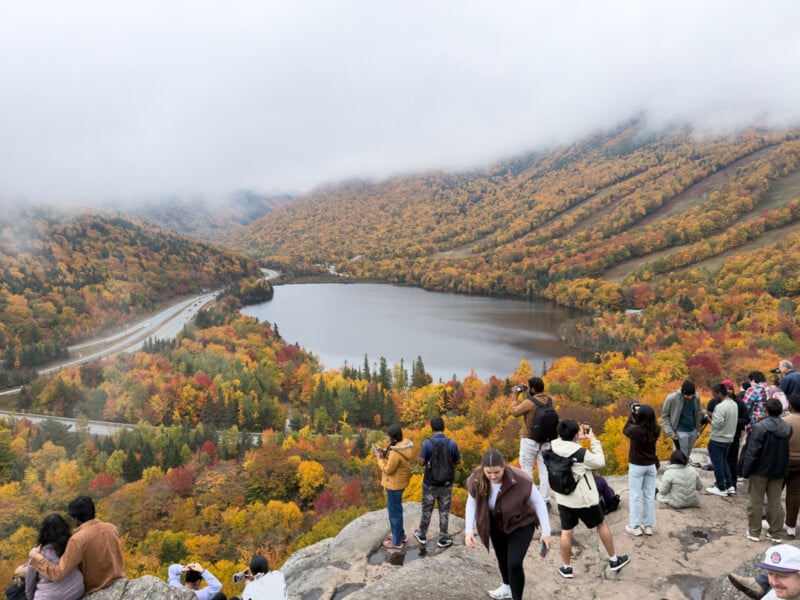
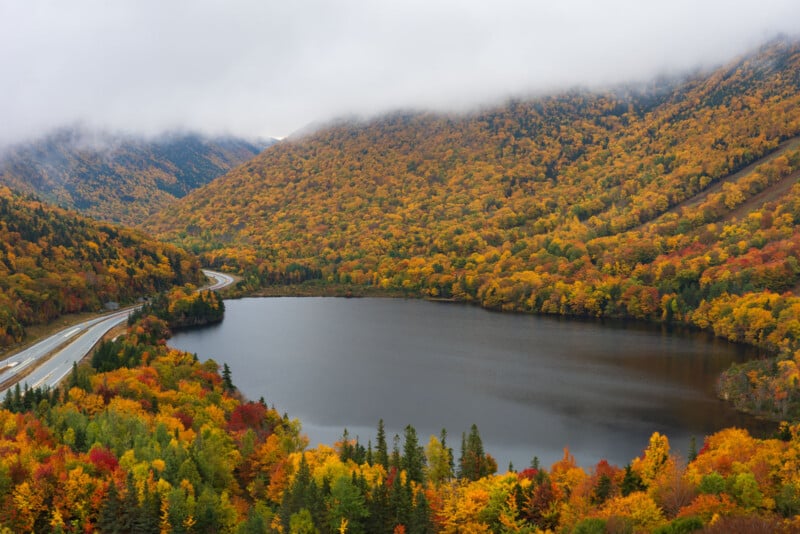
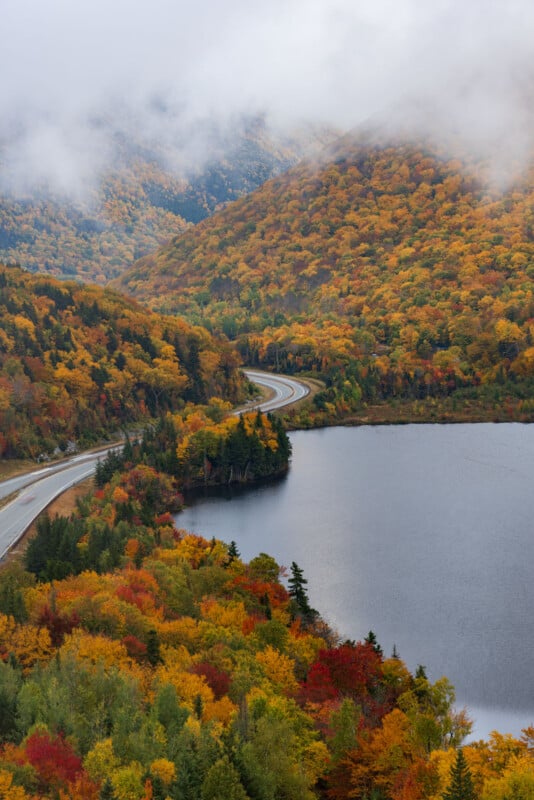
The expedition began in the pitch-black hours of Saturday morning. At 3:00 AM, accompanied by a remarkably supportive partner willing to sacrifice a normal night’s sleep in pursuit of "good light," Jeremy embarked on a night hike up to Artists Bluff in Franconia Notch State Park. The goal: to capture the sunrise breaking over the iconic, mist-shrouded Echo Lake.
Upon arriving at the viewpoint, the logistical realities of peak foliage season quickly set in. As a premier destination on a pristine autumn Saturday morning, Artists Bluff was already populated by early-riser tourists and fellow photographers. For traditional landscape shooters relying on ultra-wide lenses, this presents an immediate headache. A 24mm or wider field of view inherently sweeps in everything—including crowds of people, modern infrastructure, and distracting background clutter—forcing photographers to either wait out the crowd or wrestle with complex removal in post-processing.
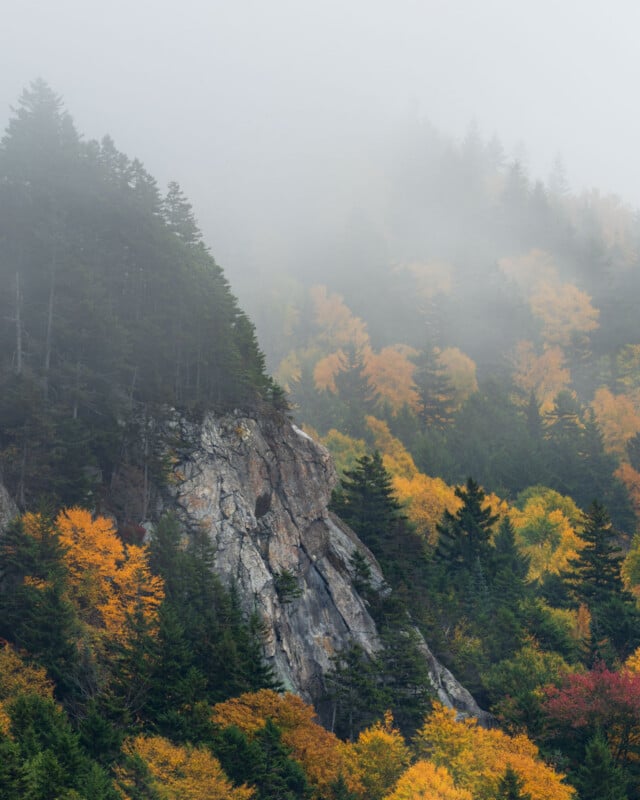
For Jeremy, however, the telephoto lens acted as an optical scalpel. Utilizing the reach of the 400mm f/4.5 prime, he was able to completely bypass foreground hikers, power lines, and unwanted horizon elements, isolating the pure essence of the scene.
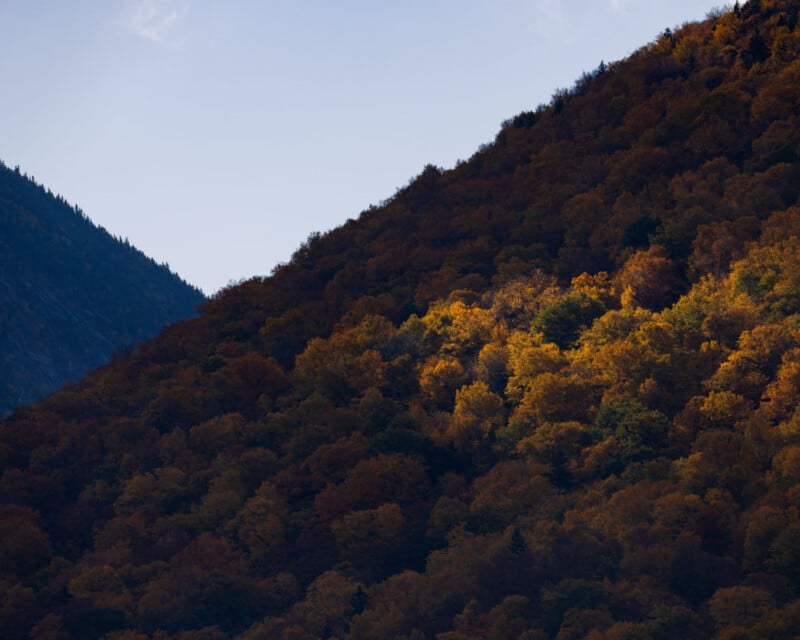
"Sometimes landscape photography, often a solitary adventure, is better when you share it with strangers," Jeremy noted. "However, more people are awful in terms of practicality. A wide-angle perspective meant having a bunch of people in the frame, and that’s not at all my style… using a longer focal length removes distractions."
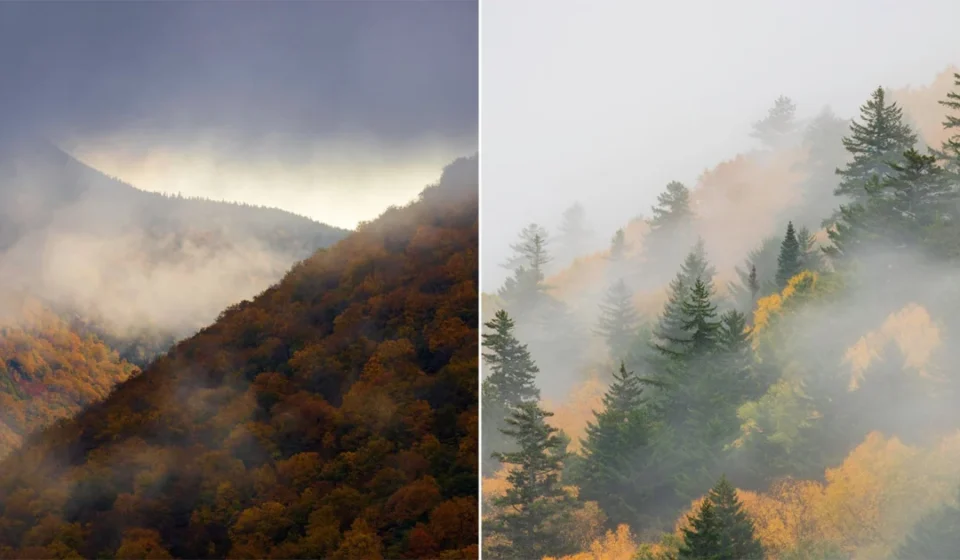
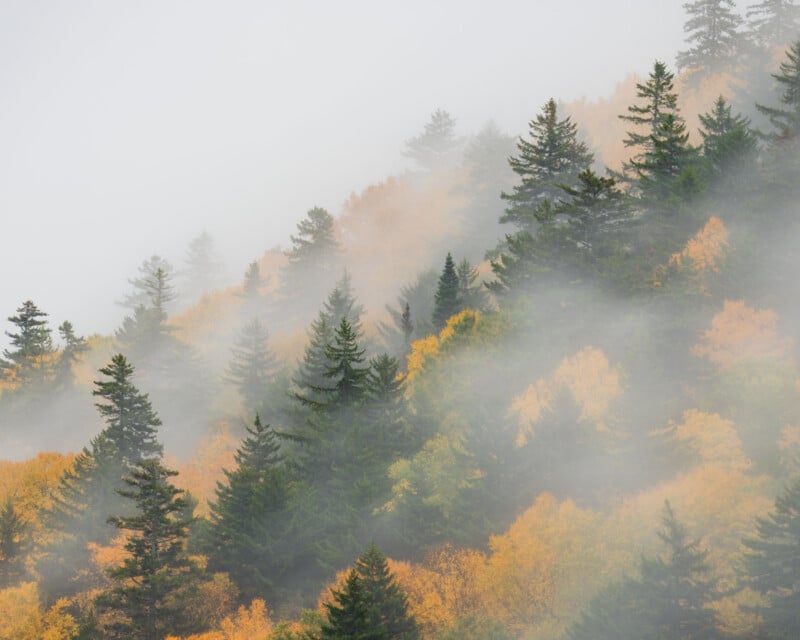
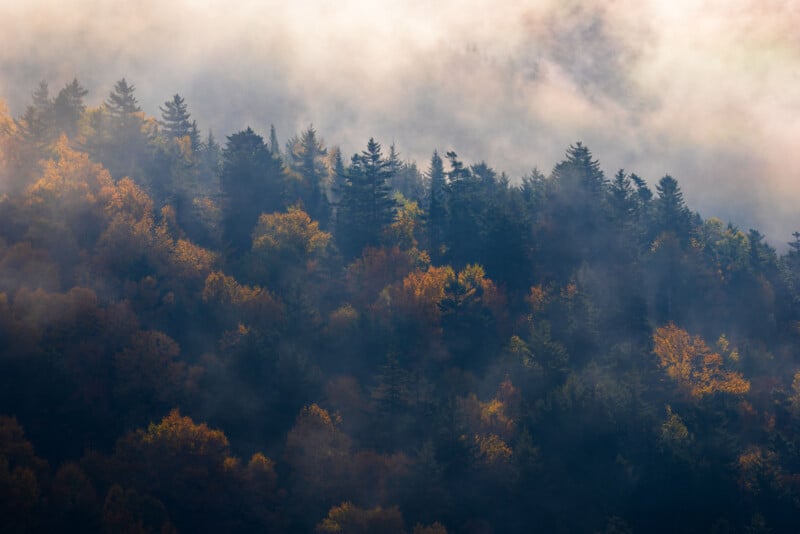
Rather than attempting to "zoom with his feet"—a physical impossibility when standing on the precipice of a rocky cliff face—he let the glass do the work. The morning mist clinging to the autumn canopies, the contrasting deep greens of evergreen conifers against explosions of golden maple foliage, and the rhythmic geometry of winding mountain highways became the sole subjects of the frame.
Supporting Data and Gear Economics: The Rise of Specialized Field Kits
The gear deployed during this New England excursion highlights a major technological shift in modern mirrorless camera ecosystems. The combination of the Sony a7R VI—a high-resolution powerhouse designed to capture minute architectural and natural details—and specialized, lightweight telephoto primes like the 994-gram Sony FE 400mm f/4.5 GM OSS has radically altered what photographers are willing to haul into the backcountry.
Historically, carrying a 400mm lens meant resigning oneself to heavy, cumbersome white-barreled sports and wildlife monoliths weighing three kilograms or more. Today, advancements in optical engineering allow manufacturers to produce ultra-sharp telephoto lenses light enough for multi-mile hikes.
A breakdown of shooting data from modern landscape outings reveals shifting usage patterns:
- The Traditional Kit Staple: The 24-70mm or 24-105mm zoom remains a mandatory pack item, yet field logs indicate that the lower third of these zoom ranges (24mm–35mm) sees significantly less utilization during peak nature events.
- The Sweet Spot: A large percentage of favored fine-art landscape images cluster heavily in the 70mm to 200mm range, with an increasing shift toward extreme telephotos (300mm to 600mm) for abstract compositions.
- Hit-Rate Efficiency: Photographers utilizing telephoto compression report higher selectivity and satisfaction rates because the framing process forces deliberate compositional choices prior to shutter actuation.
Official Perspectives and Industry Reception
While legacy landscape education has historically prioritized wide-angle lenses to establish a sense of scale, depth, and immersion—frequently teaching that foreground elements like rocks, wildflowers, or streams are mandatory—contemporary educators and gear reviewers are validating the telephoto approach.
Industry analysts point out that ultra-wide lenses are notoriously difficult to master. A wide-angle frame demands absolute perfection in foreground-midground-background relationships. Without a compelling, structurally sound anchor close to the front element, wide landscape photos frequently suffer from what critics call "empty foreground syndrome," where the viewer’s eye wanders aimlessly across a vast, uninteresting expanse before reaching a distant, tiny mountain range.
Conversely, telephoto lenses bypass this compositional trap entirely. By introducing optical compression, long focal lengths stack elements visually, making distant mountain ridges appear massive and layered against one another while flattening mist layers into atmospheric brushstrokes.
Professional landscape workshops increasingly advocate for the "telephoto first" exercise: arriving at a sweeping vista, keeping the wide-angle zoom zipped away, and forcing oneself to find three distinct compositions using a telephoto or tele-zoom lens. This constraint trains the eye to look past the overwhelming grandeur of a scene and home in on micro-landscapes, dramatic lighting pockets, and geometric patterns in nature.
Implications for the Future of Landscape Photography
The growing dominance of telephoto lenses in genres traditionally ruled by wide angles carries profound implications for both amateur and professional creators.
1. Redefining "Landscape" Aesthetics
The visual language of nature photography is evolving. Consumers and art buyers are growing fatigued by distorted, hyper-wide vistas where subjects look impossibly far away. Telephoto landscapes offer a more intimate, painterly perspective that mimics how the human eye naturally isolates a subject when something catches our attention in the distance.
2. Conservation and Practical Field Ethics
"Zooming with your feet" is a popular photographic idiom, but in fragile ecosystems, it can lead to environmental degradation. Stepping off established trails to find a better foreground angle damages delicate alpine vegetation, moss beds, and wildflower meadows. Telephoto lenses promote "Leave No Trace" ethics by allowing photographers to capture pristine compositions from safe, legal vantage points without trampling nature.
3. Shifting Gear Investments
As manufacturers continue to release compact, high-performance telephoto lenses with close-focusing capabilities and stellar image stabilization, consumer purchasing habits are adapting. Photographers who once invested heavily in ultra-wide specialty primes are now reallocating their budgets toward versatile mid-telephotos and super-telephotos, recognizing that these lenses offer unmatched versatility in the field.
Conclusion: A Call to Experiment
Jeremy’s reflections from the heights of Artists Bluff serve as a timely reminder during peak foliage season: gear is merely a tool to interpret the landscape, and convention should never dictate creativity. While wide-angle lenses will always hold a permanent place in the history of photography, the telephoto lens has firmly established itself as a formidable, if not superior, instrument for capturing the soul of the natural world.
For photographers heading out into the autumn color this weekend, the advice from the field is simple: zip up the wide-angle, mount a telephoto, and look closer. You might just find that the best photos were hiding inside the view you almost ignored.