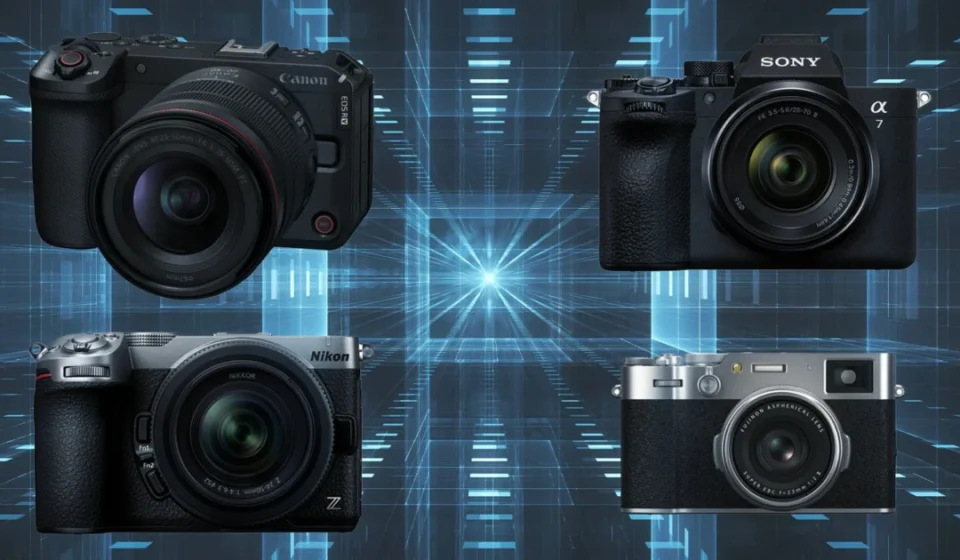
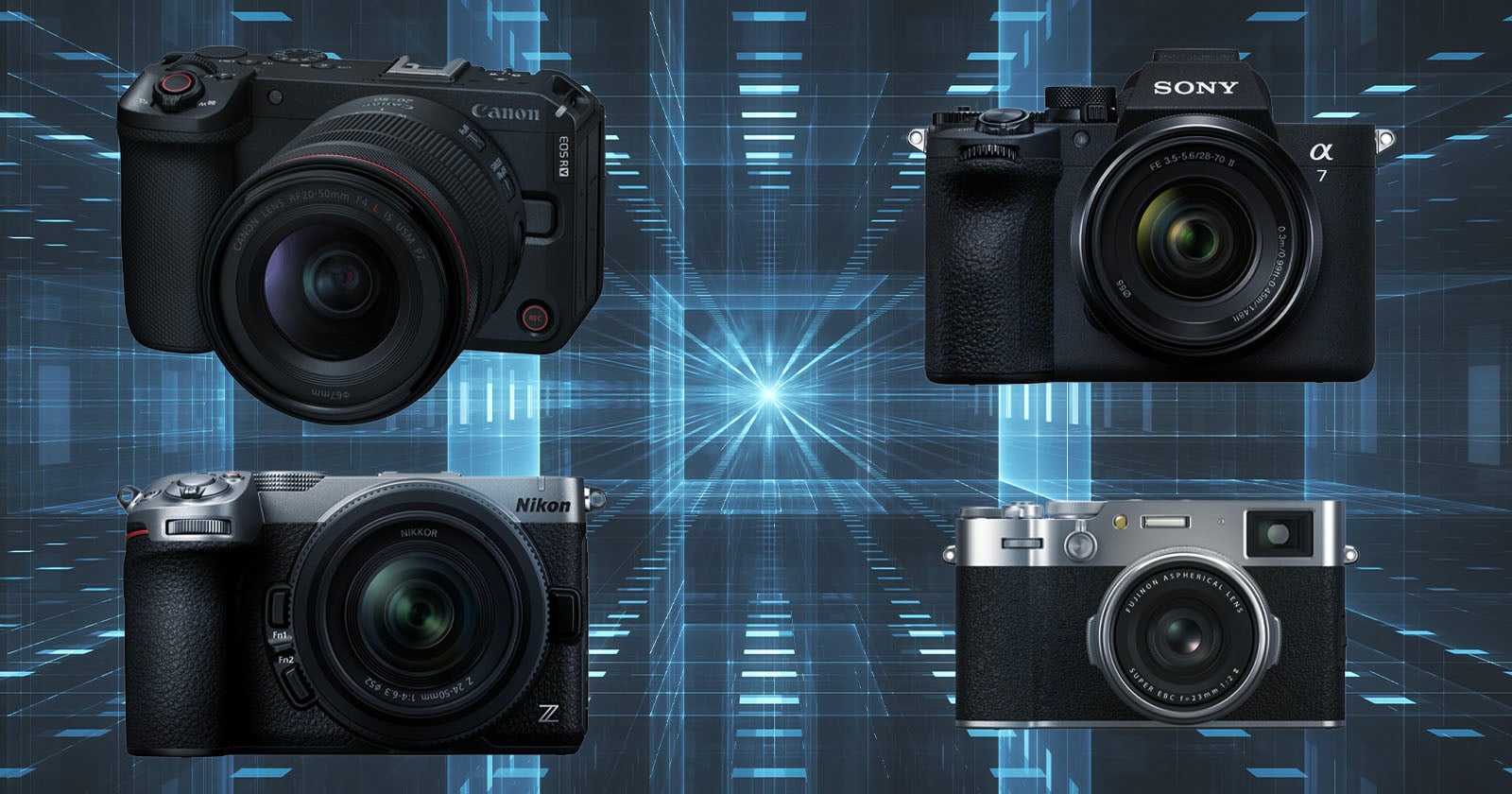
Comments Off on The Future of Photography Through Four Lenses: How Canon, Nikon, Sony, and Fujifilm Plan to Survive the AI and Smartphone Era
By Tech & Industry Desk Published: October 2026
Main Facts
The modern imaging industry stands at a monumental crossroads. In a series of rare, high-profile executive interviews published by the Japanese economic daily Nikkei—and later analyzed by industry monitors like Photo Rumors—the leaders of the "Big Four" camera manufacturers laid out starkly divergent visions for the future of photography.
Canon, Nikon, Sony, and Fujifilm are no longer competing merely on traditional hardware metrics like megapixel counts, autofocus speed, or frame rates. Instead, they are grappling with seismic industry shifts: the ubiquity of generative artificial intelligence (AI), the maturation of computational smartphone photography, a resurgence of analog-inspired aesthetics, and a booming youth demographic that views cameras as lifestyle accessories rather than strictly professional tools.
Representing the old guard and the new frontier alike, the executives interviewed include:
Go Tokura (Canon)
Hiroyuki Ikegami (Nikon)
Kenji Tanaka (Sony)
Koji Matsumoto (Fujifilm)
While each brand acknowledges the pressure exerted by smartphones and AI, their strategic responses vary wildly. Canon is betting on hybrid content creation and lifestyle vlogging; Nikon is fortifying its core sensor and processor technology to deliver high-end power efficiently; Sony is repositioning its Alpha ecosystem as an entertainment and "Spatial AI" platform; and Fujifilm is doubling down on tactile, analog-inspired joy and human-centric self-expression.
Chronology: The Evolution of the Digital Camera Market
To understand the weight of these executive interviews, it is necessary to trace how the camera industry reached this juncture over the past two decades.
2007–2015: The Smartphone Onslaught
For decades, standalone cameras enjoyed steady, predictable growth. The arrival of the iPhone in 2007 and the subsequent rapid evolution of smartphone cameras decimated the point-and-shoot market. By the mid-2010s, entry-level compact camera sales plummeted by over 80%. Manufacturers were forced to abandon low-end compact lines and pivot aggressively toward high-margin mirrorless interchangeable-lens cameras (ILCs) targeted at enthusiasts and professionals.
2018–2023: The Mirrorless Transition and the Creator Economy
Camera makers successfully transitioned away from aging DSLR systems to full-frame and crop-sensor mirrorless systems. During the COVID-19 pandemic, a secondary phenomenon emerged: the explosive growth of the "creator economy." Demand for high-performance video capabilities skyrocketed as remote work, vlogging, and streaming became mainstream. Brands like Sony (with the ZV series) and Canon recognized that hybrid shooters—those who shot both stills and video—were the primary engine of modern hardware sales.
2024–2026: The AI Disruption and Gen Z Renaissance
By 2026, the imaging landscape faced two competing pressures. On one hand, generative AI platforms advanced to the point where text-to-image models could fabricate hyper-realistic visuals in seconds, threatening traditional commercial photography. On the other hand, an unexpected demographic shift occurred: Gen Z consumers began driving a massive resurgence in compact digital camera sales.
Rather than seeking pristine, clinical perfection, younger consumers embraced older, imperfect digital compacts and tactile, film-simulation-equipped mirrorless cameras. This cultural counter-movement prompted Nikkei to convene its landmark panel of industry leaders to ask a fundamental question: What is the purpose of a dedicated camera in a world dominated by smartphones and AI?
Supporting Data & Market Dynamics
The strategic choices outlined by the Big Four executives are deeply rooted in current market data and consumer behavioral shifts:
The "Smartphone + 1" Phenomenon: Industry research indicates that consumers are increasingly looking for dedicated cameras not to replace their phones, but to complement them. These "smartphone + 1" devices serve to preserve smartphone battery life during heavy content creation days while offering superior optical reach and ergonomic handling.
The Youth Demographic Shift: According to Canon’s Go Tokura, younger buyers are actively seeking out minor inconveniences—such as managing physical media, charging dedicated batteries, and dealing with fixed lenses—because the physical act of shooting provides a tangible, mindful experience absent from scrolling through a smartphone screen.
The Valuation of Tactility: Fujifilm’s continued success with film simulations and physical exposure dials proves that tactile feedback is no longer viewed as outdated engineering, but as a luxury feature. In an era where everything is rendered behind smooth glass touchscreens, physical resistance, clicks, and mechanical dials offer psychological grounding.
Official Responses: The Big Four Strategies
1. Canon: Embracing the "V Series" and Hybrid Lifestyle
Canon’s Go Tokura emphasizes that the modern consumer base is changing rapidly. Young people are no longer buying cameras strictly for laboratory-grade image quality.
"Young people are driving the current growth of compact digital cameras. They certainly aren’t buying them just because of high performance or image quality; they enjoy the shooting experience itself, even if it comes with some minor inconveniences," Tokura states.
To capitalize on this, Canon is shifting its product philosophy away from rigid price-and-performance tiers toward lifestyle integration:
Style and Feel: Canon recognizes that individuals have unique identities they wish to express. Cameras must reflect that diversity.
Expansion of the V Series: Tokura confirmed that Canon plans to aggressively expand its video-oriented "V Series" lineup to meet continuous consumer demand for vlogging and social media content creation.
Unified Optics: Canon is prioritizing lens development that bridges the gap between video and stills. Future lenses must be versatile enough to capture high-end cinematic video without compromising single-frame photo quality or ergonomics.
2. Nikon: Building Next-Gen Foundations and Protecting Margins
Nikon is taking a measured, foundational approach. While the company achieved massive critical acclaim with its flagship sports and wildlife powerhouse, the Z9, cascading those high-end technologies down to entry-level price points is a delicate balancing act.
"It is taking a bit of time to cascade the features of our flagship Z9 down to lower-end models. Completing a lineup from high-end to low-end drops the average selling price. Currently, we are concentrating investments on next-generation image processing engines, sensors, and video cameras. We are right in the middle of laying those foundations," explains Hiroyuki Ikegami.
Nikon’s strategy focuses on:
Core Hardware Investment: Pouring capital into proprietary sensors and next-gen processing engines rather than rushing cheap, low-margin bodies to market.
Targeting the "Smartphone + 1" Market: Developing dedicated cameras engineered specifically to appeal to younger demographics who want to offload heavy multimedia workloads from their smartphones.
3. Sony: Redefining Alpha Through "Spatial AI"
Of the four manufacturers, Sony’s vision is arguably the most radical, moving far beyond traditional hardware manufacturing into the realm of digital infrastructure. Kenji Tanaka introduces "Spatial AI" as the core philosophy driving the Alpha series forward.
"Spatial AI involves capturing the physical world using image sensors to create a digital twin, wherein we can make reality more attractive or simulate different ways of presenting it. That simulation is then turned into content for people to experience back in the physical world," Tanaka explains.
Sony’s blueprint views the camera not as an isolated image-capture tool, but as a data-gathering node for an expansive entertainment ecosystem:
Digital Twins and Simulation: Using advanced subject tracking and spatial recognition to map physical reality digitally, enabling creators to simulate, manipulate, and enhance real-world environments.
Expanding the Definition of "Creator": Sony explicitly rejects the notion that creators are limited to photographers and cinematographers. Anyone who moves an audience—dancers, musicians, athletes—is a creator who can leverage Spatial AI.
Ecosystem Value: The Alpha division is treated as a foundational pillar within Sony’s broader global entertainment strategy, creating interactive value for both content producers and consumers.
4. Fujifilm: Championing the Joy of Photography and Human Authenticity
Fujifilm continues to lean heavily into its heritage, philosophy, and the emotional resonance of traditional photography. Koji Matsumoto points out that the democratization of photography via smartphones has paradoxically made people more visually literate and appreciative of distinct aesthetics.
"AI can generate images, but only humans possess the subjective sense of feeling, ‘This is real,’" Matsumoto asserts.
Fujifilm’s strategy centers on experiential marketing and analog connection:
Hands-On Engagement: Rather than relying solely on digital marketing, Fujifilm invests heavily in physical retail spaces and shooting events where consumers can experience the tactile joy of photography firsthand.
Preserving the Analog Soul: The physical act of turning mechanical dials, paired with proprietary film simulations, gives users an authentic experience that algorithms and smartphones simply cannot replicate.
Implications for the Future of Imaging
The divergence of these four corporate strategies signals the end of a monolithic camera market. For decades, camera companies competed on a linear spectrum: more megapixels, faster bursts, cleaner high-ISO performance. Today, that linear race has fractured into four distinct futures:
Canon’s Lifestyle Play: By focusing on hybrid vlogging and lifestyle aesthetics, Canon aims to capture the hearts of content creators who view gear as an extension of their personal brand.
Nikon’s Engineering Discipline: By prioritizing foundational R&D and calculated product cascading, Nikon is protecting its brand prestige while quietly engineering tools to siphon users away from heavy smartphone reliance.
Sony’s Metaverse-Adjacent Vision: By pioneering Spatial AI, Sony is future-proofing its Alpha ecosystem against the threat of generative AI by embracing it—turning cameras into portals for digital twins, virtual production, and cross-disciplinary art.
Fujifilm’s Human-Centric Analog Revival: By doubling down on the tactile, emotional joy of shooting, Fujifilm is positioning itself as the premier antidote to synthetic, AI-generated fatigue.
Ultimately, the camera of tomorrow will not just record light—it will reflect how humanity chooses to interact with reality. Whether through Sony’s hyper-connected digital twins, Fujifilm’s analog nostalgia, Canon’s vibrant vlogging ecosystems, or Nikon’s pure optical engineering, the future of photography is no longer about capturing what is in front of the lens. It is about why we choose to look through it in the first place.