Navigating the Noise: How Brands Can Overcome Peak Social Media Saturation Through Strategy, Data, and Originality

It is time to pull the ripcord on creating content simply for the sake of content.
Across boardrooms, marketing agencies, and corporate communications departments, a singular refrain echoes with increasing urgency: social media saturation is leaving audiences mentally and emotionally exhausted, while burning out the very professionals tasked with keeping feeds alive. Much like an unmanageable web browser loaded with dozens of active tabs, trying to keep pace with the relentless firehose of digital information has become entirely unsustainable.
Today, more than 5.5 billion people use social media worldwide, with the average global user spending approximately two hours and 20 minutes on social networks every day. Yet, despite this massive audience, users feel simultaneously everywhere and nowhere. Modern network algorithms now surface content based on hyper-personalized interests rather than tangible human connections. Paired with the breakneck velocity of meme culture and an unprecedented tidal wave of AI-generated content flooding feeds, a hard ceiling has been reached regarding the volume of information human beings can realistically process.
To understand how modern enterprises can survive this landscape, industry analysts recently examined how global technology company BMC successfully utilized social intelligence to conquer social media saturation, shifting their strategy away from endless publishing loops and toward high-impact, resonant storytelling.

Main Facts: The Anatomy of Peak Social Saturation
The modern social media ecosystem is defined by a paradox: consumers are spending more time online than ever before, yet their capacity to engage meaningfully with individual pieces of content is shrinking rapidly.
Data reveals that brands published an average of 9.5 posts per day across networks in 2024, according to Sprout Social’s Content Benchmarks Report. For specific consumer-facing industries and media companies, that output doubles, triples, or even quadruples—with some media organizations averaging upward of 64 posts daily.
However, this staggering production volume collides directly with dwindling human attention spans. Scientific research indicates that human screen attention spans plummeted from an average of 2.5 minutes in 2004 down to a meager 47 seconds by 2023. As trends move faster and audiences gravitate toward short-form video, marketing teams feel relentless pressure to churn out a higher quantity of posts just to maintain baseline visibility.
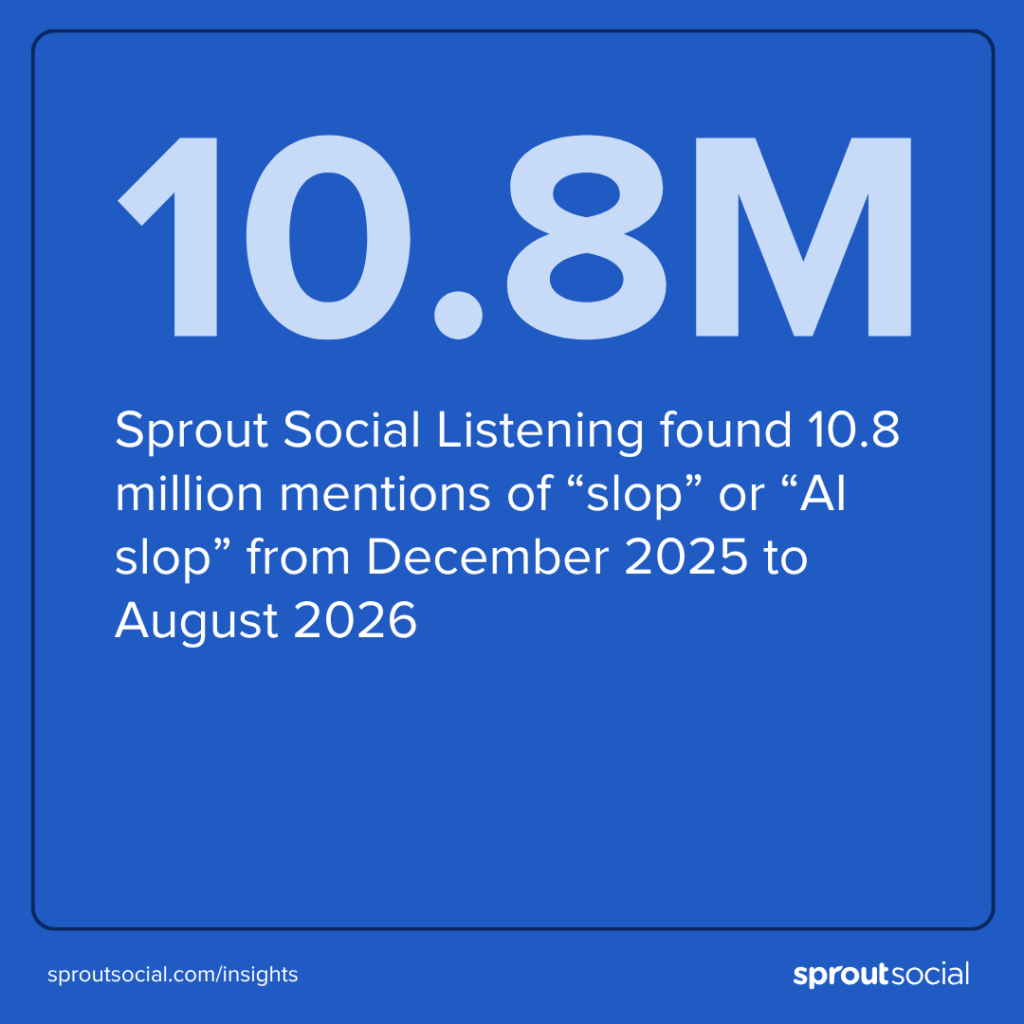
Compounding this crisis is the explosion of "AI slop." Automated bots and low-effort generative text or imagery have polluted comment sections and main feeds alike. Sprout Social Listening data from December 2025 to August 2026 captured more than 10.8 million mentions of the terms "slop" or "AI slop" circulating across social channels. This metric measures the conversation surrounding the phenomenon rather than the volume of the posts themselves, serving as a stark indicator of public frustration with subpar, automated content.
Chronology of the Crisis: From Chronological Feeds to Algorithmic Noise
To understand how the industry arrived at this critical juncture, it is helpful to trace the evolution of digital platforms over the past two decades:
- The Chronological Era (Late 2000s–Mid 2010s): Social networks operated primarily on chronological timelines. Brands could reliably reach followers by posting consistently, establishing a direct correlation between output volume and audience visibility.
- The Algorithmic Pivot (Mid 2010s–2020): Platforms shifted toward interest-based algorithms. Content curation replaced pure timelines, forcing brands to optimize for engagement metrics rather than mere presence.
- The Fragmentation & Short-Form Boom (2020–2024): The launch of TikTok accelerated the demand for rapid-fire, short-form video. The ecosystem splintered as alternative networks like BeReal, Threads, Bluesky, and Mastodon emerged, fragmenting user bases and complicating multi-channel strategies.
- The Generative AI Flood (2025–Present): The widespread availability of generative AI tools drastically lowered the barrier to content creation. Feeds became heavily saturated with repetitive, low-value material, culminating in widespread consumer backlash, industry-wide burnout, and the implementation of user-facing controls—such as LinkedIn’s "seems like AI slop" reporting button, which logged over one million user flags within its first month.
Supporting Data and Quantitative Insights
Recent empirical studies highlight the precise mechanics of consumer fatigue and the shifting priorities of digital audiences:
- Attention Metrics: 44% of consumers state they are willing to watch video content longer than one minute if the initial five seconds immediately capture their interest. However, generational divides remain stark; while Gen Z viewers rarely skip long-form feeds immediately (only 14% do), Baby Boomers are the demographic most likely to swipe away instantly (33%).
- The Value of Originality: According to Sprout Social’s Q3 Pulse Survey, one-third of consumers cite the originality of a brand’s content as the primary factor that makes them stand out as a favorite on social media—ranking second only to the overall quality of the brand’s products or services.
- Cultural Relevance: 84% of surveyed consumers either strongly or somewhat agree that it is important for corporate social media accounts to stay synchronized with online culture.
- Platform Expansion Pressure: Despite declining organic engagement rates, 87% of marketers report plans to expand their brand presence onto additional social networks, mistakenly treating geographic expansion as a cure for fading audience attention.
Official Responses and Case Studies: How BMC Broke Through
Faced with diminishing returns on high-volume publishing schedules, leading enterprises are actively rethinking their playbooks. The transition executed by enterprise technology company BMC serves as a prime industry blueprint.
BMC’s Insight-Led Strategy Pivot
BMC’s turning point arrived when internal social analytics revealed that their thought leadership content consistently outperformed one-off product promotional assets. Rather than treating social media as a billboard for daily ad placements, engagement metrics showed that audiences craved deep connections tied to broader industry trends, complex customer challenges, and authoritative corporate perspectives.
This realization prompted BMC to overhaul its publishing cadence. Moving away from arbitrary daily posting goals, the team launched The BMC Briefing—a monthly editorial LinkedIn newsletter that packaged product education, customer success stories, and expert industry commentary into a unified, high-value format. By prioritizing depth over frequency, BMC transformed social media from a noisy broadcast channel into an effective, insight-led storytelling engine.
Strategic Implications: How Brands Can Overcome Saturation
For marketing teams operating in a saturated landscape, survival requires a fundamental restructuring of operational rituals. Industry experts recommend four core pillars to cut through the digital noise:
1. Invest Heavily in Original Content
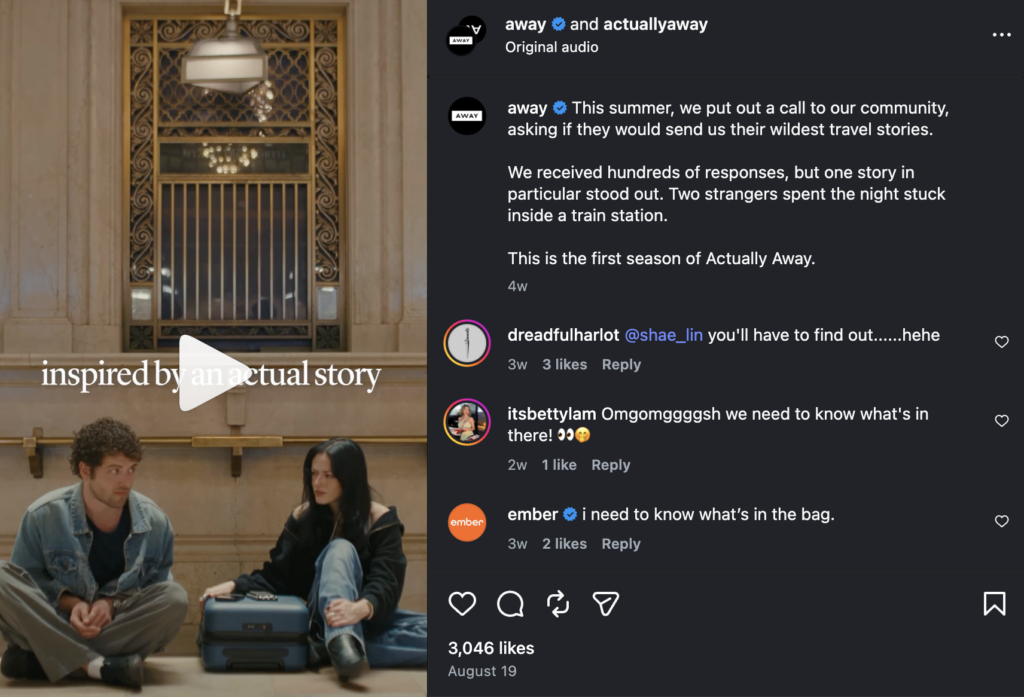
In an era dominated by automated generative text and homogenous brand templates, original thought is a rare commodity. Forward-thinking brands are shifting away from stock imagery and generic corporate messaging, leaning instead into unique formats. For instance, retail and travel brands like Away and Nuuly have successfully utilized episodic microdramas on Instagram and YouTube Shorts. These creative narratives entertain audiences while subtly highlighting product utility, providing genuine escapism from repetitive advertising.
2. Calibrate Content Around Real Audience Preferences
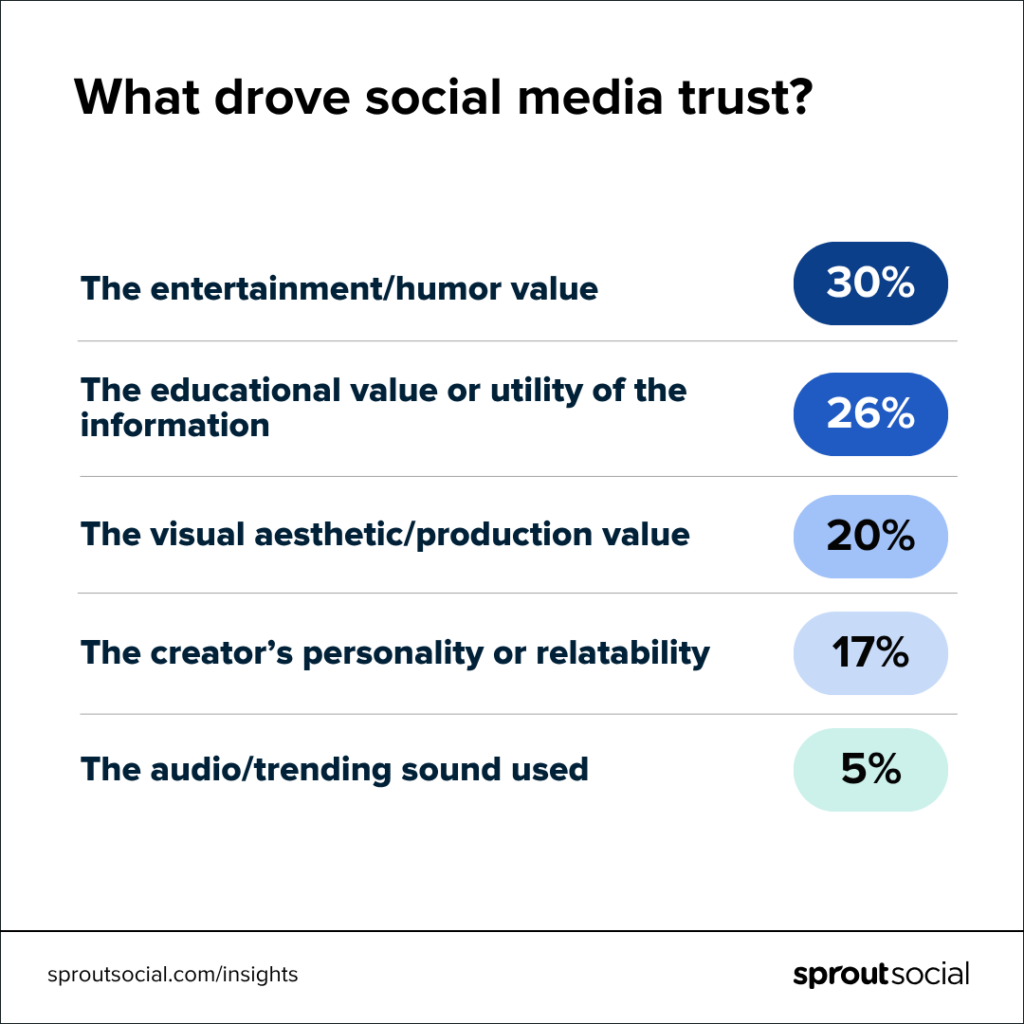
Marketers must stop guessing what users want to see and rely on data-driven audience intelligence. Because modern platforms offer diverse video and static formats, social teams must tailor content length, placement, and tone to specific demographic habits. Understanding whether your target audience prefers educational deep-dives or quick entertainment ("edutainment") prevents wasted resources on unoptimized formats.
3. Practice Precision Trendjacking
While 84% of consumers want brands to engage with online culture, jumping blindly onto every trending topic ("trendjacking") contributes directly to the slop problem. Brands must adopt a data-first approach, using social listening tools to evaluate whether a cultural moment genuinely aligns with their core identity before participating.
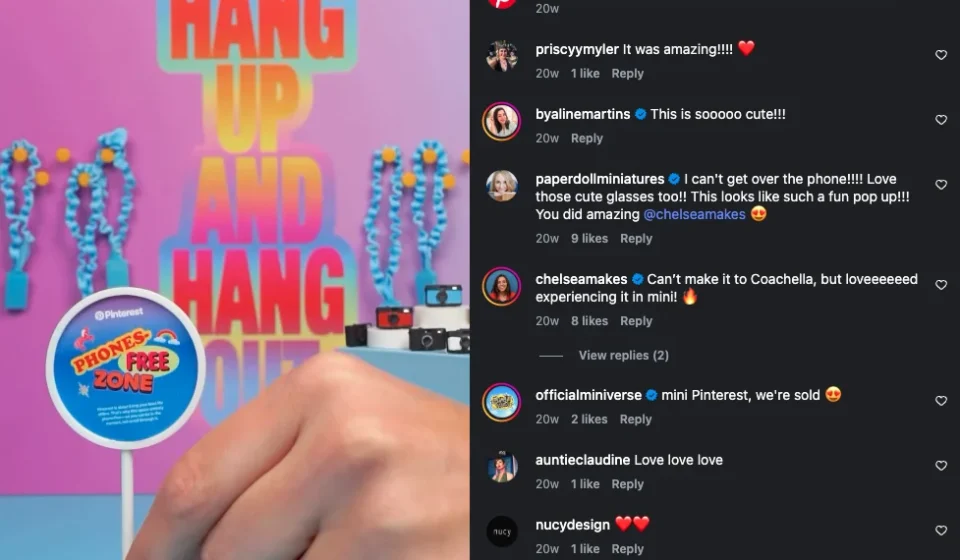
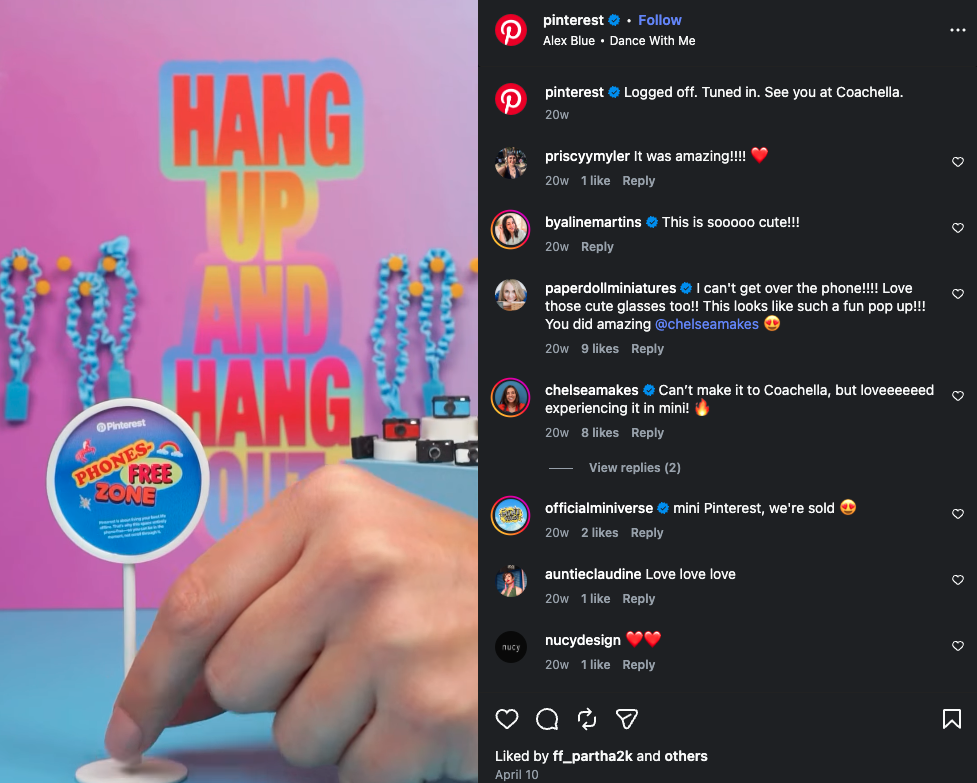
A prime example is Pinterest’s physical activation at Coachella. Rather than launching another easily ignorable digital campaign, Pinterest leaned into an "analog aesthetic" trend tracked via its own platform data (where searches for the term surged over 260%). They built a physical, phone-free experiential booth featuring custom charm-making and junk journaling—delivering a fresh, highly relevant take on a trending cultural movement.
4. Redefine Success Through Resonance Metrics
Traditional metrics like raw reach and gross impressions no longer reflect true business impact in a saturated environment. Marketing leaders should advocate for shifting key performance indicators (KPIs) toward community engagement, conversation depth, and meaningful interaction (such as comments, shares, and peer tagging). As industry data demonstrates, a smaller group of highly engaged brand advocates yields far higher long-term value than millions of passive viewers who scroll past without a second thought.
Conclusion: Turning Saturation Into an Opportunity
Social media saturation is undoubtedly an operational challenge, but it also presents a rare catalyst for strategic reinvention. As platforms grow more nuanced and audiences become increasingly discerning, the old formula of "post more to gain more" is officially obsolete.
By reducing content volume, doubling down on originality, respecting audience preferences, and measuring success through genuine engagement rather than empty reach, brands can successfully rise above the noise. Social networks may run on complex algorithms, but building authentic connections with human audiences remains an art rooted in strategy, quality, and restraint.
Related posts: