The Relentless Rise of Fábio Simão dos Santos: Crafting the Future of Indie Comics

In the high-stakes, hyper-competitive world of the US independent comic book industry, few artists manage to carve out a sustainable career while maintaining the raw, tactile integrity of traditional media. Fábio Simão dos Santos, a versatile and determined penciler, has emerged as a beacon for aspiring creators. Since 2019, he has transitioned from a passionate enthusiast to a professional mainstay, proving that even in an era dominated by digital illustration, the classic marriage of graphite and ink wash remains a potent force for visual storytelling.
For Simão dos Santos, the journey has been far from linear. "It was a long road to achieve this dream, and having to fight for each step like there was no tomorrow," he reflects. His work, characterized by a deep reverence for anatomy, atmosphere, and fantasy tropes, serves as a masterclass in modern comic penciling. By balancing the grit of traditional pencil work with the fluidity of ink wash, he has established a distinct aesthetic that resonates with both fans of classic comic book art and modern gaming enthusiasts.
The Foundation: A Chronology of Artistic Growth
Simão dos Santos’s career trajectory offers a roadmap for emerging artists looking to break into the industry. His early years were defined by intense self-study and a deep immersion in graphic arts.
The Rookie Phase (2019–2020)
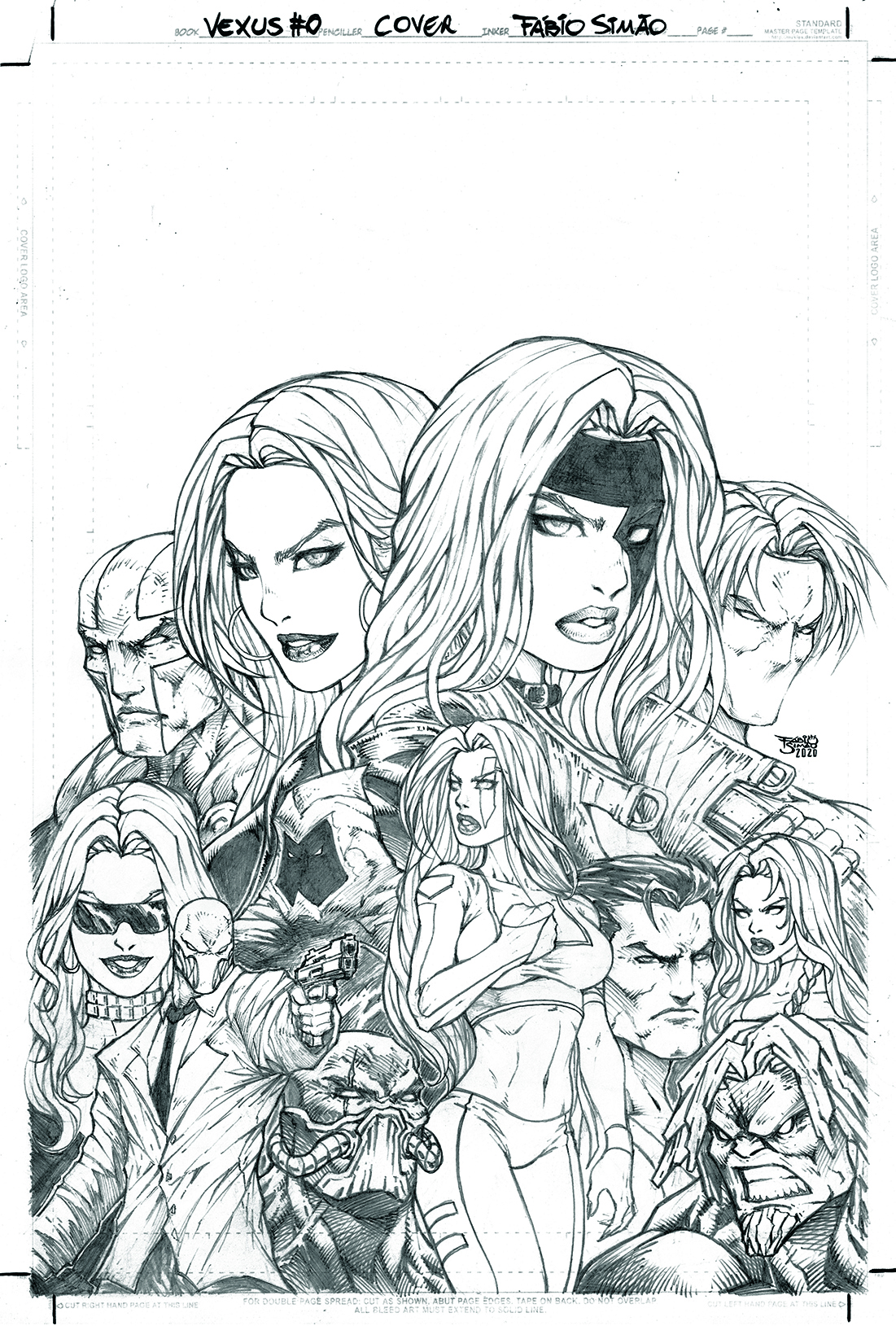
Like many professionals, Simão dos Santos’s breakout moment arrived through grit rather than luck. In 2020, he landed his first major published cover for Chameleon Studios Comics. At the time, he viewed himself as a "rookie"—a term he uses not with self-deprecation, but as a badge of honor. This period was characterized by long hours at the drawing board, experimenting with light sources and composition. The Chameleon Studios work provided him with the necessary professional credentials to begin pitching to larger independent publishers, effectively closing the gap between hobbyist and professional.
The Professional Evolution (2021–Present)
Following his initial success, the artist moved toward more regular, long-term commitments. Becoming the primary penciller for the ongoing Justice series (Wingless Comics) marked a shift from one-off covers to sustained narrative work. This transition required a shift in mindset: moving from creating a single, punchy image to maintaining character consistency and narrative flow over dozens of pages. This period solidified his reputation as a reliable and technically adept artist capable of meeting the rigorous deadlines inherent in the indie comic market.
The Technical Craft: A Deep Dive into Process
What sets Simão dos Santos apart is his technical process. While much of the industry has shifted toward tablet-based workflows, he continues to prioritize the physical tactile experience of paper and lead.
The Necromancer: Fantasy Through Pencil
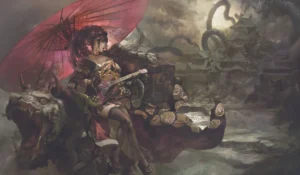
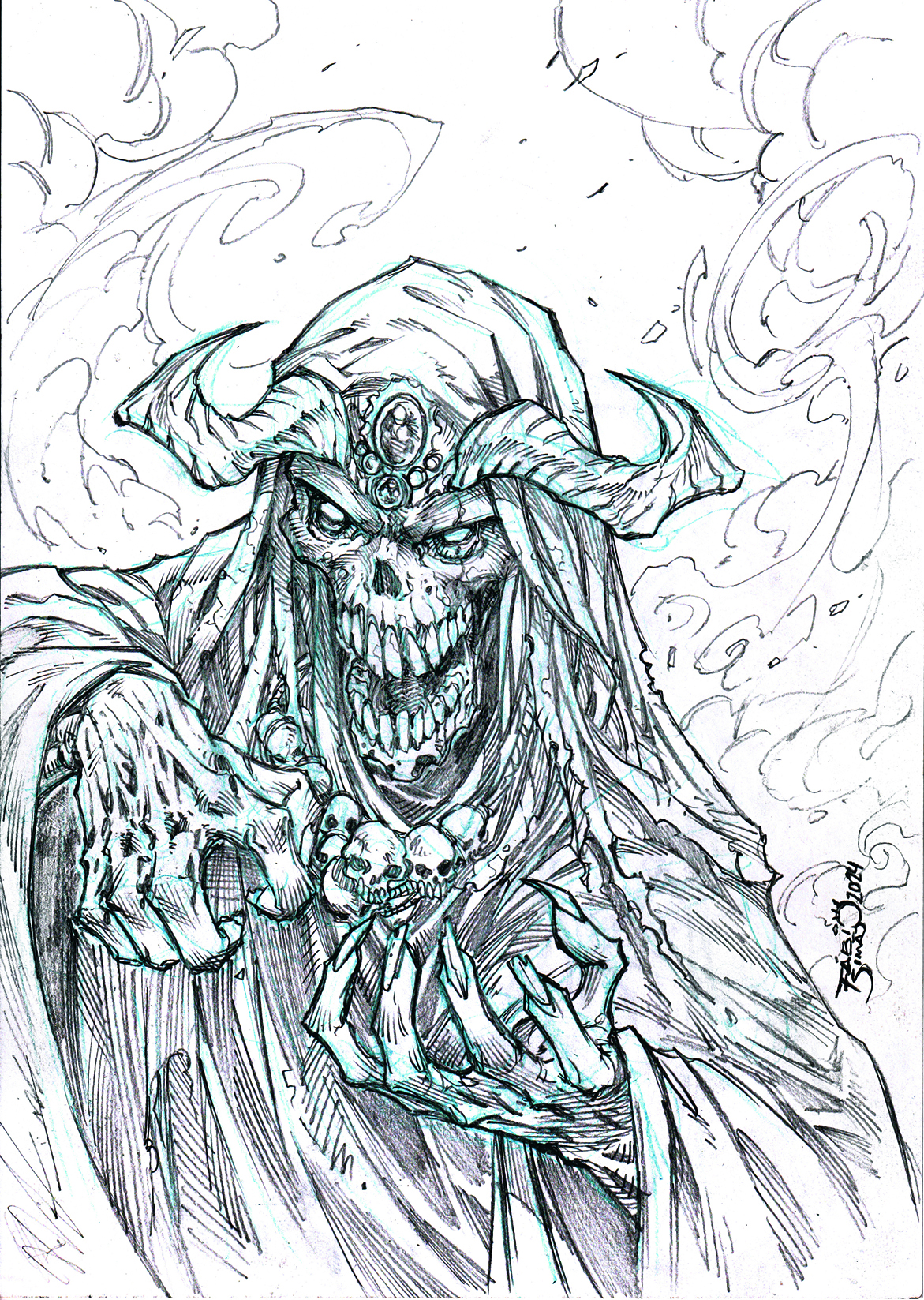
His piece The Necromancer serves as an excellent case study in his methodology. Drawing heavily from the visual language of RPG games, the piece showcases his ability to translate high-fantasy tropes into a compelling comic book format.
- The Workflow: He begins with a light blue pencil sketch—a technique commonly used in traditional animation and comic penciling to allow for clean, dark graphite overlay without the "dirt" of standard preliminary sketches.
- The Result: The final image possesses a weight and presence that is often lost in purely digital workflows. Simão dos Santos notes that he specifically designed the character as a "boss" figure, utilizing shadow and posture to evoke a sense of dread.
Valkyrie: Mythological Precision
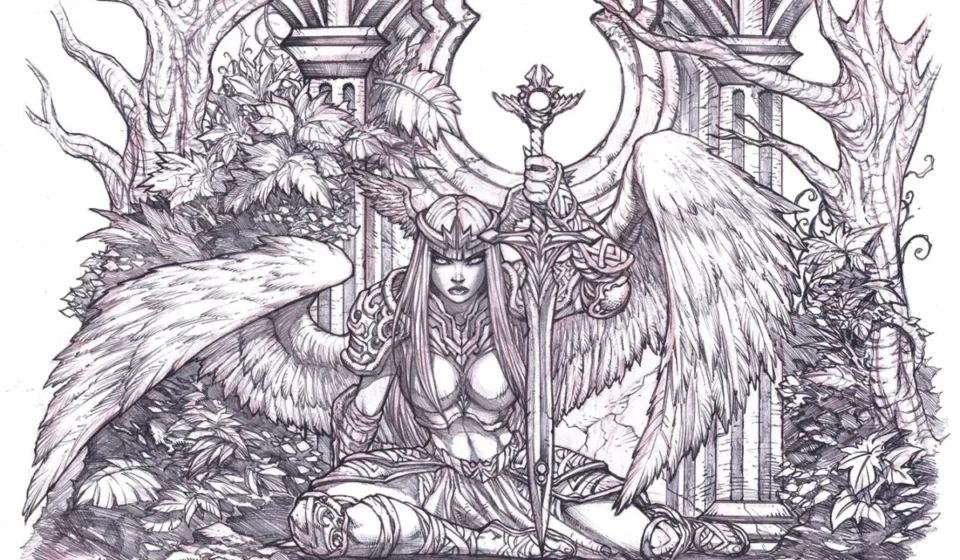
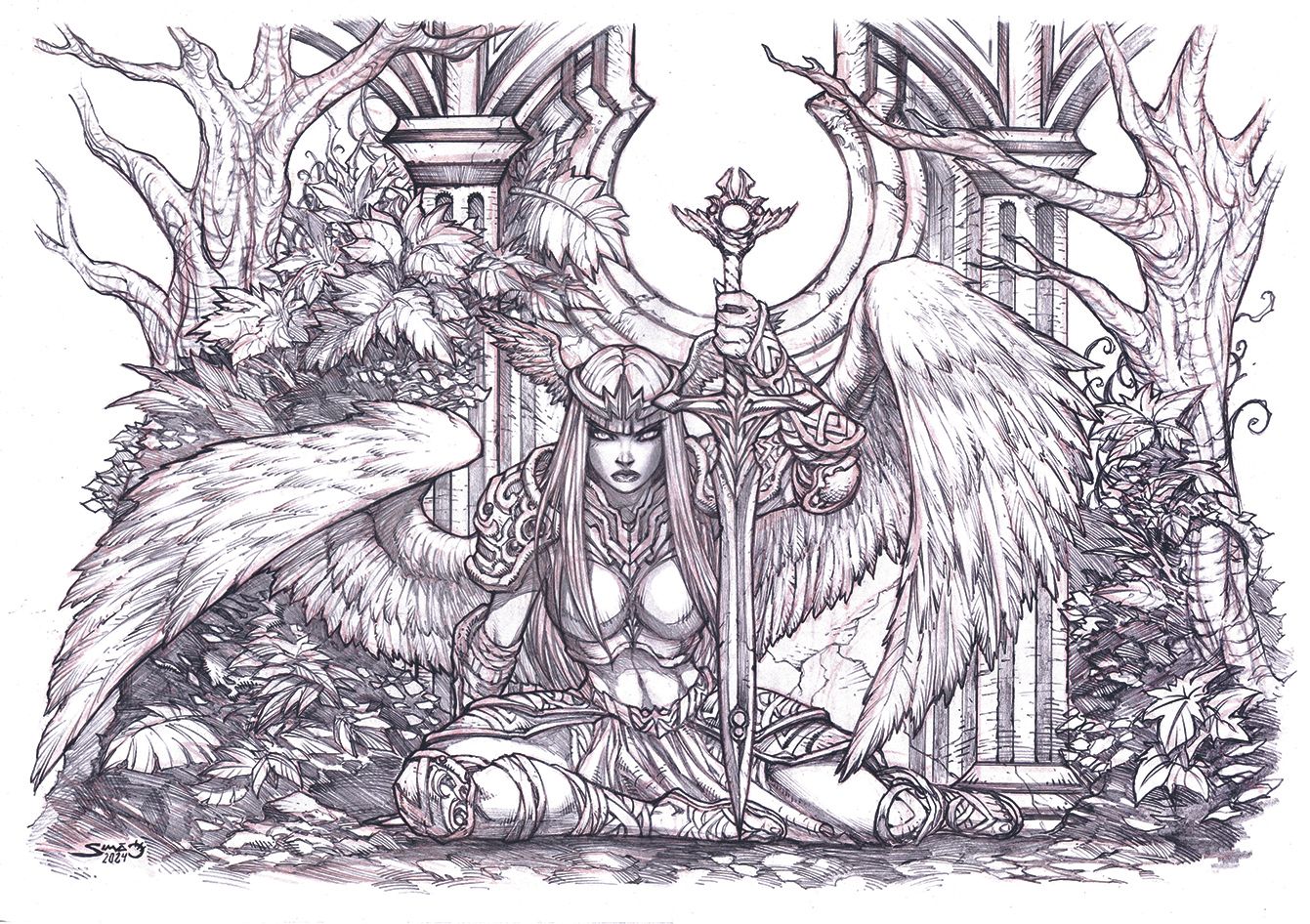
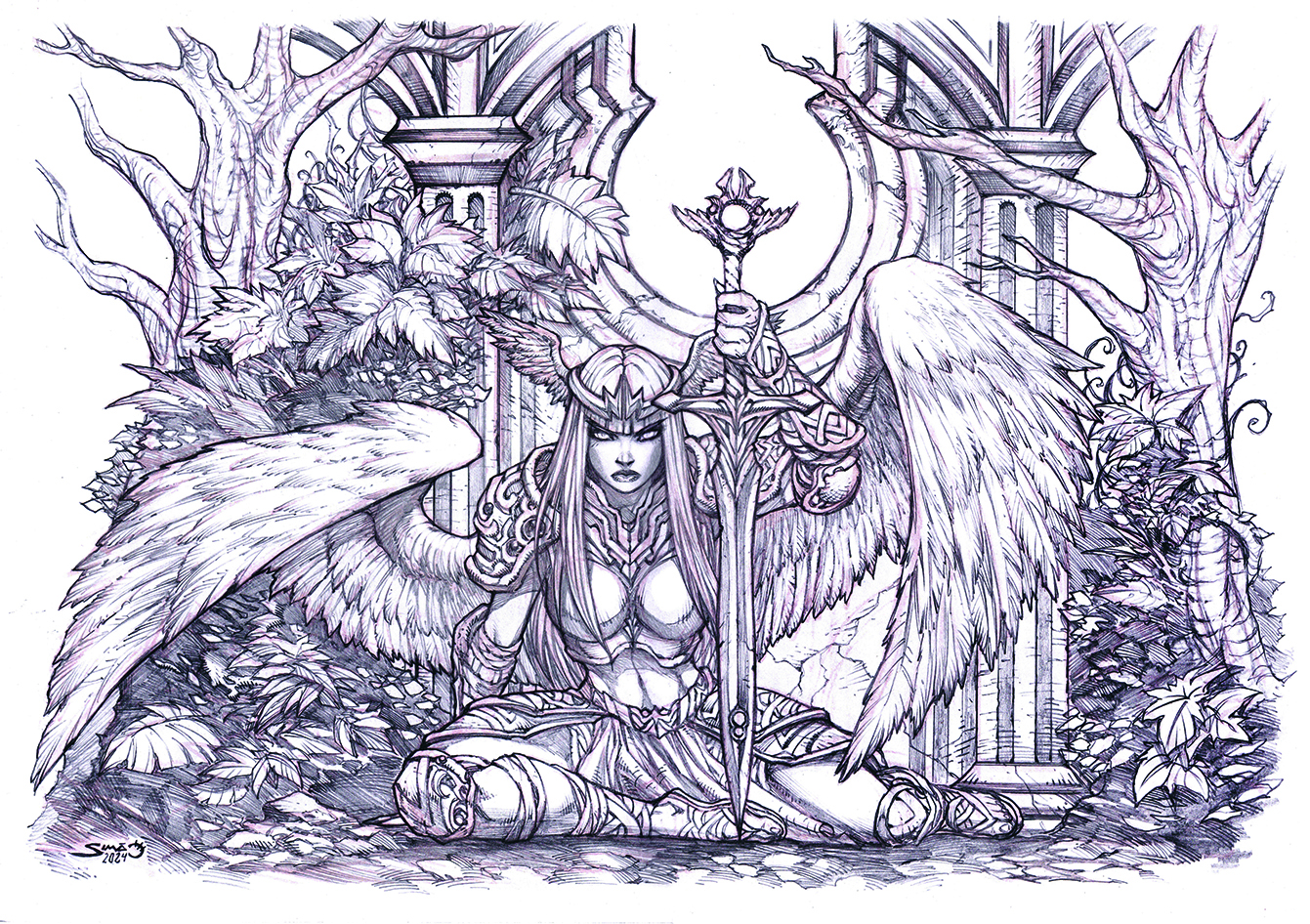
In his illustration of a Valkyrie, the artist demonstrates his comfort with larger formats, working on A3-size cardstock. The choice of substrate is significant; the texture of the cardstock plays a role in how the graphite sits on the page, allowing for richer, more varied grey tones. By using a light red sketch as his foundation, he manages to keep the final piece clean while maintaining the dynamic, aggressive energy expected of a Norse warrior.
Justice #4: Mastering Ink Wash
Perhaps his most complex work is for the Justice series. Here, he moves beyond simple pencil sketches, incorporating an ink wash to achieve what he describes as "watercolour textures." This is a sophisticated application of mixed media. By applying a diluted ink wash over his pencils, he creates a depth of field that pushes the art from flat line work into a more cinematic, atmospheric space. Working on 11-by-17-inch cardstock—the industry standard for original comic pages—he proves he has fully mastered the physical constraints of the trade.
Industry Implications: The Resilience of Analog Art
The success of Simão dos Santos signals a broader, albeit quiet, trend within the illustration world: a re-appreciation for analog skills. While the "Get the gear" sections of art publications are increasingly filled with digital tablet comparisons, artists like Simão dos Santos prove that there is still a robust market for hand-drawn, physical originals.
For independent publishers, hiring an artist who specializes in traditional media can be a significant asset. Original pages hold value beyond their utility in a comic; they are marketable assets that can be sold to collectors, providing a secondary income stream that digital files cannot replicate. Furthermore, the discipline required to draw in ink and pencil—where "Ctrl+Z" is not an option—instills a level of technical precision that can translate into faster, more confident production speeds in the long run.
Official Perspective and Artistic Philosophy
When asked about his advice for those following in his footsteps, Simão dos Santos emphasizes that the technical skill is only one half of the equation. "You have to fight for each step," he reiterates. His philosophy is one of constant iteration. Whether it is his early work at Chameleon Studios or his current work for Wingless Comics, the thread that connects his portfolio is a refusal to stagnate.
He is not just an artist; he is a practitioner of a craft that demands physical presence. By utilizing modern distribution platforms like Payhip to share his work and process, he bypasses traditional gatekeepers, allowing him to maintain creative control over his portfolio. This autonomy is vital for independent artists in the current economic climate, where large publishing houses are often slow to adapt to new, niche, or experimental styles.
Future Outlook: Building a Legacy
As the comic book industry continues to fragment and diversify, the role of the freelance penciller is evolving. The future for Simão dos Santos seems firmly rooted in the expansion of his own artistic identity. By bridging the gap between traditional fantasy illustration and the structured narrative needs of comic books, he has carved out a niche that is both commercially viable and artistically fulfilling.
For those inspired by his output, the takeaway is clear: success in the arts is rarely about the latest software or the most expensive hardware. It is about the ability to translate one’s vision onto a surface with enough conviction to command an audience. Whether it is a dark, brooding Necromancer or a fierce, battle-ready Valkyrie, Simão dos Santos’s work is a testament to the enduring power of the pencil.
For readers looking to follow his career, his website serves as a primary hub for both his finished illustrations and, occasionally, insights into his process. As the industry moves forward, creators like Simão dos Santos will continue to be the backbone of the indie comic scene, proving that even as technology changes, the fundamental human need for well-drawn, evocative storytelling remains constant.
This report highlights the career and technical methodology of Fábio Simão dos Santos. For those looking to refine their own craft, the artist’s work remains available through his online portfolio, while ongoing inspiration can be found in publications like ImagineFX.