Failing Forward: How the ASAE Great Ideas Conference Redefined Innovation Through Vulnerability

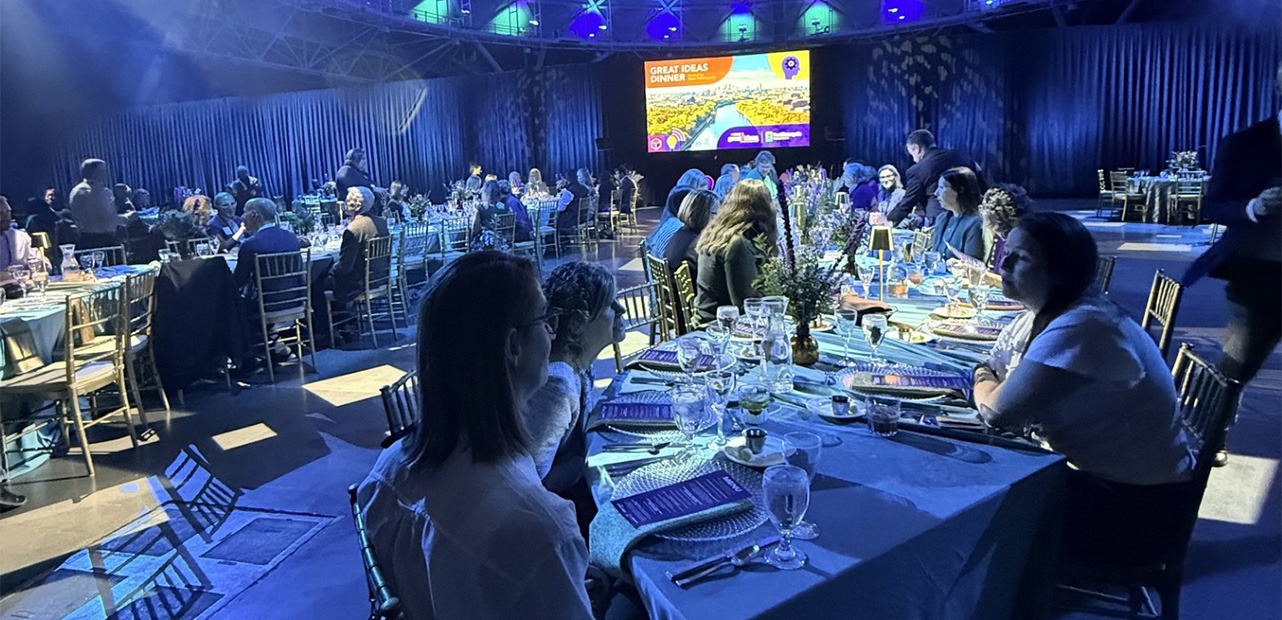
MINNEAPOLIS – In the heart of the Mill City, where the Mississippi River flows past a skyline defined by architectural ambition, a different kind of progress was being measured last week. After a six-year hiatus, the American Society of Association Executives (ASAE) brought its flagship Great Ideas Conference back to the Sheraton Minneapolis Downtown Convention Center. However, this was not a standard industry gathering focused on polished successes and corporate triumphs. Instead, the conference made a bold, counter-intuitive pivot: it made failure the main event.
The theme of the conference, "Failure as Fuel," served as a rallying cry for association professionals navigating an era of unprecedented volatility. By normalizing the "messy experiments" that often precede breakthrough growth, the event challenged attendees to discard the curated facades of professional life and embrace the gritty, iterative reality of innovation.
The "Failsume": A New Metric for Leadership
The tone was set early by Deanna Singh, chief change agent of Flying Elephant, who issued a radical challenge to the assembled leaders: present a "failsume." Unlike a traditional resume, which highlights only the peaks of one’s career, a failsume serves as a candid inventory of the missteps, rejected ideas, and pivots that ultimately paved the way for professional maturity.
Singh’s keynote struck a resonant chord in an industry often plagued by the pressure to maintain a seamless public image. "Failure is a universal part of the human experience," she stated, arguing that the present professional climate demands a "fail fast" mentality. According to Singh, the ability to rapidly identify what isn’t working and synthesize those lessons is no longer a soft skill—it is a survival mechanism.
This ethos of radical transparency permeated the conference. Whether discussing the trivial—such as the learning curve of utilizing AI like ChatGPT to construct an event website—or the monumental, the message remained consistent: those who refuse to crawl will never gain the momentum required to run. The conference effectively deconstructed the "high-boy tablecloth" culture of conferences, where attendees traditionally hide their experimental failures to focus only on the polished final product. By inviting leaders to discuss their vulnerabilities, the Great Ideas Conference transformed innovation from a high-stakes, intimidating concept into a normalized, iterative process.
Chronology of a Culture Shift
The return of the Great Ideas Conference was not merely a logistical milestone; it was a deliberate structural reset.
- Day One: The Philosophy of Friction. The opening sessions focused on the psychological barriers to innovation. Experts argued that the fear of failure is the single greatest inhibitor of institutional growth.
- Day Two: The "Fail Fest." Moving from theory to practice, the conference hosted a Shark Tank-style competition. Five association professionals took the stage to present "daring changes" that had initially gone awry. They detailed the specific points of failure, the internal panic, and the subsequent "course correction" that led to success.
- Day Three: Resourcefulness and Synthesis. The final days were dedicated to the "Jugaad" methodology—the art of solving complex problems with limited resources—and concluded with an immersive off-site experience at Paisley Park, drawing inspiration from the late Prince’s history of rule-breaking artistic innovation.
Supporting Data: The Innovation Impact Study
The conference’s focus on structured risk-taking was deeply rooted in the ASAE Research Foundation’s Association Innovation Impact Study (2026). This research underscores that innovation is not a lightning strike of genius, but a measurable, repeatable process.
The study highlights that associations are most successful when they stop viewing "innovation" as a nebulous, high-budget initiative and start treating it as a targeted response to member-specific problems. The data suggests that organizations that measure the outcomes of their experiments—both successes and failures—against the needs of their stakeholders develop a "resilience quotient" that far outpaces their more conservative peers.
A prime example of this data-driven success was the winner of the Fail Fest competition: the Michigan Association of Administrators of Special Education (MAASE). Their "paraeducator Bootcamp" was born out of a critical staffing crisis. By iterating through a multi-path learning model, they created a system that didn’t just solve a hiring gap—it fundamentally improved the workforce readiness of their members. Their project stood as a testament to the fact that when you address a "meaningful problem" with an experimental mindset, the outcomes are measurable and transformative.
The Heart of Science: A Dialectical Approach
Dr. Jayshree Seth, chief science advocate at 3M, provided the scientific framework for the conference’s human-centric approach. Through her work, The Heart of Science, Dr. Seth argues that true innovation requires "dialectical thinking"—the ability to hold two opposing ideas or truths in the mind simultaneously and synthesize a path forward.
"Megatrends represent broad and global shifts that create vast changes and challenges with the potential to impact daily life," Dr. Seth explained. For association leaders, this means that the problems they face—structural, organizational, or human—are rarely simple. They require a rigorous, scientific approach to experimentation. She urged attendees to prioritize the human element in their problem-solving, noting that technology and methodology are merely tools; the "heart" of the solution must always reside in the needs of the people the association serves.
The Art of Constraint: Innovation through "Jugaad"
Perhaps the most practical takeaway for budget-conscious association planners came from Dr. Simone Ahuja, founder of Blood Orange and author of Jugaad Innovation. Addressing the anxiety that innovation requires massive capital or unlimited staff, Dr. Ahuja flipped the script: "Constraints actually advance innovation and growth."
Dr. Ahuja introduced attendees to the concept of jugaad, a South Asian term referring to a frugal, flexible approach to solving problems using whatever resources are at hand. For the "MacGyver-minded" leader, a lack of resources is not an excuse for stagnation; it is an invitation to creative thinking.
She walked teams through "The Ease Equation," a methodology designed to identify the most acute pain point for an end-user and develop the simplest possible "test" to address it. By focusing on the user’s experience rather than the planner’s convenience, teams were able to identify immediate, actionable solutions that required minimal investment but provided maximum impact. This focus on "inside-the-box" thinking provided a refreshing counter-narrative to the idea that innovation is an expensive, top-down mandate.

Off-Site Inspiration: The Minneapolis Legacy
The choice of Minneapolis as the host city served as a physical manifestation of the conference’s themes. The city itself has a long history of "rule-breaking" and pioneering innovation, from the humble Post-it note to the invention of the pop-up toaster and rollerblades.
The conference culminated in an evening at Paisley Park, the home and studio of the late musical icon, Prince. The venue served as a powerful metaphor for the conference attendees. Prince was an artist who constantly failed, experimented, and reinvented his own sound, often in the face of industry pushback. By walking the halls where some of the world’s most "impossible" music was created, attendees were reminded that the path to greatness is rarely straight.
Implications for the Future of Associations
The Great Ideas Conference has sent a clear signal to the association community: the era of the "safe" strategy is over. In an increasingly complex global environment, associations that cling to traditional, failure-averse models are at risk of obsolescence.
The implications for the sector are significant:
- Cultural Normalization of Failure: Organizations are encouraged to create "safe zones" where employees can propose radical ideas without fear of retribution for the inevitable missteps.
- Outcome-Based Experimentation: Innovation must be tethered to measurable data, as outlined in the ASAE Innovation Impact Study.
- Frugal Innovation: Leaders should embrace constraints as a creative force, moving away from "budget-first" planning and toward "need-first" problem solving.
As the attendees departed Minneapolis, the lingering sentiment was not one of relief that the conference was over, but of urgency to begin the work. By embracing "failing forward," the association sector is positioning itself to be more than just a membership-based organization; it is becoming a laboratory for the future of work and community building.
The "Failsume" may have started as an icebreaker, but by the time the conference concluded, it had become a badge of honor—a testament to the fact that in the pursuit of great ideas, the only true failure is the refusal to try.