
Behind the heavy, velvet-lined curtains of Nashville’s Grand Ole Opry House, there exists a silence that feels strangely weighted. It is a quietude born not of emptiness, but of history. As a visitor standing in the wings, one does not merely look at a stage; one looks at a threshold. There, embedded in the dark oak, lies a six-foot circle of wood—a physical relic transplanted from the original Ryman Auditorium in 1974. It is the most hallowed ground in American music, a portal through which legends have passed for a century.
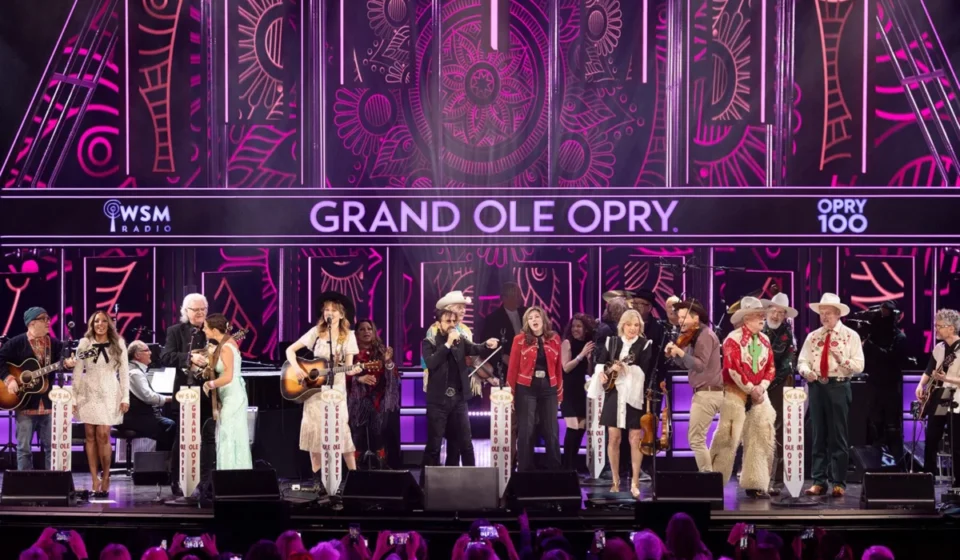
As the Grand Ole Opry celebrates its centennial—a milestone marking 100 years since its 1925 debut—the institution remains the singular heartbeat of Nashville. From the rambunctious spirit of Johnny Cash to the timeless grace of Dolly Parton, the Opry is more than a radio show; it is the living, breathing chronicle of the American soul.
The Evolution of an Icon: A Centennial Chronology
To understand the Opry is to understand the evolution of American broadcasting and culture. Founded in November 1925 by George D. Hay, the show began as WSM Barn Dance, a humble radio program designed to showcase the "old-time" fiddling and folk traditions of the American South.
The Early Decades (1925–1943)
The show’s meteoric rise was almost instantaneous. By 1927, it was officially dubbed the "Grand Ole Opry," a name intended to signify the sophisticated variety of the performance following a classical music program on the WSM network. Throughout the 1930s, the Opry became a lifeline for rural families, turning local pickers into national icons.
The Ryman Era (1943–1974)
In 1943, the Opry moved to the Ryman Auditorium, a former tabernacle that would become synonymous with the show’s "golden age." It was here that the Opry cemented its status as the proving ground for musical immortality. This era saw the ascent of Bill Monroe, the father of bluegrass, and the debut of Hank Williams, whose 1949 performance of "Lovesick Blues" triggered six encores. It was also the stage for the infamous 1965 incident where an intoxicated Johnny Cash shattered the footlights with a microphone stand, leading to a temporary banishment—a moment that remains part of the Opry’s rugged, uncompromising folklore.
The Modern Opry (1974–Present)
In 1974, the Opry made the controversial move to a custom-built venue in East Nashville. While critics feared the loss of the Ryman’s "spirit," the new Opry House proved to be a masterful acoustic vessel. By physically moving that iconic circle of wood from the Ryman to the new stage, the Opry ensured that the lineage of the performer remained unbroken. Today, through "Opry 100," the institution is honoring this history with a year-long celebration running through October 2026, featuring archival flashbacks, surprise performances, and a look toward the next century.
Supporting Data: The Machinery of Magic
While the Opry trades in nostalgia, its operation is a feat of modern engineering and staggering scale. Running the world’s longest-running radio show is an logistical endeavor of epic proportions.
- The Infrastructure: The stage is a marvel of technical precision, requiring over 15.8 million feet of audio, video, and lighting cable to facilitate the high-definition broadcasts that reach millions globally.
- The Reach: The Opry has broadcast for well over 5,000 consecutive Saturday nights. Its cumulative audience has eclipsed 55 million, cementing its status as the most influential country music broadcast in history.
- The Membership: Membership is the most coveted honor in country music. There are currently over 200 active members, all of whom are referred to as "family." This designation is not merely promotional; it dictates the culture of the backstage environment.
- The Post Office: One of the most endearing features of the backstage area is the fully functional Grand Ole Opry Post Office. Each member is assigned a mailbox, allowing fans from across the globe to send physical correspondence. The sheer volume of mail for legacy members like Dolly Parton—whose box, 163, is perpetually overflowing—serves as a tangible measure of their enduring impact.
The Backstage Ecosystem: A Study in Tradition
Walking through the backstage halls today feels like traversing a museum that refuses to be static. The walls are lined with photographs that span decades, capturing moments of profound human experience. It is a surreal environment; one might brush shoulders with modern country stars like Dustin Lynch or Liam St. John, only to turn a corner and see the legacy of Minnie Pearl staring back from a framed print.
The dressing rooms themselves serve as thematic time capsules. The "Women of Country" room honors icons like Patsy Cline, while the "Stars and Stripes" room is dedicated to service members—a nod to the Opry’s long-standing tradition of patriotism. The "Cousin Minnie" room features the iconic hat with the $1.98 price tag still attached, a reminder that the Opry was built on self-deprecating wit and authenticity.

Perhaps the most fascinating aspect of the current Opry is its refusal to remain pigeonholed. While the institution is the pillar of country music, it has increasingly opened its doors to broader musical acts. When guests like Sabrina Carpenter, Jack Black, or Paul McCartney grace the stage, it isn’t viewed as a dilution of the brand, but as a testament to its universal appeal. The Opry has become a "must-play" destination for artists regardless of their genre, because the circle represents a validation that transcends the Billboard charts.
Official Perspectives: What the Legends Say
The significance of the Opry is best articulated by those who have spent their lives under its lights. For members, the Opry is not just a venue; it is a vocation.
In a poignant televised flashback aired during a recent show, country superstar Garth Brooks summarized the feeling shared by nearly every performer who has stepped into the circle: "This is the pinnacle of what I do. Nothing has ever touched being a member of the Grand Ole Opry."
This sentiment is echoed by the Opry’s management, who view their role as stewards rather than owners. By maintaining the "Family Room" lounge—a space where artists and their families gather to sip lemonade and debrief after a set—the Opry preserves the intimate, communal atmosphere that characterized its early radio days. The 2010 Nashville flood, which devastated the Opry House, served as a turning point that led to a modernization of the facilities. Yet, despite new lockers and upgraded technology, the "soul" remains intentionally untouched.
Implications: The Universal Appeal of the Opry
The most profound realization for any visitor—even those who identify as "not-so-country" fans—is the universality of the Opry experience. During a recent performance by folk artist Dom Flemons, the audience sat in rapt silence, witnessing a display of banjo picking and traditional storytelling that felt ancient and electric all at once. When the performance concluded, the realization was clear: the Opry’s magic is not found in the genre, but in the sincerity of the craft.
As the announcer Charlie Mattos calls out the names of guests from around the world—announcing birthdays for fans in their 20s alongside those in their 80s, or congratulating a couple who flew from the United Kingdom to wed on the Opry stage—it becomes evident that the Opry is a connective tissue for humanity.
The implications for the future are bright. As the Opry enters its second century, it stands as an essential, non-negotiable stop for any visitor to Nashville. It provides a necessary grounding force, a reminder of the roots that allow the city’s glitzy Broadway neon to shine so brightly.
To visit the Grand Ole Opry is to undergo a crash course in American history. It is a place where, for a few hours, the noise of the modern world fades, and the only thing that matters is the voice, the instrument, and the six-foot circle of wood that has held the dreams of a nation for 100 years. It remains the beating heart of Nashville, and as it looks toward the next 100 years, it shows no signs of slowing down.