
In the world of interior design, the galley kitchen is often unfairly maligned. Frequently dismissed as a cramped "tunnel" or a utilitarian afterthought, the galley layout is, in reality, a masterwork of ergonomic efficiency. However, as Reddit user OddLychee4067 recently demonstrated in a viral transformation shared on the r/kitchenremodel community, the difference between a claustrophobic corridor and a bespoke, high-end culinary space lies not in the floor plan, but in the application of texture, light, and architectural proportion.
The renovation, which has garnered significant attention from DIY enthusiasts and professional designers alike, serves as a textbook example of how to modernize a home without erasing its structural integrity. By eschewing the common impulse to tear down walls or force an island into an unsuitable space, the homeowner achieved a sophisticated, custom-built aesthetic that maximizes every square inch of the room.

Main Facts: The Anatomy of the Transformation
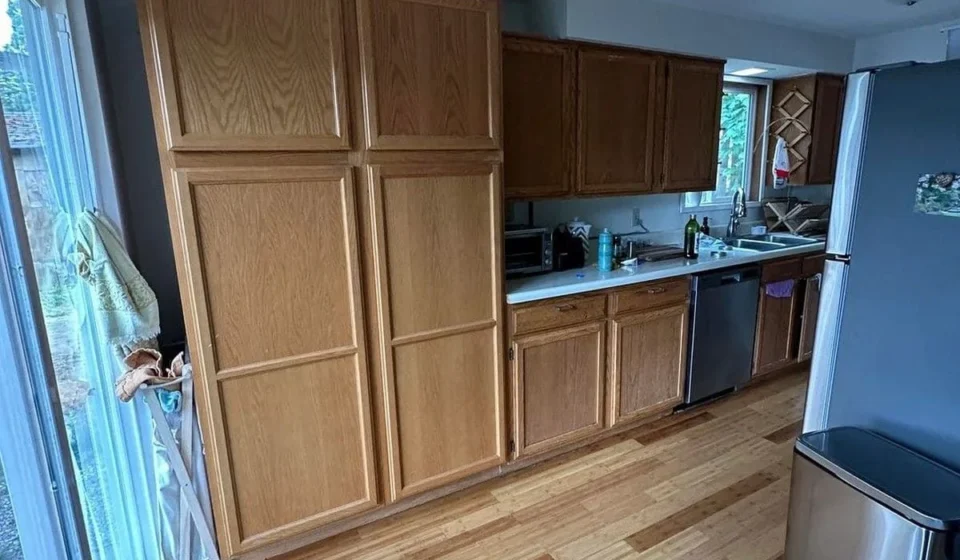
At its core, the project was a study in restraint and material selection. The original kitchen, while functional, suffered from "builder-grade fatigue." It was characterized by an overwhelming abundance of orange-toned oak, raised-panel cabinet doors that felt heavy and dated, and obstructive soffits that visually truncated the room’s vertical height.
The key components of the successful redesign include:

- Walnut Slab Cabinetry: Replacing the traditional oak frames with sleek, flat-panel walnut fronts introduced a contemporary warmth and a continuous grain pattern that acts as the room’s primary visual feature.
- Vertical Expansion: By removing the soffits and installing full-height cabinetry, the ceiling-line was effectively pushed upward, creating a sense of volume that was previously nonexistent.
- Tactile Backsplash: The introduction of glossy, square green tiles provides a sophisticated color story and a reflective surface that bounces light throughout the narrow corridor.
- Ergonomic Enhancements: Custom drawer-heavy lower storage and specialized pull-outs for trays and cutting boards replaced inefficient cupboard doors, drastically improving the kitchen’s organizational capacity.
Chronology of the Project
The journey from a dated, dark galley to a bright, modern space did not happen overnight. The project followed a deliberate sequence that prioritized structural flow over cosmetic "quick fixes."
Phase 1: Assessment and Demolition
The initial phase involved the removal of the heavy oak cabinetry and the obstructive soffits. This was a critical juncture; the homeowner had to ensure that the removal of the soffits did not interfere with existing HVAC or plumbing lines. Once the "heavy" elements were stripped away, the true proportions of the room were revealed, confirming that the original footprint was sound.

Phase 2: Structural Refinement
With the walls cleared, the focus shifted to the "bones" of the room. The decision was made to keep the galley layout, recognizing that it offered the most efficient "work triangle" between the sink, range, and refrigerator. The installation of full-height cabinetry began, which required precise measurements to ensure a seamless fit from floor to ceiling.
Phase 3: Material Integration
The mid-phase of the project focused on the interplay of materials. The installation of the walnut slab doors was followed by the application of the green tile backsplash. This stage also included the custom integration of a curved shelf near the dining nook, a design choice that would later be hailed by the community as the "star" detail of the project.

Phase 4: Finishing Touches
The final stage involved the installation of hardware and the finishing of the window sill. By continuing the countertop material into the sill, the kitchen achieved a sense of visual continuity, effectively "framing" the natural light source rather than blocking it with traditional trim.
Supporting Data: Why the Galley Layout Works
The "galley" design—named for its resemblance to the narrow kitchens found on ships—is scientifically lauded for its efficiency. In a standard kitchen triangle, the distance between the refrigerator, sink, and stove is minimized in a galley layout, reducing unnecessary steps for the cook.

However, the psychological impact of the original space was negative due to the "compression effect." According to interior design principles:
- Visual Weight: The orange-oak cabinetry created a "visual wall" that absorbed light rather than reflecting it.
- Horizontal Clutter: The combination of standard hardware, raised panels, and soffits created hundreds of tiny horizontal and vertical breaks, making the eyes "stutter" across the room.
- Color Saturation: A monochromatic, high-warmth color palette (orange oak) can make a small room feel warmer in temperature but smaller in volume.
The new design addresses these by using "visual continuity." By selecting a rich, natural material like walnut and maintaining a consistent grain flow, the space feels like a single, cohesive piece of furniture. The use of glossy tiles creates a "mirroring" effect, tricking the eye into perceiving more depth than is actually present.

The Community Response: A Reddit Phenomenon
The renovation was shared on Reddit’s r/kitchenremodel forum, where it quickly became a reference point for others looking to remodel small spaces. The community response highlighted several "micro-decisions" that contributed to the overall success:
- The Curved Shelf: User comments repeatedly praised the curved shelving unit near the dining nook. This detail was seen as the "softener" that broke the rigid, industrial feel of the galley, proving that even in a linear space, organic shapes can provide a necessary contrast.
- The Tray Drawer: The inclusion of a vertical pull-out drawer specifically for baking sheets was noted as an essential modern upgrade. It highlighted the move away from "deep dark cupboards" toward "accessible, organized zones."
- Professionalism of Finish: Many users noted that the kitchen looked "custom-built" rather than "renovated." This distinction is largely due to the choice of slab fronts, which eliminate the dust-catching crevices of traditional Shaker or raised-panel doors.
Implications for Modern Home Design
The success of this kitchen renovation offers several broader implications for the future of residential design, particularly as urban living spaces become increasingly compact.

The Death of the "White-Out" Trend
For years, the industry standard for small kitchens was to paint everything white to "make it look bigger." This project proves that color, texture, and natural wood tones can be used in small spaces to create a sense of luxury and depth. By embracing the darkness of the walnut rather than fighting it, the homeowner created a space that feels intentional and cozy rather than sterile.
The Rise of "Architectural Cabinetry"
The trend toward full-height, slab-front cabinetry reflects a shift toward minimalism that prioritizes function. When cabinetry is treated as part of the architecture—reaching to the ceiling and integrating into the window sills—the kitchen becomes a built-in feature of the home, increasing both the utility and the resale value of the property.

Sustainability through Preservation
Perhaps the most significant implication is the sustainability of the project. Rather than gutting the house to open up floor plans—which often involves costly structural engineering, beam installation, and demolition waste—the homeowner worked within the existing layout. This approach is not only more budget-friendly but also more environmentally conscious. It honors the existing house’s architecture while bringing it into the 21st century through intelligent material choices.
Conclusion
The transformation of this galley kitchen by OddLychee4067 is more than just a successful home improvement project; it is a lesson in design philosophy. It teaches us that small spaces do not need to be expanded to be improved. By focusing on the interplay between light, natural textures, and smart, hidden storage, one can turn a standard, builder-grade room into a high-functioning, aesthetic centerpiece.

Whether you are working with a narrow galley, an awkward nook, or an outdated pantry, the takeaway remains the same: identify your space’s strengths, eliminate the visual noise, and prioritize continuity. In doing so, you don’t just remodel a room—you redefine how you live within your home.