
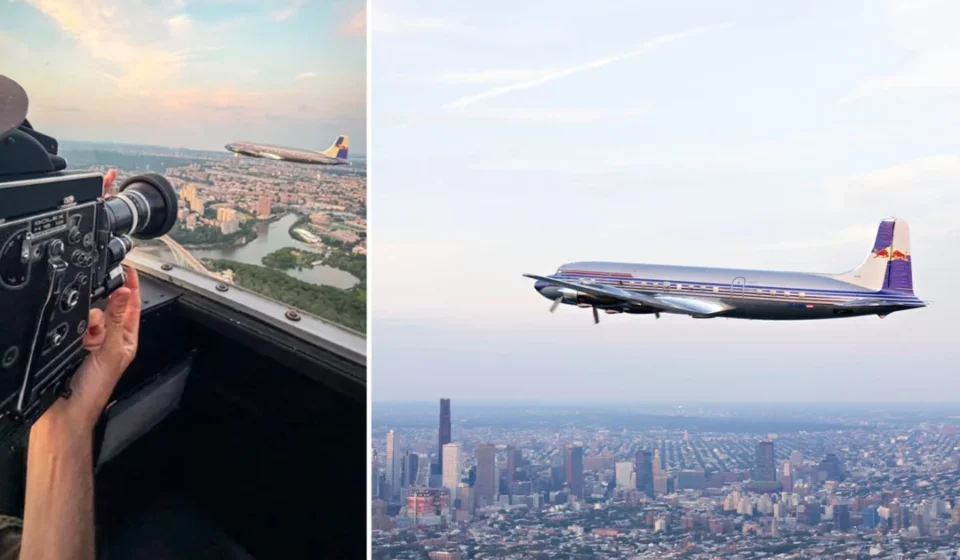
A Time-Capsule Flight: How Red Bull Reunited a 1958 Legend with the Analog Age

In the world of modern aviation, where flight is increasingly defined by carbon-fiber composites, fly-by-wire precision, and ultra-high-definition digital monitoring, the return of a 1958 Douglas DC-6B to American skies represents a rare, tangible bridge to the mid-century golden age of flight. Not seen in the United States since its original assembly in Santa Monica, California, nearly seven decades ago, the historic aircraft—a centerpiece of Red Bull’s renowned aviation collection—recently embarked on a symbolic homecoming.
However, the Red Bull Aviation team did not simply record this tour with standard cinema gear. Instead, they opted for an ambitious, risky, and deeply poetic approach: they documented the flight using vintage 16mm Bolex motion picture cameras from the same era as the aircraft. The project, dubbed “DC-6 x Bolex,” serves as a profound meditation on the synergy between mechanical engineering and the analog arts.
The Chronology of a Homecoming
The DC-6B, an iconic symbol of post-war passenger travel, spent decades away from its birthplace. Its return to the U.S. in July 2026 was not merely a logistical feat, but a cultural event. The aircraft made its first stop in the bustling, vertiginous airspace of New York City.
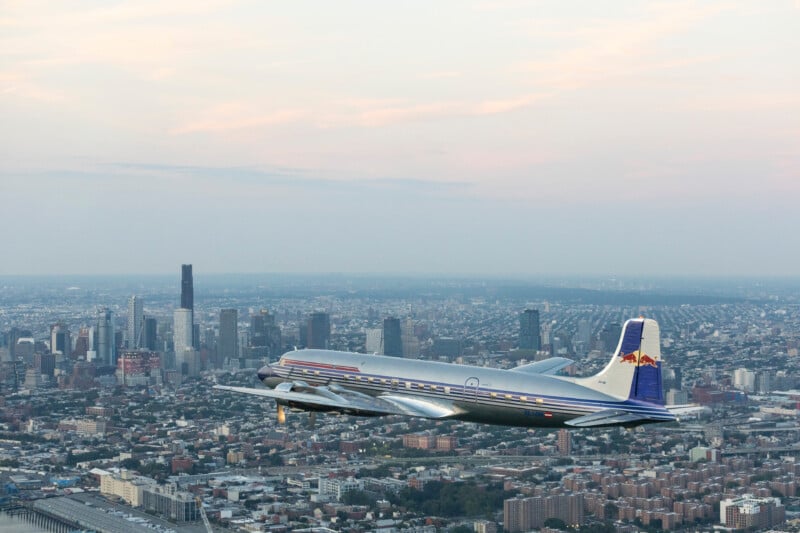
The production timeline was tight, requiring seamless coordination between the aviation crews—provided by Million Air—and the cinematography team. On July 11, 2026, the DC-6B took to the skies above Manhattan, a flight path that required precision navigation to ensure the vintage airframe remained safe while allowing for the necessary "chase" geometry required for filming.
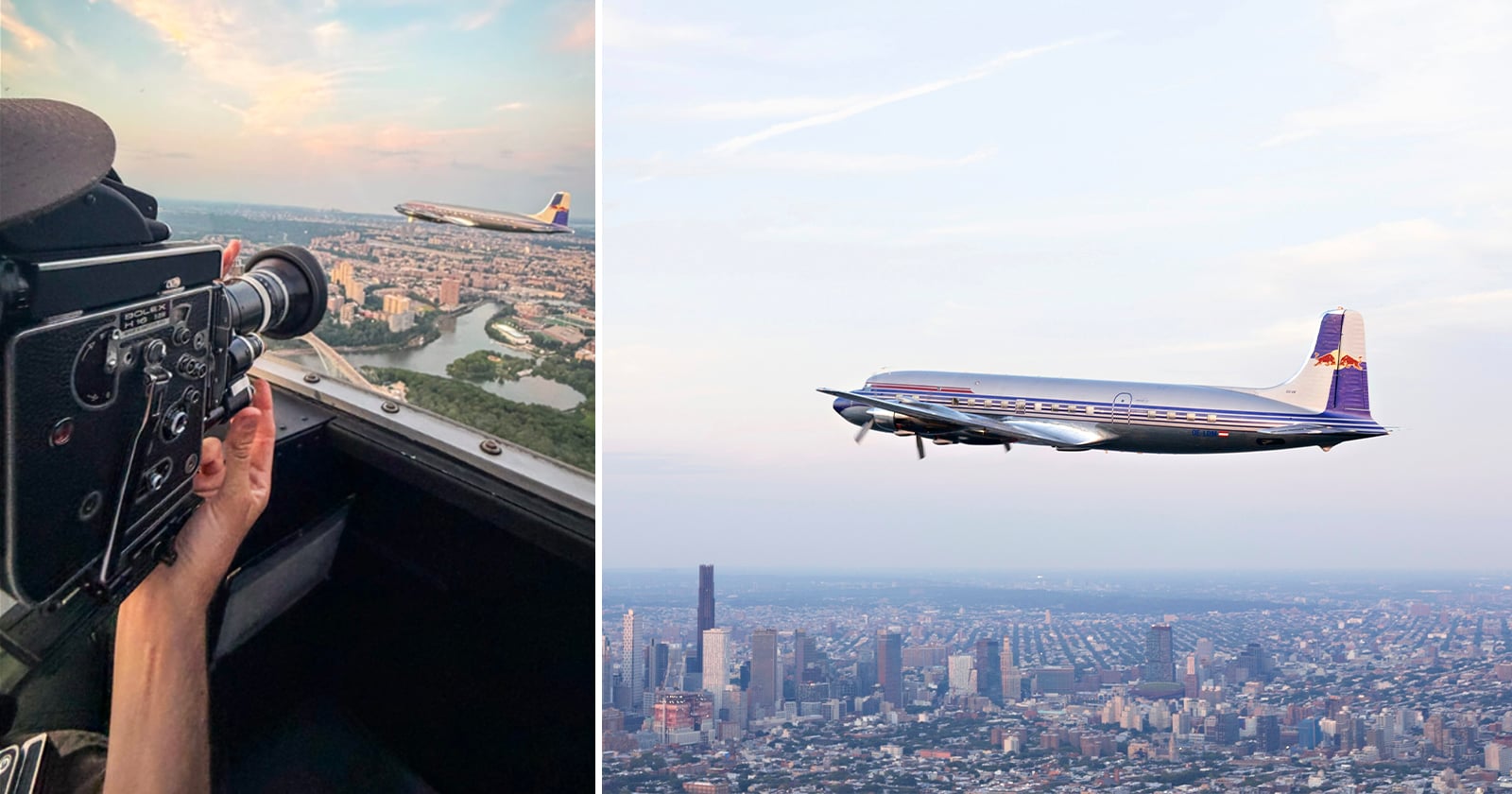
The process of capturing the footage occurred under challenging conditions. The team operated from the nose of an A-26 Invader, a historic bomber-turned-camera-platform. Balancing the physical volatility of flying in an open-cockpit-adjacent position while managing delicate, mechanical clockwork cameras presented a unique set of stressors. By July 14, 2026, the aircraft arrived at Morristown Airport in New Jersey, marking the conclusion of the most intense phase of the operation.
Technical Specifications: The Analog Arsenal
To ensure the visual language of the footage matched the historical pedigree of the aircraft, the production team went to great lengths to source authentic equipment. They settled on two specific camera bodies:
- Bolex H16 Rex 3 (1963): A staple of documentary filmmaking, chosen for its ruggedness and mechanical reliability.
- Bolex H16 SBM (1970): Selected for its compatibility with a wider range of lenses and its iconic, smooth film-transport mechanism.
The selection of these cameras was a deliberate attempt to avoid the "clinical" sharpness of modern digital sensors. By using 16mm film, the team introduced natural grain, a distinct latitude in shadow detail, and a color rendition that digital processing struggles to replicate authentically.
To complement the cameras, the crew utilized Kodak VISION3 50D and 250D film stocks. The 50D, a low-speed daylight-balanced film, provided the crisp, high-contrast imagery required for the bright, mid-day light above the city, while the 250D allowed the team to capture the atmospheric, golden-hour light during the critical 8:00 PM sunset flight.
Supporting Data: The Logistics of Aerial Cinematography
Aerial cinematography is inherently dangerous, but filming from a 1940s-era A-26 Invader added a layer of complexity that modern drone operators rarely encounter.
| Variable | Specification/Detail |
|---|---|
| Primary Aircraft | Douglas DC-6B (1958) |
| Camera Platform | A-26 Invader |
| Camera Models | Bolex H16 Rex 3 / H16 SBM |
| Film Stocks | Kodak VISION3 50D & 250D |
| Flight Date | July 11, 2026 |
| Primary Location | Manhattan, New York City |
The team’s reliance on mechanical cameras meant there was no "instant replay." They were working with limited film reels, high vibration, and the reality that once a shot was missed, it could not be recovered. The "shield" provided by the camera—the focus required to operate the device—served as a psychological buffer against the inherent anxiety of flying in a vintage, exposed aircraft configuration.
Official Perspective: Why Film Matters
In an exclusive conversation with PetaPixel, the Red Bull Aviation team emphasized that this project was a labor of love, driven by a desire to challenge the modern status quo of digital saturation.
"The decision to film the DC-6B on Bolex cameras stemmed from a genuine appreciation of film photography and motion pictures," the team noted. "It has a way of presenting a subject in such a unique, authentic way to really set the tone of the DC-6B visit. We wanted to celebrate the plane by capturing it with cameras from the same era in which it was built."
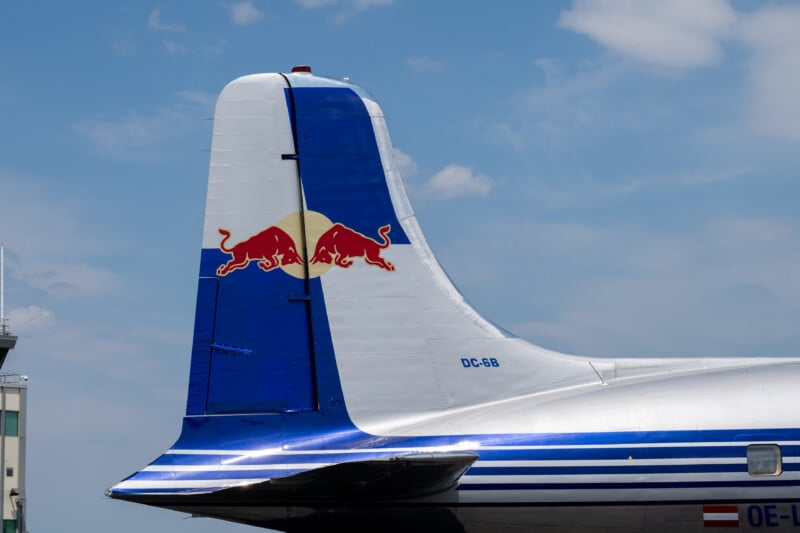
The team highlighted the "surreal" nature of the Central Park flyover. As the DC-6B carved its silhouette against the skyscrapers of Manhattan, the cinematographers—including Khyber Jones—had to trust their instincts rather than a digital monitor. "There was a slight color grade added to the footage; aside from that, the footage is how we received it from the Kodak Lab in New York City. The whole goal was to stay true to the art form of film."
Implications for Modern Content Creation
The "DC-6 x Bolex" project arrives at a time when the creator economy is dominated by trends, rapid turnaround times, and algorithmic optimization. By choosing a path that required more effort, more risk, and a slower workflow, Red Bull has made a statement about the enduring value of intentionality.
Challenging the Status Quo
The primary implication of this project is the reminder that technology is merely a servant to the vision. In an era where any high-end smartphone can capture 4K video, the "quality" of a film is increasingly defined not by pixel count, but by the aesthetic and emotional resonance of the medium. The grain, the slight mechanical inconsistencies of the Bolex, and the limitations of film stock forced the production team to be more disciplined, resulting in a product that feels "lived-in" rather than manufactured.
Inspiration for Future Creators
The Red Bull Aviation team’s message to the next generation of filmmakers is one of defiance against trend-chasing. "Don’t wait around to create," they urge. "No matter what you’re going to shoot, just go and do it for yourself. Capture life, your surroundings, and let it inspire you."
This philosophy suggests a shift in how legacy brands may approach storytelling in the future. Instead of pursuing the "newest" tech, there is a growing appetite for "authentic" tech—tools that carry a weight of history and a specific visual texture.
Conclusion: A Lasting Legacy
As the DC-6B concludes its U.S. tour, the imagery left behind serves as more than just promotional content; it is a historical record of a machine and a medium meeting in the sky. By refusing to update the filming process to match the modern digital standard, Red Bull successfully synchronized the DC-6B with its own past.
The project proves that even in the age of instant digital gratification, there is immense value in the deliberate, the tactile, and the analog. Whether it is an aircraft engine humming at 10,000 feet or the whirring of a spring-wound Bolex camera, the "DC-6 x Bolex" project reminds us that the most powerful stories are often those that refuse to take the path of least resistance. The legacy of the DC-6B is now forever tethered to the unique character of 16mm film, ensuring that when we look back at this flight decades from now, the footage will have aged with the grace of the aircraft it captured.