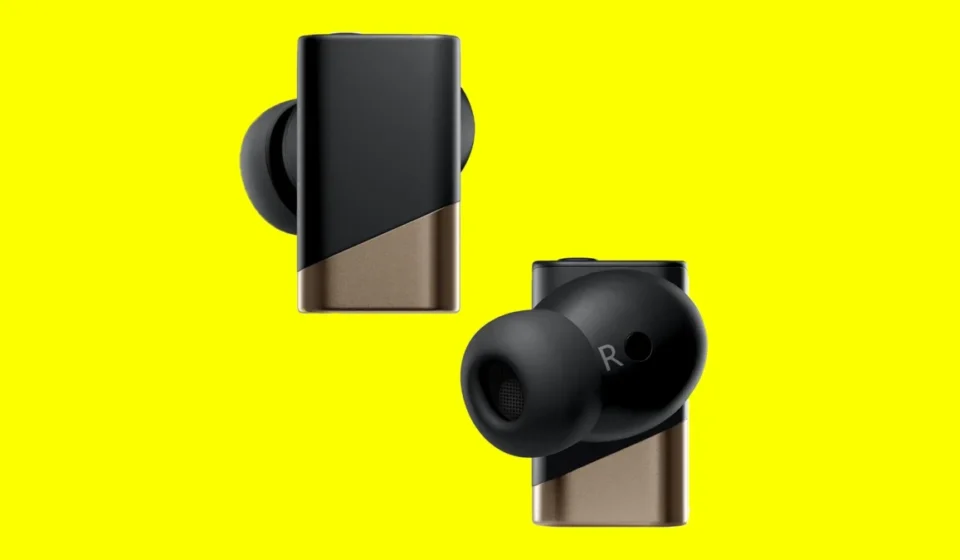
Audiophile Precision in Your Pocket: The Status Audio GoldenSound Pro X Reinvents Wireless Listening

In an industry currently dominated by the "arms race" of noise-canceling technology, where manufacturers frequently sacrifice sonic integrity to bolster algorithmic silence, a quiet revolution has been brewing. For years, the market for wireless earbuds has been bifurcated: consumers either opt for mainstream giants that prioritize consumer-friendly, V-shaped EQ profiles, or they turn to niche, wired high-fidelity equipment. Status Audio, however, has consistently challenged this dichotomy. With the introduction of the new GoldenSound Edition of their flagship Pro X earbuds, the company has signaled a shift in the landscape of mobile audio, proving that true audiophile-grade sound can exist within a compact, wireless form factor.
The Evolution of the Pro X: A New Gold Standard
The original Status Audio Pro X earned its reputation by refusing to compromise on hardware. While many competitors rely on a single, budget-friendly driver, the Pro X utilizes an ambitious triple-driver configuration. By housing a 12mm dynamic driver—dedicated to the heavy lifting of sub-bass frequencies—alongside dual Knowles-balanced armatures for precise mids and highs, the Pro X provides a level of instrument separation typically reserved for high-end in-ear monitors (IEMs).
The standard Pro X tuning is, by design, punchy and engaging. It offers a "V-shape" sound signature that brings a visceral weight to the lower registers while maintaining a crisp, energetic top end. However, Status Audio recognized that there is a subset of listeners who crave a more clinical, reference-level experience—a sound that prioritizes neutral timbre and harmonic accuracy over mere excitement.
Enter the GoldenSound Edition. This collaborative release features a specialized, locked sound profile engineered by Cameron "GoldenSound" Oatley, a prominent figure in the audiophile community known for his rigorous, data-driven approach to audio testing. By integrating Oatley’s expertise directly into the firmware, Status Audio has essentially offered a "Pro" version of a "Pro" product, bridging the gap between convenience and studio-grade realism.
Chronology: From Hardware Innovation to Collaborative Mastery
The journey to the GoldenSound Edition did not happen overnight. It is the culmination of a multi-year effort by Status Audio to refine their acoustic engineering.
- Phase One (The Foundation): The development of the base Pro X architecture began with a focus on driver housing and acoustic chambers. The goal was to eliminate the distortion often found in wireless hardware by isolating the dynamic driver from the balanced armatures.
- Phase Two (The Software Interface): Upon the launch of the original Pro X, Status Audio introduced a robust companion application. This app was pivotal, as it allowed users to bypass the default tuning via an open EQ, signaling that the company viewed their product as a platform for customization rather than a static device.
- Phase Three (The Partnership): Recognizing the limitations of consumer-tuned EQ, Status Audio approached Cameron Oatley to create a profile that corrected for common psychoacoustic pitfalls. Using the Brüel & Kjær 5128 head and torso simulator—the industry gold standard for acoustic measurement—Oatley mapped the frequency response to achieve a target curve that mirrors natural human hearing.
- Phase Four (Market Integration): The final iteration, launched as the GoldenSound Edition, marks the first time this specific, high-precision calibration has been baked into the hardware as a locked, "Reference" mode, selectable alongside the original signature tuning.
Supporting Data: The Physics of High-Fidelity Audio
To understand why the GoldenSound Edition is being lauded by critics, one must look at the technical challenges of wireless audio. Wireless transmission inherently involves compression (even with high-bitrate codecs), which can lead to a loss of detail in the upper-mid frequencies and a "muddying" of the soundstage.
The GoldenSound profile addresses these issues through precise frequency-response shaping. While the standard Pro X profile emphasizes a 3-5dB boost in the sub-bass and a slight lift in the treble, the GoldenSound tuning targets a "Harman-plus" neutral curve. By smoothing out the treble peaks—where the Knowles armatures can sometimes become overly sibilant—the GoldenSound profile ensures that strings, vocals, and woodwinds retain their natural timbre.
Technical Specifications:
- Driver Setup: 1x 12mm Dynamic Driver (Bass); 2x Knowles Balanced Armatures (Mids/Highs).
- Measurement Standard: Brüel & Kjær 5128 Head and Torso Simulator (HATS).
- Frequency Range: 20Hz – 20kHz (Calibrated).
- Connectivity: Bluetooth 5.x with multi-point support.
- Materials: Matte black/gold finish with CNC-machined components.
The use of the Brüel & Kjær 5128 is significant. Unlike older simulators, the 5128 mimics the human ear canal’s geometry with far greater accuracy, allowing engineers to compensate for how sound waves bounce within the canal. This results in a soundstage that feels "outside the head" rather than trapped behind the eyes, a common complaint with lesser earbuds.
Official Responses and Engineering Philosophy
In recent statements, the Status Audio development team emphasized that the GoldenSound Edition was not intended to replace the original Pro X, but to provide a "second voice" for the hardware. "Our philosophy has always been that the hardware should be good enough to support multiple profiles," said a spokesperson for the company. "By locking in the GoldenSound profile, we are guaranteeing that the user is hearing exactly what our acoustic measurements intended, without the risk of accidental EQ degradation."
Cameron Oatley, in discussions regarding the collaboration, noted that his goal was to "fix the common fatigue" associated with long-term listening. "Most earbuds are tuned to sound impressive for five minutes in a store," Oatley stated. "The GoldenSound Edition is tuned to sound correct for five hours of continuous listening. It’s about balance, cohesion, and removing the artificial digital ‘sheen’ that often plagues wireless audio."
Aesthetic and Ergonomic Implications
Beyond the internal circuitry, the GoldenSound Edition differentiates itself with a sophisticated design language. Eschewing the glossy, fingerprint-prone plastics of mass-market competitors, the earbuds feature a refined matte black finish accented with subtle matte gold detailing. This aesthetic choice reflects the "pro" nature of the product—understated, functional, and durable. The charging case follows suit, with a weighted feel and a signature matte gold lid that houses the dual branding of Status Audio and the GoldenSound project.
However, the implications of this design extend to comfort. The ergonomic shape has been refined to ensure that the heavier triple-driver array remains stable in the ear during extended sessions. This is essential, as the sound quality is highly dependent on a perfect seal. A loose fit would bleed sub-bass, effectively ruining the calibration performed by the GoldenSound team.
The Future of Wireless Fidelity
The release of the GoldenSound Pro X represents a potential turning point for the audio industry. If consumers demonstrate that they are willing to pay for "tuned" and "calibrated" wireless devices, we may see a decline in the dominance of generic, bass-heavy audio products.
Furthermore, this move by Status Audio opens the door for a new type of "firmware-as-a-service" model in hardware. We are moving toward a future where a single pair of high-quality drivers can be updated, tweaked, and re-tuned by world-class engineers, extending the lifespan of the hardware far beyond the typical two-year upgrade cycle.
In conclusion, the Status Audio GoldenSound Pro X is not just another set of wireless earbuds; it is a declaration of intent. It proves that the limitations of wireless audio are not necessarily in the hardware, but in the software engineering behind it. For those who have been waiting for the convenience of Bluetooth without the sonic compromise, the GoldenSound Edition finally offers a seat at the audiophile table. Whether you are a professional producer looking for a portable reference monitor or a casual listener who simply appreciates the nuances of a well-balanced mix, this collaboration sets a high bar that the rest of the industry will struggle to clear.