
In an era where the “Instagrammability” of a destination often dictates the density of its foot traffic, the American traveler is facing a quiet crisis of convenience. As global travel markets fluctuate and domestic tourism remains a bedrock of the U.S. economy—with Americans spending a staggering $1.54 trillion on travel in 2025—the hunt for authentic, tranquil experiences has become increasingly difficult.
From the neon-lit sensory overload of theme parks to the shoulder-to-shoulder crush of major metropolitan cruise ports, many travelers are finding that their vacations are becoming more exhausting than their daily routines. In response to this, a growing contingent of savvy explorers has turned to community forums like Reddit, seeking refuge in the “quiet corners” of the country. This shift in sentiment reflects a broader trend: a move away from bucket-list saturation and toward intentional, restorative travel.
The Anatomy of the Modern Travel Fatigue
The impetus for this trend is clear. A recent thread on the r/traveladvice subreddit crystallized the frustrations of the modern vacationer. One user, seeking a departure from the high-octane itinerary of cruises and Disney parks, posed a simple yet profound question: "Where can I go to walk to a coffee shop, hit a spa, grab a bite, hike, and relax on a quiet beach without being surrounded by thousands of people?"
The response was overwhelming, revealing that while the U.S. is the world’s largest travel market, its most valuable hidden gems are not found in major city centers, but in the shoulder seasons and secondary markets of its diverse landscape.
A Chronology of the "Quiet Travel" Movement
The desire for seclusion is not a new phenomenon, but its current manifestation is distinctly post-pandemic.
- 2020–2022: The "Great Outdoors" boom. As international borders closed, Americans rediscovered national parks and rural landscapes. This initial surge led to unprecedented overcrowding in iconic spots like Zion and Acadia.
- 2023–2024: The "Overtourism" Correction. Travelers began documenting the negative impacts of record-breaking crowds in hubs like Sedona and Asheville, leading to local water crises and infrastructure strain.
- 2025–Present: The "Shoulder Season" Strategy. A more sophisticated class of traveler has emerged, prioritizing "off-peak" timing. By avoiding the traditional summer and holiday windows, these travelers are successfully reclaiming popular destinations from the throngs of tourists.
Regional Snapshots: Where to Find Your Solitude
While no destination is truly "secret" in the digital age, the following regions—frequently highlighted by experienced travelers—offer a reprieve from the noise, provided one exercises patience and strategic timing.
1. Mendocino, California: The Fog-Kissed Retreat
Perched on the rugged edge of Northern California, Mendocino is a masterclass in atmospheric calm. It offers a dramatic juxtaposition of redwood forests and jagged coastal bluffs. While it welcomes nearly two million visitors annually, its appeal lies in its Victorian-era charm and slow pace.
- The Strategy: Avoid holiday weekends at all costs. The town’s water resources are sensitive, making eco-conscious, off-season travel a prerequisite for a sustainable visit.
2. The San Juan Islands, Washington: A Pacific Archipelago
With 172 named islands, this Pacific Northwest chain provides a rugged escape. Whether exploring the marine parks by ferry or browsing the galleries of Friday Harbor, the islands offer a sense of isolation that is rare in the lower 48.
- The Strategy: Lean into the shoulder season. Autumn brings a moody, quiet beauty, and the lack of summer ferry lines transforms the experience from a logistical challenge into a tranquil retreat.
3. Sedona, Arizona: Mysticism Beyond the Main Street
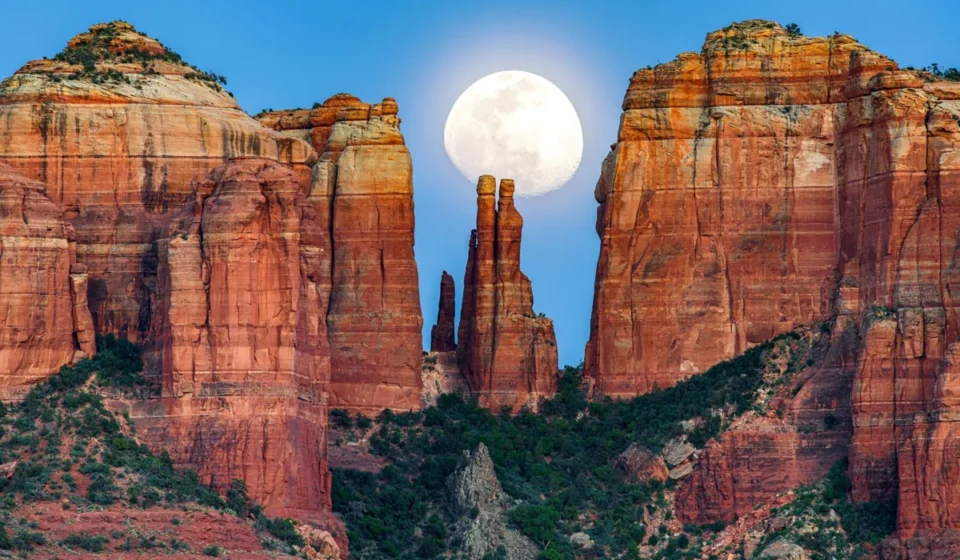
Sedona’s red rocks are iconic, yet the downtown corridor often suffers from heavy congestion. To find the "mystical" Sedona, one must look toward the outskirts.

- The Strategy: Bypass the commercial center. By committing to longer, more challenging hikes, you effectively filter out the day-trippers, leaving the vistas that inspired 80 Western films to you and the elements.
4. Asheville, North Carolina: The Blue Ridge Sanctuary
Asheville has recently commanded national attention—not only for its recovery following the 2024 Hurricane Helene but also for hosting high-level global summits like the G20. Despite this, its soul remains rooted in the Blue Ridge Mountains.
- The Strategy: Focus on the River Arts District and the surrounding wilderness. Visit during the transition periods—early spring or late autumn—to witness the foliage without the peak-season rush.
5. Stowe, Vermont: The Alpine Escape
Stowe is often pigeonholed as a ski-resort hub, but it is an idyllic year-round destination.
- The Strategy: Visit in the "mud season" or late spring. While skiing is the primary draw, the town’s charm is amplified when the slopes are empty and the local creameries, like the iconic Ben & Jerry’s factory, are accessible without the tourist queue.
6. The Upper Peninsula, Michigan: The Rugged Frontier
The Upper Peninsula (UP) offers a stark contrast to the bustling resort towns of Michigan’s Lower Peninsula. With 2,000 miles of Great Lakes shoreline, it is a haven for those who prefer silence over surf-shops.
- The Strategy: Embrace the history. From the iron-mining legacy of Ironwood to the cultural depth of Sault Ste. Marie, the UP is for the traveler who values historical context over commercial infrastructure.
7. The Berkshires, Massachusetts: Cultural Highlands
The Berkshires serve as the cultural heartbeat of Western Massachusetts, blending high-end museums like MASS MoCA with raw, natural mountain vistas.
- The Strategy: Target the early fall. Before the foliage-chasers arrive, the region is a quiet paradise of cafes and hiking trails.
8. Vieques, Puerto Rico: The Caribbean Beyond the Resorts
Stepping away from the San Juan cruise terminals reveals a different side of the Caribbean. Vieques, a former naval base, is home to the Vieques National Wildlife Refuge.
- The Strategy: Prioritize the bioluminescent bay at Puerto Mosquito. By avoiding the mainland resort hubs, travelers find a version of Puerto Rico that is unhurried and ecologically profound.
Supporting Data: The Economic Reality of Travel
The U.S. travel market is a behemoth, and the data suggests that domestic travel is not merely a fallback—it is the primary engine of the industry. The $1.54 trillion spent in 2025 underscores a cultural shift: when economic or geopolitical uncertainty strikes, Americans turn to their own geography. However, this concentration of spending creates a "bottleneck effect." Popular sites often suffer from the very popularity that sustains them, leading to increased regulation and, ironically, higher costs for the average traveler.
Official Responses and Implications
Tourism boards across these regions are beginning to respond to the strain of overtourism. Many are shifting their marketing budgets away from "volume-based" tourism toward "value-based" initiatives. This includes promoting lesser-known trails, encouraging mid-week visits, and implementing reservation systems for high-traffic natural landmarks.
The implication for the traveler is clear: the era of the "unplanned, effortless vacation" is fading. To enjoy the best of the U.S., one must act as a participant in the local ecosystem rather than a consumer of it. This means researching water usage in coastal California, respecting the recovery timelines of mountain communities in North Carolina, and understanding the fragile biology of bioluminescent bays in Puerto Rico.
Conclusion: The New Luxury
In the final analysis, "quiet" has become the new luxury. As the world becomes increasingly connected and digital, the ability to disappear into a landscape—whether it is a redwood forest in Mendocino or a quiet beach in Vieques—is the ultimate reward. By choosing to travel during the shoulder seasons and favoring depth over breadth, the modern American traveler can ensure that these destinations remain preserved for generations to come, while simultaneously securing the peace of mind they so desperately seek.