
Echoes of an Analog Era: Wolfgang Zurborn’s Crowds Captures Society in Transition

Main Facts
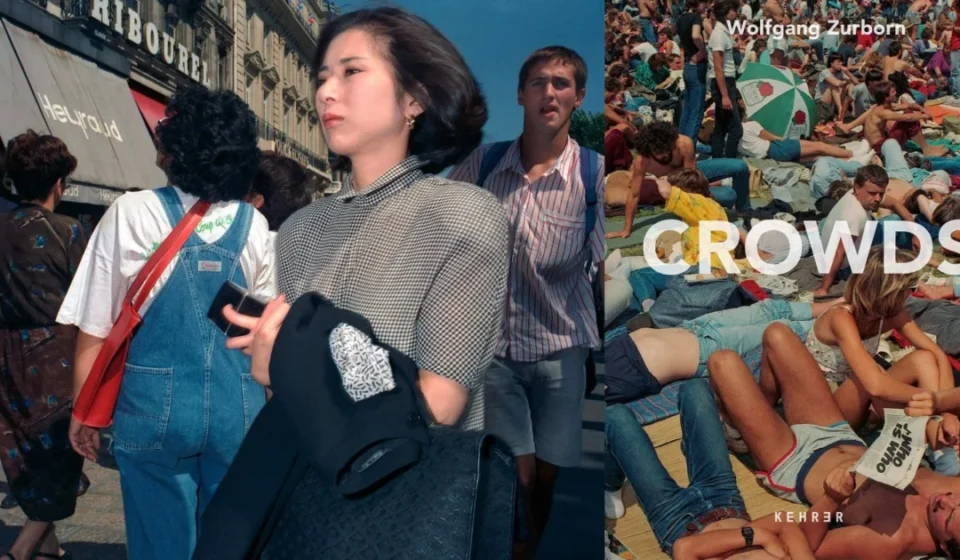
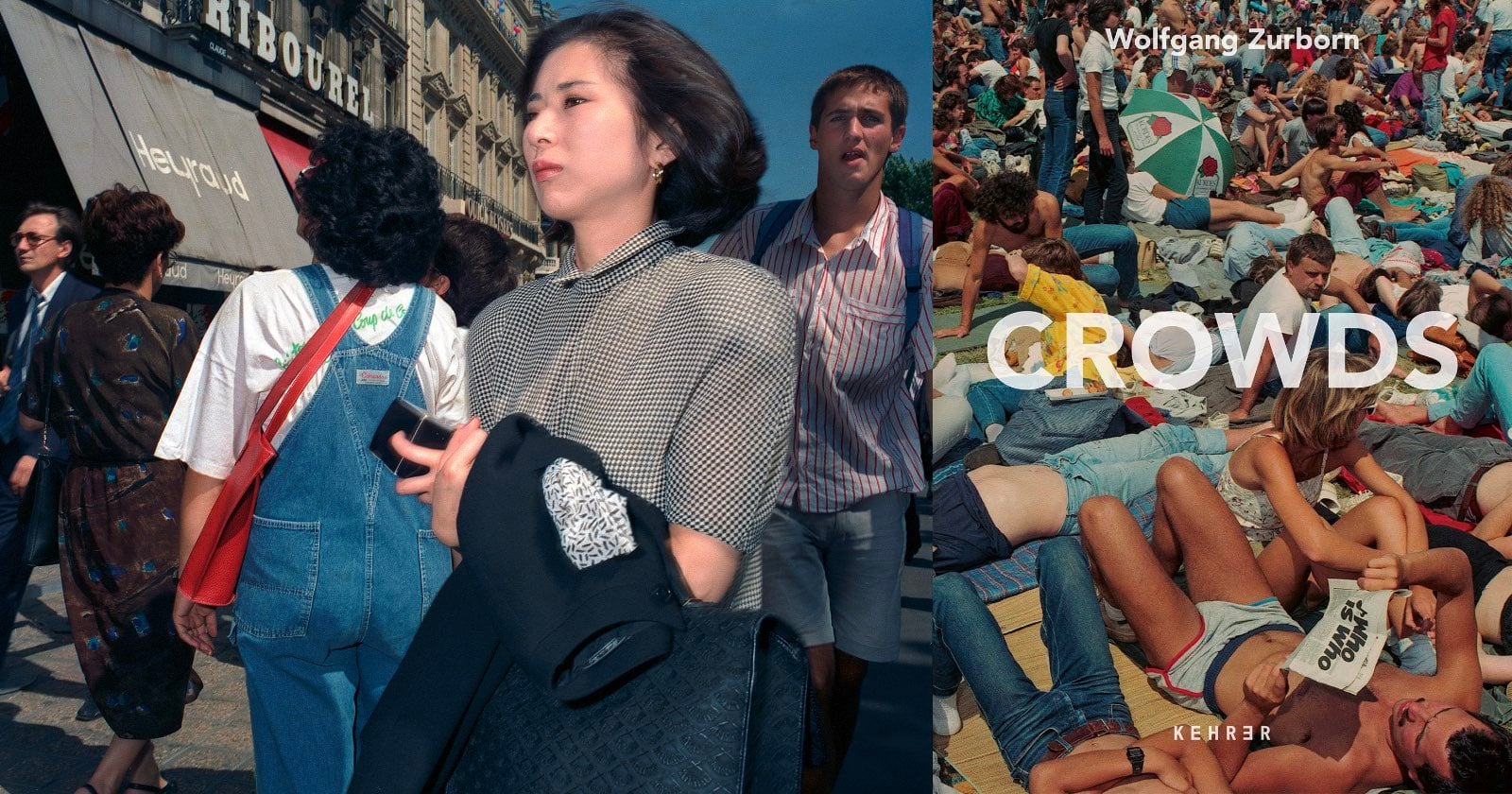
Renowned German photographer Wolfgang Zurborn is set to release a compelling new monograph titled Crowds, published by Kehrer Verlag. The forthcoming book gathers hundreds of digitized, analog color negatives sourced directly from Zurborn’s extensive personal archive, many of which have never before been seen by the public. Spanning the vibrant and politically charged decades of the 1980s and 1990s, the collection presents an unflinching, yet deeply empathetic, look at public life in Europe during a time of immense social, cultural, and technological transformation.
Operating within the rich tradition of color street photography, Zurborn’s lens does not treat people merely as static components of a urban backdrop, nor does it isolate individuals from their environments. Instead, Crowds investigates the intricate relationships, unspoken tensions, and shared psychological experiences that bind people together in public spaces. From the bustling streets of Paris and Cologne to the politically volatile gatherings in Wackersdorf, Zurborn documents how individuals navigate mass culture, social conditioning, and the burgeoning influence of mass media. Born out of the enforced isolation of the COVID-19 pandemic lockdowns, the project serves as a profound meditation on the collective human experience—one that feels startlingly resonant in today’s hyper-digitized and frequently fractured world.
Chronology: From the Streets to the Archive, and Back Again
Capturing the Pulse of the 1980s and 1990s
For more than four decades, Wolfgang Zurborn has dedicated his artistic career to observing public behavior. During the 1980s and 1990s, Europe was experiencing a profound cultural shift. The Cold War was reaching its climax, mass consumerism was rapidly reshaping urban landscapes, and mass media was beginning to exert an unprecedented influence on daily consciousness. Zurborn traversed public spaces across Germany, France, and beyond, training his camera on political demonstrations, religious processions, tourist hubs, sporting events, and chaotic entertainment carnivals.
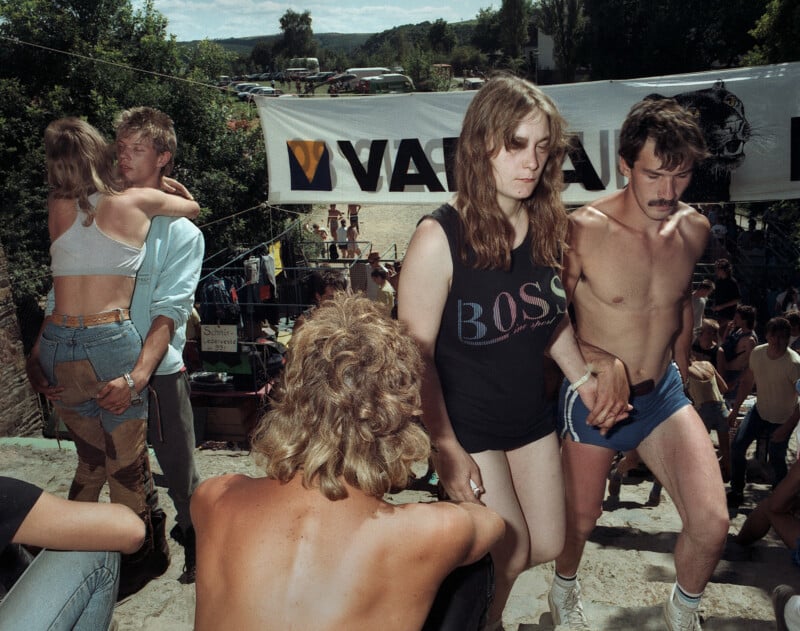
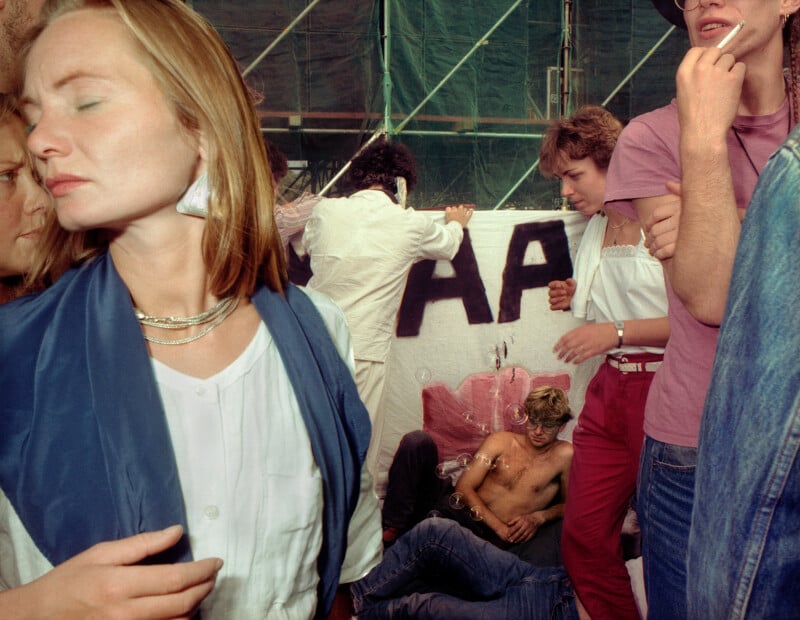
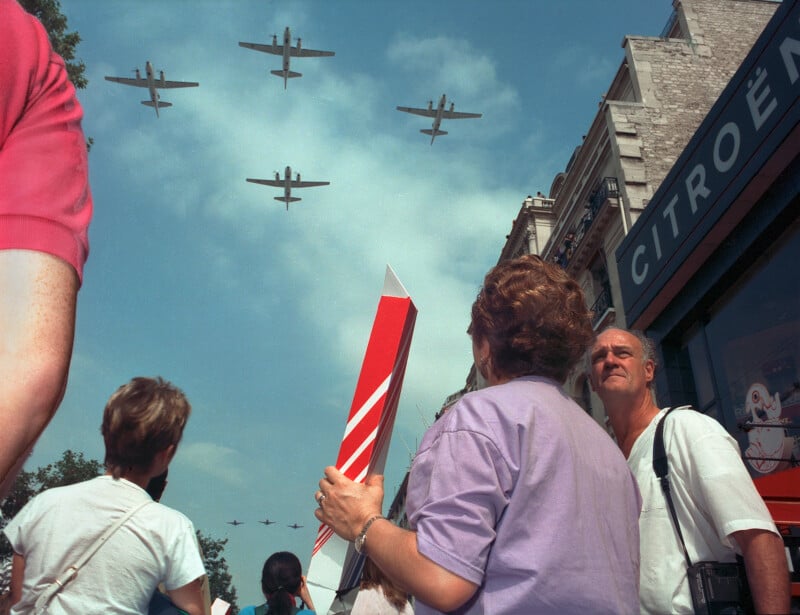
Rather than chasing singular, heroic portraits, Zurborn immersed himself in the thick of the action. He captured moments of serendipity, fleeting gestures, and accidental configurations of people that revealed deep-seated societal structures. Whether photographing anti-nuclear protesters in Wackersdorf in 1986, spectators watching formation flights over Paris in 1989, or everyday citizens wandering through Cologne’s vibrant cityscapes, Zurborn built a massive repository of analog color negatives that documented the sensory overload of late-20th-century life.
The Pandemic Pause and the Birth of Crowds
For years, these negatives sat quietly in Zurborn’s archive. However, the global landscape shifted dramatically in 2020 with the onset of the coronavirus pandemic. As governments worldwide imposed strict lockdowns, public gatherings—the very lifeblood of Zurborn’s artistic practice—came to an abrupt and eerie standstill.
Confined to his studio and stripped of the ability to photograph new public scenes, Zurborn turned inward, revisiting his decades-old physical archives. This period of enforced stillness provided the critical distance required to synthesize a cohesive narrative out of thousands of disparate frames. Over months of meticulous scanning, digitizing, and editing, Zurborn began to trace unexpected visual and thematic threads across years and locations. The pandemic lockdowns offered a poignant backdrop for a project centered on crowds; looking back at dense, shoulder-to-shoulder gatherings of people became an emotional and intellectual exercise in questioning how human beings interact, adapt, and seek self-determination within powerful social and media-driven environments.
Supporting Data and Technical Approach
Navigating the Complexity of Color Street Photography
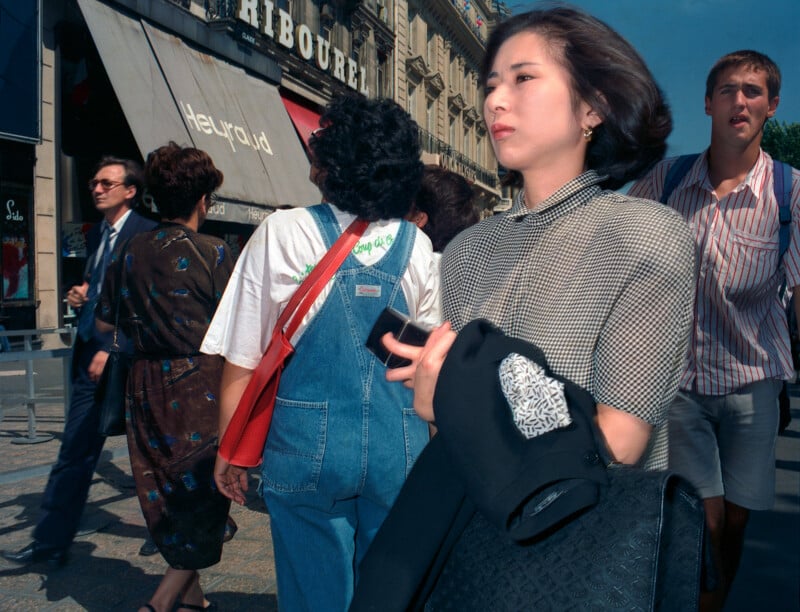
Zurborn’s methodology distinguishes itself through an embrace of visual complexity. Unlike photographers who utilize shallow depth of field to isolate a single subject from a distracting environment, Zurborn purposefully crams his frames with overlapping layers of information. Foreground elements, background activities, sharp architectural lines, and erratic human movements coexist within the same rectangular plane.
This democratic treatment of the visual field mirrors the very nature of modern public spaces: chaotic, loud, overstimulating, and dense. At first glance, images such as his 1990 Cologne street scene or the 1986 Wackersdorf festival photographs can appear overwhelmingly busy. Yet, upon closer inspection, a distinct visual and structural order emerges from the chaos. This delicate balance between randomness and composition allows viewers to appreciate the rhythm of everyday public life without reducing it to a simplistic narrative.

Archival Scope and Publication Details
- Crowds is published by Kehrer Verlag, a premier independent publisher known for high-art photography books.
- The book incorporates hundreds of digitized analog color negatives, curated from Zurborn’s lifetime archive.
- The chronological span covers critical historical moments primarily concentrated in the 1980s and 1990s.
- Geographic locations featured prominently include Germany (Cologne, Wackersdorf, Loreley) and France (Paris), capturing a cross-section of Western European social life during the waning decades of the 20th century.
- The monograph is available for purchase directly through Kehrer Verlag and select international art booksellers, complete with standard affiliate distribution partnerships.
Official Perspectives and Critical Analysis
While monographs of street photography often rely on essayists to guide the reader’s gaze, Crowds deliberately avoids imposing a singular, dogmatic interpretation. According to project statements provided by the publisher and artistic reflections by Zurborn himself, the book is designed to function as an open-ended visual dialogue.
In reflections on the genesis of the work, Zurborn notes that the extended pause of the pandemic allowed him to reevaluate the relationship between the individual and the collective. In an era before smartphones dominated human attention, public crowds were already tethered to collective psychological currents driven by television, advertising, print media, and shared ideological movements. Zurborn’s work asks a fundamental question: To what extent are our actions truly self-determined when we are swept up in the currents of mass culture?
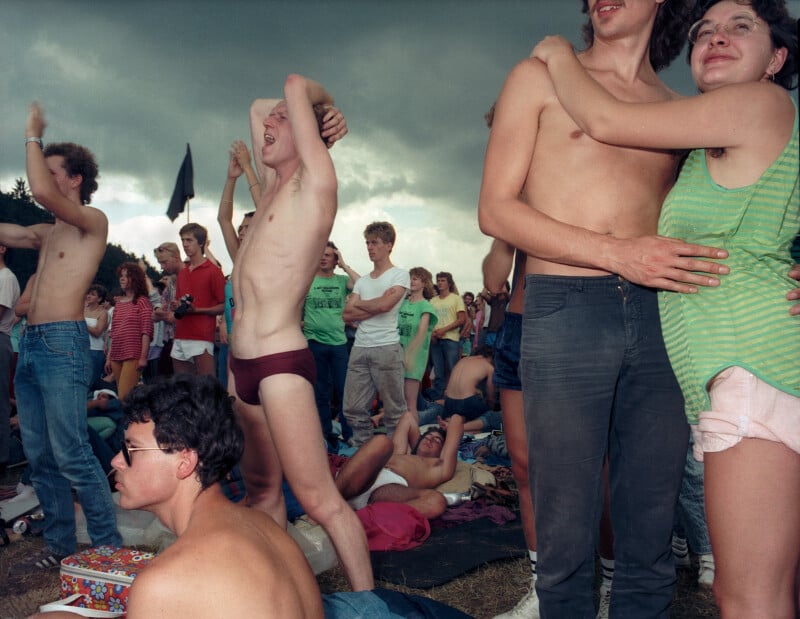
Art critics and photography historians examining Zurborn’s output have long praised his mastery of color palettes unique to analog processes—subtle shifts in skin tones, neon glows of fairground rides, faded asphalt, and the muted, natural lighting of overcast European skies. By translating these negatives into high-resolution digital assets for the book, Zurborn preserves the tactile authenticity of the analog era while offering contemporary audiences a stark mirror to reflect upon current anxieties regarding social gathering, community, and isolation.
Implications: Why Crowds Matters Today
The release of Crowds arrives at a uniquely poignant moment in contemporary history. Following years of pandemic-era social distancing, followed in turn by an explosion of digital connectivity, virtual reality, and algorithmic social isolation, the physical act of gathering in a crowd has taken on new cultural significance.
1. A Counter-Narrative to Digital Isolation
Today, public spaces are frequently viewed through the lens of screen-addiction, where individuals walk side-by-side yet inhabit entirely different digital dimensions. Zurborn’s photographs from the 1980s and 1990s remind viewers of a recent past when physical proximity was the primary medium of human interaction. The bodies in his frames touch, bump into one another, lean against fences, crane their necks toward the sky in unison, and engage in direct, unmediated eye contact.
2. Documenting Social Tensions and Political Awakening
The inclusion of photographs from politically charged sites like Wackersdorf—famous for intense anti-nuclear protests—highlights the power of the collective voice. These images underline the historical importance of mass movements in shaping European democracy. They show that crowds are not merely passive consumers of entertainment, but active agents of political and social friction.
3. The Enduring Relevance of Analog Archives
As digital photography and artificial intelligence increasingly dominate contemporary visual culture, projects like Crowds underscore the irreplaceable value of the physical archive. The analog negative captures light as a physical reality, preserving a slice of time that can never be replicated or synthetically generated. By unearthing these lost negatives, Zurborn demonstrates how historical archives can continuously re-contextualize the present, offering modern viewers a deeper understanding of how yesterday’s societies birthed the complexities of the modern world.
Related posts: