
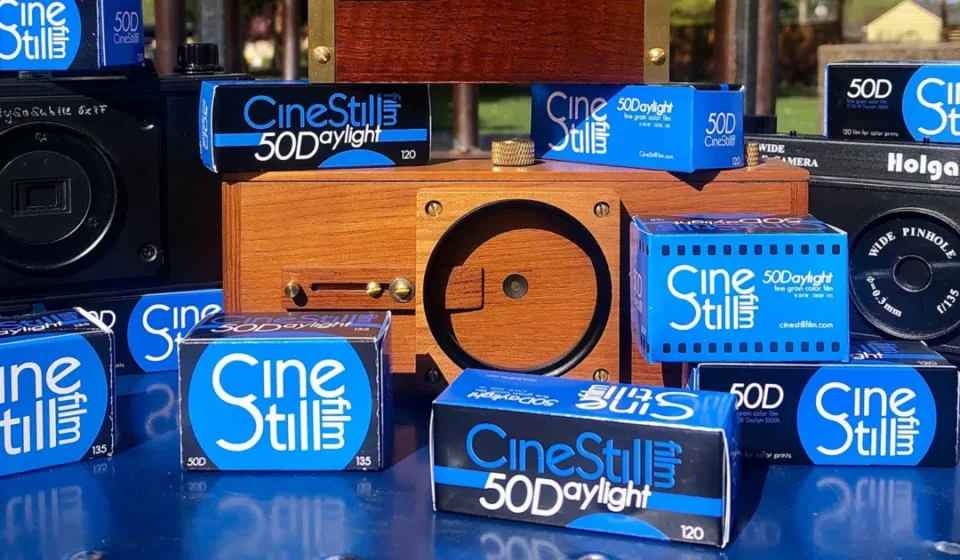
Beyond the Cult Classics: Why CineStill 50D Deserves a Place in Your Camera Bag

In the pantheon of modern analog photography, few brands have managed to bridge the gap between professional motion picture technology and the hobbyist’s weekend walk-around camera quite like CineStill. While the company’s high-speed 800T tungsten-balanced film and the versatile 400D often dominate social media feeds and online forums, their daylight-balanced sibling—the CineStill 50D—remains an unsung hero of the lineup.
Often overlooked in favor of its faster, moodier counterparts, CineStill 50D offers a distinct, cinematic aesthetic characterized by a delicate pastel palette, exceptional sharpness, and a uniquely ethereal halation effect. As part of our ongoing "Film Friday" exploration, we take a deep dive into why this low-speed emulsion is not just a niche product, but a sophisticated tool for photographers seeking a refined, painterly approach to daylight shooting.
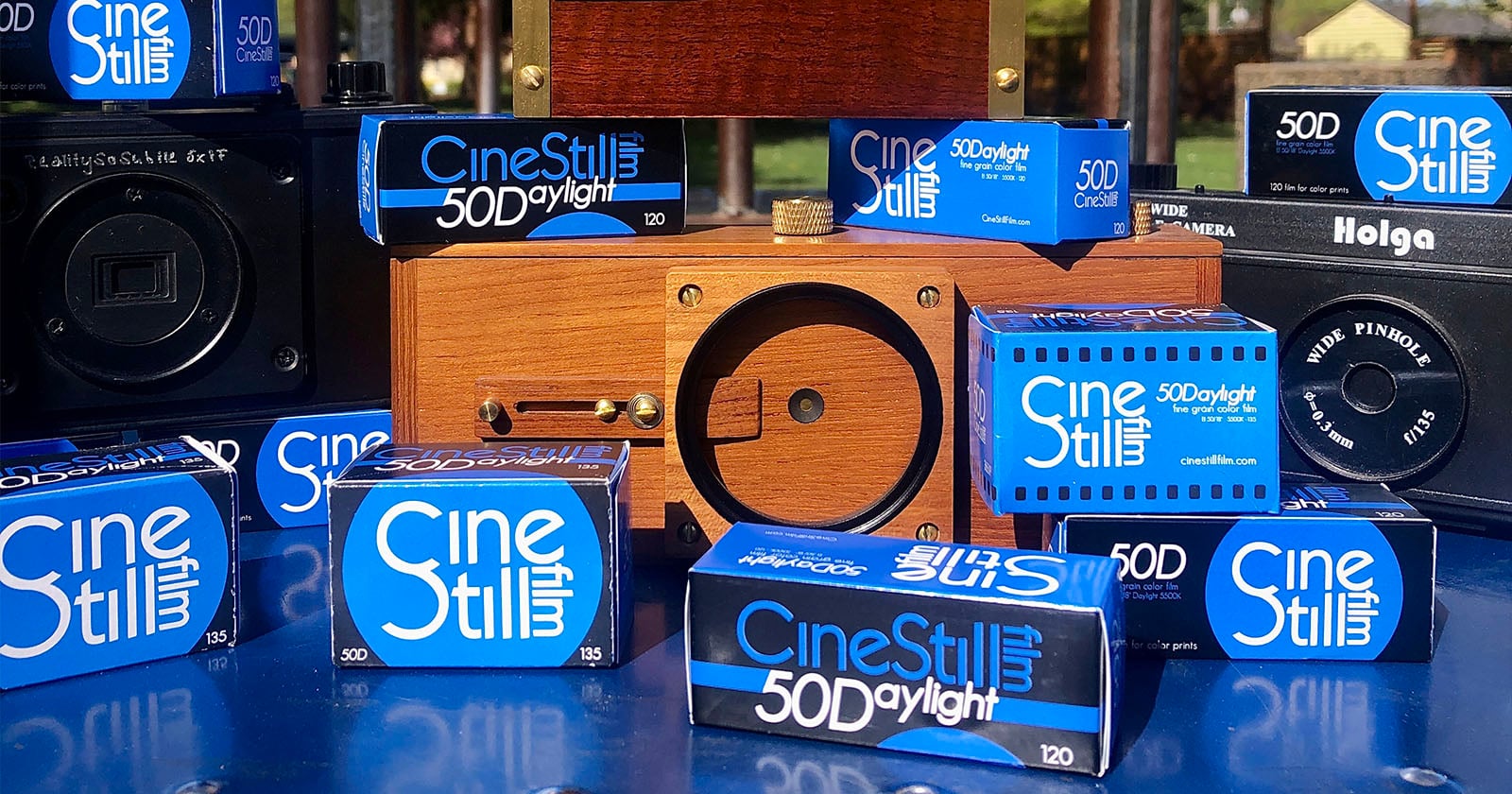
The Genesis of CineStill: From Hollywood to the Home Studio
To understand CineStill 50D, one must first understand its origins. The film is essentially Kodak Vision3 50D (technically identified as Kodak 5203/7203), a gold standard in professional cinematography. This is the very same film stock that has captured high-budget features, commercials, and music videos for years.
The defining characteristic of professional motion picture film is the "Remjet" layer. This jet-black, anti-halation, and lubricating coating is essential for the high-speed mechanics of movie cameras, preventing light piping and static buildup. However, this same layer is a nightmare for standard C-41 laboratory processors, as it can dissolve and contaminate the chemistry, effectively ruining a lab’s entire processing line.
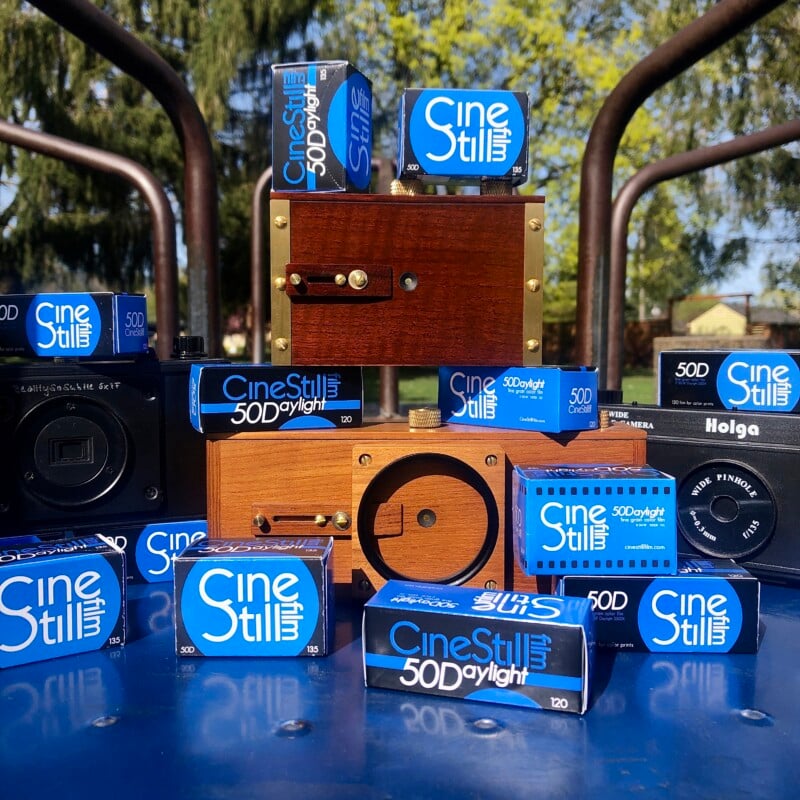
CineStill’s primary innovation lies in their proprietary process of removing this Remjet layer before spooling the film into standard 35mm and medium format cartridges. By stripping the backing, they have opened the gates for still photographers to access a cinematic-grade emulsion that was previously restricted to the world of big-budget motion pictures.
Technical Specifications and Performance Metrics
CineStill 50D is, as the name suggests, a 50 ISO film. This low sensitivity is its greatest strength, offering a grain structure so fine that it borders on invisible, even in standard 35mm enlargements. When used in medium format, the clarity is breathtaking, rivaling the clinical sharpness of digital sensors while retaining the organic soul of analog chemistry.

Exposure Latitude and Color Rendering
The film is balanced specifically for daylight, which contributes to its reputation for producing some of the most accurate, flattering skin tones in the color negative market. Many enthusiasts argue that in controlled lighting, the 50D renders flesh tones with a level of nuance that exceeds even the legendary Kodak Portra 160.
Unlike the punchy, high-saturation look of Kodak Ektar, the 50D presents a softer, more subdued color palette. The contrast is measured and polite, making it an ideal choice for high-contrast environments where you want to retain detail in both the highlights and the shadows. Its lower saturation ensures that colors feel authentic rather than processed, allowing the composition to take center stage.

The "Cine-Look": Understanding Halation
Perhaps the most polarizing feature of the CineStill line is the "halation" effect. Because the anti-halation layer has been removed, light hitting bright highlights—such as the sun reflecting off water or a streetlamp at night—tends to bounce off the film’s pressure plate and back into the emulsion. This creates a distinct, diffuse, red-hued glow around bright areas. While some photographers find this distracting, it has become a signature aesthetic for "cinematic" photography. When planned for, this glow adds a dreamlike, ethereal quality that is impossible to replicate with digital filters.
Chronology of Development: ECN-2 vs. C-41
A critical aspect of shooting CineStill 50D is understanding the evolution of its processing. The film is natively designed for the ECN-2 (Eastman Color Negative 2) motion picture process. However, because CineStill removes the Remjet, the film is "cross-processed" when taken to a standard C-41 lab.

- The Early Days: When the film was first introduced to the public, there was significant confusion regarding whether it could be taken to local "drugstore" labs. The successful removal of the Remjet layer was a breakthrough that allowed photographers to bypass the specialized ECN-2 labs that were difficult to find for the average consumer.
- The Modern Consensus: Today, photographers have the option to choose. While C-41 processing is the standard for convenience, it does yield slightly different results than ECN-2. C-41 typically results in lower saturation and contrast compared to the native ECN-2 process. CineStill’s ongoing work in the market has helped demystify these differences, providing side-by-side comparisons that allow photographers to choose the look that best suits their artistic intent.
Post-Processing: The Digital Workflow
One of the nuances often ignored by newcomers is the necessity of post-scanning color correction. Because the film is a motion-picture stock, the orange mask and the base chemistry differ slightly from standard consumer C-41 films like Fujifilm Superia or Kodak Gold.
Photographers often report that 50D scans can lean toward yellow or green, or, if underexposed, can appear cold and blue. This is not a defect of the film, but rather a characteristic of its unique color-science profile. We have found that once the initial scan is corrected for white balance, the film yields a stunning, naturalistic color palette. Digital post-processing, therefore, is not an "add-on" for 50D; it is an essential part of the workflow. Treating the scan as a "digital negative" that requires a subtle touch in Lightroom or Photoshop is the key to unlocking the film’s true potential.

Implications for Future Creative Work
Why should you reach for 50D over your usual go-to rolls? The answer lies in the limitations of the film itself.
Slow Shutter Speed Creativity
Because it is an ISO 50 film, you are naturally forced into longer shutter speeds. This is a blessing for those interested in long-exposure photography. Whether you are shooting moving water, traffic, or using a pinhole camera, the low sensitivity acts as a built-in neutral density filter. It encourages a slower, more deliberate process, pushing the photographer to use a tripod and consider the movement within the frame.

Medium Format Potential
For those shooting 120 film, 50D is a revelation. The lack of grain allows for massive enlargements. We have seen stunning results from medium format cameras like the Pentax 67 or the Hasselblad 500CM, where the detail in landscape shots remains crisp from corner to corner. When paired with high-quality glass, the 50D captures a "medium format look" that is both modern in its sharpness and vintage in its color depth.
Conclusion: A Call to Experiment
CineStill 50D is a film that rewards patience. It is not designed for fast-paced street photography where you need high shutter speeds, nor is it designed for low-light indoor shooting. It is a tool for the deliberate photographer—someone who wants to capture the soft light of a spring morning, the subtle gradients of a desert landscape, or the quiet intimacy of a portrait.
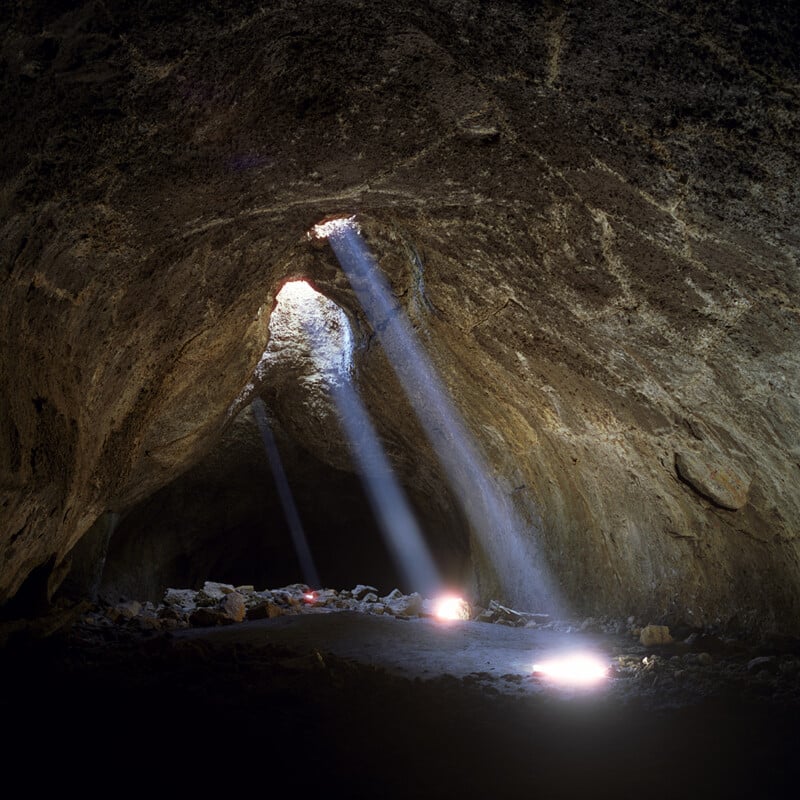
As we continue to see a renaissance in analog photography, the market is flooded with choices. While the 800T might grab the headlines for its neon-lit aesthetic, 50D provides a more sophisticated, nuanced, and technically demanding experience. We encourage you to pick up a roll, load it into your favorite manual camera, and embrace the process. Go find a scene that demands delicacy, experiment with your shutter speeds, and watch as the magic of motion picture chemistry brings your still images to life in a way that no digital sensor can perfectly mimic.
In a world of instant gratification, CineStill 50D serves as a reminder that the best results often come from the most careful, intentional work. Happy shooting!

This report is brought to you by Blue Moon Camera and Machine in Portland, OR. From providing high-quality film stocks and expert processing to maintaining a curated selection of vintage cameras, Blue Moon is dedicated to the preservation of the photographic arts. PetaPixel Members are eligible for an exclusive 10% discount on all lab services. Join the community today to support the future of film.