
For the millions of travelers who flock to Japan annually, the itinerary is often a predictable, albeit magnificent, loop: the hyper-kinetic streets of Tokyo’s Shibuya district, the contemplative Zen gardens of Kyoto, and the mouth-watering street food stalls of Osaka’s Dotonbori. This "Golden Route" offers a concentrated dose of Japanese culture, history, and modernity. Yet, for those who yearn to strip away the glossy, neon-lit veneer of contemporary Japan to find something more primal, more ancient, and infinitely quieter, there exists a sanctuary in the heart of Shikoku Island: the Iya Valley.
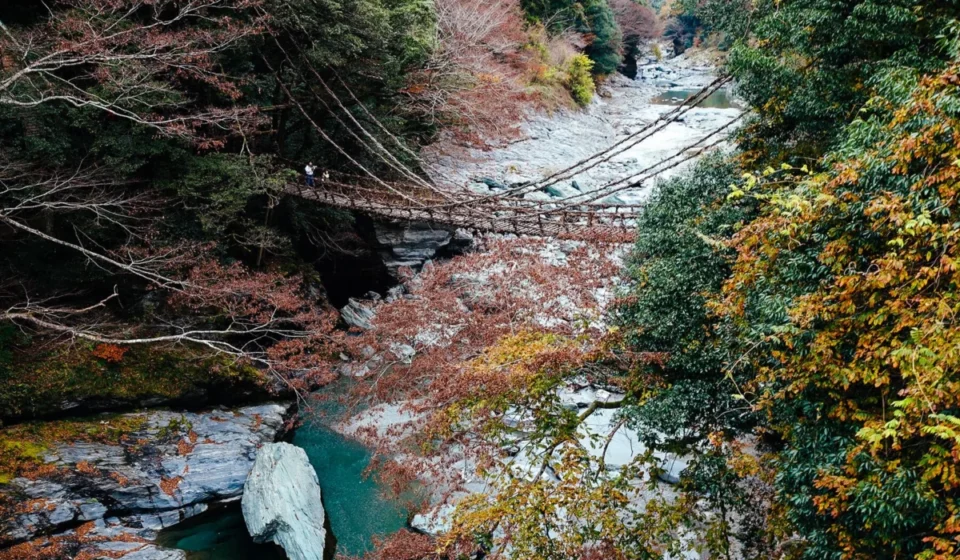
Often referred to as the "Tibet of Japan," the Iya Valley is a steep, forested gorge carved by the emerald-green waters of the Iya River. It is a place where time seems to have folded in on itself, offering an escape into a world of mist-covered peaks, legendary vine bridges, and the fading echoes of a samurai past.
Main Facts: A Wilderness Frozen in Time
The Iya Valley is situated in the Tokushima Prefecture on Shikoku, the smallest and least populated of Japan’s four main islands. Geographically, it is defined by its extreme topography; the valley is characterized by deep ravines and mountains so steep that traditional farming necessitated the creation of intricate terraced fields, some of which cling to the slopes at dizzying angles.
The primary appeal of the region is its profound isolation. For centuries, the valley served as a refuge for defeated warriors and those fleeing the political instability of the mainland. Because of its rugged terrain, it remained largely inaccessible until the 20th century, allowing local customs, dialects, and architectural styles to flourish in a vacuum of outside influence. Today, the valley remains one of the few places in Japan where the rhythm of life is dictated not by train schedules or office hours, but by the turning of the seasons and the cycle of the harvest.
A Chronology of Seclusion: From Samurai Refuge to Cultural Heritage
The history of the Iya Valley is woven with threads of folklore and military legend.
- The Heian Period (12th Century): According to local tradition, the valley served as a sanctuary for the remnants of the Taira clan following their catastrophic defeat at the Battle of Dan-no-ura in 1185. Legend suggests that the Taira warriors fled deep into the mountains to escape the conquering Minamoto clan. They built the famous kazurabashi (vine bridges) across the river, which were designed to be easily cut in the event of an pursuit, effectively severing their trail from the outside world.
- The Edo Period (1603–1867): During this era, the valley’s isolation allowed for the preservation of a unique form of mountain agriculture. The Ochiai settlement and surrounding areas developed a lifestyle centered around the cultivation of buckwheat, millet, and tobacco on steep, terraced slopes. This period solidified the architectural aesthetic of the region: the thatched-roof house, or kayabuki-minka.
- The 20th Century: For much of the early 1900s, the valley remained an enigma to outsiders. It was not until the introduction of modern road networks and the eventual promotion of "eco-tourism" in the 1990s and 2000s that the region began to open its doors to a broader international audience.
- The Modern Era (2010s–Present): A concerted effort to prevent rural depopulation led to the restoration of historic structures. The Tougenkyo-Iya project, which converted abandoned farmhouses into luxury, modernized lodging, has become a benchmark for cultural preservation, proving that heritage can be a catalyst for sustainable economic revitalization.
Supporting Data: The Architecture of Sustainability
The centerpiece of a visit to the Iya Valley is the village of Ochiai. Nestled on the side of a mountain, the village is a protected traditional building preservation area. The architecture here is a testament to human resilience.
The restoration of the eight thatched houses in the Tougenkyo-Iya collection serves as a case study in blending heritage with hospitality. While the exterior of these homes remains faithful to the 200-year-old original designs—using thick, layered thatch for insulation and weathered wood for structural integrity—the interiors have been updated to meet the needs of modern travelers.
- Thermal Regulation: The thick thatched roofs provide exceptional insulation, keeping the homes cool in the sweltering humid summer and retaining heat during the harsh, snow-dusted winters of Shikoku.
- Terraced Agriculture: The slopes of Ochiai represent a monumental feat of civil engineering performed by hand. Data from the local heritage boards indicate that some of these terraces have been in constant use for over 300 years, managed by a shrinking but dedicated demographic of elderly farmers.
- Accessibility Trends: Despite its reputation as a "hidden" gem, tourism infrastructure in the Iya Valley has grown by approximately 15% annually over the last decade, driven largely by interest from travelers seeking "slow travel" experiences that favor deep immersion over rapid sightseeing.
Official Responses and Preservation Initiatives
Local government bodies in Tokushima Prefecture have been instrumental in balancing the influx of visitors with the necessity of preserving the valley’s fragile ecosystem.

"Our goal is not mass tourism," says a representative from the Iya Valley Tourism Board. "We are managing the legacy of a landscape that is extremely vulnerable to environmental and demographic change. Every guest who stays in a restored thatched house is, in effect, a patron of the preservation movement. By bringing these houses back to life, we prevent them from collapsing into history, and we provide a livelihood for the local artisans who still know how to harvest and bundle thatch."
These initiatives are supported by the Japanese government’s broader Satoyama preservation movement—a national effort to restore the traditional landscape where human activity and nature existed in a harmonious, sustainable balance.
The Implications: Why the Iya Valley Matters
The allure of the Iya Valley is not merely its photogenic beauty; it represents an existential question for modern travelers: What are we looking for when we travel?
In a world increasingly dominated by the digital, the Iya Valley offers a return to the tactile. The act of crossing a vine bridge—a structure that sways and creaks underfoot—is a sensory experience that no high-speed train or curated city tour can replicate. It forces the traveler to be present, to acknowledge the physical reality of the environment, and to respect the ingenuity of those who carved a life out of such an unforgiving landscape.
A Lesson in Slow Travel
The implications for future tourism are clear. As travelers become more environmentally conscious and weary of "over-tourism" in Kyoto and Tokyo, destinations like the Iya Valley provide a blueprint for a more ethical form of exploration. This is "slow travel" at its finest. It requires patience, as the journey to the valley involves winding mountain roads and limited public transport. It requires an open mind, as the amenities are rustic and the pace of life is dictated by the sun rather than a schedule.
The Preservation of Cultural Identity
However, the rise in popularity of the Iya Valley carries the inherent risk of commodification. The challenge for the region is to ensure that as they market themselves to the world, they do not turn the valley into a museum exhibit. The preservation of the kayabuki houses is successful because it is functional—these are homes that are being lived in. The moment they become mere backdrops for photography, the soul of the valley will begin to dissipate.
Final Reflections
To visit the Iya Valley is to walk through a doorway into a Japan that is fading but not yet gone. It is a place that demands humility from the visitor, asking them to walk softly on the mossy trails and to listen to the rushing water of the gorge rather than the ping of a notification.
Whether you are looking to hike the misty slopes of Mount Tsurugi, partake in the simple, hearty cuisine of the mountains, or simply sit on the porch of a centuries-old farmhouse as the fog rolls into the valley, the Iya experience is one of profound stillness. In the rush to see everything, we often miss the most important things. The Iya Valley remains a quiet, persistent reminder that the best parts of travel—and perhaps the best parts of life—are found when we finally decide to stop running and start looking.