Courtside Living: How Nordic Knots is Bringing the Geometry of Tennis Into the Modern Home

This summer has been defined by a convergence of high-stakes sporting drama and the quiet, deliberate evolution of domestic design. While the international sports calendar—ranging from the global spectacle of the World Cup to the hallowed, grass-stained tradition of the Wimbledon Championships—has captivated the public imagination, a quieter revolution has been taking place in the world of interior aesthetics. Swedish design house Nordic Knots has seized upon the distinctive visual language of the tennis court, translating the crisp, linear precision of the game into a sophisticated new collection: The Grand Open.
By migrating the iconic geometry of grass and clay courts from the outdoor arena to the interior floor, Nordic Knots is exploring the intersection of leisure, architecture, and craftsmanship. In an era where the home has become a sanctuary for personal expression, these rugs serve as a testament to how the typology of the rug is being re-evaluated—not merely as a functional floor covering, but as a pictorial canvas that brings the aspirational elegance of the sport into the everyday living space.
The Genesis of The Grand Open: A Design Chronology
The journey of The Grand Open collection began with a desire to capture the ephemeral, high-energy atmosphere of summer sports. Nordic Knots, known for its minimalist Scandinavian sensibilities, sought to distill the essence of the tennis court—a space defined by rigid boundary lines, vibrant color palettes, and a specific sense of historical grandeur.
1. Conceptualization and The Eltham Palace Connection
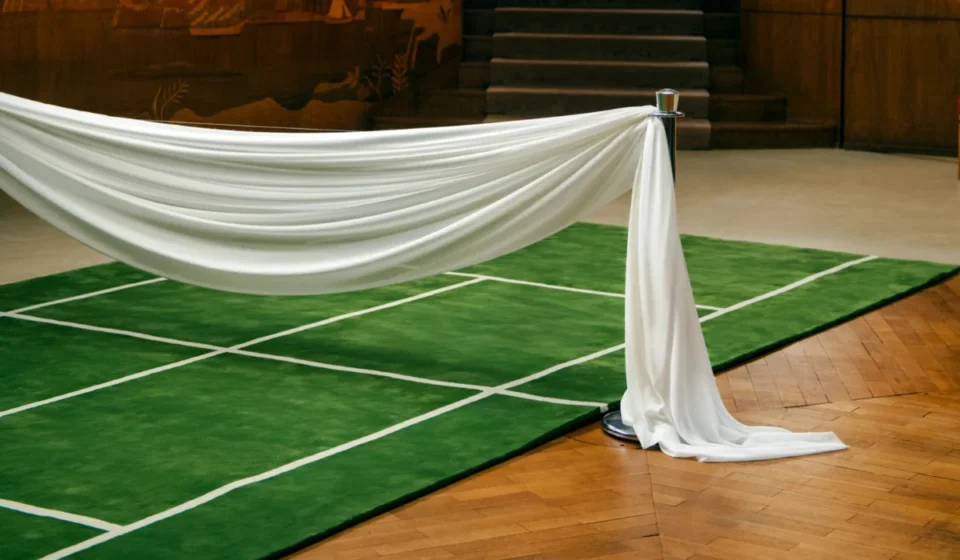
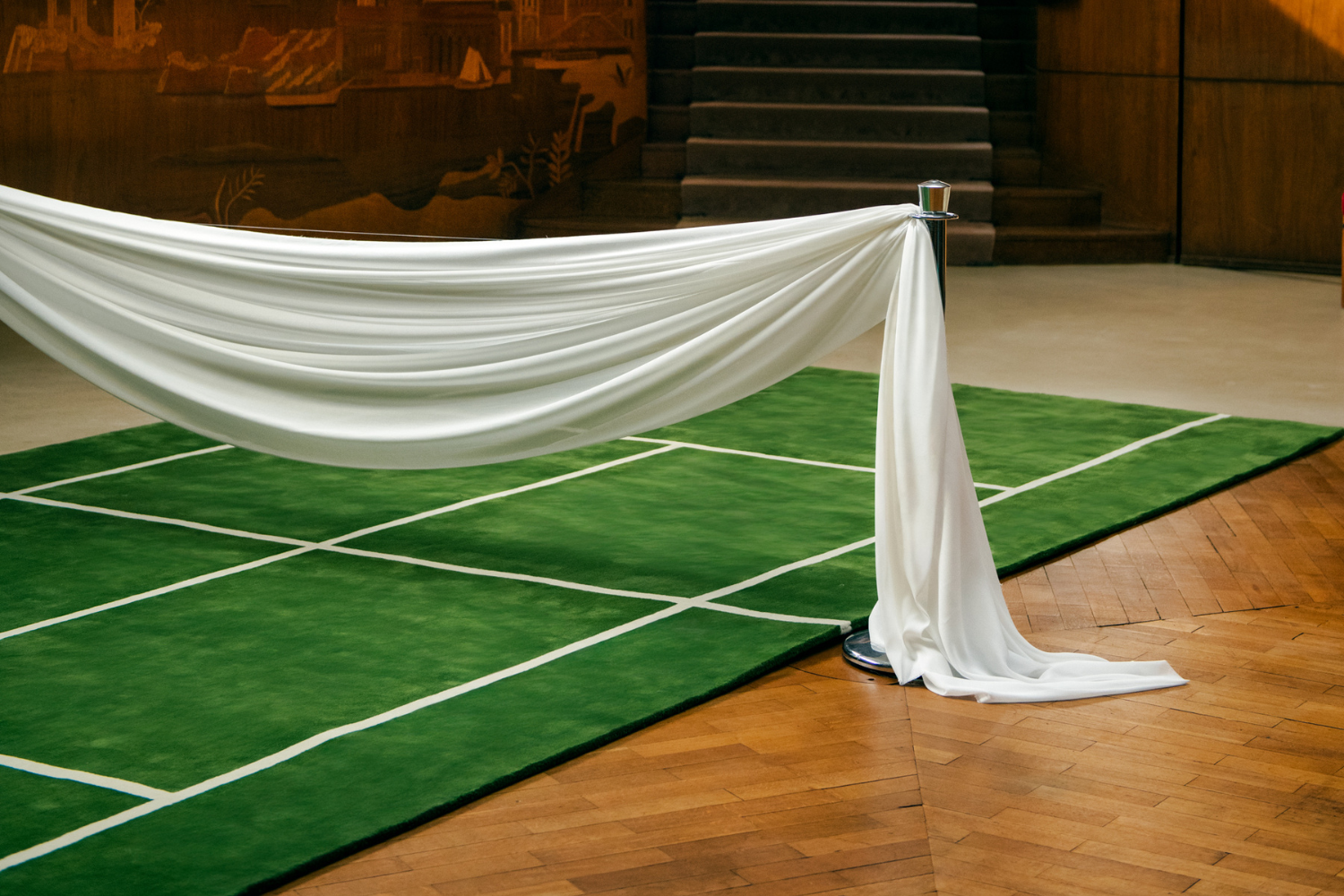
The campaign for the collection was strategically staged within the historic halls of Eltham Palace in southeast London. A masterpiece of medieval architecture fused with 1930s Art Deco luxury, the palace provided a stark, intentional contrast to the modern, graphic nature of the rugs. The choice of venue was deliberate: the palace was designed by Swedish architect Rolf Engström, creating an inherent dialogue between the rug’s Swedish origins and the opulent, complex woodwork (intarsia) found within the estate.
2. The Launch and Production
Following the initial campaign reveal, the collection was brought to market as a limited-edition offering. The production process involved a transition from digital concept to tactile reality, utilizing 100 percent New Zealand wool. The rugs are hand-loomed with a 14mm-thick cut pile, a specification chosen to mimic the subtle textural shifts of a manicured lawn or the gritty, brushed surface of a clay court.
3. Expanding the Narrative
To ensure the collection resonated beyond the aesthetic, Nordic Knots launched a series of accompanying accessories, including branded tennis rackets and balls. This move turned the collection into a lifestyle narrative, effectively blurring the lines between a high-end interior design product and the sporting culture that inspired it.
The Architecture of the Rug: Supporting Data and Craftsmanship
The appeal of The Grand Open lies in its deceptive simplicity. While a tennis court is a space of intense, chaotic movement, its visual representation is one of extreme order.
Technical Specifications
- Materiality: Each rug is crafted from 100 percent high-grade New Zealand wool, known for its durability, softness, and ability to hold vibrant dyes.
- Tactility: The 14mm cut pile is not uniform; through hand-looming, the artisans have introduced tonal shifts that prevent the rug from feeling flat or “gimmicky.” These shifts mirror the natural unevenness of a grass court or the fine particulate texture of crushed brick clay.
- The Geometry: The rugs feature sharp, clean boundary lines that define the “playing surface.” By scaling these lines to fit a living room or bedroom, Nordic Knots has successfully translated the proportions of an outdoor court to a human-centric scale.
The Rise of the Pictorial Rug
In the contemporary design market, the rug has emerged as a dominant medium for artistic experimentation. No longer relegated to neutral, background roles, the floor covering has become an object of focus. Much like a painting hung on a wall, these rugs invite viewers to “read” the design. Whether it is a trompe l’oeil representation of a swimming pool or the stark lines of a tennis court, the modern rug is increasingly used to anchor a room’s narrative, turning the floor into a gallery of personal aspiration.

Official Perspective: Design as Narrative
Nordic Knots has framed this collection not as a mere novelty, but as a deep dive into the “visual language” of the summer. By stripping away the unnecessary flourishes that often plague sports-themed home decor, they have arrived at a product that feels contemporary rather than childish.
"The brightly colored rug brings the specifically delimited outdoor space inside," the brand noted in its campaign literature. "It is simple in visual but doesn’t overwhelm with unnecessary or gimmicky details."
This restraint is key. By pairing the vibrant green of grass or the rich, earthy blue of clay with a clean white geometric grid, the rugs maintain a level of sophistication that allows them to exist in both modern, minimalist apartments and traditional, historic settings like Eltham Palace. The juxtaposition between the rug’s straightforward geometry and the complex marquetry of the palace serves as a metaphor for the collection’s place in the home: a modern, athletic accent that complements rather than competes with established architecture.
Implications for Modern Living
The emergence of The Grand Open and similar collections—such as those depicting urban pools—suggests a significant shift in how we conceive of “aspirational living.”

1. The Democratization of Leisure
Traditionally, owning a private tennis court or a full-sized swimming pool was an indicator of significant wealth and expansive property. By translating these environments into textile form, design brands are offering a form of “aspirational accessibility.” The homeowner can now invite the spirit of the court into their living room for a fraction of the cost and maintenance required by the real thing. It is a way of curating one’s identity, signaling a connection to the culture of sport without the burden of infrastructure.
2. The Return to Graphic Design in Interiors
After years of neutral palettes, beige-on-beige layering, and organic, asymmetrical shapes, the return to rigid, graphic lines is a breath of fresh air. The geometric precision of the tennis court serves as a visual anchor. In a room filled with soft textures and varying heights, the sharp lines of a Grand Open rug act as a grounding element, providing a sense of focus and intentionality.
3. Sustainability and Craft
The move toward high-quality, natural materials like New Zealand wool signals that consumers are looking for longevity in their design choices. As the market pivots away from “fast decor,” the hand-loomed quality of these rugs provides an ethical and aesthetic justification for the investment. It isn’t just a sports rug; it is a piece of artisanal craft that happens to be inspired by tennis.
Conclusion: A New Typology of the Home
As we look toward the future of interior design, it is clear that we are moving toward a more narrative-driven approach to decorating. The home is increasingly seen as a stage, and the objects we choose—from our furniture to our floor coverings—are the props that tell our story.

Nordic Knots has succeeded with The Grand Open by recognizing that the most powerful design is often that which taps into our shared cultural experiences. Whether you are a lifelong fan of the Wimbledon Championships or simply appreciate the clean, structural beauty of a perfectly marked court, the collection offers a way to bridge the gap between the outdoors and the indoors.
By taking art off the wall and laying it on the floor, we are redefining the limits of our domestic spaces. We are no longer just living in rooms; we are living within the geometry of our passions. As the lines between public leisure and private sanctuary continue to blur, expect to see more designs that translate the “grand” experiences of the world into the intimate, tactile comfort of the home. The court, it seems, is always open.