Designing Atmosphere: The Multidisciplinary Evolution of Nicole Alexander and Siren Betty

In the world of interior design, few practitioners manage to bridge the gap between high-concept hospitality and lived-in residential comfort as fluidly as Nicole Alexander. As the founder of the Chicago-based studio Siren Betty, Alexander has spent nearly two decades defining the visual language of the Windy City’s most iconic spaces. From Michelin-starred dining rooms to neighborhood coffee hubs, her work is defined not by a single aesthetic, but by a rigorous focus on the guest experience—a philosophy rooted in a lifelong obsession with craft, materiality, and the art of the found object.
A Legacy of Found Objects: The Early Influences
Nicole Alexander’s design perspective was not cultivated in a vacuum; it was inherited. Growing up, her domestic environment was an ever-evolving gallery of history. “My parents certainly had the earliest influence on me,” she reflects. “I grew up going to estate sales and auctions with them. The house was always filled with amazing finds.”
This early exposure to the "treasure hunt" instilled in her an appreciation for objects with a narrative. Rather than relying on mass-produced catalogues, Alexander learned to see the potential in aged wood, vintage brass, and unique silhouettes. This foundational curiosity served as the precursor to her formal career. Before establishing her presence in the design world, Alexander explored various creative outlets, including art therapy and dance—disciplines that, while seemingly disparate, taught her the importance of movement, human behavior, and emotional resonance.

Chronology: From Fashion to Furniture to Interiors
Alexander’s path to interior design was anything but linear, characterized by a restless pursuit of craft. Her first professional foray into creative business was Mr. Lulu, a fashion line where she hand-stitched one-of-a-kind garments from vintage and repurposed materials. This experience was instrumental in her development; it forced her to understand textiles, drape, and the limitations of working with existing, pre-worn media.
Transitioning from fashion to furniture, Alexander began building custom pieces. This period proved critical in her professional maturation. By manipulating raw materials—sawing, sanding, and assembling—she gained an intimate understanding of how furniture impacts the spatial volume of a room. This tactile knowledge eventually coalesced in 2006, when she founded Siren Betty.
Since its inception, the studio has evolved into a multidisciplinary powerhouse. While initially focused on the intricacies of furniture design, the studio naturally expanded into full-scale hospitality and commercial interiors. Today, Siren Betty is recognized for its ability to transform "blank slate" environments into spaces that feel as though they have been lived in for generations.

Supporting Data: The Siren Betty Philosophy
The Siren Betty portfolio spans a wide range of typologies, but a unifying thread connects them: the prioritization of the user journey. Alexander describes her approach as "imaginative," yet the results are deeply grounded in practicality.
1. Layla & Ringo’s: Redefining the Work-Cafe
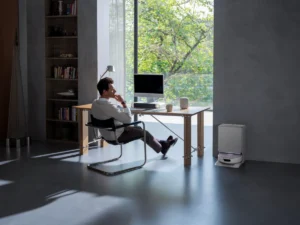
Located in Chicago, Layla & Ringo’s serves as a case study in modern utility. Tasked with creating a space that functions as both a morning coffee shop and a daytime remote-work hub, Alexander eschewed the common design tactic of discouraging loitering. Instead, she leaned into it. By providing high-quality natural light, diverse seating options ranging from sofas to standing counters, and acoustic-conscious "phone booth" nooks, she transformed a standard coffee shop into a functional community resource.
2. Dimmi Dimmi: The Nostalgia Factor
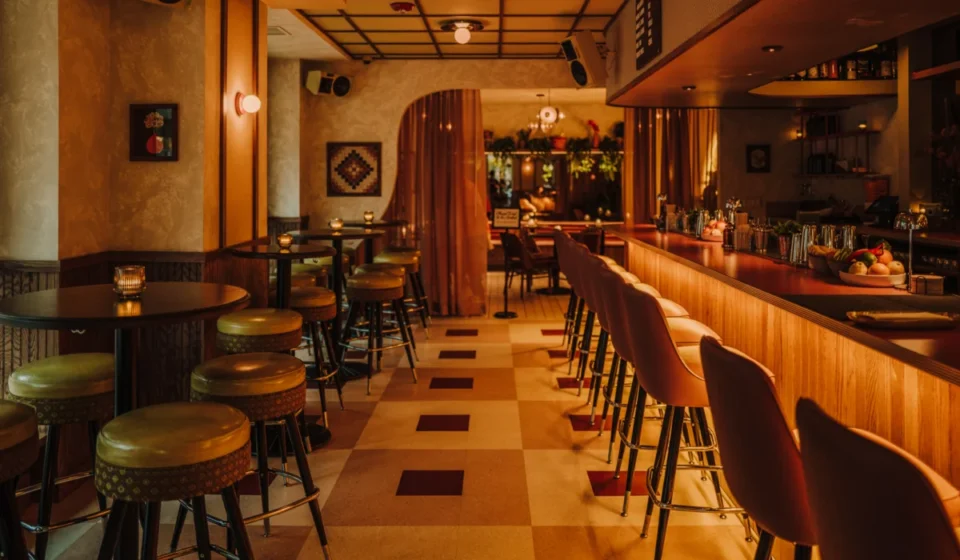
For Dimmi Dimmi, the goal was to evoke a sense of "borrowed memory." Alexander utilized traditional Italian-American visual cues—checkerboard flooring, deep-toned leather, and warm ambient lighting—to trigger an immediate sense of comfort. Crucially, the space avoids becoming a period piece through the strategic use of layered art and thrifted décor, ensuring the environment feels authentic rather than staged.

3. Hoffman House: The Residential Pivot
Alexander’s foray into residential design with Hoffman House highlights the studio’s adaptability. The project allowed for materials that would typically be deemed too delicate for commercial traffic, such as glass and marble pedestal sinks. The success of this project has signaled a shift for the firm, which is increasingly applying its hospitality-grade attention to detail to private, single-family homes.
4. El Che Steakhouse + Bar: Moody Sophistication
Working with long-time collaborator Chef John Manion, Alexander tackled the challenge of El Che. Because the kitchen revolves around live-fire cooking, the dining room needed to reflect that intensity. By incorporating oversized mirrors and metallic fixtures, Alexander allowed the literal sparks of the kitchen to permeate the room. The result is a dark, "sexy" environment that feels alive, with light dancing off surfaces to create a dynamic atmosphere.
5. Double Fun: Adaptive Reuse in the Gold Coast
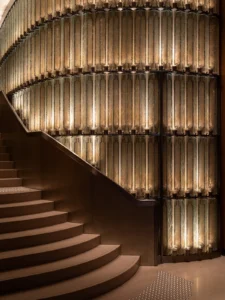
Perhaps the most dramatic project in the studio’s recent history is Double Fun. The site, formerly a generic, sterile retail bank, required a total personality transplant. Through the introduction of custom millwork, arched niches, and a signature curved bar, Alexander injected a sense of history into a characterless structure. The project exemplifies her mastery of flow—creating an entrance that beckons passersby and an interior that rewards exploration.

Official Perspectives: The Client-Designer Symbiosis
What sets Siren Betty apart in the competitive Chicago market is Alexander’s relationship with her clients. She views herself not as a dictator of style, but as a translator of vision. Her long-standing collaboration with Chef John Manion is the gold standard for this; she understands his culinary philosophy so deeply that the design of his spaces becomes an extension of the menu.
"The magic is really in the layering," Alexander notes. She believes that a space should never feel "done" the day it opens. Instead, it should be built with enough character that it can absorb the wear, tear, and personality of its patrons over time. This philosophy reflects a maturity in design that prioritizes longevity over fleeting trends.
Implications for the Future of Interior Design
As the lines between work, life, and hospitality continue to blur, the influence of firms like Siren Betty is likely to grow. The "hospitality-fication" of residential spaces—where homes demand more durable, multifunctional zones—is a trend that Alexander is perfectly positioned to lead.

Furthermore, her commitment to adaptive reuse, seen clearly in projects like Double Fun, addresses a critical need in the industry: sustainability. By choosing to work within existing envelopes and repurposing materials, Siren Betty demonstrates that high-end design does not require new construction. Instead, it requires the vision to see what a space could be, rather than what it currently is.
In an era where digital presence often dictates the success of a venue, Alexander’s work remains stubbornly physical. Her designs are meant to be felt, sat in, and experienced. By combining the soul of an estate-sale treasure hunter with the technical rigor of a commercial architect, Nicole Alexander has ensured that Siren Betty remains at the vanguard of American design. As the studio continues to explore new typologies, one thing is certain: the focus will remain on the guest, the craft, and the enduring power of a space that tells a story.