
In the landscape of contemporary art and industrial design, few entities operate with the provocative, disruptive frequency of the Brooklyn-based collective MSCHF. Known for their penchant for turning mundane consumer objects into manifestations of internet-age absurdity—ranging from the viral, cartoonish “Big Red Boots” to microscopic, handbag-sized renditions of luxury accessories—MSCHF has built a reputation on the subversion of the familiar. Their latest project, however, scales this subversion to the size of the open road.
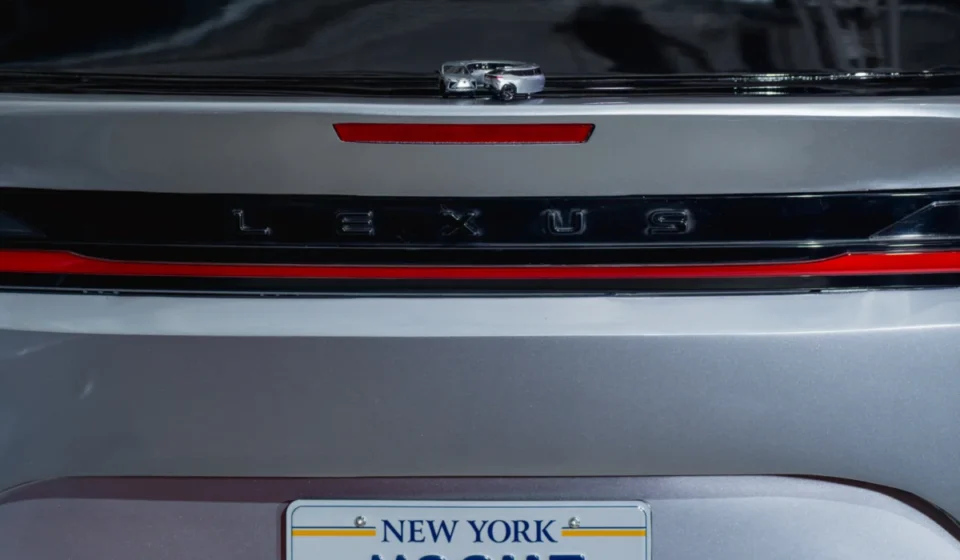
In a landmark collaboration with Lexus, the collective has unveiled MOTOMORPHOSIS, a daring exhibition debuting during New York’s prestigious Armory Week. The project features two production vehicles—the Lexus RZ 450e and the RX 450h+—transformed into surrealist automotive sculptures. These are not merely customized cars; they are physical manifestations of digital distortion, pushing the boundaries of how we perceive industrial mass and geometric possibility.
The Core Concept: From CAD to Concrete
At the heart of MOTOMORPHOSIS lies a fundamental shift in how we interpret the automobile. While traditional concept cars are typically engineered to showcase future technologies, aerodynamics, or interior advancements, MSCHF’s “Form Cars” ignore utility entirely. Instead, the collective treats the chassis as a canvas for software-driven manipulation.
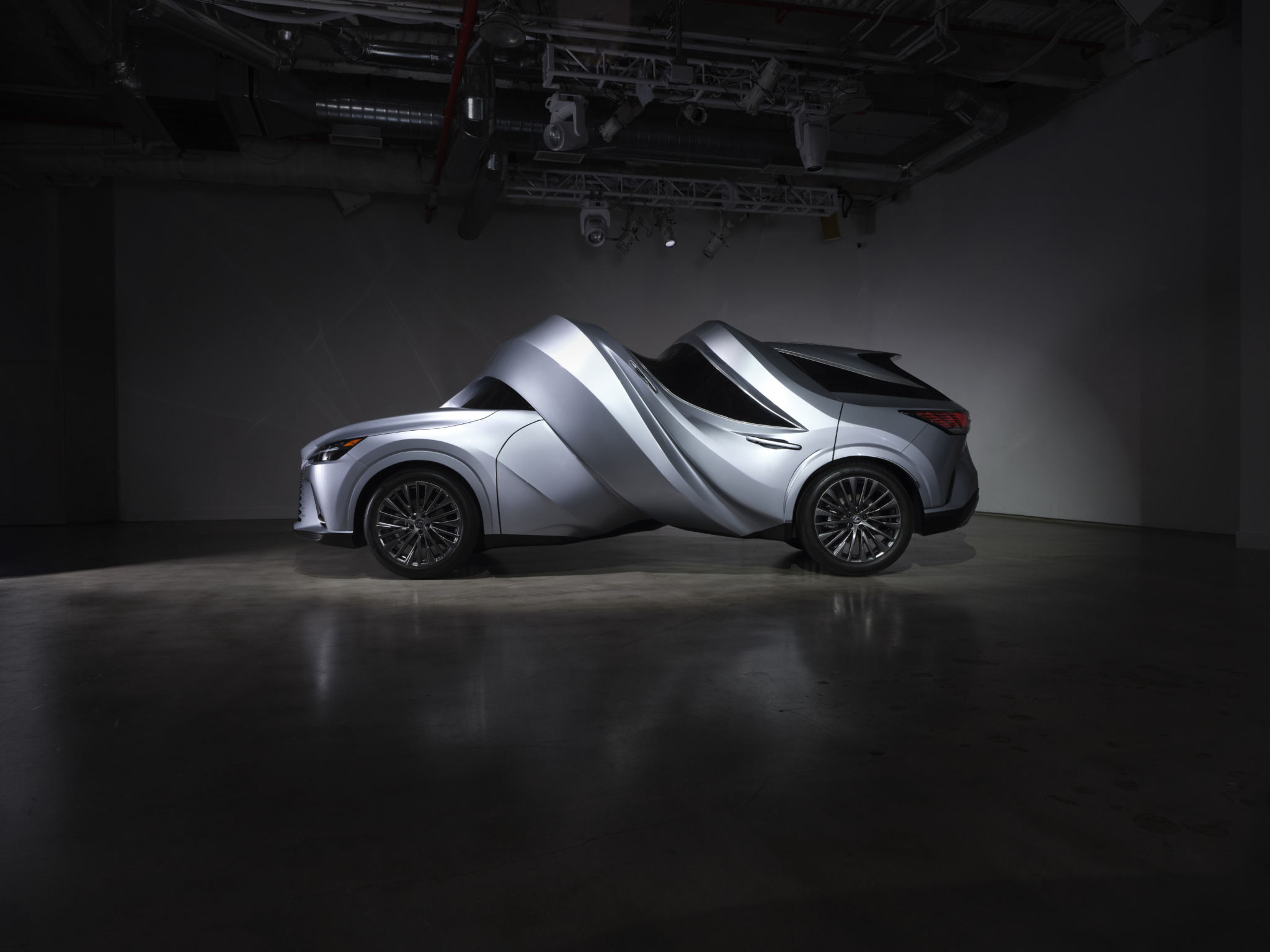
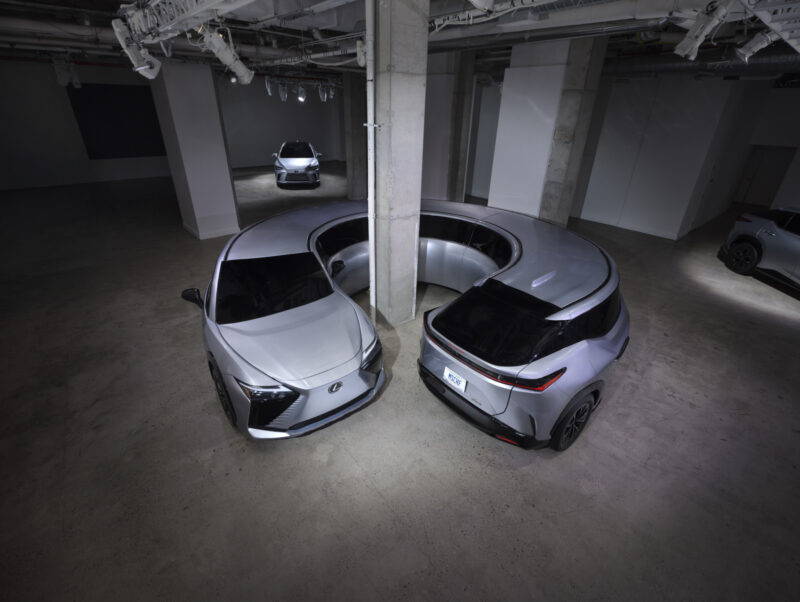
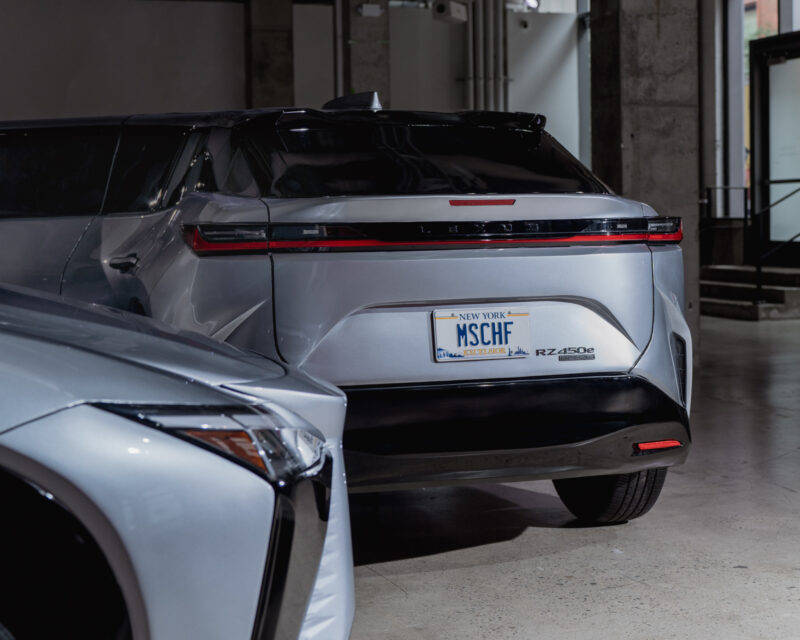
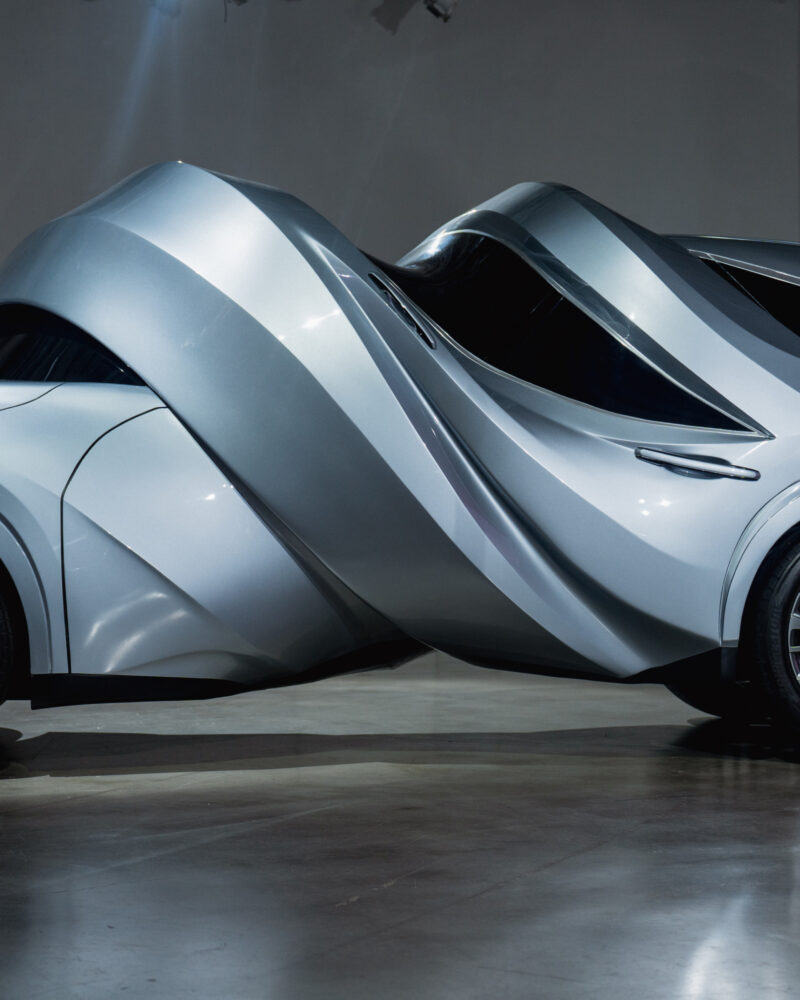
The exhibition features two primary sculptures. The Circle Car, based on the Lexus RZ 450e, is a feat of structural engineering that defies traditional vehicular logic. The body of the SUV has been stretched and curved until its front and rear bumpers meet in a continuous, seamless loop. The Twisted Car, utilizing the RX 450h+, explores a different aesthetic axis. Here, the vehicle appears to have been rotated along its longitudinal center, pulling the doors, window frames, and signature Lexus spindle grille into a hypnotic, structural spiral.
When placed alongside their factory-standard production counterparts, the contrast is jarring. The standard vehicles, representing the pinnacle of modern manufacturing, serve as the baseline against which the MSCHF sculptures are measured. The juxtaposition highlights not just a change in shape, but a fundamental change in the object’s identity—from a machine built for transport to a static entity built for contemplation.
Chronology of a Collision: Art Meets Industry
The partnership between a high-end luxury automaker like Lexus and an irreverent art collective like MSCHF represents an intriguing intersection of corporate branding and counter-culture creative direction.
- Early 2026 (Project Inception): Lexus approached MSCHF with the goal of exploring the future of electrification, not through mechanical performance, but through the emotional and visual potential of the automobile.
- Spring/Summer 2026 (Conceptualization & Design): The MSCHF team utilized high-end 3D modeling software to simulate distortions. The creative process mimicked the way digital artists manipulate meshes in programs like Maya or Blender, using “squash and stretch” techniques—a visual shorthand in 3D animation used to convey action or impact.
- August 2026 (Production): Fabrication teams worked to translate these purely digital geometries into physical, load-bearing sculptures. This involved extensive bodywork, structural reinforcement to maintain the “twisted” or “looped” poses, and high-fidelity painting to ensure the finishes matched the luster of the original production models.
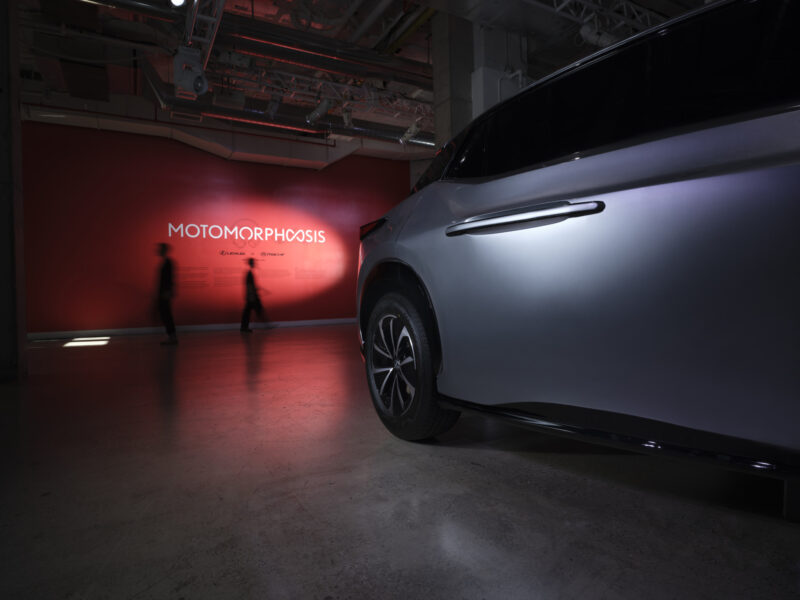
- September 2026 (Public Unveiling): MOTOMORPHOSIS opened to the public at Chelsea Industrial in New York City, coinciding with the city’s Armory Week.
The Philosophy of the “Smear Frame”
One of the most compelling aspects of the MOTOMORPHOSIS exhibition is its conceptual debt to animation. In the world of computer-generated imagery, artists often create “smear frames”—distorted images that appear only for a fraction of a second to suggest rapid motion. By stretching an object, the animator tricks the eye into seeing speed and force.
MSCHF has effectively taken these digital abstractions and given them physical mass. By freezing these “smear frames” in steel and aluminum, they force the viewer to confront the absurdity of the digital tools that define our modern lives. We see cars on our screens constantly—in advertisements, racing games, and design software—but we rarely see the logical consequences of the software’s ability to warp reality.
“These cars are not meant to be driven,” a spokesperson for the project noted. “They are meant to be understood as the byproduct of a world where form is subservient to software.”
Official Perspectives: Bridging the Gap
The collaboration marks a significant departure from typical automotive marketing. Lisa McQueen, senior manager of Lexus marketing, provided insight into why the brand chose to lean into such a radical, non-functional approach.
“Most conversations about electrification focus on how a vehicle is powered—the battery, the range, the torque,” McQueen stated during the opening ceremony. “MOTOMORPHOSIS asks a different question: What can electricity power in our imagination? Working with MSCHF allowed us to take the automobile beyond its familiar form and explore movement, transformation, and possibility in an entirely new way.”
For Lexus, the goal was to demonstrate that electrification is not just a technological shift but a creative one. By removing the necessity of the engine bay, the drivetrain, and the functional interior, the collaboration allowed the designers to view the car as a sculptural entity that could evolve in ways previously confined to the imagination.
Implications for Design and Automotive Culture
The implications of MOTOMORPHOSIS reach beyond the art gallery. As the automotive industry transitions toward electric vehicle (EV) platforms, the constraints of the traditional combustion engine—the long hood, the cooling grilles, the transmission tunnel—are vanishing.
1. The Death of Utility-Driven Design
For a century, “form follows function” has been the mantra of industrial design. A car was designed primarily to be aerodynamic and safe. MSCHF’s work suggests a future where, as autonomous driving and electrification become ubiquitous, the “function” of a car may change from “transportation” to “experience.” If a car doesn’t need to be a mobile living room or a high-performance machine, it can become an object of pure aesthetic sculpture.
2. The Digitization of Physical Reality
The project highlights our increasing comfort with digital manipulation. We are now so accustomed to seeing warped, filtered, and altered images on our devices that we have begun to project those digital sensibilities onto the physical world. MOTOMORPHOSIS acts as a bridge between the physical and the virtual, proving that our built environment is increasingly being shaped by the logic of the screen.
3. The New Role of Luxury Branding
By commissioning an art collective known for satire, Lexus is signaling a shift in luxury marketing. Luxury is no longer just about quality, craftsmanship, or status; it is about cultural relevance and the ability to spark conversation. By engaging with a group like MSCHF, Lexus is positioning itself not just as a car manufacturer, but as a curator of cultural discourse.
Conclusion: A Static Future
As visitors walk through the Chelsea Industrial space, the sight of the Circle Car and the Twisted Car remains both unsettling and deeply captivating. They are, in every sense, impossible objects. They exist in a state of permanent tension, frozen in a moment of digital transformation that can never resolve.
The exhibition invites the public to look past the badge and the spec sheet and consider the vehicle as a vessel for human creativity. MOTOMORPHOSIS serves as a reminder that as our tools become more powerful, our ability to manipulate our surroundings becomes limited only by our capacity for imagination. Whether this vision of a warped, surreal automotive future ever touches the consumer market remains to be seen, but for now, the MOTOMORPHOSIS exhibition stands as a defining moment in the intersection of high art, software, and the open road.
The exhibition remains on view at Chelsea Industrial in New York through September 26, 2026. For those unable to attend in person, the project continues to generate discourse across design forums and automotive publications, serving as a testament to the enduring power of the object, even when that object is pushed beyond the limits of its own reality.