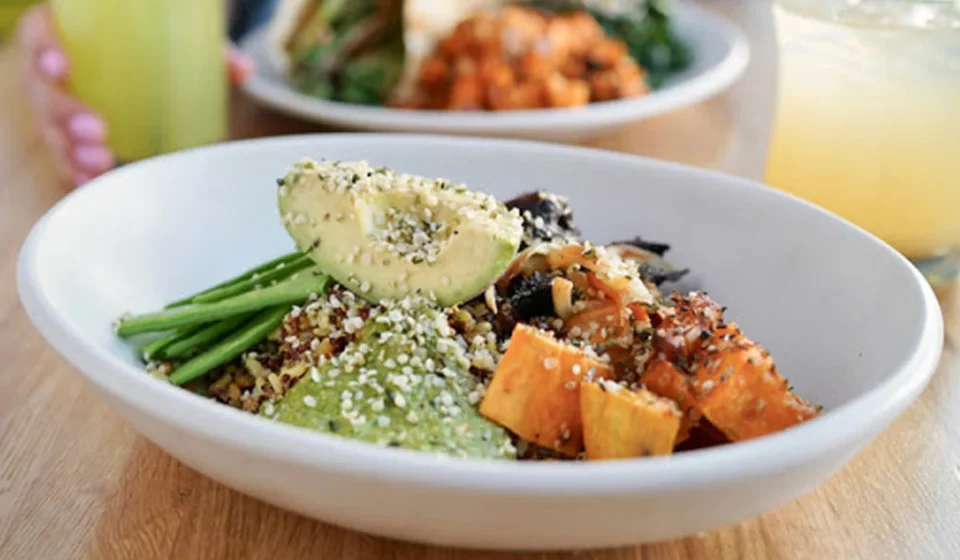
From Wellness Pioneer to Restructuring: The Turbulent Decline and Strategic Reset of True Food Kitchen

The wellness-driven restaurant industry, once viewed as a recession-proof haven for health-conscious diners, is facing a stark reality check. True Food Kitchen, the Phoenix-born brand founded on the principles of anti-inflammatory nutrition and ingredient-forward culinary craft, announced this Monday that it has officially filed for Chapter 11 bankruptcy. This move marks a pivotal moment for a chain that was once hailed as the future of “better-for-you” dining.
In a decisive effort to shed the weight of unsustainable financial commitments and operational inefficiencies, the company has shuttered 12 locations, leaving a footprint of 34 restaurants across 14 states. The brand now enters a court-supervised sales process, intended to stabilize its capital structure and refocus its mission on core profitability.
The Financial Landscape: A Struggle for Solvency
The collapse of True Food Kitchen is not the result of a single event, but rather a cascade of financial pressures that reached a breaking point. According to recent court filings, the company is grappling with approximately $42.1 million in total debt. This burden is complicated by a web of merchant cash advance agreements with various lenders—a form of high-interest financing that often serves as a red flag for companies struggling to access traditional credit lines.
To navigate the immediate fallout of the bankruptcy filing, the company has secured $20 million in debtor-in-possession (DIP) financing provided by HumanCO TFK IV. This critical infusion of capital is designed to keep the remaining 34 restaurants operational while the brand navigates the restructuring process.
The financial turmoil, however, runs deeper than just debt. Internal audits and court documents suggest that the company’s capital allocation in recent years was erratic, characterized by significant investment in failed prototypes and geographic expansion into markets that failed to yield the expected foot traffic.
A Chronology of Growth and Misstep
To understand the current state of True Food Kitchen, one must examine its 18-year evolution from a boutique wellness concept to a national chain.
The Origins: A Vision of Anti-Inflammatory Dining
Founded in 2008 by renowned wellness author Dr. Andrew Weil and prolific restaurateur Sam Fox, True Food Kitchen was positioned as a radical departure from the standard American casual-dining model. By emphasizing ingredients that minimize inflammation and support longevity, the brand carved out a niche that appealed to affluent, health-conscious consumers. Its early success under Fox Restaurant Concepts (FRC) was exponential, leading to a successful spinoff in 2017 when the chain reached its 20-location milestone.
The Era of Aggressive Expansion
Following the spinoff, the brand entered a period of rapid scaling. In 2022, the company celebrated a landmark $100 million funding round—the largest in its history. At the height of its expansion, the brand operated 46 locations. However, this growth phase occurred concurrently with significant leadership turnover, which many analysts now identify as the catalyst for the brand’s current woes.
The Pivot to Failure
As leadership changed, so did the vision. Under varying executive teams, the company began experimenting with off-brand concepts. One such venture, "True Food To-Go," a quick-service prototype launched in Tempe, Arizona, failed to gain traction, draining resources that could have been better spent on core restaurant operations. Furthermore, the COVID-19 pandemic forced the company to scramble; it pivoted toward ghost kitchens and delivery-only models—ventures that ultimately failed to align with the brand’s high-touch, "genuine hospitality" identity and have since been terminated.
Operational Failures and Leadership Turnover
The bankruptcy filing provides a rare, candid look into the internal discord that plagued the chain. Court documents highlight a lack of consistency in brand direction. Different leadership teams, lacking a cohesive strategy, authorized expenditures on food and beverage lineups that alienated the brand’s core demographic.
Management instability led to a fragmented operational strategy. Resources were poured into secondary markets where the "better-for-you" dining demographic was not sufficiently dense, leading to a portfolio of underperforming assets. By the time CEO Jeff Chandler was brought on board in July 2026, the company was already in a state of advanced financial distress. Chandler’s mandate was clear: evaluate the real estate portfolio, terminate non-essential staff, and assess potential strategic alternatives, including a sale.
Official Responses: A Path Toward Simplification
In the wake of the filing, CEO Jeff Chandler has taken a tone of measured optimism, emphasizing that bankruptcy is a "tool for survival" rather than an admission of defeat.
"True Food Kitchen is a pioneering brand with a distinctive position in wellness-driven dining, a loyal community of guests, and a mission that is more relevant than ever," Chandler stated. "This process is the best path forward to simplify the business and focus on what we do best: delivering craveable, health-forward food and genuine hospitality. We are confident this step will help us build a stronger True Food Kitchen for the future."
However, the human cost of the restructuring is significant. The closure of 12 stores has resulted in substantial layoffs. Addressing this, Chandler noted: "We know these decisions are especially hard on the team members affected, and we are deeply grateful for their contributions to True Food Kitchen and their communities. We are committed to approaching this difficult moment with care and respect."
Broader Implications for the Restaurant Industry
The True Food Kitchen saga serves as a cautionary tale for the "fast-casual" and "better-for-you" sectors. As the industry faces rising labor costs, volatile commodity pricing, and a shift in consumer spending habits, the following implications have emerged:
1. The Peril of Over-Extension
The rise and fall of True Food Kitchen underscore the dangers of "growth at all costs." When a brand expands beyond its core operational capability, the dilution of the customer experience becomes inevitable. The failure of the "To-Go" prototype demonstrates that brand equity in the wellness space is fragile and cannot be easily transposed onto different service models.
2. The Debt Trap
The reliance on high-interest merchant cash advances is an increasingly common, yet dangerous, strategy for retailers. When operational cash flow cannot cover debt service, and traditional banking options are unavailable, companies enter a cycle of borrowing that is rarely sustainable. True Food Kitchen’s $42.1 million debt load highlights the necessity for restaurateurs to maintain leaner, more flexible capital structures.
3. The Need for Strategic Focus
The industry is currently seeing a "return to basics." Brands that succeeded during the pandemic were those that doubled down on their core value proposition. True Food Kitchen’s attempt to diversify into ghost kitchens and high-speed service distracted from the very thing that brought guests through the door: the dining environment and the quality of the ingredients.
Looking Ahead: The Sales Process
As the court-mandated sales process begins, potential buyers will be looking for a brand that has been stripped of its "excess weight." The 34 remaining restaurants represent the core of the business—locations that have proven their profitability and community relevance.
The successful bidder will likely acquire a brand with a strong, loyal customer base and a menu that remains on-trend with global wellness movements. However, the new owners will face the immediate challenge of restoring staff morale, re-establishing brand consistency, and proving that the "better-for-you" concept can remain a viable, high-margin business in a post-bankruptcy environment.
For now, the focus for True Food Kitchen is survival. Whether the brand can successfully pivot back to its roots or if it will be absorbed into a larger hospitality group remains to be seen. What is certain is that the company’s 18-year journey has reached a definitive fork in the road—one that will either lead to a successful reinvention or the quiet dissolution of a once-pioneering name in American dining.
Related posts: