IMEX America 2026: A Pulse Check on the Future of Global Meetings and Events

As the curtains rise on IMEX America 2026, the energy on the show floor serves as a barometer for the global meetings, incentives, conferences, and exhibitions (MICE) industry. Following a robust start, the second day of the event reinforced a singular theme: the industry is not just recovering—it is aggressively evolving. From multi-billion-dollar infrastructure projects in major U.S. hubs to the burgeoning intersection of wellness and corporate travel, the conversations at this year’s gathering point toward a future defined by scale, sustainability, and human-centric design.
The Pillars of Growth: Infrastructure and Expansion
The primary narrative driving the 2026 edition of IMEX is one of long-term investment. Destination marketing organizations (DMOs) and hotel groups are placing massive bets on the longevity of the meetings market, with several key announcements highlighting a new era of capacity expansion.
Orlando’s Grand Concourse Vision
Orlando continues to cement its status as a global powerhouse for large-scale conventions. The Orange County Convention Center (OCCC) has officially broken ground on the $650 million "Grand Concourse Expansion." Slated for completion in late 2029, this project is a strategic response to the demand for more versatile, high-capacity space. The expansion will deliver 44,000 square feet of additional meeting space and a massive 100,000-square-foot ballroom capable of hosting between 5,000 and 10,000 attendees. This development signals Orlando’s commitment to capturing the largest global congresses, ensuring the city remains competitive in an increasingly crowded international market.

Cincinnati and the "Queen City" Momentum
Cincinnati (Visit Cincy) is making a compelling case for planners looking for mid-market accessibility paired with major-market infrastructure. With the $226 million renovation of the First Financial Center now complete—boasting 750,000 square feet of total event space—the city is aggressively booking for 2028 and beyond. Complementing this is the ongoing construction of a new 700-room Marriott Convention Center hotel, a critical asset for planners who prioritize keeping delegates in close proximity to the main event footprint.
Los Angeles: Preparing for the World Stage
The Los Angeles Convention Center (LACC) is currently undergoing a "glow-up" of historic proportions. With a $2.62 billion modernization project underway, the city is preparing to welcome the world for the LA28 Summer Olympics. The project aims to add 190,000 square feet of event space, significantly increasing the LACC’s ability to host concurrent, large-scale events. A standout feature will be the "Skynode" atrium—a sun-filled, glass-encased connector that links the two existing buildings, blending Southern California’s climate with state-of-the-art architectural design.
Corporate Innovation and Brand Engagement
IMEX has always served as a canvas for brand storytelling, and this year, Caesars Entertainment took a bold approach. By transforming The Cromwell into "The Vanderpump Hotel," the company aimed to break the monotony of the traditional trade show floor. Their "Be You" disco booth was more than a marketing gimmick; it served as a practical demonstration of the wellness initiatives Caesars has championed over the past three years, proving that corporate events can successfully integrate play and mental rejuvenation.

Meanwhile, MGM Resorts provided a sneak peek into the future of luxury hospitality. The upcoming renovation of the Aria Resort & Casino, beginning in late 2026, will introduce a "desert-inspired" aesthetic. Utilizing warm ivory tones and organic textures, the renovation—which will be phased floor-by-floor to ensure minimal disruption—reflects a broader trend of moving away from sterile, corporate room design toward spaces that feel like elevated, residential retreats.
The Wellness Economy: A Multi-Trillion Dollar Shift
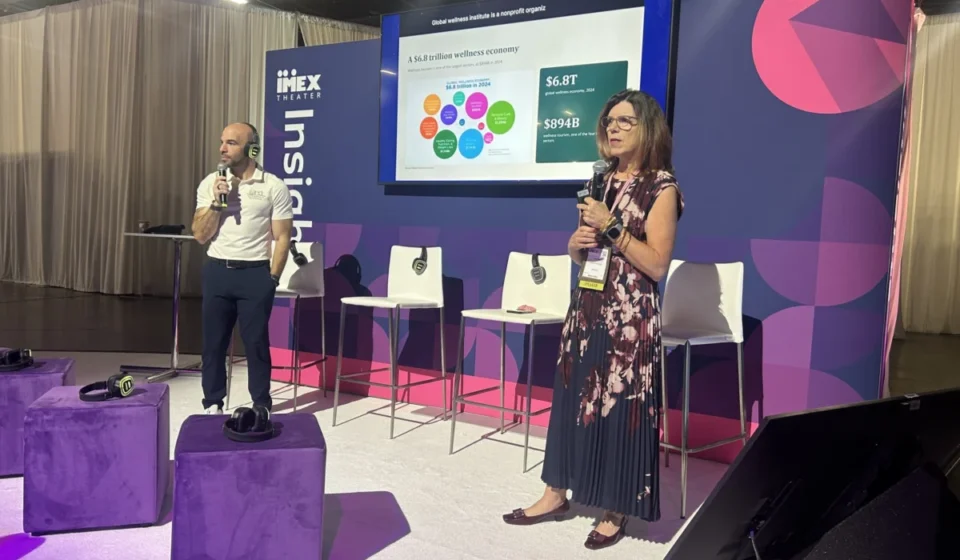
Perhaps the most significant intellectual shift at this year’s IMEX is the professionalization of wellness within the travel industry. David T. Stevens, co-founder of Olympian Meeting, and Lisa Starr, owner of Wynne Business, presented compelling data on the $900 billion wellness tourism sector.
Data-Driven Wellness
According to the Global Wellness Institute, wellness tourism now ranks as the fourth-largest segment of the nearly $7 trillion global wellness economy, trailing only personal care, nutrition, and physical activity. The projection is staggering: the wellness economy is expected to reach $9.75 trillion by the end of the decade.
The economic implications for planners are clear. Domestic wellness tourists spend 137% more than the average traveler, driven by higher education and income levels. However, as Stevens noted, the demand isn’t just about spas; it’s about behavior. Attendees are increasingly seeking "restoration over exhaustion." This translates into a demand for "clean" food options, customizable menus (e.g., sauces on the side), and spaces that prioritize natural light and air quality. For the modern planner, wellness is no longer a "nice-to-have" add-on; it is a core logistical requirement.
Cultivating the Next Generation: Education and Advocacy
The industry is acutely aware of the "talent gap," and this year’s IMEX programming directly addressed the recruitment and retention crisis.
The UNLV Panel Discussion
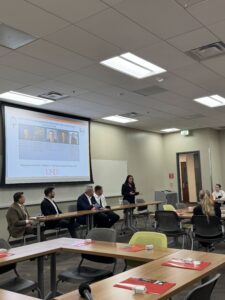
Multimedia Editor Eming Piansay attended a high-level panel at the University of Nevada, Las Vegas (UNLV), featuring leaders from MGM Resorts, Boyd Gaming, and Prestige Global Meeting Source. The consensus among panelists was sobering but actionable: the industry must reconcile the struggle of staffing shortages with rising service expectations. The advice for students was universal: prioritize volunteer work and tangible experience. "Get noticed by doing the work," was the overarching message for those looking to enter the field.

EIC’s "Pathway" Initiative
The Events Industry Council (EIC) utilized IMEX to launch "Pathway," a comprehensive workforce initiative designed to align career awareness, skill-building, and mentorship under a single framework. Stephanie Harris, EIC Board Chair and President of the Incentive Research Foundation, emphasized that solving the labor shortage is a collective responsibility. "Building the workforce our industry needs cannot be the responsibility of any one organization," Harris stated. By integrating resources and partnerships into a unified process, Pathway aims to make the MICE industry a more visible and viable career path for the next generation.
Global Perspectives: Washington D.C., Mexico, and Beyond
The international presence at IMEX was robust, with several key regions showcasing their growth.
- Washington D.C.: CEO Elliott Ferguson of Destination DC highlighted the city’s massive infrastructure push. Beyond new cultural venues like the Milken Center and the National Geographic Museum of Exploration, the city is betting big on the airport experience. Dulles International Airport (IAD) is embarking on a decade-long renovation to transform it into a world-class gateway, acknowledging that the arrival experience is now a critical component of destination competitiveness.
- Grupo Posadas: Mexico’s leading hotel group, led by Enrique Calderon, reported a 20% increase in appointments compared to last year. The expansion of the Grand Fiesta Americana Riviera Cancun—which will feature 650 rooms and an 80,000-square-foot convention center—underscores their intent to capture the massive demand for groups exceeding 2,000 attendees, a segment previously underserviced in that region.
- Scotland and Boston: The spirit of collaboration was highlighted by a ceremonial bowl gifting between VisitScotland and Meet Boston. The event celebrated the growing cultural and economic ties between the two cities, solidified by the exchange of visitors during the 2026 FIFA World Cup.
Implications for the Future
The takeaway from day two of IMEX America 2026 is that the meetings industry has entered a phase of "calculated scale." Infrastructure projects are no longer just about adding rooms; they are about creating integrated ecosystems that serve the health and professional development of the attendee.
For the planner, the landscape is increasingly complex. One must balance the technical requirements of massive convention centers with the hyper-personalized, wellness-oriented needs of the modern attendee. Furthermore, the reliance on human talent remains the industry’s greatest challenge. As the industry moves toward 2030, the ability to balance the physical expansion of venues with the professional development of the workforce will determine which destinations and organizations rise to the top.
The data suggests a bright, if demanding, future. With the wellness economy set to explode and major cities investing billions into their "global footprint," the industry is poised to remain a critical driver of both the global economy and human connection.