The Anatomy of Courage: Radim Malinic’s ‘Daring Forever’ Challenges the Myth of the Fearless Creative

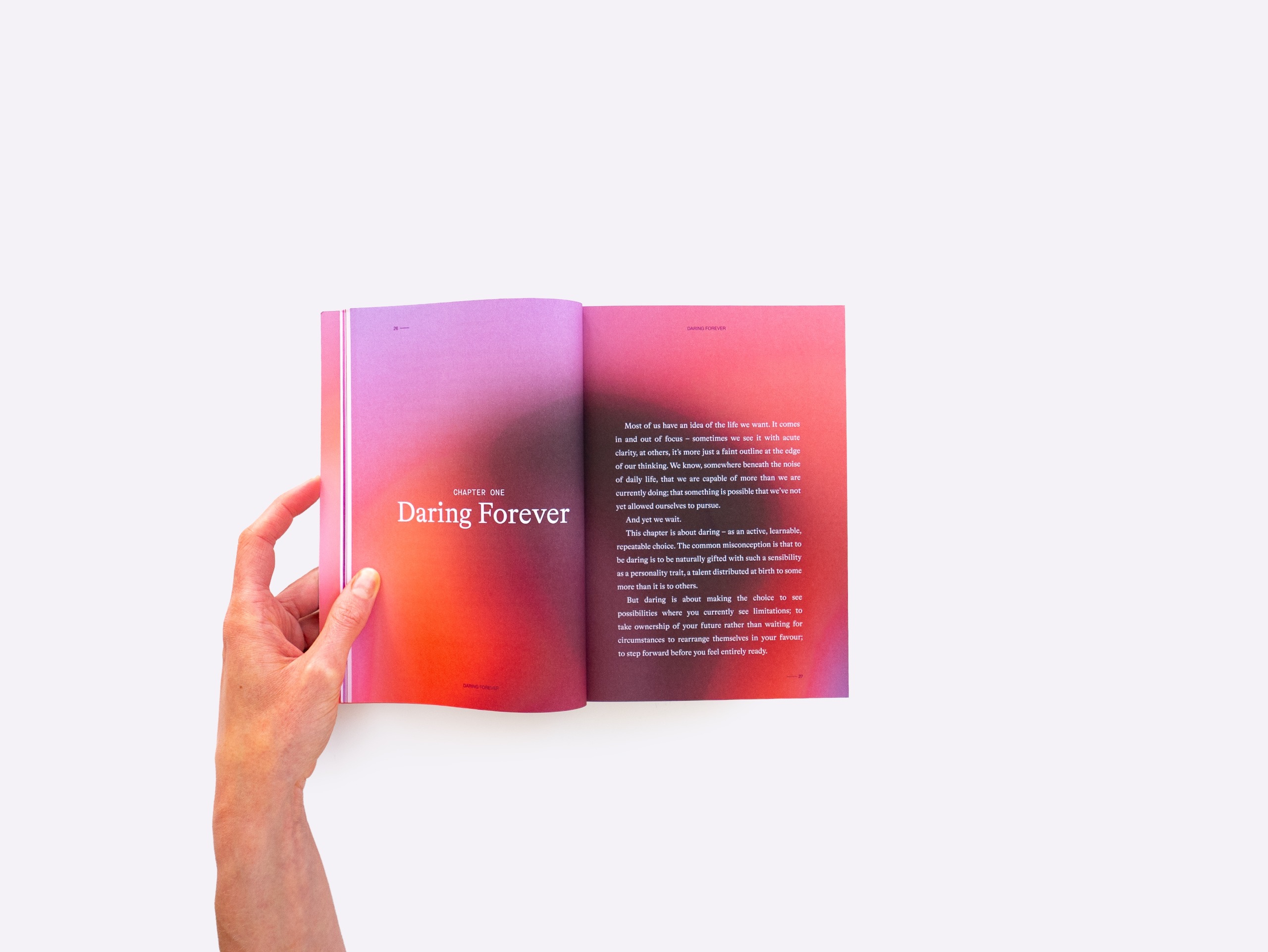
In the hyper-competitive landscape of the modern creative industry, the ability to take risks is often romanticized as a trait bestowed upon a select few "visionaries." We view courage as a destination—a state of being where fear no longer exists. However, acclaimed creative director, designer, and bestselling author Radim Malinic argues that this perspective is fundamentally flawed. In his latest release, Daring Forever, Malinic dismantles the myth of the fearless creative, reframing courage not as a personality trait, but as a latent, universal human capacity that can be cultivated by anyone, at any time.
The Core Thesis: Redefining Daring in a Digital Age
At its heart, Daring Forever serves as a profound meditation on the intersection of human vulnerability and professional ambition. Malinic posits that the most significant breakthroughs in art, design, and business are rarely born from a lack of fear; rather, they are the products of individuals who acknowledge their apprehension and choose to lean into it regardless.
"Daring isn’t a personality trait reserved for the fearless," Malinic asserts. "It’s a human capacity we all carry, and it’s never too late to use it."
The book functions as both a philosophical treatise and a practical manual. By analyzing the "lean"—that infinitesimal moment of hesitation before we commit to a blank page, a new venture, or a life-altering decision—Malinic attempts to provide the "owner’s manual" for the human experience that so many of us feel we were never issued.
A Chronology of Creative Empowerment
To understand the significance of Daring Forever, one must look at the trajectory of Malinic’s career. A veteran of the creative industry, Malinic has spent decades working at the intersection of branding, visual arts, and psychological exploration. His previous works, which have ranged from technical branding guides to deeply personal treatises on mindfulness and mental health, have established him as a mentor for a generation of digital creatives.
- The Early Foundation: Malinic’s early career was defined by the rapid evolution of digital design. As he navigated the transition from traditional media to the digital-first era, he began to document the psychological toll of creative output.
- The Shift toward Mentorship: Following his initial success as a designer, Malinic pivoted toward knowledge sharing. His transition into writing was prompted by a desire to bridge the gap between technical skill and emotional resilience.
- The Research Phase: Over the past several years, Malinic conducted extensive interviews with high-performing creatives, entrepreneurs, and artists. It was during these sessions that the "pattern of the afraid" emerged—the realization that those who appear the most confident are often navigating the highest levels of internal doubt.
- The Synthesis: Daring Forever is the culmination of this research. It marks a transition from his previous, more industry-specific books toward a broader, more human-centric exploration of the creative spirit.
The Data of Doubt: Why Fear is a Creative Necessity
While Daring Forever is a narrative-driven book, its core arguments are supported by the empirical observations Malinic made while interviewing industry leaders. The book highlights several recurring phenomena that plague the creative workforce:
- The Imposter Threshold: Malinic notes that nearly 85% of the high-achieving professionals he interviewed cited recurring feelings of "imposter syndrome" as their primary barrier to innovation.
- The Risk-Reward Paradox: Statistical data within the creative sector suggests that "safe" projects—those designed to avoid failure—consistently underperform in terms of both long-term brand equity and personal satisfaction compared to projects that involved a high degree of perceived risk.
- The Burnout Cycle: Malinic identifies a direct correlation between the suppression of creative fear and the acceleration of professional burnout. By attempting to "numb" the anxiety of creation, professionals often lose the curiosity that drives their best work.
These observations form the backbone of the book’s actionable advice. Malinic argues that when we accept that "nobody has it figured out," we remove the weight of perfectionism, allowing for a more authentic and daring creative process.
Official Perspectives: The Philosophy of the "Lean"
The promotional materials surrounding Daring Forever describe the book as a "love letter" to the human condition. In a formal statement regarding the launch, the publisher noted:
"’Daring Forever’ begins at the edge of something—a blank page, a stage, a life we haven’t quite stepped fully into yet. The rope feels unattached. The drop looks real. And still, something in us leans forward. The book is a love letter to that lean: to the body that carries us further than we believe it can, to the self we are still learning to accept, to the curiosity that refuses to sit still, and to the gratitude that brings us home to the present."
Malinic himself emphasizes that the book is not designed to be a "quick fix" or a motivational platitude. Instead, he positions it as a companion for the long haul. "After years of interviewing remarkable people, I noticed the same pattern," he explains. "The ones doing the most daring work were often the most afraid. Nobody has it figured out, and that’s the point. Your body is the vehicle, and you’re the driver. Most of us were never given the owner’s manual. This book is my attempt to write one."
Implications for the Future of Work
The implications of Daring Forever extend far beyond the creative arts. In an era where AI and automation are beginning to handle the technical aspects of design and production, the "human" element of creativity—our capacity for risk, empathy, and intuitive leaps—is becoming our most valuable asset.
Redefining Professional Success
Malinic’s work suggests a shift in how companies and individuals define success. If daring is a universal capacity, then organizations that foster an environment where "fear is acknowledged rather than penalized" will naturally outperform their competitors. This represents a significant shift in corporate culture, moving away from rigid KPIs toward a more holistic view of professional well-being.
The Role of Mindfulness in Design
A recurring theme in the book is the importance of grounding. Malinic argues that curiosity is the antidote to fear, but curiosity can only exist if we are present. By practicing mindfulness, the creative can detach from the outcome of their work and focus on the process, thereby making the act of "daring" less intimidating.
Sustaining Long-Term Creative Output
For the individual creator, Daring Forever offers a roadmap for longevity. By normalizing fear, Malinic provides a framework that prevents the "creative death" that often follows a major failure or a prolonged period of burnout. It encourages readers to view their career not as a series of deliverables, but as a continuous evolution of the self.
Conclusion: A Call to Action
Daring Forever is not merely a book to be read; it is a catalyst for change. As the creative industry continues to face unprecedented disruption, the need for a recalibrated approach to risk and self-acceptance has never been greater.
Whether you are a seasoned creative director grappling with the weight of expectation or a student standing at the edge of your professional life, Malinic’s message remains the same: the fear you feel is not a stop sign; it is a signal that you are operating at the edge of your potential. By choosing to "lean in," you are not just creating better work—you are becoming a more daring version of yourself.
Daring Forever is currently available in paperback, Kindle, and audiobook formats, providing multiple entry points for those ready to navigate their own "owner’s manual" for the creative life. As the industry moves forward, Malinic’s latest work serves as a timely reminder that while the drop may look real, we are more capable of the leap than we dare to believe.