

Meta Pivots Strategy: Camera-Free "Luna" Smart Glasses Aim to Sidestep Growing Privacy Backlash

SAN FRANCISCO — Facing mounting regulatory scrutiny, widespread public backlash, and blanket bans across international venues, Meta is reportedly preparing to launch a radically different type of wearable technology: a pair of smart glasses entirely devoid of a camera.
Citing supply chain and industry sources, a report by The Information indicates that Meta is readying a camera-free smart eyewear device, internally codenamed Luna. The device is slated for an official unveiling at the upcoming Meta Connect developer conference, scheduled for September 23 and 24, with retail shipments potentially kicking off as early as October.
The strategic shift marks a critical turning point for the social media giant. After years of pushing image- and video-capturing hardware as the vanguard of augmented reality and everyday AI integration, Meta is seemingly bowing to the reality that continuous video recording capabilities on the face have created a public relations and privacy nightmare.
Main Facts: What We Know About Project Luna
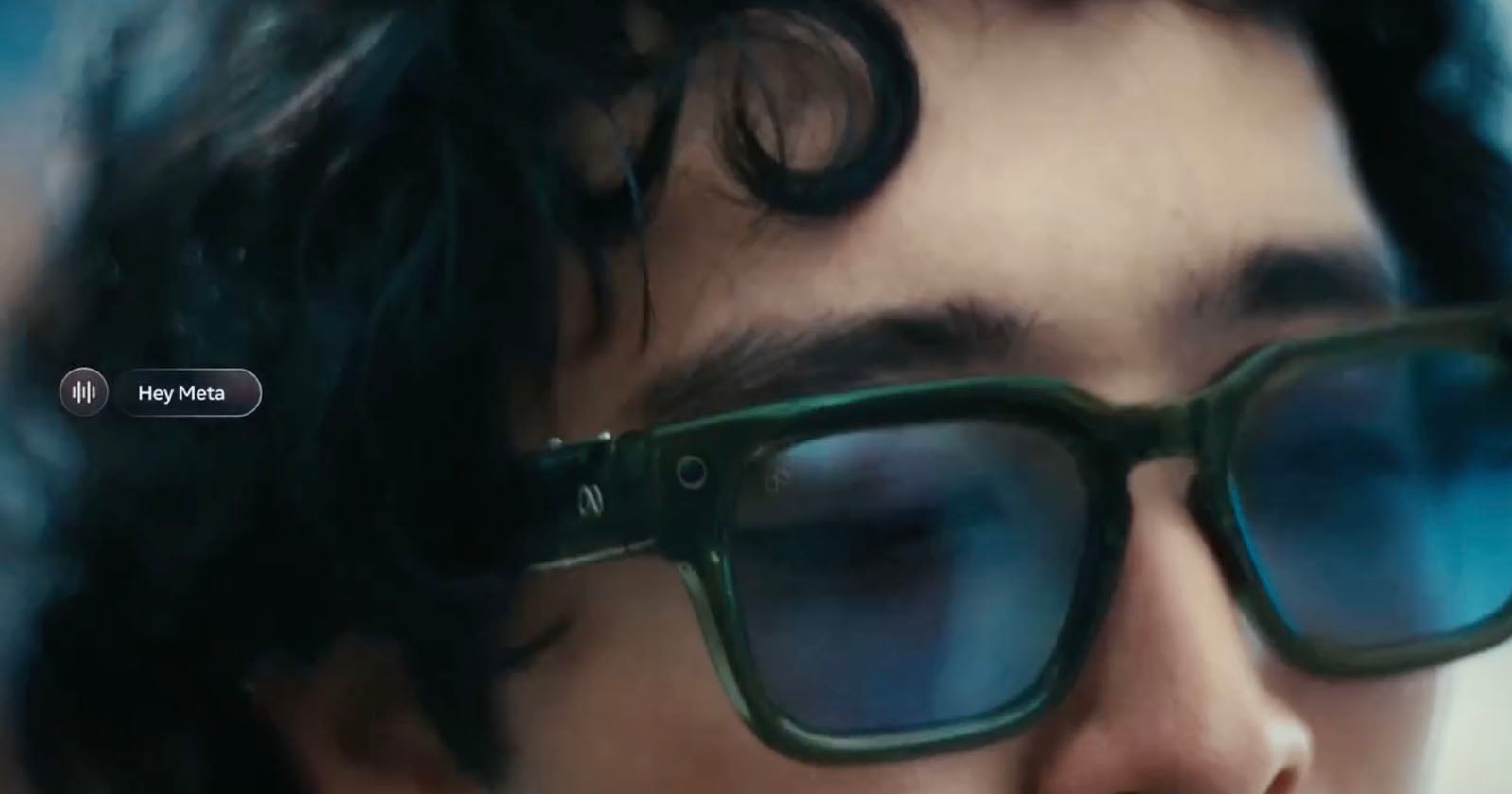
Project Luna represents a distinct departure from Meta’s current generation of Ray-Ban smart glasses. Rather than focusing on optical capture, Luna focuses on ambient audio computing and conversational AI.
According to leaks, Luna will feature:
- No Optical Camera: By completely eliminating the camera sensor and its accompanying hardware stack, Meta has solved several engineering hurdles.
- Sleeker Form Factor: The removal of bulky camera modules allows for significantly slimmer temple arms, making Luna visually nearly indistinguishable from traditional, high-end optical frames.
- Design Options: The glasses are expected to launch in two classic eyewear silhouettes: Clubmaster and Burbank.
- Six-Microphone Array: Instead of recording video, Luna relies on six built-in microphones to capture voice commands and ambient sound.
- Advanced AI Integration: Users will interact natively with Meta AI and the company’s new Muse AI agent. A dedicated physical button on the side of the frame will provide instant, tactile access to AI functions.
- Directional Audio: Built-in speakers are engineered to beam sound directly into the wearer’s ears, facilitating private listening experiences without isolating the user from their physical environment.
In addition to Luna, sources indicate Meta plans to offer a glimpse of another hardware project during the upcoming Connect conference. Codenamed Phoenix, this second device is an advanced, true augmented reality (AR) platform capable of projecting virtual workspaces and cinematic screens into the user’s field of view. However, Phoenix is not expected to hit consumer markets until 2027.
Chronology: The Escalation of the Smart Glasses Privacy Crisis
To understand why Meta is releasing a camera-free wearable, one must look at the rapid deterioration of public trust surrounding its current camera-equipped devices.
- Late 2023 – 2025: Meta’s second-generation AI-powered smart glasses (developed in partnership with EssilorLuxottica) enjoy strong initial sales. Features like live streaming, photo capture, and real-time visual analysis via Meta AI are marketed as futuristic conveniences.
- Mid-2026 (Summer): The cultural backlash reaches a boiling point. The combination of inconspicuous recording indicators, widespread adoption, and malicious exploitation leads to a wave of harassment incidents. Bad actors begin utilizing the glasses to secretly record unsuspecting citizens in public, restaurants, and private spaces, uploading the footage online to mock or embarrass subjects.
- August 2026: Public tolerance evaporates. A sweeping wave of venue bans hits the United Kingdom, where nightlife operators and public spaces bar users from wearing Meta smart glasses on their premises.
- Late August 2026: The backlash spreads stateside. Prominent New York City nightclubs and entertainment venues institute strict no-wear policies, threatening permanent bans for any patrons caught wearing camera-equipped smart glasses inside.
- September 1, 2026: In an aggressive move to combat tampering, Meta introduces a controversial software update designed to combat privacy workarounds. The update actively "bricks"—or permanently disables—thousands of smart glasses if sensors detect that the recording LED indicator has been physically removed, damaged, or bypassed.
- September 23–24, 2026 (Upcoming): Meta Connect conference, where Project Luna is expected to take center stage as an alternative, camera-free vision of the future.
- October 2026 (Projected): Expected commercial launch and global shipping of the Luna smart glasses.
Supporting Data: The Anatomy of a Surveillance Backlash
The friction between wearable technology and public privacy is not new, but camera-equipped smart glasses have accelerated anxieties to an unprecedented degree. Google famously stumbled a decade earlier with "Google Glass," which suffered a swift social death due to the cultural creepiness of a prominent, face-mounted camera.
Meta attempted to bypass this stigma by embedding the camera into fashionable frames and introducing a flashing LED recording light. However, tech-savvy bad actors quickly figured out how to obscure the light with tape, custom modifications, or software patches. This prompted Meta’s drastic step of remotely bricking modified glasses—a move that raised separate consumer rights concerns regarding device ownership and software obsolescence.
Despite these countermeasures, the fundamental unease remained: consumers do not want strangers secretly filming them without explicit consent. Market research from mid-2026 indicates that nearly 64% of surveyed patrons in urban nightlife districts view camera-embedded facial wearables as an active threat to personal privacy. By shifting to an audio-first, camera-free model with Luna, Meta hopes to reset consumer perception and re-enter markets and venues that have banned its hardware outright.
Official Responses and Industry Context
Meta’s executive leadership has remained largely tight-lipped regarding specific leaks ahead of Meta Connect, though company representatives have repeatedly emphasized their commitment to privacy and safety controls on current-generation hardware.
In statements accompanying recent anti-tampering software updates, Meta stressed that safeguarding public trust is paramount. "We build privacy into our products from the ground up," a Meta spokesperson noted following the rollout of the LED-bricking security patches. "We have zero tolerance for attempts to disable physical privacy indicators designed to notify others when media is being captured."
However, privacy advocates argue that removing the camera does not completely clear Luna of ethical complications. Civil liberties groups have pointed out that a device featuring a six-microphone array, constant AI listening capabilities, and an unassuming optical design introduces a distinct, yet equally concerning, set of privacy vectors.
The debate mirrors parallel controversies in consumer tech. For instance, the release of the Apple Watch Series 12 reignited discussions over ambient, always-on audio monitoring and health tracking data processing. Critics note that while an audio-only device like Luna cannot film a person without their consent, it is fully capable of capturing private conversations, sensitive business meetings, and ambient audio data in public and private spaces alike.
Implications: A New Era for Ambient Computing or Just a Diversion?
The debut of Project Luna carries profound implications for the wearable technology sector, Meta’s hardware strategy, and the future of human-computer interaction.
1. Market Rehabilitation
If Luna successfully captures consumer interest, it could offer Meta a vital escape hatch from the regulatory and social crosshairs currently targeting its camera glasses. By trading optics for audio, Meta can market Luna as a productivity and lifestyle tool—focusing on note-taking, hands-free messaging, and conversational AI assistance—without the baggage of the "creepy camera" stigma.
2. The Normalization of "Always Listening"
While Luna removes the fear of being filmed, it deepens society’s reliance on continuous ambient listening. As users increasingly converse with AI agents like Muse and Meta AI on the go, questions surrounding data retention, voice biometric collection, and corporate eavesdropping will inevitably take center stage. Regulators in the European Union and the United States are expected to scrutinize how Luna processes and stores voice data.
3. A Stepping Stone to True AR
By parsing out its hardware releases—Luna in late 2026 for audio/AI, and Phoenix in 2027 for full augmented reality—Meta is adopting a measured, iterative product roadmap. This allows the company to refine its AI agent ecosystem and build consumer trust in lightweight smart frames before asking the public to embrace complex, head-mounted optical displays.
As the tech world looks toward San Francisco for Meta Connect later this month, all eyes will be on whether consumers are willing to embrace a camera-free future—or if the baggage of Meta’s past missteps will follow its frames wherever they go.
Related posts: