
Published: October 2, 2026
Source: Industry Reports / Robb Report
Main Facts
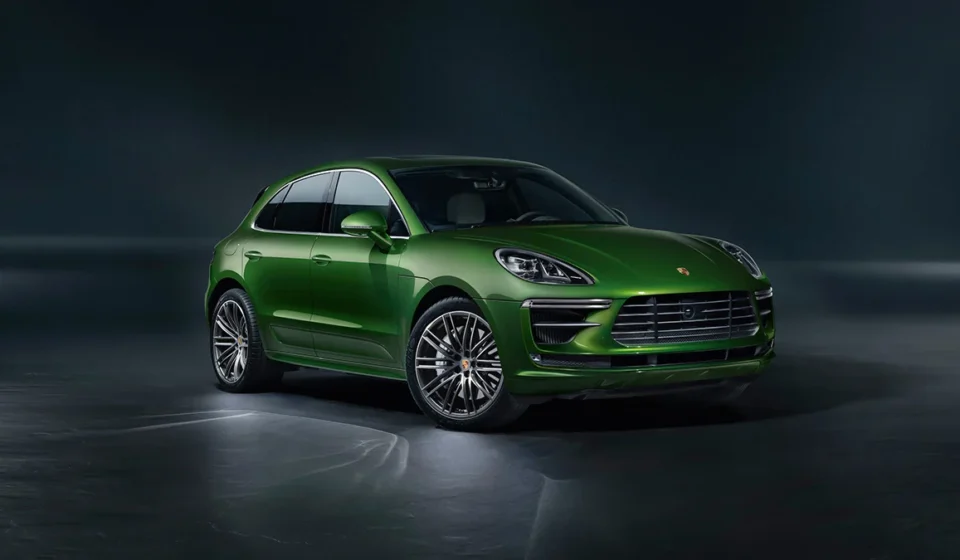
In a significant strategic pivot that signals a recalibration of the automotive industry’s aggressive push toward total electrification, Porsche has announced plans to bring back the gas-powered internal combustion engine (ICE) version of its best-selling Macan SUV.
The unexpected reversal was confirmed by Porsche’s new Chief Executive Officer, Mark Leiters, during his inaugural interview with international media since taking the helm of the storied German sports car manufacturer in January. Speaking with The Financial Times, Leiters outlined a pragmatic blueprint for the brand’s future, one that rejects an all-or-nothing approach to propulsion in favor of a balanced, dual-track portfolio.
Rather than phasing out traditional combustion engines entirely in pursuit of a battery-electric vehicle (EV) monopoly, Porsche is restoring the gas-powered Macan to sit alongside its all-electric sibling. The new ICE Macan is anticipated to hit global markets by 2028.
This policy shift comes in response to evolving market conditions, consumer hesitation, and a notable slump in profitability—exacerbated by a sharp decline in sales within the critical Chinese market. While Porsche remains committed to its long-term electrification goals, the company has recognized that consumer demand for internal combustion remains robust, particularly within the lucrative luxury performance segments.
Chronology of Events
To understand how Porsche arrived at this strategic crossroads, it is necessary to examine the timeline of the Macan’s evolution, the regulatory hurdles it faced, and the leadership changes that precipitated its return.
2014–2023: The Reign of the Original Macan
- November 2013: Porsche unveils the first-generation Macan at the Los Angeles Auto Show, establishing a new benchmark for compact luxury performance SUVs.
- 2014–2023: The gas-powered Macan becomes an immediate commercial powerhouse. It consistently ranks as one of—if not the—best-selling vehicle in Porsche’s global lineup, driving massive volume and securing vital profits for sports car development.
2024: The EV Transition and Regulatory Roadblocks
- Early 2024: Porsche officially introduces the second-generation, purely electric Macan EV, signaling the brand’s aggressive pivot toward zero-emission motoring.
- Throughout 2024: The automaker faces shifting European regulatory landscapes. Due to impending and stringent European Union cybersecurity rules that the legacy electrical architecture of the first-gen ICE Macan cannot cost-effectively meet, Porsche is forced to discontinue sales of the gas-powered model in the EU.
2025–Early 2026: Sales Volatility and Leadership Shake-Up
- Mid-2025: Anticipating regulatory cutoffs and lingering consumer demand for combustion engines, reports emerge that Porsche is stockpiling gas-powered Macans in North America and other permissive markets.
- January 2026: Mark Leiters, former CEO of McLaren, takes over as the CEO of Porsche, inheriting a company grappling with contracting sales in China and margin compression.
- H1 2026 Financial Reports: Sales data reveals a complex reality: global sales of the first-gen gas Macan tumble by roughly 40 percent year-over-year in the first half of 2026 (largely driven by the forced European withdrawal), while the newer electric Macan sees a modest 2 percent uptick—a growth rate falling well short of initial corporate expectations to fully offset the legacy vehicle’s volume.
October 2026: The Announcement
- October 2, 2026: In his first major interview with international media, CEO Mark Leiters formally announces that the gas-powered Macan will return to the lineup by 2028, operating as a parallel offering to the electric variant.
Supporting Data and Market Analysis
The financial and sales metrics underpinning Porsche’s decision paint a clear picture of an automotive market that is transitioning at varying speeds across different global territories.

Sales Performance (H1 2026)
- Gas-Powered Macan (First-Gen): Experienced a 40 percent year-over-year drop during the first six months of 2026. This contraction was largely artificial, engineered by regulatory lockouts in the European Union rather than a sudden evaporation of consumer appetite.
- Electric Macan (Second-Gen): Registered a 2 percent year-over-year increase during the same period. While positive, the marginal growth rate alarmed investors and executives, as it failed to compensate for the vacuum left by the declining availability of the ICE model.
Macroeconomic Pressures
Porsche’s overall financial health has faced headwinds over the past two years. Beyond the capital-intensive nature of transitioning factories to EV platforms, the brand has suffered from a sharp downturn in the Chinese luxury automotive sector. Historically one of Porsche’s most reliable and high-volume growth markets, China has seen domestic consumers rapidly pivot toward technologically advanced local EV brands, undercutting sales of traditional German luxury imports.
Consequently, Porsche’s profit margins have tightened. The fastest, most capital-efficient path to restoring bottom-line health, according to the new executive leadership, is to leverage existing internal combustion architecture and customer loyalty to generate immediate revenue.
Official Responses and Executive Perspectives
Mark Leiters has sought to frame the decision not as a retreat from electrification, but as a pragmatic recalibration of Porsche’s product philosophy. Addressing critics who might label him an EV skeptic, Leiters dismissed the moniker as "unfair" in his conversation with The Financial Times.
"We have to recover our petrol strategy," Leiters told the newspaper, emphasizing the necessity of meeting buyers where their preferences lie. "I’m very positive that once we have the Macan with the petrol engine, we have a very balanced offer for our customers on electric and petrol cars."
Leiters’ background as the former head of McLaren suggests a deep-rooted appreciation for mechanical engineering, lightweight performance, and visceral driving dynamics—qualities that many purists argue are diluted in heavy, battery-electric packages.
Furthermore, Leiters provided clarity on the broader Porsche product roadmap during the interview:
- The 718 Cayman/Boxster: Development of the upcoming, battery-powered fourth-generation 718 continues as planned, though questions remain regarding whether performance-oriented variants will satisfy traditionalists.
- The Flagship 911: Re-emphasizing prior corporate stances, Leiters firmly stated that there will not be an electric 911 anytime soon, safeguarding the soul of Porsche’s halo sports car with its iconic flat-six engine for the foreseeable future.
Broader Implications for the Automotive Industry
Porsche’s tactical retreat offers a powerful case study for the wider luxury and mainstream automotive sectors. For years, legacy automakers mapped out strict, unyielding timelines to phase out internal combustion engines entirely, bowing to aggressive regulatory targets—particularly in Europe and parts of North America.

However, the reality of consumer adoption curves, infrastructure bottlenecks, and shifting geopolitical trade dynamics has forced a reality check. Porsche is not alone in re-evaluating its timeline; several major global brands have recently adjusted their "EV-only" deadlines, introducing flexible architectures capable of supporting both gas and electric powertrains on the same assembly lines.
1. The Multi-Powertrain Reality
The announcement confirms that the automotive industry is entering a prolonged transitional phase where coexistence, rather than replacement, is the winning strategy. Automakers are learning that forcing consumers into a single powertrain technology before market demand and infrastructure are fully mature can alienate loyal buyers and damage profit margins.
2. Engineering Flex
For Porsche, engineering a path to bring the Macan back onto a compliant path by 2028 demonstrates the necessity of flexible manufacturing. Future platforms must be "fuel-agnostic"—capable of accommodating mild-hybrid, plug-in hybrid, pure ICE, and fully electric systems depending on regional demand and regulatory shifts.
3. Protecting the Brand DNA
Ultimately, Porsche’s brand equity is built on decades of motorsport heritage, exhaust notes, and mechanical precision. While the electric Macan and Taycan have proven that Porsche can build dynamic EVs, the company risks alienating its core demographic if it strips away internal combustion too quickly. By ensuring that the Macan—and crucially, the 911—maintain a bridge to petrol culture, Porsche is protecting the emotional connection that underpins its high-end luxury pricing power.
As development on the resurrected gas-powered Macan ramps up ahead of its 2028 debut, all eyes will be on Stuttgart to see how efficiently the iconic sports car maker can execute its newly balanced vision for the road ahead.
Related posts: