Redefining Connection: How Top Event Professionals Are Rewriting the Playbook on Leadership and Experiential Design

1. Main Facts: A Paradigm Shift in Professional Development
In an industry often dominated by transactional logistics and rigid scheduling, a select group of the hospitality and event sectors’ most influential leaders recently convened at the newly renovated Salamander DC. The gathering was designed to transcend the traditional "planner-meets-supplier" networking formula, replacing standard business card exchanges with an immersive, three-day exercise in collective self-reflection, leadership development, and experiential design.
The summit challenged established industry paradigms, urging participants to re-evaluate how they communicate, how they manage personal and professional transition, and how they utilize physical event spaces. Set against the backdrop of Washington, D.C.’s rapidly evolving southwest waterfront, the event served as a living laboratory for modern event design. Attendees engaged in intensive behavioral science workshops, interactive artistic activations, and a radical reimagining of large-scale venue utilization.
Rather than treating professional development as a secondary byproduct of leisure, the event structured every interaction—from morning keynotes to evening dining—around the psychological concepts of nonverbal communication, emotional adaptation, and creative problem-solving.
2. Chronology: Inside the Three-Day Leadership Summit
[Day 1: Arrival & Grounding]
  └─ Registration & property tours of Salamander DC's $35M renovation
  └─ Welcome dinner highlighting Afro-Caribbean gastronomy at Dōgon

[Day 2: Intellectual & Creative Integration]
  └─ Morning: Erick Rheam's behavioral science workshop on nonverbal dynamics
  └─ Afternoon: John Register's interactive session on adaptation and letting go
  └─ Creative Sessions: Live graphic recording by Sarah Goone & Sgraffito art workshop

[Day 3: Spatial Reimagining & Culmination]
  └─ Behind-the-scenes experiential shift to Walter E. Washington Convention Center
  └─ High-tech spatial showcase: LED welcomes, indoor drone flight exhibition
  └─ Grand Finale: DC Go-Go performance & custom chef's table on the expo floor
Day 1: Arrival, Spatial Grounding, and Culinary Integration
The summit commenced with the arrival of delegates at the Salamander DC, the luxury property formerly known as the Mandarin Oriental. The first day focused on spatial grounding and sensory immersion. Attendees toured the property’s recently completed $35 million renovation, designed to foster intimate, high-leverage interactions.
The evening culminated in an opening dinner at Dōgon, the highly acclaimed Afro-Caribbean restaurant by Chef Kwame Onwuachi. This initial gathering set a collaborative, culturally rich tone, establishing a baseline of psychological safety and mutual respect necessary for the intensive workshops ahead.
Day 2: Intellectual Exploration and Creative Expression
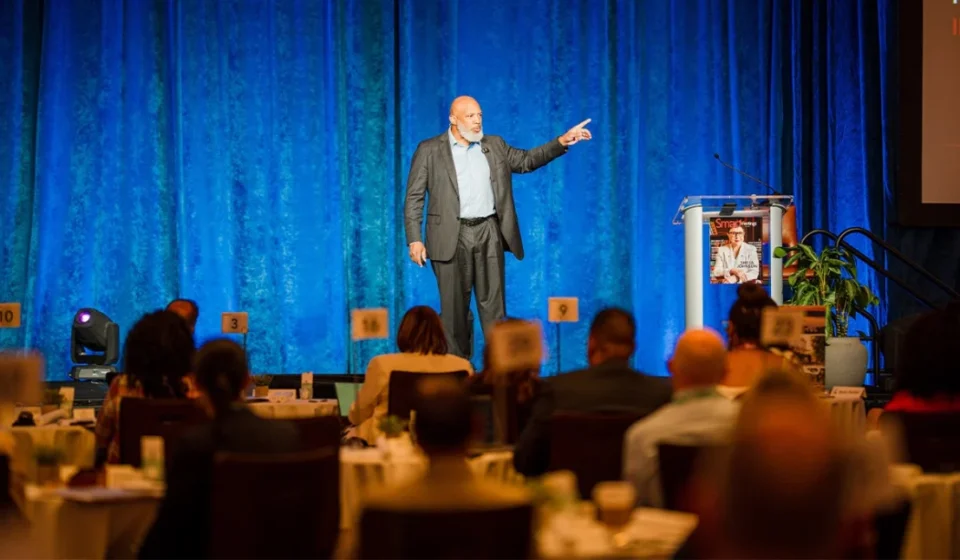
The second day shifted the focus toward behavioral science, personal leadership, and creative expression. The morning session opened with an intensive masterclass on nonverbal communication led by author and corporate trainer Erick Rheam. Participants practiced decoding micro-expressions and body language cues, applying these insights to negotiation and team-building scenarios.
In the afternoon, the focus turned inward. Paralympian and veteran John Register led an experiential session on cognitive reframing, guiding attendees through exercises to identify and systematically dismantle personal and professional limitations.
To prevent cognitive fatigue and solidify these concepts, the afternoon concluded with two tactile, creative activations:
- Visual Synthesis: Illustrator Sarah Goone of Radiant Eye captured the day’s insights on large visual canvases, translating abstract leadership theories into concrete illustrations.
- Tactile Artistry: An interactive sgraffito painting and scratching workshop, curated by Book with Eva, pushed attendees out of their intellectual comfort zones and into a state of creative play.
Day 3: Reimagining Scale and the Grand Finale
The final phase of the summit challenged participants to apply their newfound perspective to large-scale event production. The group transitioned from the intimate luxury of the Salamander DC to the expansive Walter E. Washington Convention Center, operated by Events DC.
The venue was completely transformed to challenge the traditional "blank box" perception of convention centers. The experience began with a personalized, high-definition LED welcome display at the entrance, accompanied by cherry-blossom-themed molecular gastronomy beverages.
The grand finale took place on the main expo floor, which was reimagined as a dramatic dining room. Guests dined at an elegantly dressed king’s table illuminated by a custom light-carpet pathway. The evening concluded with a synchronized indoor drone show and a live performance by The Experience Band & Show, who filled the cavernous hall with the energetic rhythms of traditional Washington, D.C. Go-Go music.

3. Supporting Data: The Mechanics of the Summit’s Design
To understand the success of this leadership summit, it is necessary to examine the underlying infrastructure, behavioral science, and economic investments that supported the experience.
The Venue: Salamander DC’s $35 Million Transformation
The physical environment of an event directly impacts the cognitive load and receptivity of its participants. The choice of the Salamander DC as the host venue provided a case study in purposeful spatial design.
| Feature | Details & Specifications | Strategic Purpose |
|---|---|---|
| Renovation Budget | $35 Million | Comprehensive property modernization and brand repositioning. |
| Culinary Anchor | Dōgon by Chef Kwame Onwuachi | High-concept, Afro-Caribbean dining ranked among the top 50 in North America. |
| Wellness Facilities | Two-story luxury spa | Designed to facilitate stress reduction and mental clarity during intensive learning. |
| Location Access | Proximity to the Wharf and National Mall | Integrates natural water views and urban walkability to stimulate creative thinking. |
The Science of Communication and Creativity
The educational sessions were grounded in established behavioral psychology and cognitive science. Erick Rheam’s session on nonverbal communication focused on the widely cited 55-38-7 communication model (originally formulated by researcher Albert Mehrabian).
[Total Message Impact]
  ├── 55% Body Language & Facial Expressions (Visual)
  ├── 38% Tone of Voice & Inflection (Vocal)
  └── 7%  Actual Words Spoken (Verbal)
By teaching event planners—who manage multi-million dollar budgets and diverse stakeholder groups—to consciously monitor and adjust the 55% visual component of their communication, the workshop provided them with practical tools to improve negotiation outcomes and vendor relations.
Furthermore, the integration of the sgraffito art workshop by Book with Eva leveraged dual-coding theory. This cognitive science principle suggests that combining verbal instruction with visual and tactile activities enhances memory retention and problem-solving capabilities.
By physically scratching away layers of paint to reveal underlying colors, participants engaged in a tangible metaphor for the self-reflection and personal growth discussed in their leadership sessions.
4. Official Responses and Analytical Perspectives
Erick Rheam on the Power of Strategic Encouragement
Erick Rheam, author of Rise Above Order and former United States Army Military Police Officer, emphasized that master level communication is rooted in situational awareness and emotional intelligence. Reflecting on his experiences as a special investigator in Bosnia-Herzegovina, Rheam shared:
"In high-stakes environments, whether in a post-conflict zone or a high-pressure corporate boardroom, the ability to read nonverbal cues is your greatest asset. But reading the room is only half the battle. The true differentiator for modern leaders is the conscious decision to be an encourager. In an industry as volatile and demanding as event production, positive, intentional reinforcement spoken to your teams and yourself yields massive returns in productivity and loyalty."
John Register on Intentional Release and Adaptation
Paralympian John Register challenged the audience to rethink how they respond to disruption. Register, who had his left leg amputated following a training injury before going on to win a silver medal in the long jump at the 2000 Sydney Paralympics, focused on the concept of "amputation to adaptation." He asked the delegates:
"What do you need to intentionally release because it no longer serves the future you are trying to build? Too often, we cling to old business models, outdated communication styles, or personal insecurities because they are familiar. True leadership requires us to acknowledge what is gone, adapt to our new reality, and build a vision based on our current strengths rather than our past constraints."
Industry Analysts on Venue Customization
Hospitality and venue design analysts noted that the transformation of the Walter E. Washington Convention Center reflects a broader shift in destination marketing. Modern event planners are no longer satisfied with sterile, standard-issue meeting rooms.
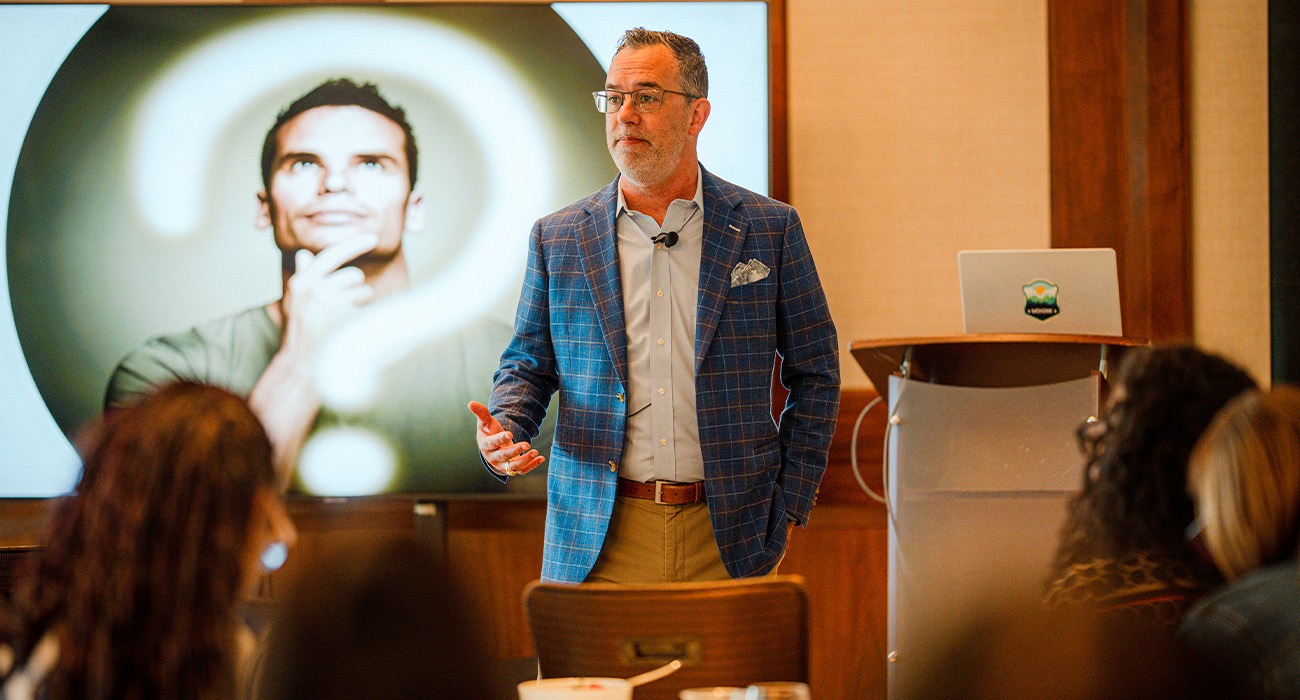
By utilizing dynamic lighting, localized culinary experiences, indoor drone technology, and regional musical genres like Go-Go, Events DC demonstrated how large-scale public venues can be customized to create memorable, culturally immersive experiences.
5. Implications for the Meetings and Events Industry
The strategies demonstrated at this summit have significant implications for the future of the Meetings, Incentives, Conferences, and Exhibitions (MICE) industry.
The Death of Transactional Networking
For decades, the standard B2B event relied on a high volume of quick meetings, crowded expo floors, and passive listening sessions. This summit demonstrates that the industry is shifting toward high-leverage, human-centric design.
As remote work remains common, physical events must offer deep psychological value, authentic relationship-building, and personal development opportunities that cannot be replicated online.
Reimagining the Convention Center
The activation at the Walter E. Washington Convention Center offers a blueprint for the convention center of the future.
[Traditional Convention Center Model]
  ├── Rigid, sterile exhibition booths
  ├── Fluorescent lighting and uninspired catering
  └── Standardized, non-localized programming
         │
         ▼ (The Transformation)
[Future Experiential Venue Model]
  ├── Dynamic spatial design (e.g., custom light carpets on the expo floor)
  ├── Cultural immersion (local culinary partnerships & regional music)
  └── High-tech integration (indoor drone shows & interactive LED welcoming)
By converting a massive exhibition hall into an intimate, high-concept dining experience, Events DC proved that large venues can successfully host both massive trade shows and bespoke, high-end events. This flexibility is crucial as convention centers look to attract a wider variety of events.
The Integration of Well-Being and Creative Play
As burnout continues to impact the corporate world, integrating wellness, mental reflection, and creative play into event agendas is moving from a luxury to a necessity.
By incorporating activities like the sgraffito art workshop and sending postcard leadership pledges, organizers showed that giving attendees time for creative reflection leads to higher engagement and better retention of educational content. Future event designers will need to balance intense learning sessions with structured downtime and creative outlets.
Ultimately, this summit proved that when event professionals are treated with care, given the space to reflect, and challenged to think creatively, they return to their organizations better equipped to lead. The success of the event suggests that the future of corporate gatherings lies in a thoughtful blend of personal growth, cultural immersion, and creative venue design.