Stewart’s Shops Accelerates $55 Million Expansion Strategy with New Flagship Norwich Location

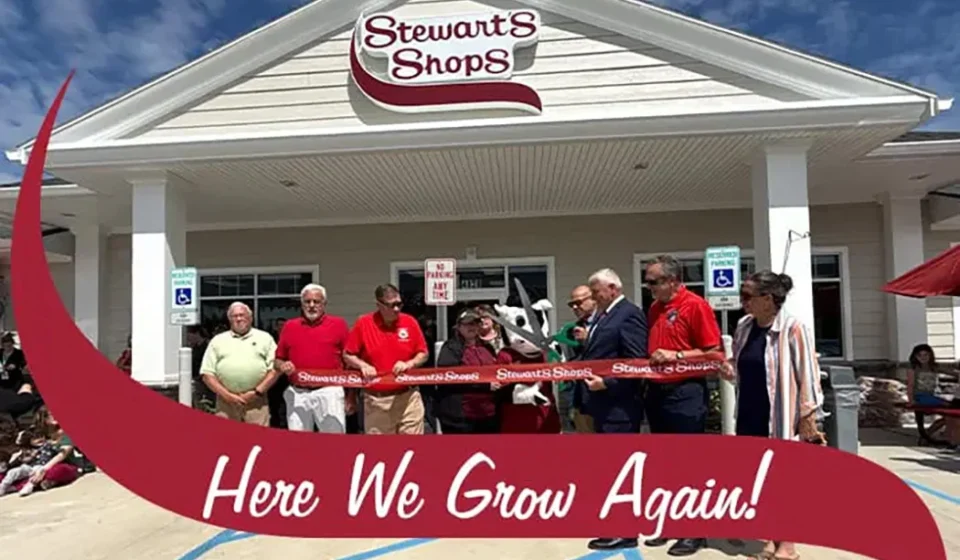
Stewart’s Shops, the iconic convenience retailer known for its deep roots in upstate New York and Vermont, has officially unveiled its latest architectural milestone in Norwich, N.Y. The opening of the 4,500-square-foot facility at 4823 Route 23 marks a significant step forward in the company’s ambitious, $55 million capital investment program aimed at modernizing its retail footprint and enhancing the customer experience across its multi-state network.
The new Norwich location is not merely a convenience store; it represents a comprehensive $3.3 million commitment to the Southern Tier region. By transitioning to a larger, more versatile format, Stewart’s is signaling a strategic pivot toward becoming a primary destination for fresh food, premium coffee, and essential household goods, rather than a mere stop-gap for fuel.
The Evolution of the Neighborhood Hub
The Norwich site serves as a blueprint for what Stewart’s envisions for the future of its brand. The expanded floor plan allows for a vastly increased inventory, including a dedicated sandwich station, an extensive grocery selection, a broader array of beverage options, and an upgraded ice cream counter. Perhaps most notably, the shop has introduced a high-end coffee bar, a feature that has already garnered significant local attention.
"We have a lot more space," noted shop manager Suanne Brown during the ribbon-cutting ceremony. "Sandwiches and breakfast empanadas are flying out the door, and the coffee bar has sparked a lot of excitement. Customers are particularly enjoying the autonomy of the new setup, where they can customize their beverages with various add-ins like chocolate or caramel to get that perfect cup exactly the way they like it."
This focus on customization and fresh preparation is a direct response to changing consumer demographics, which prioritize convenience without compromising on quality. By offering a "one-stop-shop" model, Stewart’s is effectively competing with both traditional grocery stores and fast-casual dining establishments.
Philanthropy as a Foundation for Growth
In keeping with its long-standing corporate culture of community engagement, Stewart’s Shops used the Norwich opening as an opportunity to reinvest in local institutions. The company donated $2,000 to the Norwich YMCA to bolster its summer camp programs, ensuring that area children have access to essential seasonal activities.
Furthermore, the retailer directed $1,000 toward Norwich High School for the purchase of new athletic equipment. In an effort to address food insecurity within the student body, the company also provided 150 egg certificates and 150 gallon-of-milk certificates to support the school’s "backpack program," which provides nutritious, take-home food supplies for students in need. This commitment to local welfare has been a hallmark of Stewart’s expansion strategy, serving to soften the footprint of new construction while building lasting goodwill in the markets it enters.
A Chronology of Strategic Expansion
The Norwich opening is one of many pieces in a much larger puzzle. In early June, Stewart’s Shops made public its intent to funnel $55 million into the renovation and expansion of its network throughout New York and Vermont. This follows a period of intense activity for the company, which continues to aggressively manage its portfolio of over 400 stores.
Timeline of Key Developments:
- May 2024: The company finalized a $2.5 million transformation of the former Dexter Market near Watertown, N.Y. Following a two-month renovation, the site was reopened with a massive food bar, beer cave, and modernized kitchen.
- Late 2024: Stewart’s began the complex process of rebranding and integrating the Jolley convenience stores acquired through an acquisition strategy aimed at expanding the brand’s reach in the Vermont and northern New York corridors.
- June 2024: The official announcement of the $55 million investment initiative was made, outlining plans for new construction and significant remodeling across the two-state territory.
- Current/Ongoing: Active construction and renovation projects are underway in Sidney, Alexandria Bay, Cohoes, Dolgeville, Saratoga Springs, St. Johnsville, Watertown, and Wilton.
The company’s approach is twofold: it is simultaneously building new, larger "ground-up" locations while performing major interior overhauls on at least 15 older, smaller shops to bring their food and beverage offerings up to the new corporate standard.
Supporting Data and Operational Infrastructure
The sheer scale of this growth necessitates a robust supply chain. To support the increased demand for its award-winning dairy products, prepared foods, and ice cream, Stewart’s is currently in the midst of a massive, multi-year $30 million expansion of its manufacturing and commercial kitchen facility in Greenfield, N.Y., just outside Saratoga Springs.
This facility acts as the "heart" of the operation. By centralizing the production of their signature soups, meatballs, mac and cheese, and dairy products, Stewart’s maintains strict quality control, ensuring that the experience of a customer in the Southern Tier is identical to that of a customer in the Adirondacks.
The "one-stop-shop" model, as described by Stewart’s Shops President Chad Kiesow, is the central pillar of the company’s resilience. By balancing the roles of a restaurant, coffee house, ice cream parlor, and refueling station, the company has insulated itself against the volatility of the retail sector.
"There is a growing need for fresh, quality food and beverages," Kiesow noted in a recent address. "We are committed to investing in our shops so we can serve our communities to the best of our ability. Our goal is to ensure that wherever our customers are, they have access to the Stewart’s experience."
The Implications for the Convenience Retail Market
Stewart’s aggressive expansion comes at a pivotal time for the convenience industry. As major national chains consolidate, Stewart’s is carving out a niche based on regional identity and high-touch community involvement.
Market Positioning
- Vertical Integration: By owning the production facility, the logistics chain, and the retail storefronts, Stewart’s maintains higher margins than competitors who rely on third-party suppliers.
- Community-Centric Branding: The focus on local schools, YMCAs, and libraries creates a "sticky" brand loyalty that is difficult for national, corporate-run chains to replicate.
- Modernization vs. Nostalgia: Stewart’s is successfully bridging the gap between its heritage as an old-fashioned ice cream shop and the modern requirements for high-speed, high-quality, fresh-prepared food.
The ongoing renovation of older locations to include food bars and expanded grocery aisles suggests that Stewart’s does not believe the small-format convenience store is obsolete; rather, it believes such stores are under-utilized. By maximizing the utility of every square foot, the company is proving that smaller neighborhood stores can remain highly profitable in the modern economy.
Looking Ahead: A Sustainable Future
As the company moves through its multi-year capital plan, the focus will remain on balancing rapid growth with the maintenance of its unique corporate identity. The integration of the Jolley shops serves as a test case for how Stewart’s can acquire existing infrastructure and impose its own service standards upon it. If the success of the Dexter and Norwich openings is any indication, the company is well-positioned to maintain its dominance in the upstate New York and Vermont markets.
The $55 million investment is not merely about physical construction; it is a declaration of confidence in the economic vitality of the regions Stewart’s serves. By providing essential services, creating jobs through construction and ongoing store operations, and investing in the social fabric of its towns, Stewart’s Shops is positioning itself to remain a cornerstone of the regional landscape for decades to come.
As the company continues to refine its "one-stop-shop" model, it is clear that its strategy is working. Whether it is through the introduction of a new coffee bar in Norwich or the expansion of its commercial kitchen in Greenfield, Stewart’s remains a company in motion, constantly looking for ways to serve its customers better, faster, and with a personal touch that has defined the brand since its inception.