The Analog Renaissance: Why Parker Pens Are Reclaiming the Spotlight in the Age of AI

In an era defined by the rapid proliferation of generative artificial intelligence, where algorithms can draft essays, generate code, and produce digital art in seconds, one might expect the humble ballpoint pen to be relegated to the annals of history. Yet, paradoxically, the physical act of writing is experiencing a significant cultural resurgence. At the center of this movement is the legendary stationery brand Parker, which recently found itself at the heart of a viral creative phenomenon—a challenge that successfully rebranded the analog pen as the ultimate tool for human expression in an automated age.
The Viral Catalyst: From Spec Ad to Times Square
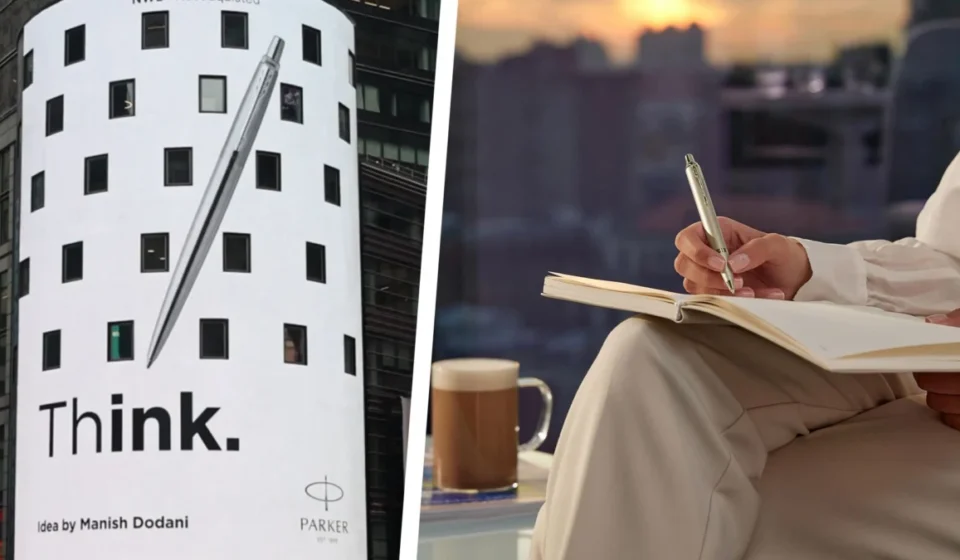
The resurgence began not in a corporate boardroom, but within the digital halls of the creative community. A viral billboard design challenge recently swept through social media, with independent creatives spontaneously proposing "anti-AI" ad concepts for Parker. These spec ads centered on the idea that in a world flooded with synthetic, frictionless content, handwriting represents an authentic, tangible human connection.
The campaign struck a nerve, resonating with a public increasingly wary of "AI slop." Recognizing the cultural zeitgeist, Parker moved with impressive agility. Rather than ignoring these unsolicited designs, the brand embraced them, elevating the grassroots concept into a high-profile, real-world marketing campaign. The result was a stunning digital billboard installation in the heart of Times Square, NYC. This move transformed a digital creative exercise into a tangible statement: the pen is not just a tool for writing; it is a declaration of human intent.
Chronology of a Cultural Shift
To understand how we arrived at this moment, it is necessary to look at the timeline of the "Analog Rebellion":
- Late 2023 – Early 2024: The public discourse surrounding generative AI shifts from curiosity to skepticism. As AI-generated flyers, marketing copy, and social media content saturate platforms like Instagram, a "backlash" movement emerges.
- Mid-2024: Creatives begin testing the efficacy of handwriting as a form of "digital resistance." Small businesses and influencers start replacing sterile, AI-generated social media posts with handwritten notes and sketches to increase engagement.
- Late 2024: The "Parker Pen Challenge" takes off on design platforms. Independent designers post mock-up billboards, creating a visual language that pits the "messy" imperfection of human handwriting against the cold, clinical output of AI.
- Present Day: Parker officially adopts the messaging, launching its Times Square presence and cementing the brand’s position as the primary champion of the "pro-handwriting" movement.
The Cognitive Case for Handwriting
Beyond the aesthetic appeal, there is a mounting body of scientific evidence supporting the cognitive benefits of handwriting. While digital typing is efficient, neuroscientists argue that it lacks the sensory feedback loop that occurs when pen meets paper.
Studies have consistently shown that the physical act of handwriting improves focus, memory retention, and deep reflection. Unlike the "flow state" often interrupted by digital notifications, handwriting forces a slower, more deliberate processing of information. It is, in essence, a form of "slow living" that appeals to those feeling overwhelmed by the velocity of modern digital life.
This is particularly relevant for creatives. When a designer or writer puts a pen to a notebook, they are engaging in a process of externalizing thought that is free from the corrective interference of "predictive text" or AI autocomplete. In this sense, the pen serves as a firewall, protecting the integrity of human creativity from algorithmic interference.

Supporting Data: The Market’s Response
The market’s response to this trend has been tangible. Retail data indicates that despite the ubiquity of tablet styluses and digital note-taking apps, the demand for high-quality, tactile stationery is climbing.
Currently, platforms like Amazon are reporting strong sales for classic models, suggesting that consumers are moving away from disposable plastic pens toward heirloom-quality instruments. The Parker Jotter—a model synonymous with the sophistication of Ian Fleming’s James Bond—is seeing renewed interest. The current pricing, which puts these pens at a lower cost than a single month of a premium ChatGPT subscription, is a powerful value proposition. It poses a rhetorical question to the consumer: For the price of an automated service, you could own a piece of engineering that lasts a lifetime.
Current Market Deals
- The Parker Jotter (Originals): Now reduced by 30%, making the classic black and steel model accessible at roughly $8.34.
- The Parker Jotter XL: The larger, monochrome stainless steel variant is seeing an 18% reduction, bringing it down to $32.79.
- The Parker 51: For those seeking the "gold standard" of writing, the fountain pen favored by the late Queen Elizabeth II and featured in the Moonraker novel is currently available for $101.25—a discount of nearly $25.
Implications for Branding and Design
The Parker campaign serves as a masterclass in modern brand management. It demonstrates that in a digital-first world, the most effective marketing often relies on the most traditional of mediums. By positioning the pen as the antithesis of the AI-generated world, Parker has successfully rebranded itself not as a "legacy company," but as a "rebel brand."
This has significant implications for the wider design industry. As businesses grapple with the "AI slop" crisis—where the internet is becoming cluttered with generic, low-effort AI imagery—human-centered design is gaining a premium. We are seeing a move toward the "human-made" aesthetic, where visible brushstrokes, ink bleeds, and handwritten typography act as a hallmark of quality and authenticity.
Conclusion: The Future is Analog
The success of the Parker billboard challenge proves that technology does not always lead to the obsolescence of the past. Instead, it often creates a vacuum that the past is uniquely qualified to fill. As we navigate the complexities of an AI-integrated future, the simple, tactile pleasure of a Parker pen offers a grounding force.
Whether it is for the sake of improved mental clarity, a stand against the homogeneity of AI, or simply the appreciation of a well-crafted object, the pen is enjoying a renaissance. It serves as a reminder that while AI can replicate patterns, it cannot replicate the soul behind a handwritten word. In the battle for human attention, it appears the pen—durable, reliable, and uniquely human—remains mightier than the algorithm.