The Architecture of Play: Erwan Bouroullec and Flos Redefine Illumination with ‘Maap’

In the contemporary landscape of industrial design, the line between a finished product and an artistic medium is increasingly blurred. With the unveiling of Maap, the latest lighting system from acclaimed French designer Erwan Bouroullec in collaboration with Italian lighting powerhouse Flos, that line has all but vanished. Launched on July 21, Maap is not merely a lamp; it is a collaborative invitation, a wall-mounted system that shifts the burden—and the joy—of creation from the designer to the inhabitant.
Main Facts: A New Paradigm for Ambient Light
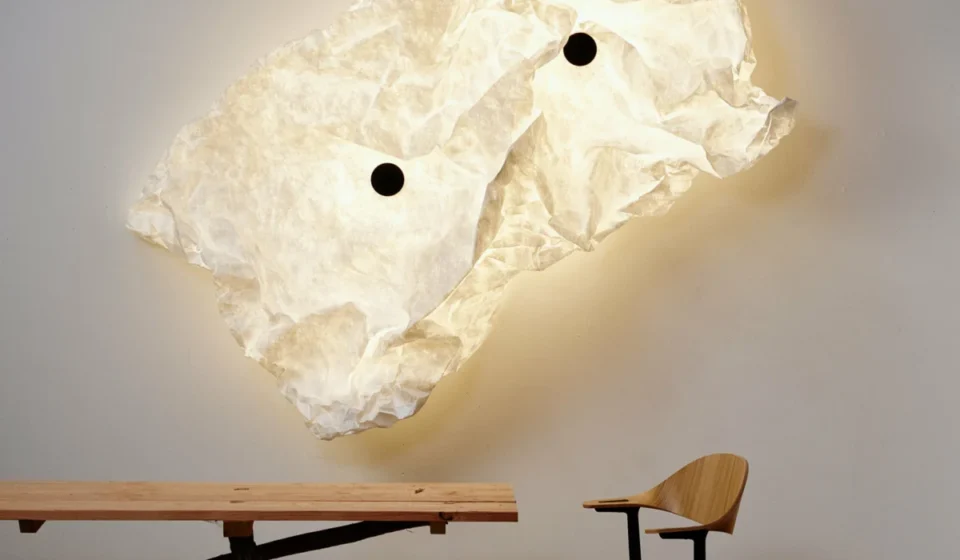
At its core, Maap represents a radical departure from the static, "finished" design philosophy that has dominated the lighting market for decades. Comprising a minimalist steel framework and an expansive, crumpled Tyvek® diffuser, the system functions as a sculptural installation.
The technical ingenuity of Maap lies in its magnetic attachment system. Users secure the lightweight, tear-resistant Tyvek material to the metal frame using magnetic "Dots," allowing the diffuser to be folded, draped, and reshaped at will. Because no two installations are identical, the light fixture becomes a living, breathing component of the architecture it occupies. Available in three distinct sizes—the largest spanning an impressive ten feet—Maap does not aim to provide a focused beam of light, but rather a soft, atmospheric wash. The effect mimics the natural diffusion of sunlight through a window, turning entire wall surfaces into ethereal, glowing canvases.
The Chronology of Development: From Fragility to Function
The journey toward Maap was one of material experimentation and rigorous refinement. Bouroullec, known for his ability to synthesize industrial precision with the organic, often chaotic beauty of the natural world, initially envisioned the diffuser as a paper-based element. However, the constraints of durability quickly became apparent. Paper, while visually poetic, proved too fragile to withstand the rigors of frequent reconfiguration and the heat-management requirements of a wall-mounted light source.
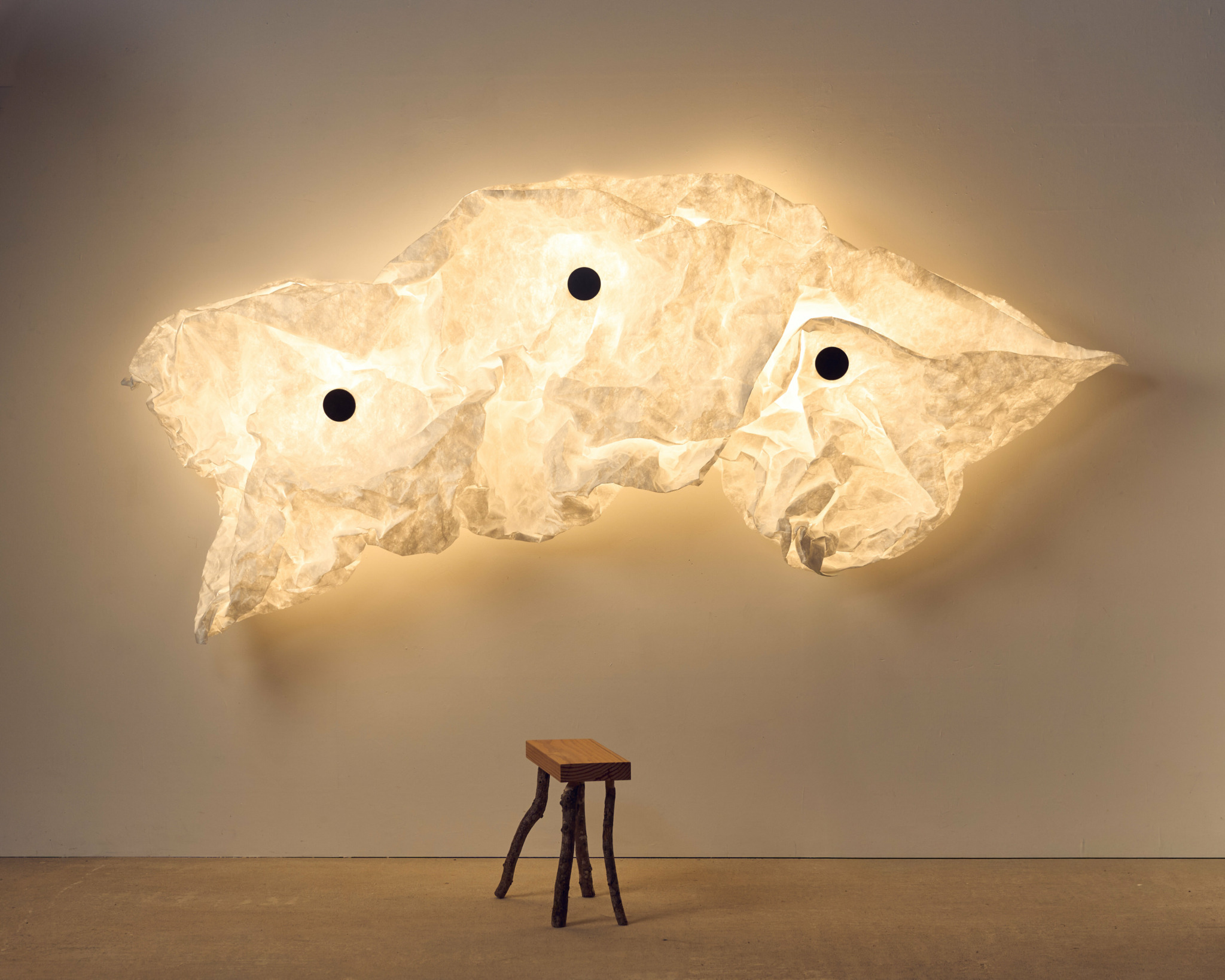
The pivot to Tyvek—a high-density, polyethylene fiber material—was a turning point in the design process. Tyvek offered the necessary structural resilience to be crumpled and rearranged repeatedly without tearing, while maintaining an opacity that creates a sophisticated, diffused light quality.
Throughout the development phase, Bouroullec focused on a "combinative construction" principle. By removing the mandate for a single, final form, he transformed the installation process into a game. The development cycle moved away from achieving a fixed silhouette and toward creating a system of "solutions" that architects and homeowners could deploy within their own unique spaces.
Supporting Data: Specifications and Spatial Impact
The Maap system is engineered to accommodate varying scales of interior design, from intimate domestic settings to sprawling commercial galleries.
- Materiality: The primary diffuser is composed of high-performance Tyvek, chosen for its lightweight, tear-resistant, and light-diffusing properties. The structural skeleton consists of a precision-engineered steel framework.
- Modularity: The "Dots"—industrial-grade magnetic fasteners—provide the interface between the frame and the textile. This allows for an infinite variety of pleats, folds, and contours.
- Sizing: The system is available in three tiers, with the largest configuration extending over 10 feet in width, positioning it as a significant architectural intervention rather than a traditional wall sconce.
- Luminous Quality: By design, the lamp avoids the harshness of point-source illumination. It functions as a "light wall," providing ambient, indirect glow that enhances the texture of interior materials and the depth of a room.
The flexibility of Maap ensures that it can adapt to the "personality" of a room. In a minimalist environment, it can be draped in tight, controlled pleats; in a more expressive or artistic space, it can be allowed to billow, creating deep shadows and high-contrast surfaces.

Official Responses: The Philosophy of Participation
Erwan Bouroullec’s perspective on Maap reflects a broader philosophy regarding the role of the designer in the 21st century. In his view, design should not be a static imposition on a space, but rather a cooperative effort.
"I see design as part of a whole," Bouroullec stated during the launch. "Designs need to cooperate with a given environment and somehow enhance it." This sentiment highlights his rejection of the "designer-as-author" trope. Instead, he positions himself as a facilitator. By providing the tools for play, he allows the user to take ownership of the object.
"Maap embodies flexible and combinative construction principles which make it ready for architects to play with," Bouroullec added. "It’s about providing solutions instead of a given proposal, thinking about collaboration instead of uniqueness, play instead of execution."
Flos, a company long celebrated for its marriage of technical innovation and aesthetic daring, has championed this project as a milestone in user-centric design. By partnering with Design Within Reach (DWR) for the product’s launch, both Flos and Bouroullec are signaling that this high-level conceptual design is intended to be accessible to a wide audience of design-conscious individuals, not just museum curators or architects.

Implications: The Future of Interior Illumination
The implications of Maap for the lighting industry are profound. For years, the trend in lighting has been toward miniaturization and "hidden" sources. Maap flips this on its head by turning the light source into the primary aesthetic focus.
1. The Death of the "Static" Lamp
By introducing an object that is meant to be reshaped, Bouroullec is challenging the consumerist expectation that a product should look exactly like its catalog image once installed. This encourages a long-term relationship with the object; as the homeowner’s needs change, or as they reorganize their furniture, the Maap can be re-folded to match the new atmosphere.
2. Architectural Integration
Historically, light fixtures have been treated as "accessories" added at the end of a project. Maap bridges the gap between furniture and architecture. Because it spans such a large surface area and is modular by design, it invites architects to consider light as a material element that can be sculpted alongside the walls themselves.
3. Sustainability through Longevity
While the lamp itself is a new product, its philosophy promotes sustainability through longevity. If an object can be reconfigured and reinterpreted, it is less likely to be discarded when trends shift. The durable nature of Tyvek combined with the timelessness of a steel frame suggests a product designed for decades of use, rather than a fleeting seasonal trend.

4. The Rise of "Playful" Engineering
The success of Maap may signal a shift in how engineers and designers collaborate. By prioritizing the "play" aspect of construction, companies like Flos are demonstrating that technical complexity (the magnets, the structural frame, the thermal testing of the Tyvek) can be invisible, leaving only the joy of the user experience visible.
Conclusion
The collaboration between Erwan Bouroullec and Flos on Maap represents more than a successful product launch; it is a manifesto for a more interactive future. In a world where our environments are often fixed and unyielding, Maap offers a rare opportunity for agency. It invites us to touch, to fold, and to experiment, turning the act of lighting a room into a creative expression.
Whether it is installed in a sleek, monochromatic loft or a cozy, eclectic living room, Maap acts as a chameleon. It is a testament to the idea that the best designs are not those that demand to be looked at, but those that invite us to participate in the act of creation itself. As of its release, the light is now in the hands of the public—literally and figuratively—to see how they choose to shape their own environments.
Maap is currently available for purchase through Flos flagship stores, the official Flos website, and at Design Within Reach showrooms and online.