
For most professionals, two decades in a specialized industry like footwear serves as the bedrock for a comfortable retirement. But for Janet Feldman, it served as a laboratory. The founder and CEO of Assistance With Elegance did not set out to disrupt the furniture market; she set out to solve a deeply personal, heartbreaking dilemma. When her aging parents faced the encroaching reality of mobility challenges, Feldman found herself confronted with an industry-wide failure: the "medicalized" aesthetic of existing lift chairs.
Today, after a decade of rigorous development, Feldman has introduced the AWEchair—a sophisticated, luxury lounge chair that prioritizes dignity as much as it does function. It is a product that challenges the long-standing stigma surrounding assistive technology, proving that accessibility does not have to come at the expense of high design.
The Genesis of a Vision
The journey toward the AWEchair began with a simple, frustrating search. As her parents’ health declined, Feldman looked for a recliner that could assist them in sitting and standing without turning their living room into a sterile medical ward. She scoured the market, only to find products that were either visually unappealing, clunky, or overtly mechanical.

"When I started researching lift chairs, I kept coming back to the same feeling that nothing was good enough for them," Feldman recalls. "I knew there had to be a way to create something functional while still being genuinely beautiful. I wanted to bring the same level of thoughtfulness that we expect from other luxury home products to a category that has been largely overlooked from a design perspective."
Feldman, who had built a career understanding the nuances of manufacturing, materials, and luxury craftsmanship, realized that the problem was not technical—it was cultural. The industry had categorized "accessible" and "beautiful" as mutually exclusive.
A Chronology of Innovation: A Decade in the Making
The path from concept to finished product was anything but linear. Feldman spent ten years orchestrating a complex, multi-disciplinary development cycle. Recognizing that she needed to bridge the gap between interior design and medical utility, she assembled a global team of experts.

The Development Phases:
- 2016–2018: Conceptualization and Expert Integration: Feldman began by consulting with gerontologists and orthopedists to define the physiological requirements of a truly supportive chair. This was not a standard furniture design process; it was a human-factors engineering project.
- 2019–2021: Engineering and Iteration: Seeking a manufacturing partner capable of meeting her high standards, Feldman spent years interviewing factories. She eventually secured a German engineering firm that understood her vision for a "disappearing mechanism"—a chair that hides its high-tech core behind a classic silhouette.
- 2022–2024: Technical Refinement: The chair went through multiple iterations to perfect the movement sequences, the patented retractable footrest, and the ergonomic lumbar support.
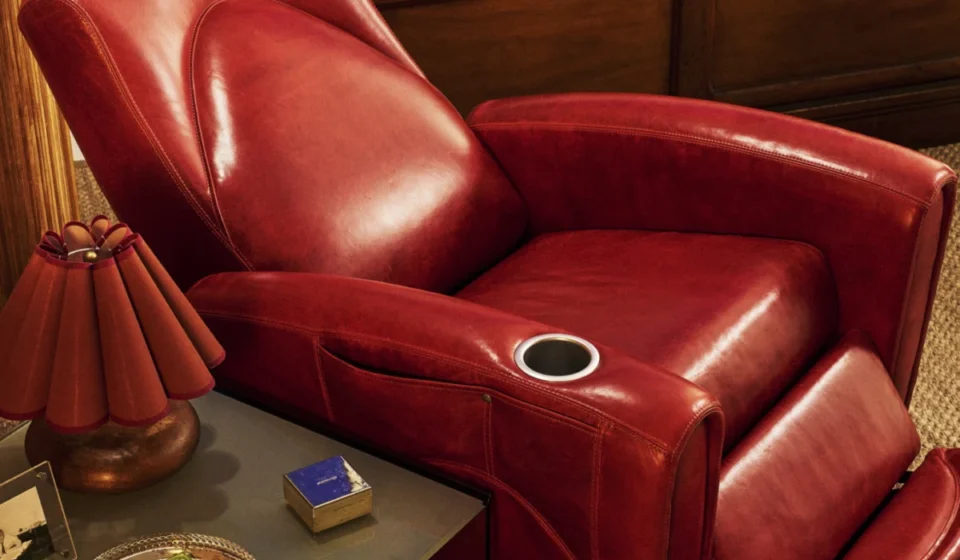
- 2025: Finalization and Upholstery: The finished frames were finalized, with the final upholstery work moved to North Carolina, ensuring the highest level of craftsmanship for the leather and synthetic leather finishes.
The Anatomy of the AWEchair: Global Engineering Meets Domestic Luxury
The AWEchair is a testament to the power of international collaboration. The chair features German-engineered internal mechanisms, a sophisticated motor system developed in China, and premium upholstery options.
What sets the AWEchair apart is its commitment to "invisible accessibility." The patented retractable footrest and the precision movement sequences allow the chair to look like a high-end club chair when at rest. Unlike traditional lift chairs, which often feature external motors and exposed tracks, the AWEchair’s mechanics are seamlessly integrated. This attention to detail resulted in eight distinct patents, covering everything from the internal foot molds to the integrated cup holder—a small detail that, for those with mobility issues, represents a significant gain in independence.

Supporting Data and the "Aging in Place" Movement
The market for inclusive design is not merely a niche; it is an economic and social necessity. According to data from the AARP and various aging-in-place research institutes, the vast majority of older adults prefer to remain in their own homes as long as possible. However, the home environment is often the primary barrier to this goal.
Feldman’s approach aligns with the growing "Universal Design" movement—the design of products and environments to be usable by all people, to the greatest extent possible, without the need for adaptation or specialized design. By creating a piece of furniture that is aesthetically pleasing to a 30-year-old just as much as an 80-year-old, Feldman is positioning the AWEchair as an aspirational purchase rather than a begrudging medical necessity.
"We all age, eventually, and we all see loved ones age," Feldman notes. "Everybody deserves something that is both functional and beautiful."

Official Perspectives: The Philosophy of Dignity
The implications of the AWEchair extend beyond the furniture industry. By removing the "clunky and mechanical" stigma, Feldman is advocating for a shift in how society views aging.
"The need we’re addressing is much bigger than simply helping someone get in and out of their chair safely," Feldman explains. "We wanted to create a chair that people could be proud to live alongside."
Industry experts suggest that the AWEchair could pave the way for a new sub-category of "Invisible Assistive Tech." As the global population ages, the demand for furniture that respects the user’s interior design aesthetic while accommodating physical limitations will likely skyrocket. The success of the AWEchair suggests that consumers are no longer willing to trade their dignity for comfort.

Implications for Future Design
While her parents were unable to experience the final version of the AWEchair, their legacy is woven into the fabric of the company. For Feldman, the chair is a gift to everyone facing the same challenges she once faced.
The entry of a product like the AWEchair into the luxury market at a $7,995 price point signals a maturation of the assistive furniture sector. It shifts the conversation from "How do we make this cheaper?" to "How do we make this better?"
The Broader Impact:

- Dignified Aging: It normalizes the presence of assistive furniture in luxury homes, reducing the psychological barrier to accepting help.
- Manufacturing Standards: It forces a higher standard of craftsmanship in the medical furniture sector, likely pressuring competitors to improve their aesthetic profiles.
- Universal Design Adoption: It provides a blueprint for how architects and interior designers can integrate accessibility into their projects without compromising on style.
As we look toward a future where "aging in place" is the gold standard for independent living, the AWEchair stands as a beacon of what is possible when design empathy is placed at the center of the engineering process. Janet Feldman has not just built a chair; she has built a testament to the idea that our living spaces should support our bodies as we grow older, without ever compromising the beauty of our homes.
The AWEchair is available in a range of genuine and synthetic leather colors. For more information, visit assistancewithelegance.com.