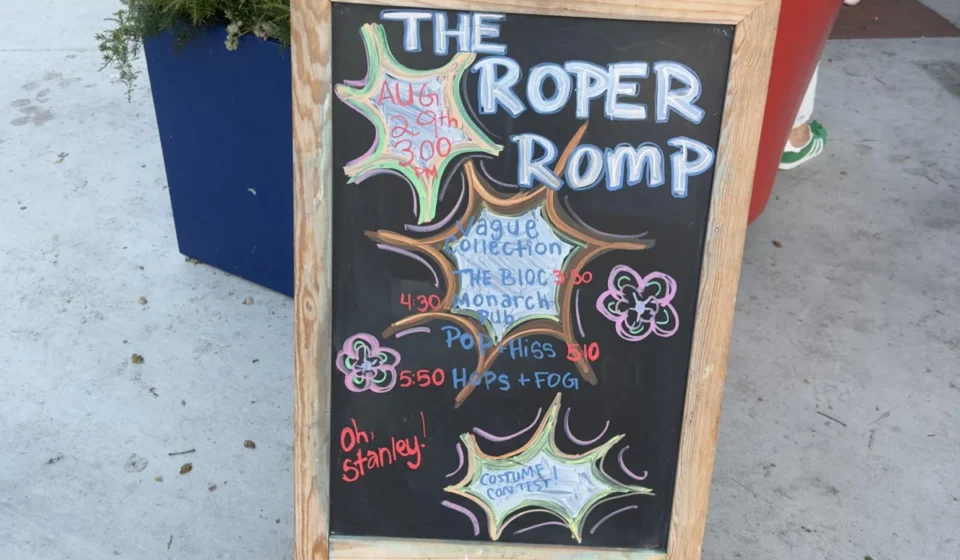

It was meant to be a quiet Saturday evening in Pacific Grove, California. After a leisurely day spent cruising the winding, scenic roads of Pebble Beach and Carmel-by-the-Sea in a vintage pink 1961 Cadillac, the objective was simple: a low-key pint at Hops and Fog Brewing. The atmosphere in this residential hamlet, known for its intimate eateries and curated vintage shops, was perfectly placid—until it wasn’t.
Without warning, the peace of the brewery was shattered by a vibrant, cacophonous parade. A sea of flowing, kaleidoscopic kaftans and gravity-defying red curly wigs flooded Lighthouse Avenue. As the sheer volume of attendees increased, it became clear this was not a local theater audition for a Baby Boomer revival of Annie. It was a "Roper Romp," a nationwide phenomenon that has transformed a 1970s television side character into a modern cultural touchstone.
The Evolution of an Icon: Who is Mrs. Roper?
To understand the fervor, one must look back at the source material. Three’s Company, which aired from 1977 to 1984, was a staple of American sitcom television. The premise was simple: Jack Tripper (John Ritter) needed a place to live, and the only affordable option was a two-bedroom apartment shared with Janet Wood (Joyce DeWitt) and Chrissy Snow (Suzanne Somers). To bypass the puritanical objections of their landlord, Stanley Roper (Norman Fell), Jack famously claimed to be gay—a "charade" that provided the show with much of its comedic tension.
However, the real anchor of the series was Audra Lindley’s portrayal of Helen Roper. Mrs. Roper was a woman out of time. While the 1970s were grappling with the complexities of the sexual revolution and shifting gender dynamics, Helen Roper was busy subverting the expectations placed upon middle-aged women. In an era where cultural tropes dictated that women of a certain age lost their sexual vitality, Helen was unapologetically amorous, frequently expressing her desires to a husband who was perpetually more interested in his own comfort.
She was the character who saw through the lies, held the moral high ground with a wink, and did so while draped in the most exuberant, maximalist fashion of the era. Her kaftans—often described as "Candyland nostalgia"—have become a visual shorthand for a specific kind of liberated, comfortable, and unapologetic self-expression.
A Chronology of the "Roper Romp"
While the show has lived on in syndication for decades, the specific ritual of the "Mrs. Roper Bar Crawl" is a relatively modern invention. The trend’s roots can be traced back to 2013, during the Southern Decadence celebration in New Orleans. The LGBTQ+ community, long known for its ability to reclaim and celebrate camp aesthetics, recognized the inherent power in Mrs. Roper’s persona.
From those early, niche gatherings, the movement began to snowball. By the late 2010s, "Roper Romps" began appearing in cities across the United States. These are not merely costume parties; they are organized, often community-driven events where participants—of all ages and genders—don their best kaftans, oversized costume jewelry, and voluminous red wigs to reclaim public space with humor and joy.
In recent years, the movement has achieved a level of ubiquity that has surprised even cultural historians. From Fort Worth, Texas, to the quiet streets of Pacific Grove, the "Romp" has become a way for fans to bridge the generational gap. It allows those who grew up watching the show on shag carpets in the 1970s to share their nostalgia with a younger generation that appreciates the character’s inherent "camp" and boundary-pushing spirit.

Supporting Data: Why Mrs. Roper?
What is it about a 1970s landlord’s wife that resonates so deeply in the 2020s? Psychologists and pop-culture analysts point to a few key factors:
- The Quest for Comfort: After years of global instability, the "comfort food TV" aspect of Three’s Company is more appealing than ever. The kaftan represents the ultimate sartorial comfort—a rejection of restrictive fashion in favor of ease and color.
- Sexual Agency: Mrs. Roper’s overt comfort with her own desires, portrayed with a lighthearted touch, feels strikingly relevant in today’s discourse regarding bodily autonomy and the aging female experience.
- The "Permission" Factor: As Beverly Behrens, an attendee of a recent Fort Worth Roper Bash, noted: "It was an absolute blast, and I was just waiting for someone to give me permission to wear a kaftan in public." The Romp provides a safe, collective space for individuals to shed their daily professional personas and embrace a character that is, at its core, fun, loud, and unapologetic.
Official Perspectives: The Impact on Local Commerce
While the primary intent of these gatherings is celebration, the economic impact on local businesses cannot be ignored. In the case of the Pacific Grove event, the influx of dozens of "Ropers" into Hops and Fog Brewing provided an immediate, significant boost to a Saturday night’s revenue.
Local tourism boards are increasingly viewing these fan-led events as "organic festivals." Unlike planned conventions, which require massive infrastructure and permits, the Roper Romps are decentralized. They move through existing commercial corridors, supporting local bars, restaurants, and shops.
"It’s the kind of spontaneous community engagement that keeps a downtown alive," says one local business owner in the Monterey area. "They aren’t looking for trouble; they are looking for a venue to be silly in. They bring their own energy, they support the local economy, and they leave the place a little brighter than they found it."
Implications for Future Pop-Culture Tributes
The success of the Roper Romp suggests a shift in how we honor legacy media. Rather than traditional fan conventions that focus on memorabilia and celebrity panels, the Roper model focuses on embodiment. It is a participatory experience that allows the fan to become the icon.
This trend also highlights a critical shift in the perception of the "sitcom mom" archetype. In the 1970s, Mrs. Roper was a punchline. Today, she is viewed as a subversive feminist icon who navigated a repressive environment with wit and style. The fact that younger generations are discovering the show through these events ensures that the legacy of Audra Lindley and the cultural impact of Three’s Company remain relevant well into the 21st century.
Conclusion: A Lasting Legacy
Back in Pacific Grove, the scene remained electric. Some participants even carried cardboard cutouts of Norman Fell’s Stanley on sticks—a humorous acknowledgment of the "henpecked" husband dynamic that defined the show. As the night wore on, the sense of camaraderie was palpable. Strangers were sharing drinks, laughing at the absurdity of the outfits, and engaging in a collective act of joyful rebellion.
Whether it is the vibrant patterns of the kaftans, the shared memory of shag-carpet television viewing, or simply the desire to find joy in a complicated world, the Mrs. Roper bar crawl is likely here to stay. It is a testament to the fact that, forty years later, Mrs. Roper is still the life of the party—and she’s still waiting for us to knock on her door.