Comments Off on Capturing the Return of the Wild: Polish Photographer Wins the 2026 Rewilding Europe Award
By Global Conservation News Desk Published: October 2026
Main Facts: The Triumph of "Urban Beavers"
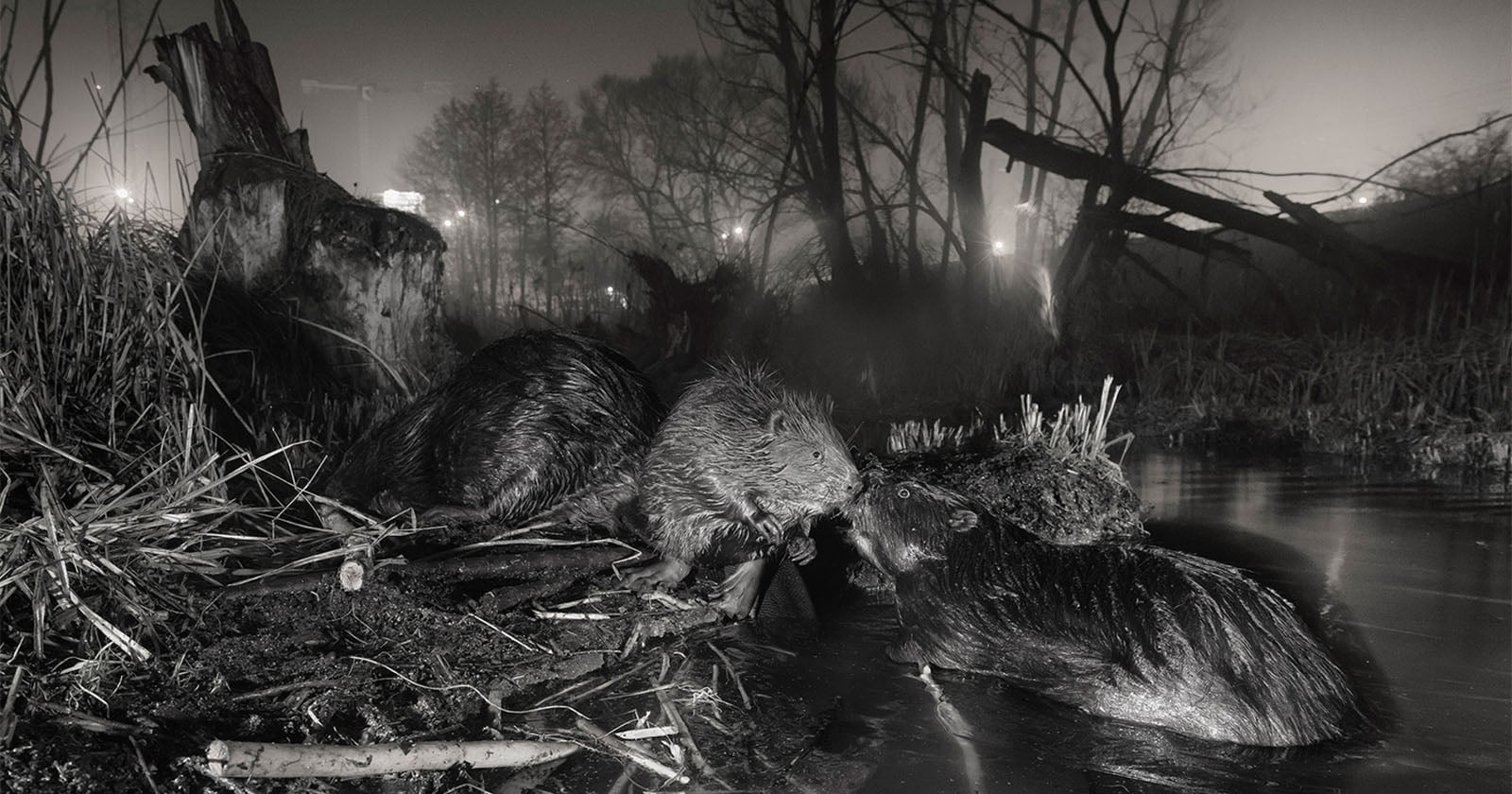
In an era dominated by disheartening headlines regarding habitat fragmentation and biodiversity loss, a poignant reminder of nature’s resilience has claimed top honors in the conservation photography world. Polish wildlife photographer Jan Wieczorek has won the prestigious 2026 Rewilding Europe Award for his striking black-and-white image titled "Urban Beavers."
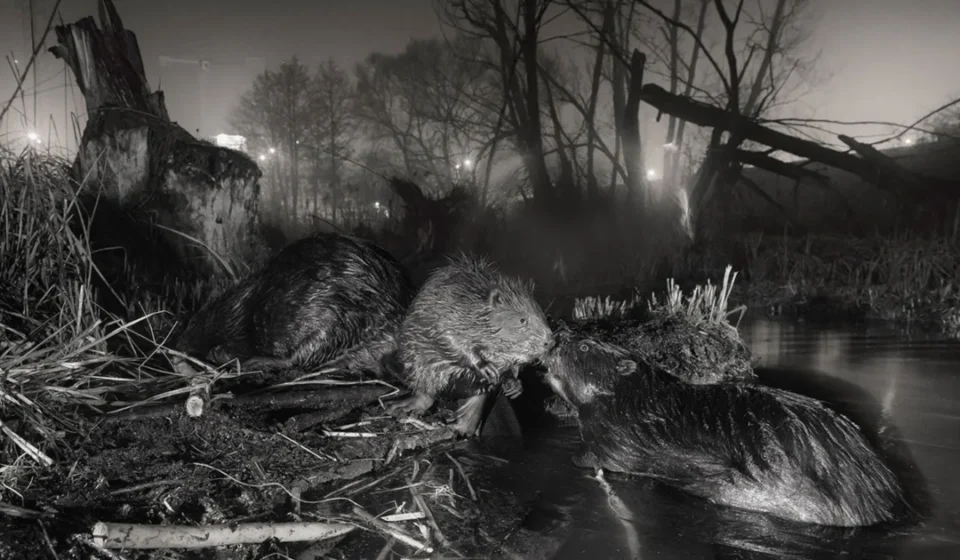
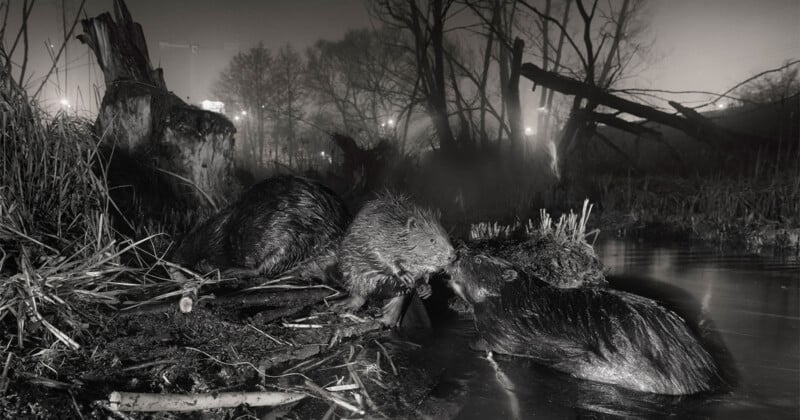
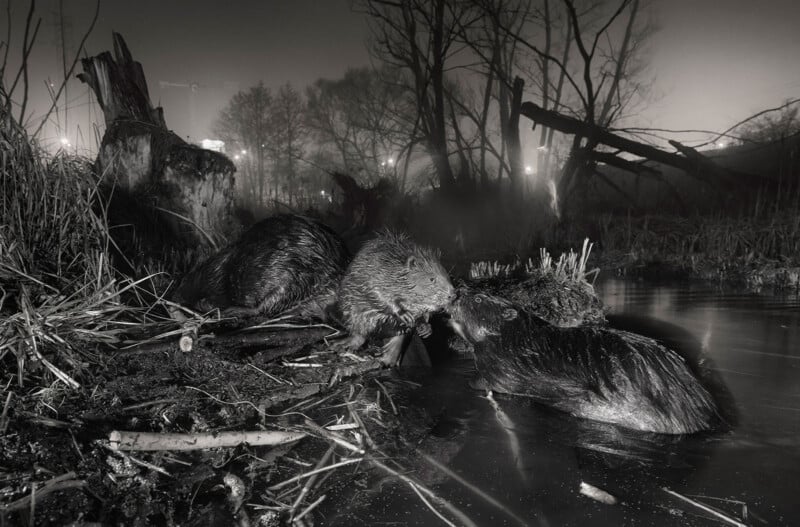
The winning photograph captures a family of Eurasian beavers interacting near the foggy, silhouetted edge of an urban wetland in Olsztyn, Poland. In the background, the faint glow of city lights illuminates a stark juxtaposition: a towering construction crane, residential developments, and human infrastructure standing shoulder-to-shoulder with a thriving natural ecosystem.
The annual Rewilding Europe photography contest—organized in partnership with the German Society for Nature Photography (GDT) and the European Wildlife Photographer of the Year competition—highlights images that visually encapsulate "rewilding in motion." Unlike traditional conservation, which often seeks to lock nature behind preservationist fences, rewilding is a progressive, dynamic approach. It focuses on allowing natural processes to resume, repairing ecological damage, and, increasingly, learning how humans and wildlife can peacefully share the same landscapes.
Wieczorek’s image emerged as the unanimous choice among a competitive pool of international submissions, serving as a powerful testament to the fact that wildlife does not exclusively belong in remote wildernesses; it can—and often does—flourish right on our doorsteps.
Chronology: A 15-Year Observation and the Evolution of a Shot
To understand the depth of "Urban Beavers," one must look past the single frame and into the timeline of its creation. Jan Wieczorek’s relationship with this specific beaver family is not a fleeting encounter captured by a camera trap; it represents a deep, patient commitment spanning nearly a decade and a half.
2011–2015 (Observation Phase): Wieczorek first began tracking local beaver populations in Olsztyn as urban expansion rapidly encroached upon the city’s green spaces. Over these initial years, he documented how local authorities and residents slowly adapted to the unexpected arrival of the rodents, shifting from viewing them as pests to tolerating—and eventually protecting—their wetland-building activities.
2020–2024 (Technological and Artistic Development): As municipal construction intensified around the wetlands, Wieczorek experimented with low-light, monochrome photography to emphasize the atmospheric tension between the natural habitat and the encroaching urban grid. He spent hundreds of hours at night studying the animals’ behavioral patterns, waiting for the precise alignment of fog, wildlife activity, and distant city illumination.
Late 2025 (The Winning Capture): On a cold, misty night, Wieczorek successfully composed the shot that would define his career. By framing three beavers actively foraging in the foreground against the hazy outline of a housing development and construction crane, he crystallized 15 years of observation into a single visual narrative.
October 2026 (Award Announcement): Rewilding Europe officially named Wieczorek’s photo the overall winner of the 2026 competition, thrusting the concept of urban rewilding into international conservation discourse.
Supporting Data: The Expanding Scope of European Conservation
The 2026 Rewilding Europe competition highlighted a diverse spectrum of conservation triumphs and challenges across the continent, reflected in the runner-up and commended entries. The underlying data and ecological baselines of these projects underscore the sheer scale of Europe’s ecological transformation:
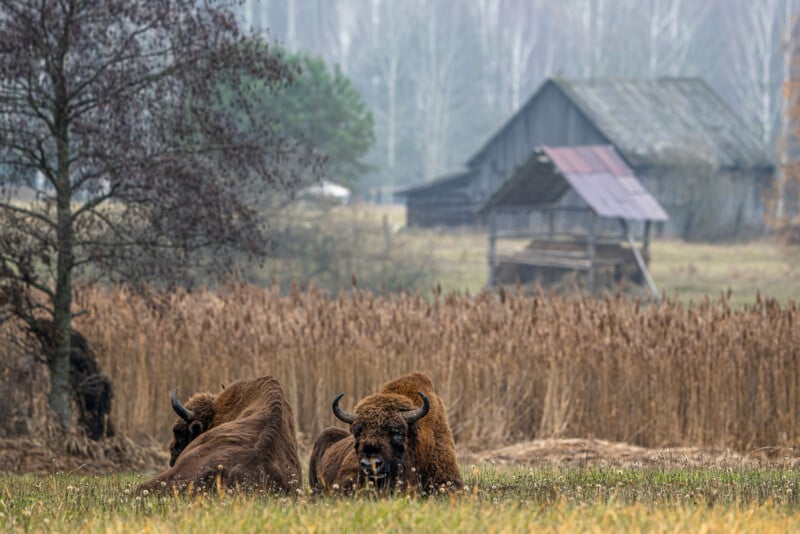
The European Bison Population Rebound: Fabian Thorand’s commended photo, "Peaceful European Bison," highlights a remarkable conservation success story. Once completely extinct in the wild during the early 20th century, European bison (Bison bonasus) have made a historic comeback. Coordinated reintroduction programs across Poland and Eastern Europe have successfully pushed the total wild population past the 10,000-individual milestone.
Anklamer Stadtbruch’s Wilderness Expansion: Silke Hüttche’s commended work captures white-tailed eagles in Anklamer Stadtbruch, a sprawling 2,000-hectare (approx. 4,940 acres) wilderness area in northeastern Germany. Created unintentionally following a massive storm surge in the 1990s that converted coastal land into a thriving peatland, this accidental wilderness now hosts the highest concentration of breeding white-tailed eagles in Germany.
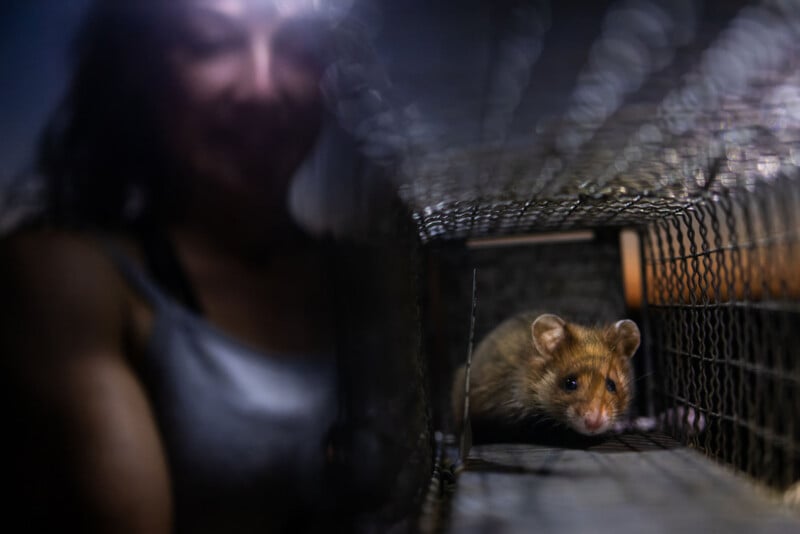
The European Hamster Crisis: Unlike the self-sustaining beavers and bison, Christoph Kaula’s runner-up image ("Managed Revival") underscores a species in critical peril. Intensified agricultural practices over the last several decades have devastated wild populations of the European hamster (Cricetus cricetus), forcing conservation scientists to rely on intensive, multi-pronged interventions—including captive breeding, genetic tracking, and localized habitat management—to pull the species back from the brink of extinction.
Marine Repopulation in Cornwall: Lewis Jefferies’ commended photograph ("A New Generation") brings attention to the National Lobster Hatchery in Cornwall, England. The facility plays a vital economic and ecological role by rearing young European lobsters and systematically releasing them into coastal tidal pools to support depleted marine ecosystems and sustain local fishing communities.
Official Responses: Perspectives from the Frontlines of Conservation
The announcement of the 2026 award winners brought forth passionate commentary from the photographers and contest judges alike, emphasizing the shifting paradigms of human-wildlife interaction.
Jan Wieczorek elaborated on the philosophical core of his winning photograph:
"The story behind the photograph shows that nature doesn’t always exist somewhere far away. It can thrive right next to our homes, beneath our bridges, and in the centers of our cities. By framing the housing development alongside the wetland created by the beavers, I wanted to show that it is possible for humans and wildlife to share space."
Jon A. Juarez, a member of the contest’s judging panel, pointed out the multifaceted nature of contemporary conservation efforts:
"Rewilding in Europe doesn’t have one single face. It can mean bringing back a species that disappeared, restoring natural processes, or simply giving nature enough space and time to recover on its own. But increasingly, it is also about learning how to share landscapes with wildlife."
Fellow judge Viktoria Pezzei highlighted the unique communicative power of wildlife photography:
"The winning and commended images capture the essence of how humans and wildlife can live side by side. Photography like this translates the complex relationships between humans and wildlife, ultimately helping us understand them better."
Christoph Kaula, whose managed-revival hamster photo claimed runner-up status, emphasized the collective responsibility required for modern species recovery:
"Bringing a species back is never the work of a single organization or individual—it’s a collective effort. And that also means raising awareness and communicating the importance of conservation to a much wider audience."
Fabian Thorand, capturing the gentle majesty of the European bison, added:
"I believe it’s important to see nature not only as our environment, but as a natural habitat for wild animals that are worth protecting. Bison play a really important ecological role, but people have to learn how to live alongside them."
Implications: What the 2026 Awards Mean for the Future of Conservation
The recognition of "Urban Beavers" and its companion pieces signals a vital maturation in the global rewilding movement. For decades, conservation models frequently operated on a segregationist principle: humans lived in urban and agricultural zones, while protected wildlife was strictly cordoned off in national parks and designated reserves.
However, as human populations expand and climate pressures mount, this traditional model is increasingly untenable. The images honored by Rewilding Europe in 2026 point toward an integrative, coexistence-driven future with several key implications:
The Shift to Proactive Tolerance: The success of urban beavers in Olsztyn proves that local communities can move past nuisance-based wildlife management and embrace the ecological benefits that animals like beavers provide—such as natural water retention and wetland creation—right inside municipal boundaries.
Balancing Hands-Off and Hands-On Approaches: The contrast between the self-managing beaver populations and the heavily managed European hamster and lobster breeding programs demonstrates that modern conservation cannot rely on a single playbook. Conservationists must be flexible, employing passive rewilding where nature can heal itself, and aggressive, hands-on interventions where anthropogenic damage has broken critical ecological links.
The Power of Visual Advocacy: Photography remains one of the most effective bridges between ecological science and public policy. By translating complex data regarding peatland recovery, bison repopulation, and marine hatcheries into striking visual art, competitions like the Rewilding Europe Award mobilize public empathy and political will.
Ultimately, the 2026 awards deliver a resonant and hopeful conclusion: nature possesses an extraordinary capacity to recover, provided humanity is willing to afford it the necessary space, protection, and time—whether that space is found deep within a reforested wilderness or right outside an urban apartment window.