The Death of the Follower: How Relevance, Micro-Creators, and AI Are Rewriting the Social Media Playbook

EXECUTIVE SUMMARY: For over a decade, corporate social media strategy operated on a simple, linear formula: amass followers, expand reach, drive engagement, generate sales, and secure larger budgets. Rinse and repeat. Today, that playbook is officially obsolete. Modern social networks run on algorithmic recommendation engines—such as TikTok’s For You page and Instagram’s Reels tab—where content is surfaced based on relevance rather than audience size. With over 70% of views frequently coming from non-followers, the traditional pursuit of follower counts has given way to a new imperative: absolute, multi-channel discoverability.
Main Facts: The Shift from Audience Size to Algorithmic Relevance
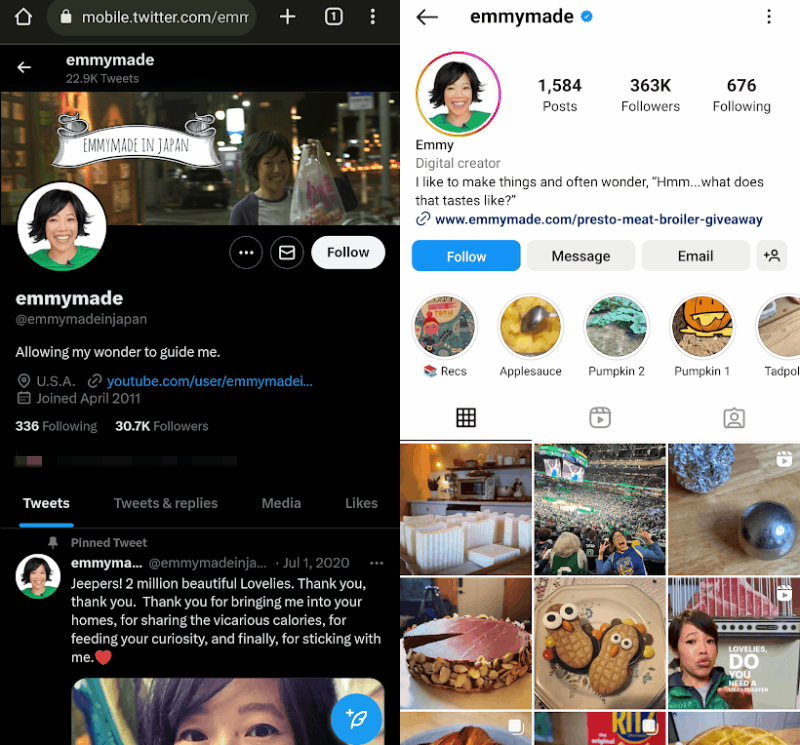
The foundational metrics of social media marketing have undergone a structural inversion. Where follower counts once served as the primary indicator of a brand’s authority, reach, and market viability, they are now increasingly viewed as vanity metrics.
Modern social ecosystems prioritize hyper-personalized algorithmic delivery. Platforms do not distribute content strictly to an account’s existing subscriber base; instead, they analyze millions of signals—including audio tracks, on-screen text, engagement velocity, and topical context—to serve videos and posts to audiences that have never interacted with the brand before.
Data from industry pulse surveys underscores this behavioral shift. Today, a mere 17% of consumers check an influencer’s or brand’s follower count before deciding to follow or trust them. Instead, audiences evaluate creators and brands strictly on content quality, contextual relevance, and authenticity.
Consequently, brands are forced to pivot away from broadcasting to a static pool of existing followers. Success in the current digital landscape requires a hyper-focus on optimization strategies that secure high visibility across algorithmic feeds, social search engines, and artificial intelligence answer engines.
Chronology: The Evolution of Social Media Discovery
Understanding how modern social marketing arrived at this juncture requires examining the shifting mechanics of digital platforms over the past decade:
- The Follower-Centric Era (Pre-2020s): Social networks operated primarily on chronological or semi-chronological feeds. A user’s timeline was dominated by accounts they explicitly chose to follow. In this era, audience acquisition was the ultimate goal, and follower counts directly correlated with content visibility.
- The Algorithmic Pivot (2020–2024): Driven by the rise of short-form video platforms like TikTok, algorithms shifted away from social graphs (who you follow) to interest graphs (what you like). Feeds transformed into dynamic discovery engines, allowing content from zero-follower accounts to instantly reach millions based purely on viewer engagement and watch time.
- The Rise of Social SEO and Multi-Platform Indexing (2025–2026): Social platforms evolved into search engines, with younger demographics increasingly bypassing traditional search engines for platform-native discovery. Concurrently, search engines like Google began embedding short-form video tabs directly into search results, while generative AI answer engines (such as ChatGPT, Claude, and Gemini) began indexing social content from platforms like LinkedIn, Reddit, and TikTok.
- The Post-Follower Era (Present): Brand strategies have decoupled from audience accumulation. Discoverability is now treated as an interconnected web spanning in-platform algorithms, social search optimization (SOSEO), and external artificial intelligence retrieval systems.
Supporting Data: What the Metrics Reveal
Comprehensive industry surveys highlight the profound disconnect between legacy marketing assumptions and modern consumer behavior. A major Q3 survey of over 2,200 consumers across the United States, United Kingdom, and Australia highlights several critical trends:
- Non-Follower Dominance: Proprietary platform data indicates that more than 70% of content views originate from non-followers 60% of the time.
- The Trust Deficit of Mega-Influencers: When purchasing decisions are influenced by digital creators, consumers exhibit higher conversion rates with niche creators than with mega-influencers. Approximately 21% of buyers report being more likely to purchase based on a recommendation from a niche creator, compared to just 15% for mega-influencers (with roughly a third indicating no preference).
- The Demand for Authenticity: An overwhelming 80% of consumers believe that influencers should genuinely use the products they promote. Furthermore, 44% state that a creator should be a long-term user before endorsing any brand offering.
- The Rise of Employee Advocacy: Employee-generated content now drives product discovery at least monthly for 40% of all consumers—a figure that surges to 62% among Generation Z.
- Economic Expectations for Employee Creators: As employee advocacy formalizes, 61% of consumers believe that workers should receive additional financial compensation when content creation extends beyond their normal job descriptions.
Official Responses & Industry Shifts: Redefining Partnerships and Advocacy
Major global brands and market observers are actively restructuring their operational frameworks to align with the post-follower paradigm.

Moving Beyond Mega-Influencers
Because follower counts are no longer reliable predictors of engagement or conversion, brand marketers are aggressively shifting budgets away from celebrity-tier influencers toward micro-influencers and specialized creators. These partners often command smaller audiences, but their communities exhibit exponentially higher trust, deeper engagement, and sharper niche relevance.
The Rise of Frontline Employee Advocates
Rather than relying solely on polished marketing campaigns produced by corporate headquarters, brands are finding unprecedented success by empowering their frontline workers. Viral phenomena—such as retail employees documenting everyday occurrences in stockrooms or baristas demonstrating beverage preparation—routinely outperform traditional corporate assets in driving consumer trust.
Recognizing this shift, forward-thinking enterprises are formalizing internal advocacy programs. Companies such as Gap Inc. and Starbucks have instituted structured creator guidelines that provide employees with creative freedom while ensuring fair compensation and clear boundaries. This institutionalization protects both the brand’s reputation and the employees’ labor rights, turning everyday staff into authentic ambassadors.
Implications: Strategic Imperatives for the Post-Follower Era
To remain competitive, marketing leaders must adapt to an ecosystem where content discoverability is governed by complex, multi-layered algorithms. Organizations should implement several structural adjustments:
1. Master Social Search Optimization (SOSEO)
Social media platforms now function as primary search engines, particularly among younger cohorts. Brands can no longer rely solely on creative intuition; they must treat social content with the same rigorous keyword strategy applied to traditional websites. Algorithms parse spoken audio, on-screen text, and closed captions to determine semantic relevance. Every video asset must be optimized across all textual and auditory layers to maximize in-platform discoverability.
2. Prepare for Generative AI and External Indexing (AEO)
Discoverability no longer stops at the borders of individual social apps. Traditional search engines now pull short-form social videos directly into their main result pages. Simultaneously, generative AI answer engines scrape and index social platforms to formulate real-time answers for users. Brands must construct evergreen social content that meets the indexing criteria of these AI systems, extending the shelf-life of digital assets from a fleeting 48-hour window to months of compounding organic visibility.
3. Redefine Key Performance Indicators (KPIs)
As follower growth ceases to correlate with business outcomes, corporate dashboards must be overhauled. Metrics should focus intensely on non-follower reach, engagement rates, cross-platform referral traffic, social search visibility, and sentiment-driven conversions.
Conclusion
The era of chasing follower counts as a proxy for brand equity is officially over. In a digital landscape dominated by algorithmic recommendation engines and AI-driven search, relevance is the ultimate currency. Brands that abandon outdated volume metrics in favor of multi-channel discoverability—by collaborating with authentic niche creators, empowering frontline employees, and optimizing for social search—will dominate the next generation of digital commerce.
Related posts: