
The global luxury hospitality sector is undergoing a profound metamorphosis. For decades, the industry’s most prestigious names—Aman, Four Seasons, The Ritz-Carlton, Waldorf Astoria, and Orient Express—have defined the pinnacle of land-based elegance. Now, in a sweeping, unprecedented wave of creative expansion, these titans are pivoting toward the water, trading brick-and-mortar landmarks for the fluid, hyper-curated intimacy of bespoke mega-yachts and river vessels.
This is not merely a diversification of portfolio; it is a total reimagining of the maritime experience. By collaborating with elite naval architects and interior designers, these brands are translating their signature aesthetic, spatial philosophies, and six-star service standards from the bedrock of the shore to the shifting currents of the ocean and the Nile.
The Chronology of a Nautical Shift
The move into the maritime space marks a strategic departure from the traditional cruise industry. Historically, cruising has been defined by scale, capacity, and volume. The new wave of "hospitality yachts," however, prioritizes the inverse: low-density, high-touch, and design-forward experiences.
- 2022: The Ritz-Carlton Yacht Collection officially launched Evrima, signaling the first major entry of a hotel-branded yacht into the market.
- 2024: The debut of Ilma expanded The Ritz-Carlton’s fleet, introducing a larger but still highly intimate vessel inspired by Maltese maritime mythology.
- 2025: Luminara joined the Ritz-Carlton fleet, pushing the boundaries of art-integrated design at sea.
- 2026 (March): Four Seasons celebrated the maiden voyage of Four Seasons I, introducing a new era of residential-style yachting.
- 2026 (June): Orient Express Sailing Yachts debuted the Corinthian, blending historical rail-travel glamour with wind-assisted propulsion.
- 2026 (Late): Waldorf Astoria is slated to launch its Nile River experience, a boutique vessel designed to bring grand-hotel heritage to Egypt’s most historic waterway.
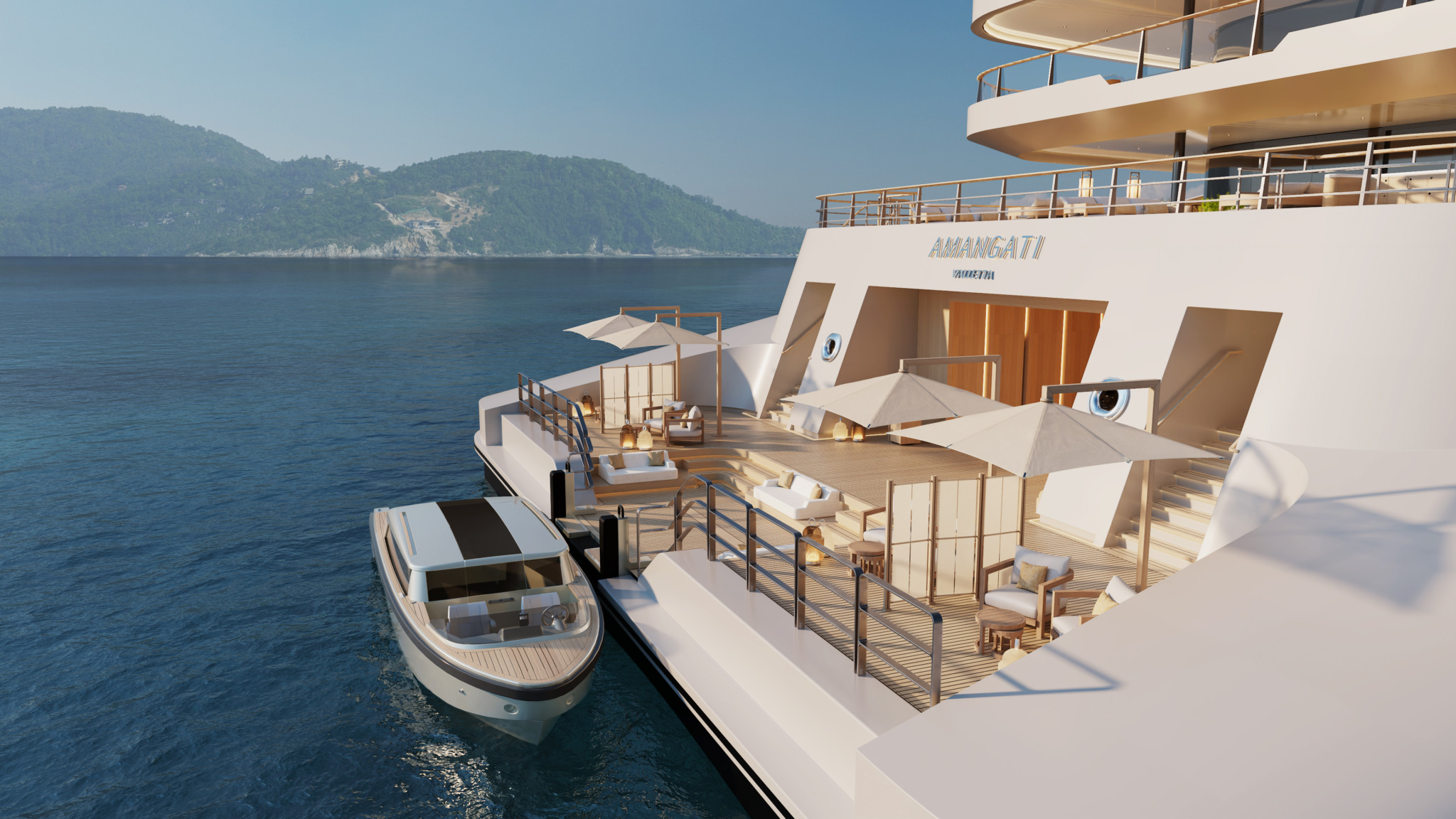
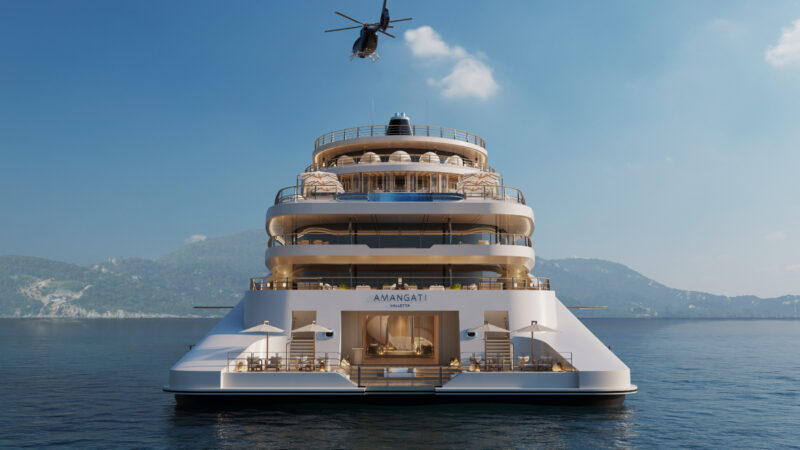
- 2027 (Spring): Aman at Sea plans to unveil Amangati, a motor yacht intended to function as a floating sanctuary of "peaceful motion."
Architectural Identity: From Keel to Crown
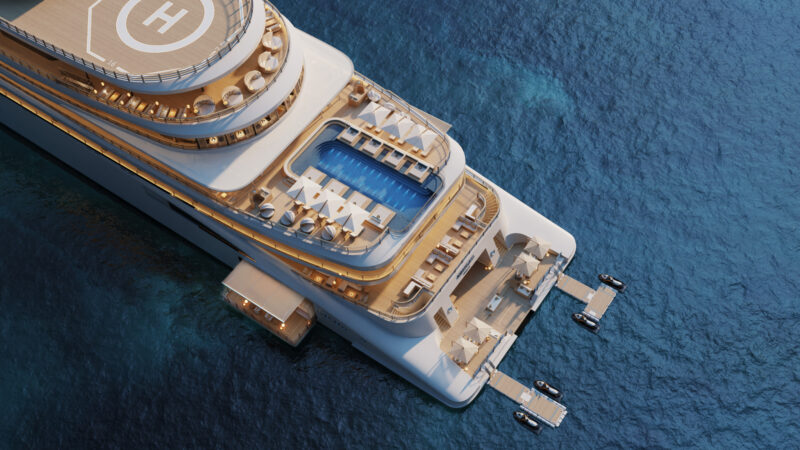
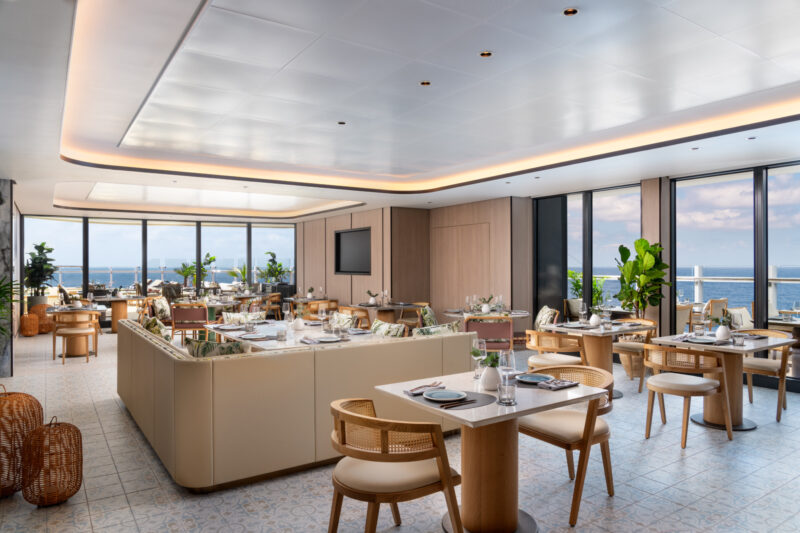
For these brands, the challenge has been engineering. Traditional cruise ship design often prioritizes structural load-bearing walls along the exterior, which restricts glass surface area. To solve this, firms like Four Seasons and Aman have re-engineered the interior core of their vessels, allowing for expansive, floor-to-ceiling glass that ensures the horizon remains a constant, uninterrupted presence.
Four Seasons: Mid-Century Glamour at Sea
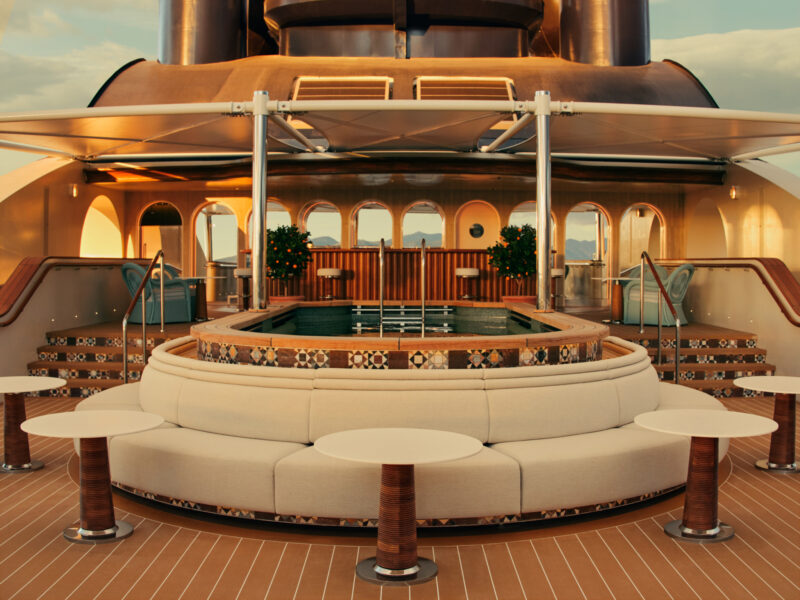
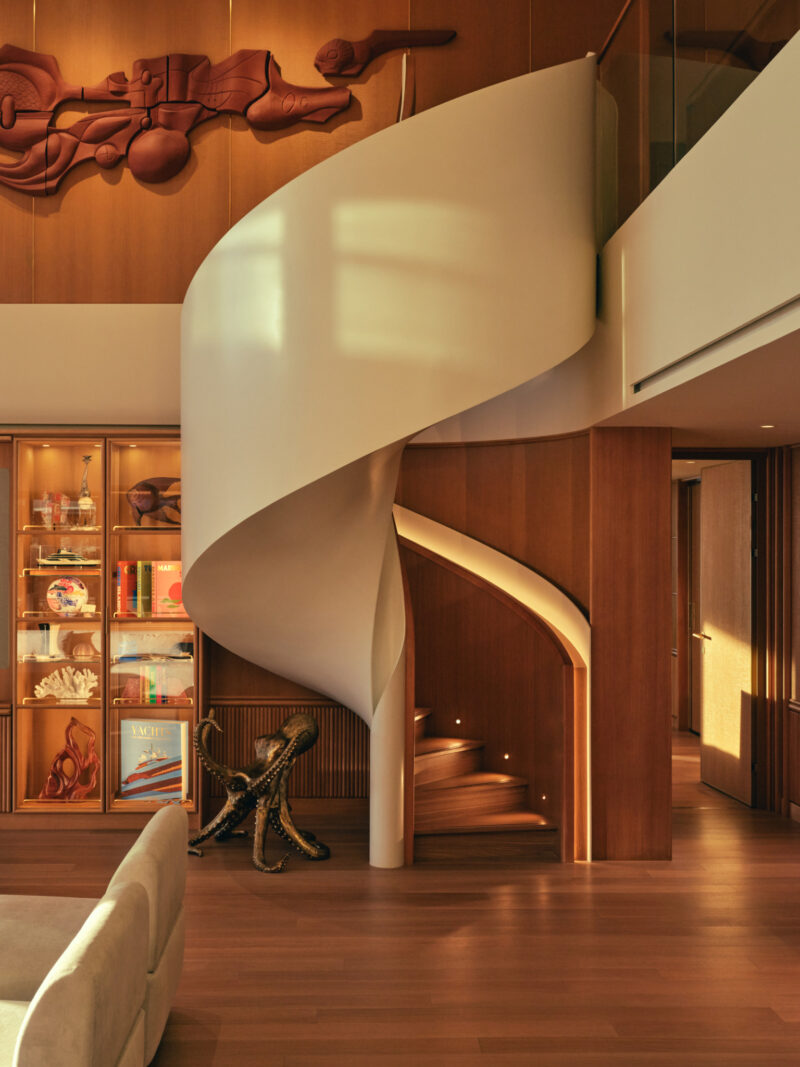
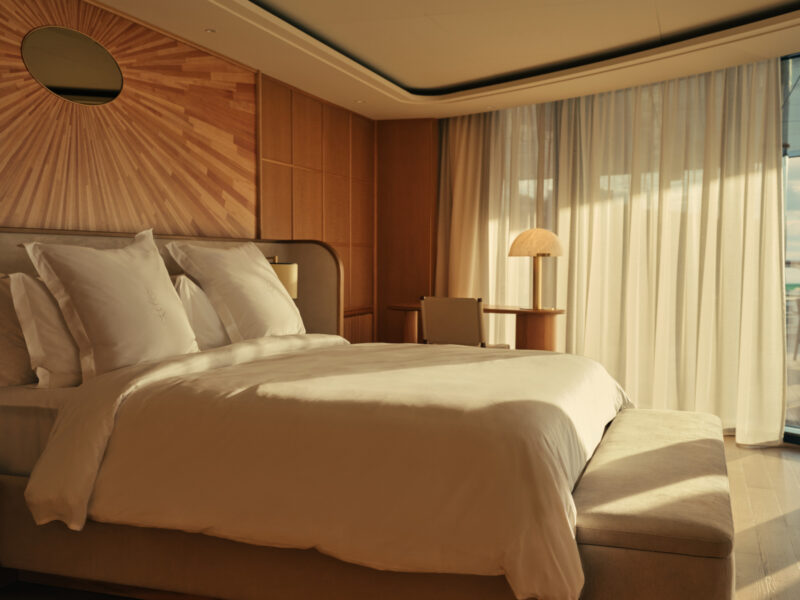
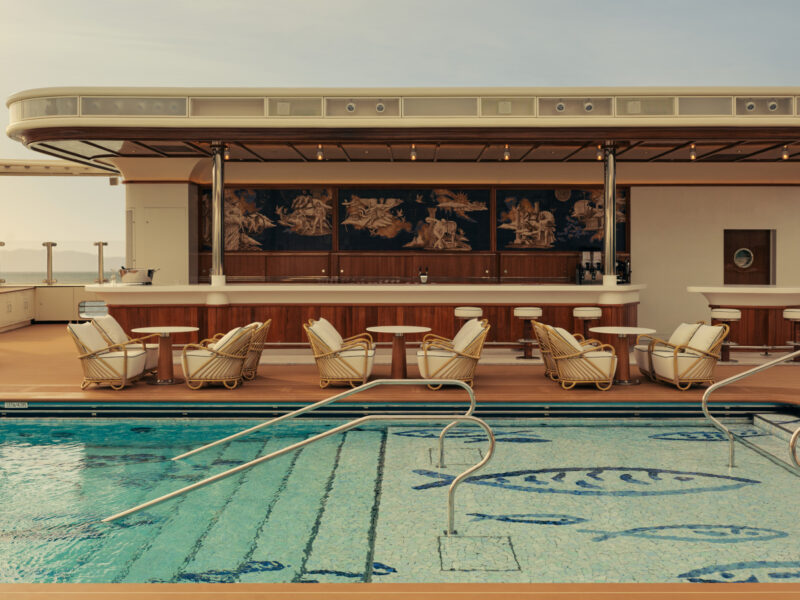
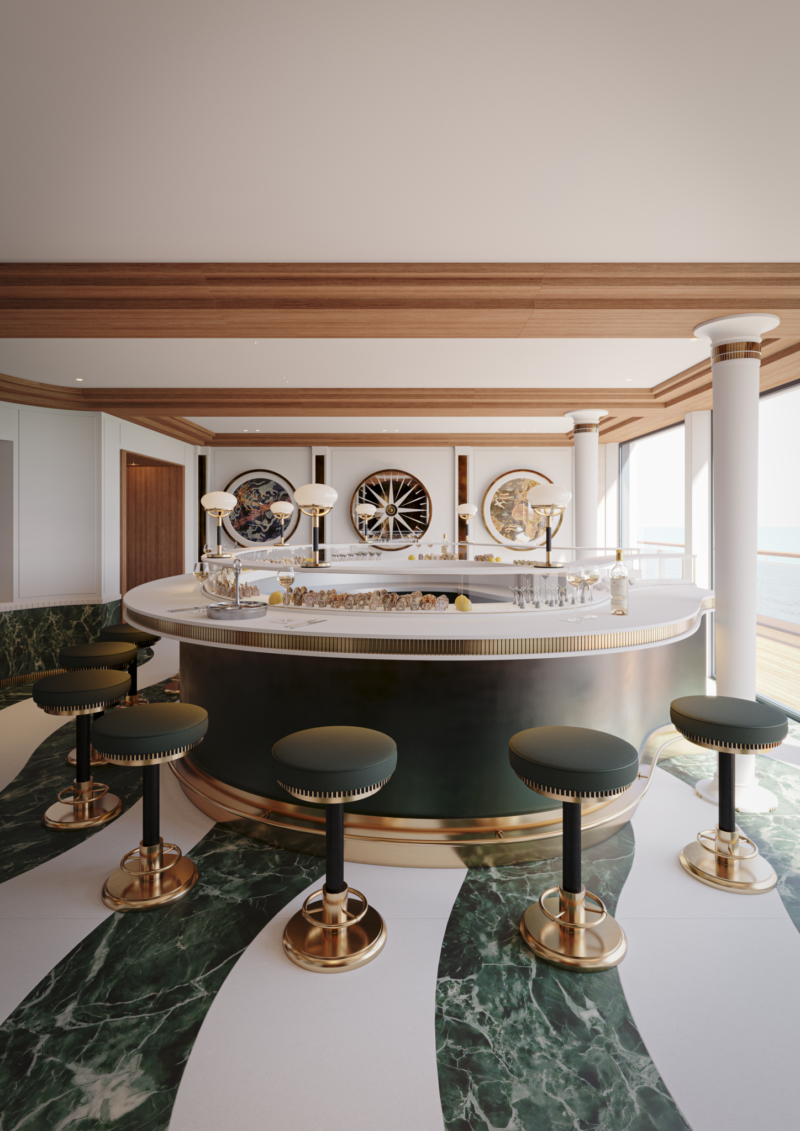
Four Seasons has leaned into the "golden age of yachting." Four Seasons I and the upcoming Four Seasons II (2028) utilize a residential philosophy where interior walls are minimized. By working with Fincantieri and Tillberg Design of Sweden, the brand has created a vessel that feels like a private residence rather than a ship. The "Horizon Lounge," with its arched openings and mosaic detailing, reflects a Mediterranean beach club sensibility, while custom headboards and maritime art collections curated by Prosper Assouline anchor the suites in a sense of place.
Orient Express: Cinematic French Minimalism
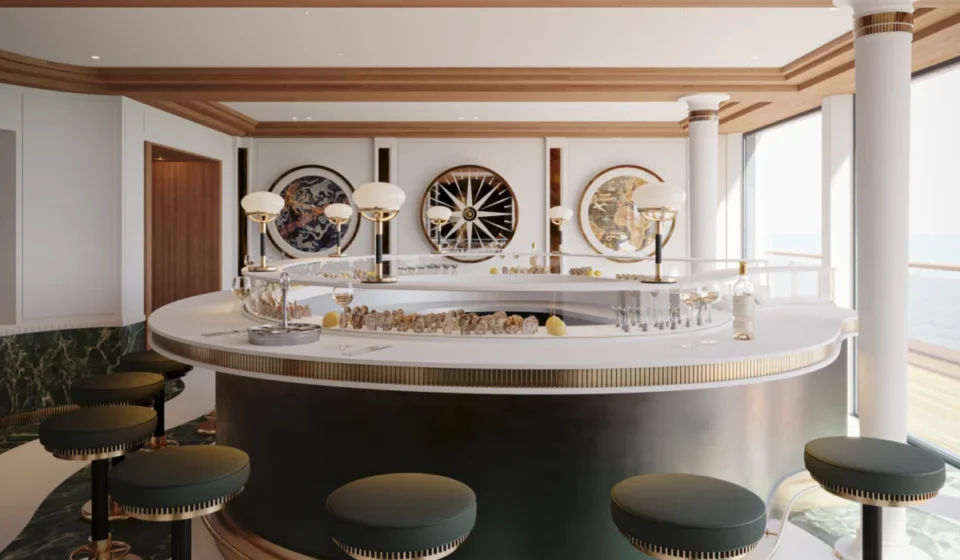
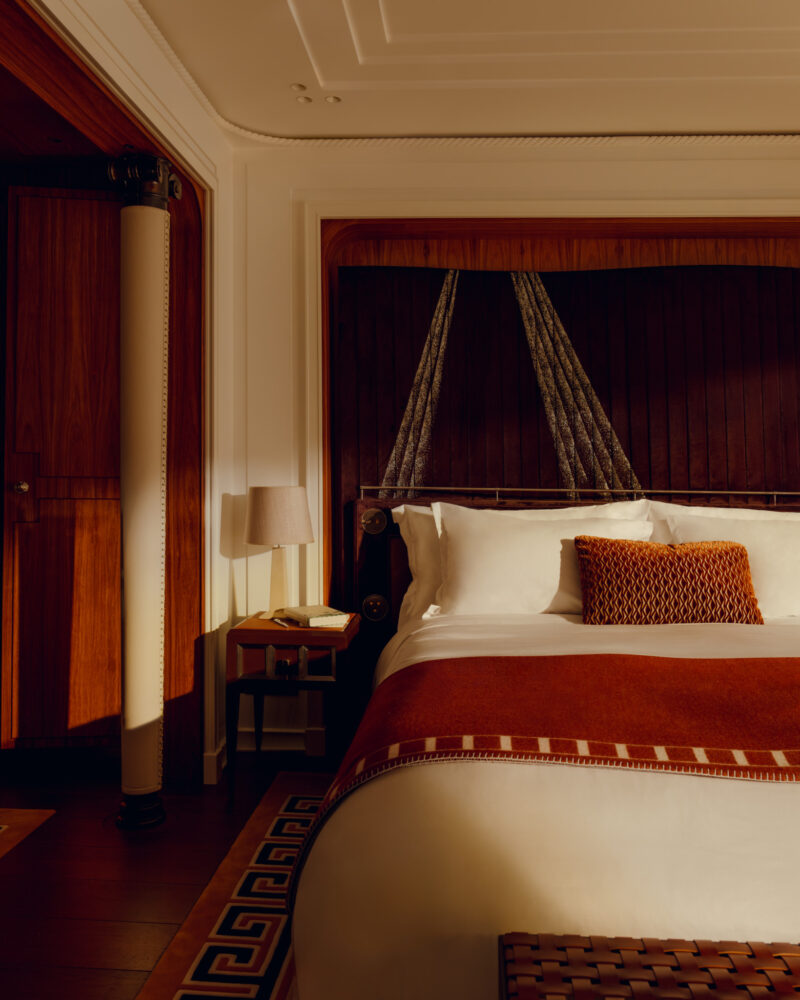
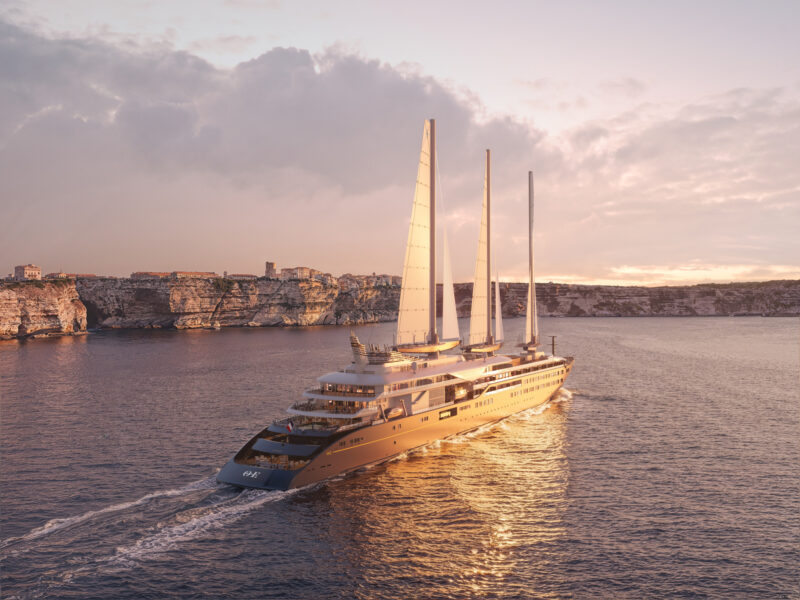
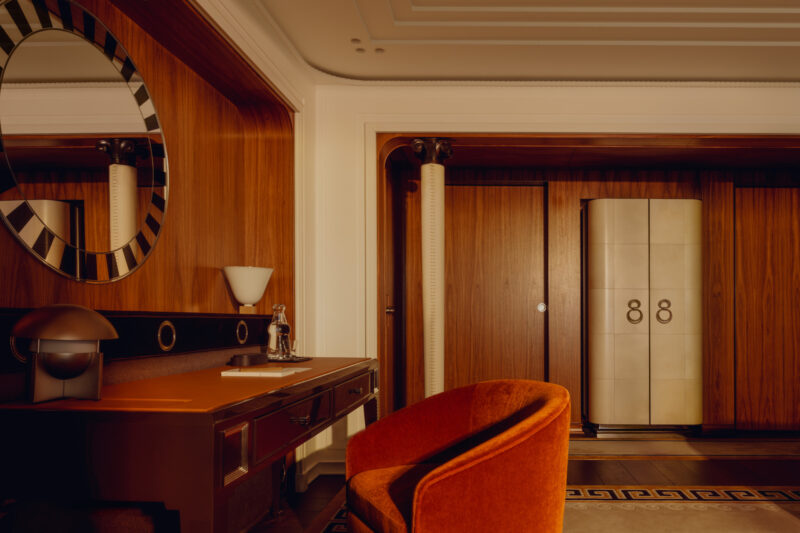
The Corinthian by Orient Express is a study in proportions. Artistic director Maxime d’Angeac has transposed the brand’s 1930s rail-travel legacy into a modern maritime context. The vessel’s striking silhouette, featuring three rigid sails powered by SolidSail technology, is as much an architectural statement as it is an engineering feat. Inside, the design language is one of "disciplined clarity," utilizing fluted columns, velvet, and rich woods to create a timeless, Art Deco-inspired environment that favors light and silence.
Aman: Restrained Ryokan Minimalism
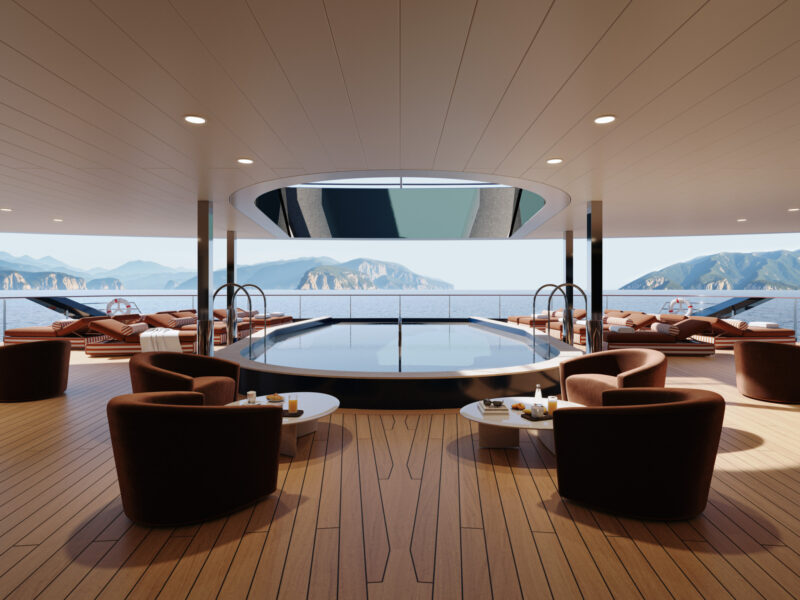
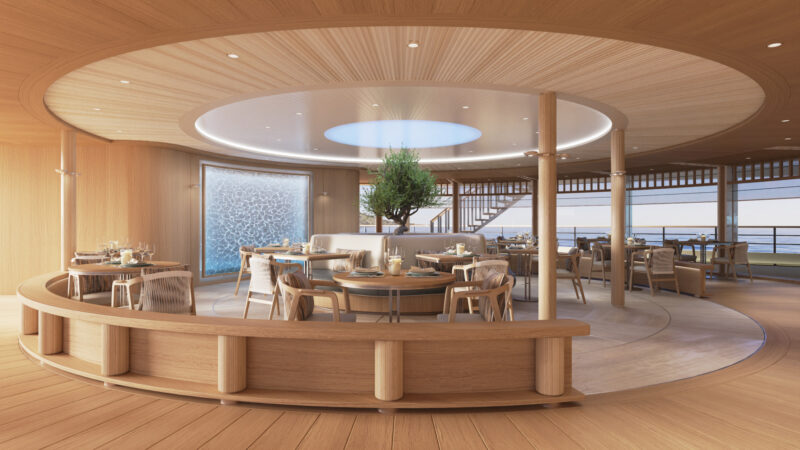
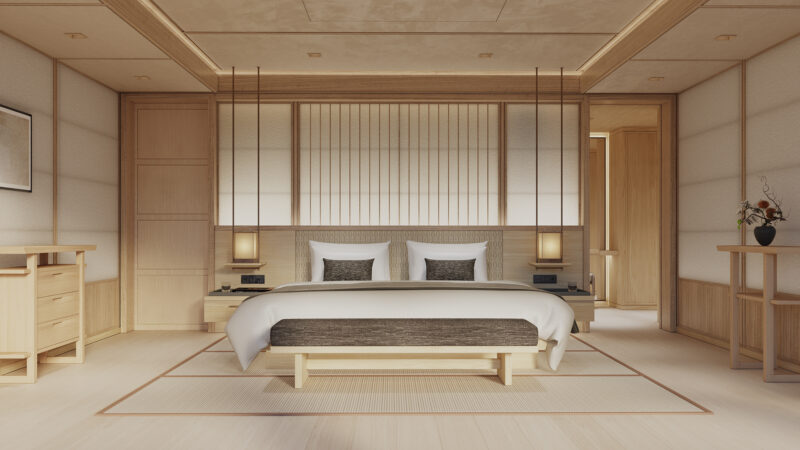
Aman’s approach with Amangati is arguably the most radical in its restraint. By partnering with Sinot Yacht Architecture & Design, Aman has created a vessel that feels like a floating Japanese ryokan. The material palette—eucalyptus, travertine, and ash wood—is intentionally quiet. The focus here is on the "wellness philosophy," with an 11,000-square-foot spa that functions as a destination unto itself, featuring a serenity garden and ocean-facing treatment suites.
The Ritz-Carlton: Yacht-Club Sophistication
The Ritz-Carlton Yacht Collection operates under a "yacht-club" aesthetic. By sourcing furniture from high-end residential houses like Minotti and Giorgetti, the brand has successfully dissolved the boundary between indoors and the sea. Each vessel—Evrima, Ilma, and Luminara—possesses a distinct narrative, expressed through massive art installations that bridge the gap between luxury hospitality and museum-grade curation.
Waldorf Astoria: Grand-Hotel Heritage
Waldorf Astoria’s focus on the Nile River is a testament to the brand’s institutional history. Rather than competing with the sprawling mega-yachts of the Mediterranean, the brand is creating a 29-suite "floating boutique hotel." The design highlights the "Peacock Alley" concept, reimagined as a sun-drenched river lounge that serves as the social heart of the vessel.
Supporting Data: The Shift in Market Metrics
The shift in design is reflected in the metrics. Traditional cruise ships often host between 2,000 and 6,000 passengers. In contrast, the luxury hospitality yacht cohort maintains an average capacity of 100 to 450 guests.
- Capacity Control: Aman’s Amangati accommodates just 94 guests; Orient Express’s Corinthian carries 110.
- Staff-to-Guest Ratio: These vessels operate with nearly a 1:1 or 2:1 staff-to-guest ratio, a stark contrast to the standard cruise industry.
- Sustainability: Propulsion technology is becoming a central pillar. Orient Express utilizes LNG-hybrid engines combined with wind power, while Aman’s Amangati relies on hybrid diesel-electric propulsion to minimize noise, ensuring the "sanctuary" feel is not interrupted by mechanical vibration.
Official Perspectives: The Philosophy of Motion
The leadership behind these projects emphasizes that this is not a business pivot—it is a brand extension.
"Rather than focusing on maximizing capacity, we focused on maximizing the quality of the guest experience," says Ben Trodd, CEO of Four Seasons Yachts. "We wanted to embrace the romance and heritage of classic yachting, ensuring the horizon remains visible wherever guests are onboard."
Maxime d’Angeac of Orient Express notes, "The objective was to remain faithful to a certain idea of travel—its rhythm, refinement, and continuity—and transpose it into life at sea while maintaining a constant dialogue between the interior, exterior, and movement."
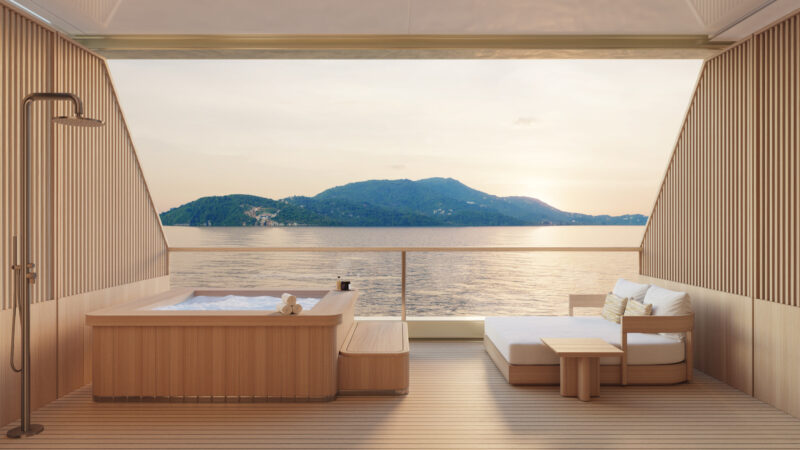
Jonathan Wilson, CEO of Aman at Sea, echoes this sentiment: "Wellness has always been woven into the fabric of every Aman property. The opportunity to realize that at sea, with genuine space and without compromise, was central to the design of Amangati."
Implications: The Future of Luxury Cruising
The entrance of these five brands into the maritime space signals a permanent change in how high-net-worth individuals view the "cruise." The industry is moving away from the "destination-as-a-stop" model toward the "ship-as-a-destination" model.
1. The Rise of the "Floating Residence"
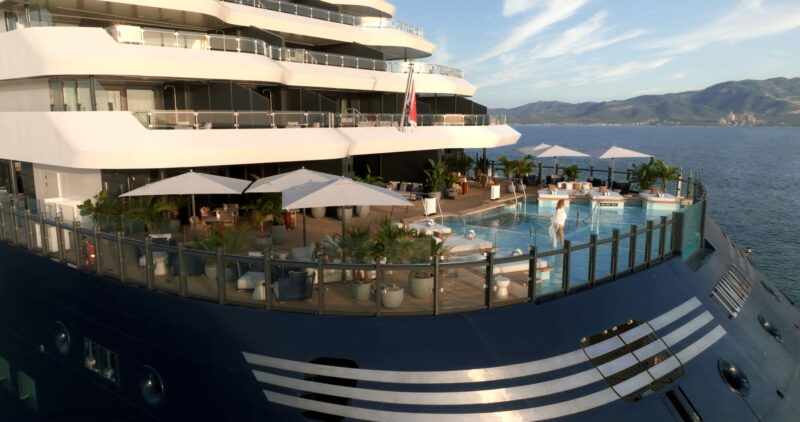
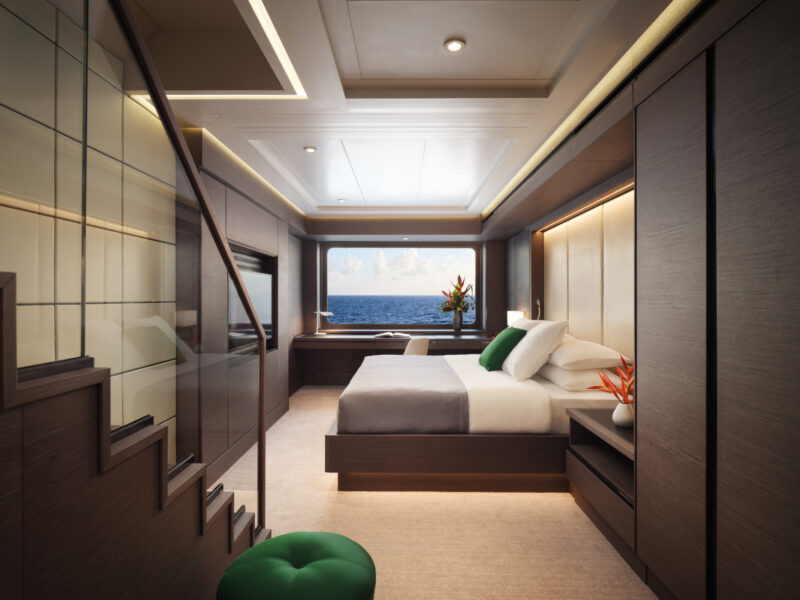
As these yachts become more residential in nature, the distinction between a five-star hotel room and a stateroom is vanishing. Travelers now expect the same level of architectural integrity and furniture quality on the water as they do in a suite at the Four Seasons or Waldorf Astoria.
2. The Rebirth of Slow Travel
By utilizing smaller, more maneuverable vessels, these brands can access ports and river systems that were previously off-limits to traditional cruise lines. This allows for a "slow travel" movement, where the voyage itself—and the quiet, intentional design of the vessel—is as important as the destination.
3. The Sustainability Mandate
The move toward wind-assisted and hybrid propulsion is not just a marketing effort; it is a necessity for the modern luxury traveler. The demand for silence and low environmental impact is forcing maritime engineers to innovate at an unprecedented pace, setting new standards for the entire shipping industry.
4. The Institutionalization of Art
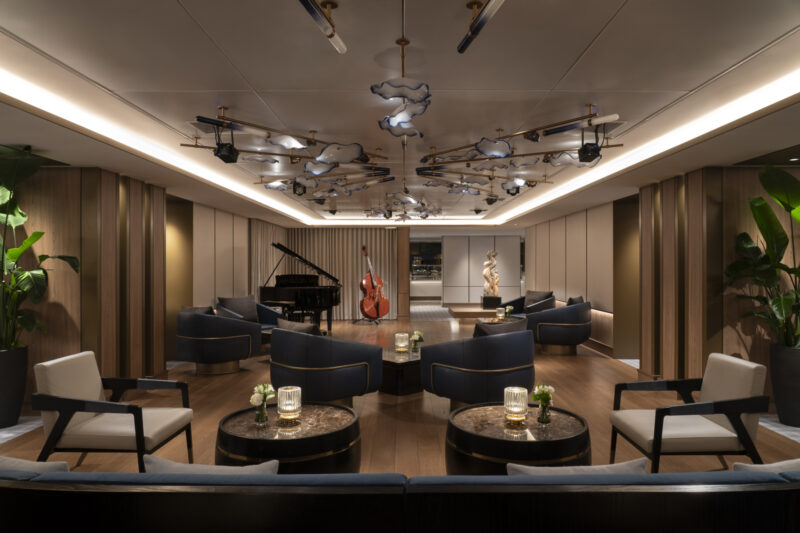
These vessels are effectively floating galleries. With commissions ranging from light sculptures to textile installations, the brands are ensuring that their maritime properties possess the same cultural gravitas as their land-based flagships.
Conclusion
The ocean is no longer a peripheral setting for the hospitality industry; it has become the next great frontier for architectural and service excellence. As Aman, Four Seasons, The Ritz-Carlton, Waldorf Astoria, and Orient Express set their courses, they are not just transporting guests from one port to another. They are redefining the very concept of luxury, proving that the most exclusive experience is one where the movement of the ship, the light of the horizon, and the precision of design converge in a single, coherent, and tranquil atmosphere. For the discerning traveler, the sea has never looked—or felt—more like home.