Comments Off on The Human Face of State Power: Jan Banning’s Bureaucratics Revisited
For over two decades, Dutch photographer Jan Banning has trained his camera on an entity that dictates the rhythms of modern life yet largely remains an invisible, monolithic force: bureaucracy. In his acclaimed ongoing project, which has culminated in the newly released publication Bureaucratics Revisited, Banning explores the human architecture of state power. Expanding upon his foundational 2008 book, this updated retrospective sifts through his extensive archive while introducing fresh work. The result is a sweeping anthropological study and a masterclass in visual storytelling, capturing the institutional cogs that keep global societies turning—and the individuals caught in their machinery.
Main Facts: The Anatomy of an Unprecedented Global Project
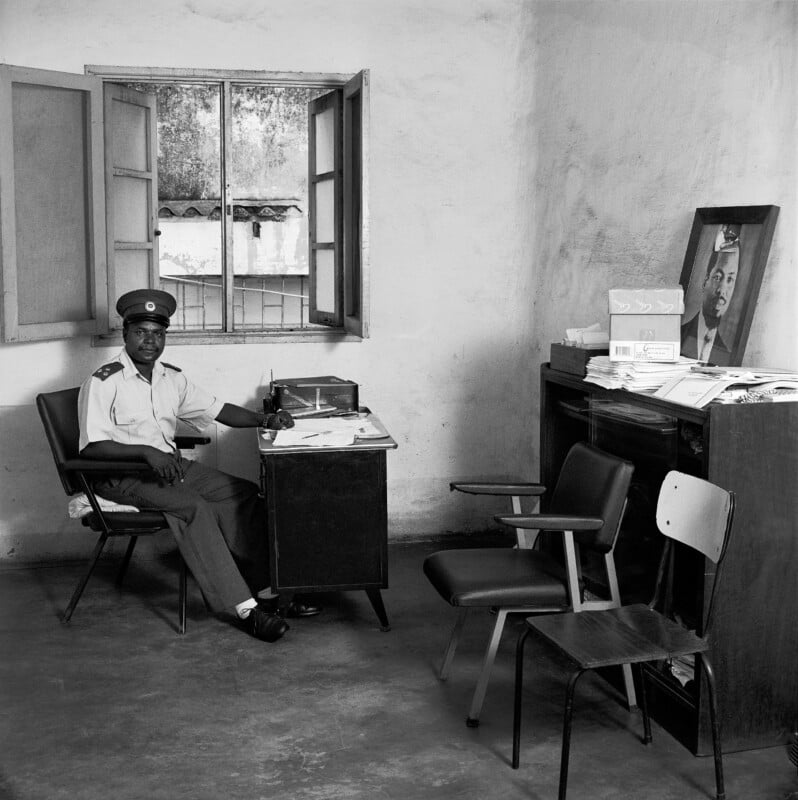
At its core, Bureaucratics Revisited is a visual catalog of civil servants, law enforcement personnel, and local administrators captured across multiple continents. To construct this definitive body of work, Banning embarked on a multi-year odyssey across eight countries, navigating bureaucratic red tape just to document the people who enforce it.
The methodology behind the portraits is both rigid and revealing. Each image relies on a strict set of parameters:
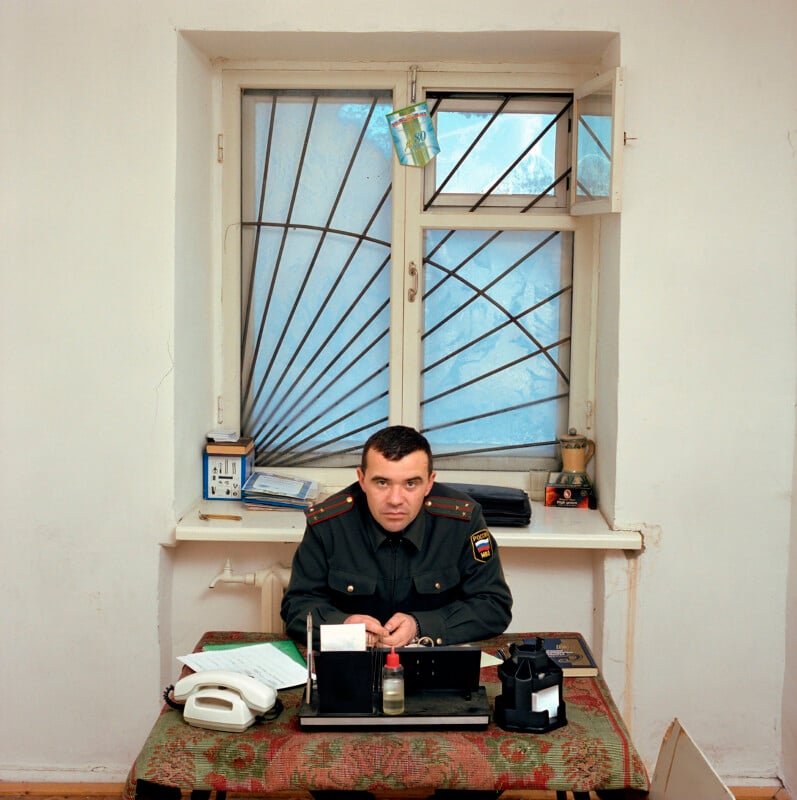
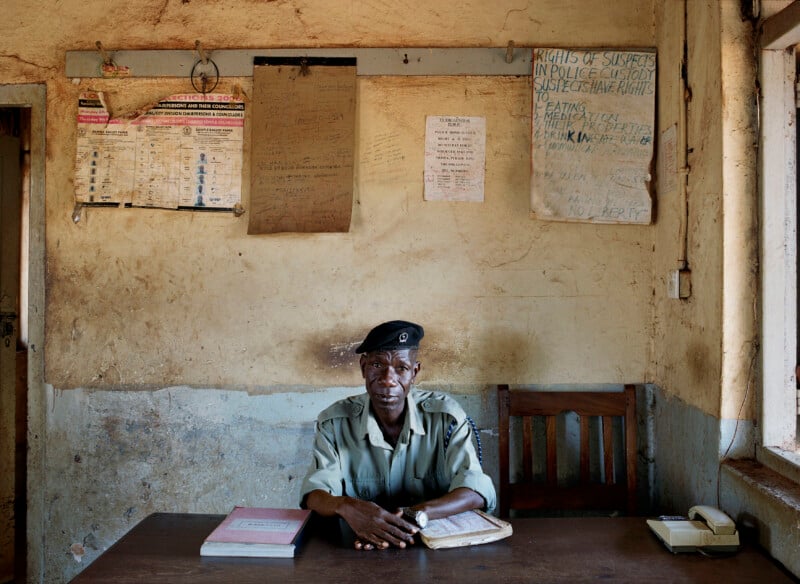
Format: A square medium-format frame that centers the subject within their environment.
Perspective: A strictly frontal composition shot precisely from the eye-level of a citizen stepping into the office.
Aesthetics: Deadpan clarity that avoids overt sensationalism, allowing the environment to speak volumes.
Renowned British photographer Martin Parr highlights the sheer tenacity required to pull off such a feat in the book’s foreword:
"Receiving permission to shoot portraits of bureaucrats is in itself an achievement, when you consider the countries they decided to visit: India, Yemen, Bolivia and others. I would not know where or how to start. So they get the go-ahead, and then Banning shoots many portraits, the best of which we see here."
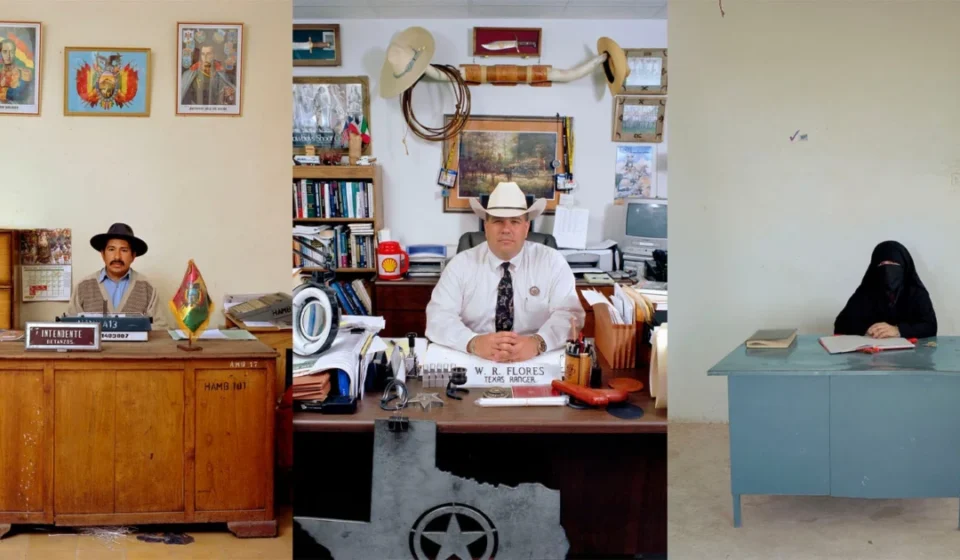
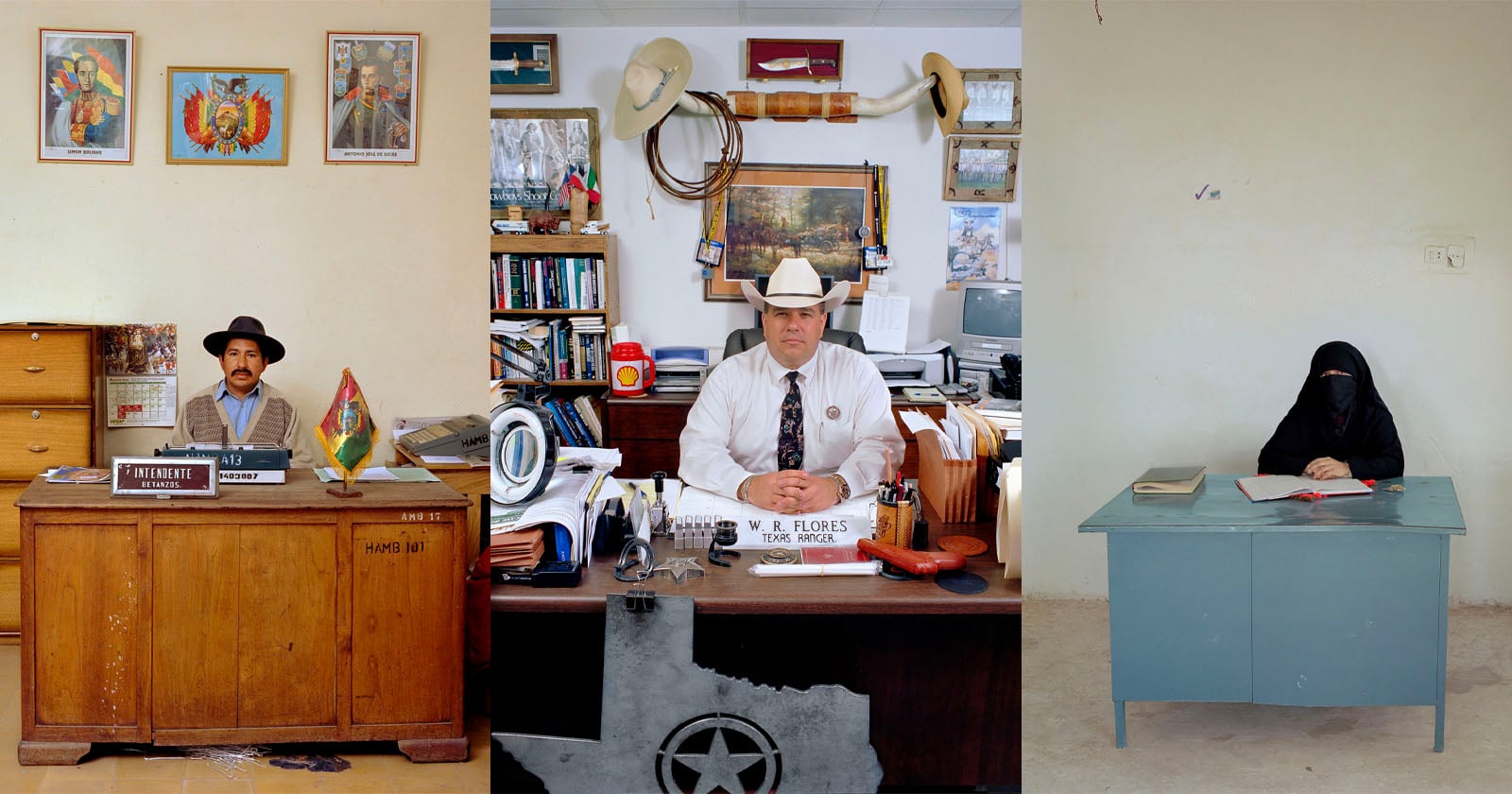
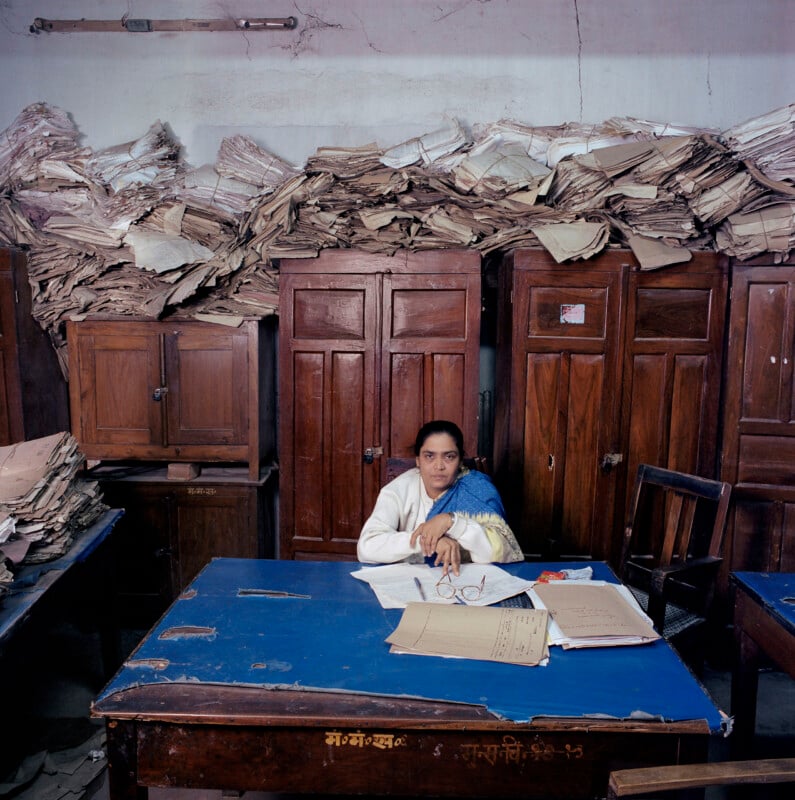
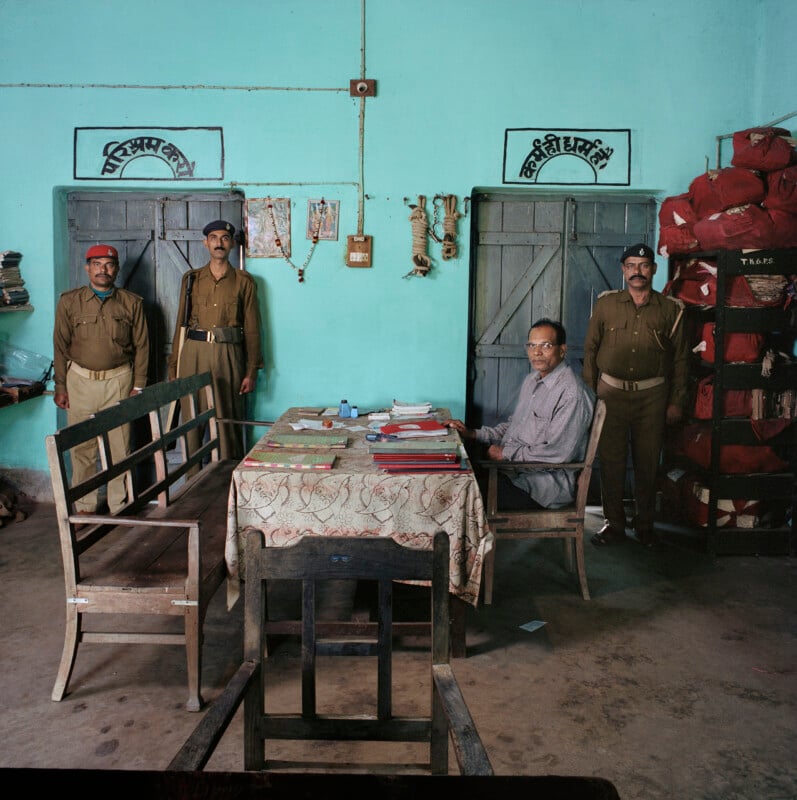
Across these spaces—whether it is a high-ceilinged government archive in Patna, India, or a sparsely equipped police post in rural Siberia—Banning’s work orchestrates a subtle dialogue. It examines the office not just as a formal, performative monument to government authority, but as the deeply personal, lived-in workspace of a human being.
Chronology: A Multi-Decade Photographic Journey
The evolution of Bureaucratics spans a critical era of shifting global governance, technological transitions, and shifting socio-political landscapes.
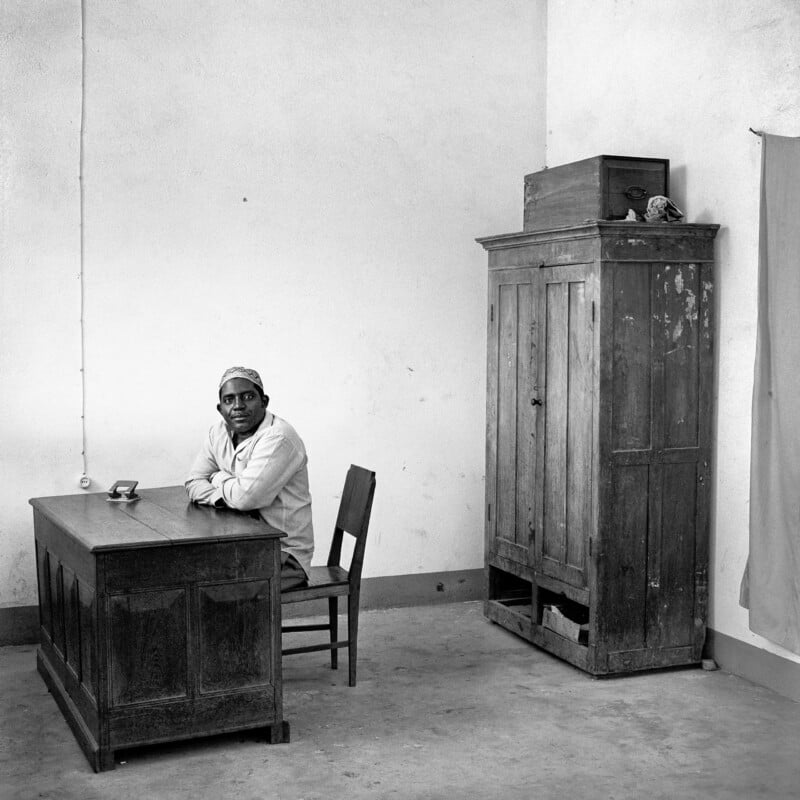
2002: Banning initiates the Bureaucratics project, setting out to document civil servants internationally. Early fieldwork commences in regions like Mozambique, capturing foundational portraits such as Carlos Roska, the administrative secretary of Boila-Nametoria, and local police commands in Maputo.
2003–2005: The geographic scope broadens significantly. Banning travels through India and South America. In 2003, he captures Jawed Hayat, a literate constable in Thakurganj, India. By 2004, he documents Sushma Prasad at the Old Secretariat in Patna, Bihar, alongside isolated civil posts in Siberia—such as lone police officer Sergej Michailovich Osipchuk in Oktyabrsky, who lacks a car, bicycle, or even department telephone. In Bolivia (2005), he records municipal workers like Rodolfo Villca Flores and police officer Constantino Aya Viri Castro operating out of remarkably resource-scarce environments.
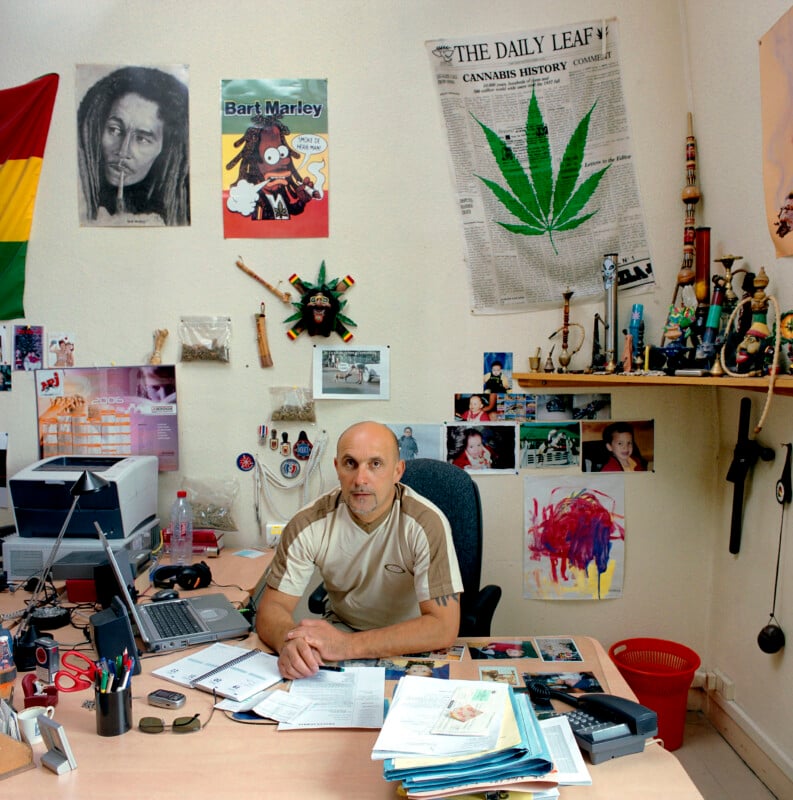
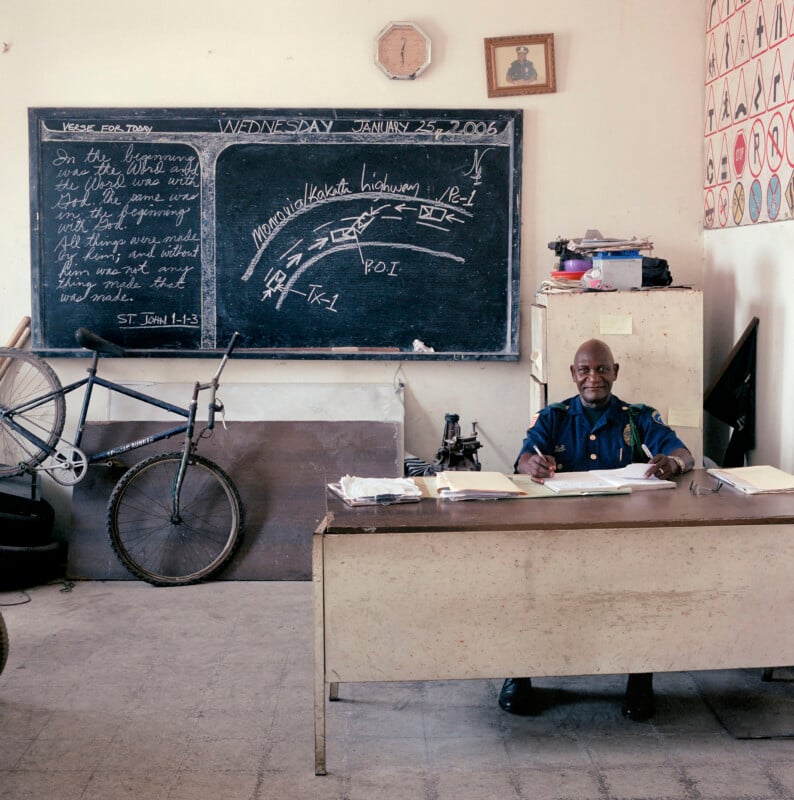
2006–2007: Banning’s lens shifts toward Western and Middle Eastern administrative nodes. He documents narcotics agent Roger Vacher surrounded by counter-culture iconography in Clermont-Ferrand, France (2006); Major Adolph Dalaney in the Reconstruction Room of the Liberia National Police; and Ministry of Agriculture adviser Nadja Ali Gayt in Yemen. In 2007, the project moves to the United States, capturing Texas Ranger Rudy Flores and Houston Council Agenda Director Marty Stein, alongside municipal officials in China like Yao Hong Yu in Tai’an City.
2011–2013: Banning expands his documentation of the legal and penal systems, capturing the staggering paper archives of Cartagena’s courts in Colombia (2011), the overcrowded quarters of Kirinya Main Prison in Jinja, Uganda (2013), and the towering stacks of closed criminal case files at the Chief Magistrate’s Court on Buganda Road in Kampala.
2008–Present: Following the initial 2008 publication of Bureaucratics, Banning continues archiving, analyzing, and expanding the project. This ongoing curation ultimately paves the way for the release of Bureaucratics Revisited, which synthesizes decades of analog and digital medium-format evolution into a definitive volume.
Supporting Data: Technical Evolution and Global Scope
To achieve the clinical yet empathetic sharpness characteristic of the series, Banning relied on high-end medium-format camera systems across different phases of the project. His gear progression mirrors the transition in professional photography over the 2000s:
Bronica SQ-Ai: Used for early analog captures, providing the foundational square-format aesthetic.
Fuji GX-680III: Utilized for its expansive film real estate and precise focal plane controls, ideal for capturing sprawling, cluttered bureaucratic offices.
Hasselblad H5: Employed in later phases to maximize digital fidelity and dynamic range.
Geographic and Institutional Breakdown
The subjects featured in Bureaucratics Revisited span a vast socio-economic spectrum, highlighting global disparities in administrative infrastructure:
Subject Name / Identifier
Role & Title
Location
Year
Office Environment & Conditions
Sushma Prasad
Assistant Clerk, Cabinet Secretary
Patna, Bihar, India
2004
The Old Secretariat; surrounded by towering wooden cabinets stacked with endless paper files.
Don Albino d’Orlando
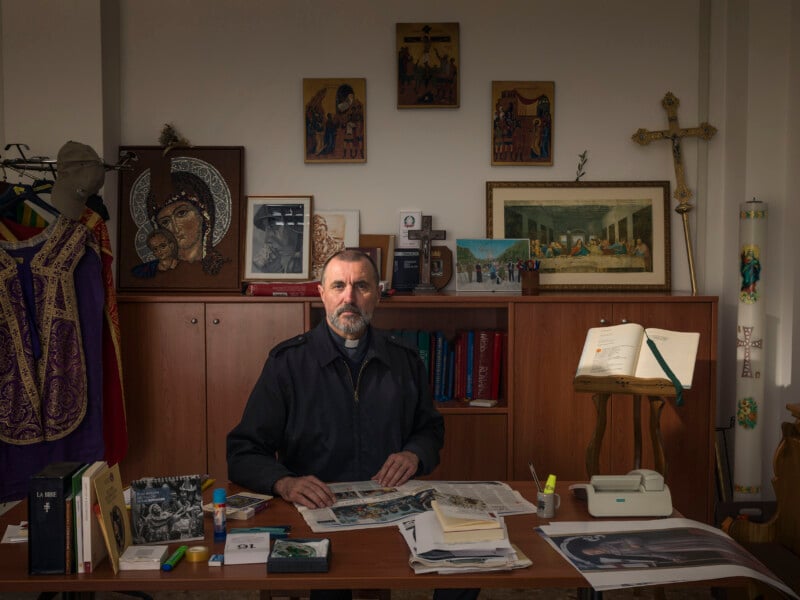
Military Chaplain, Carabinieri
Friuli Region, Italy
2025
Office adorned with religious icons, crucifixes, and clerical vestments.
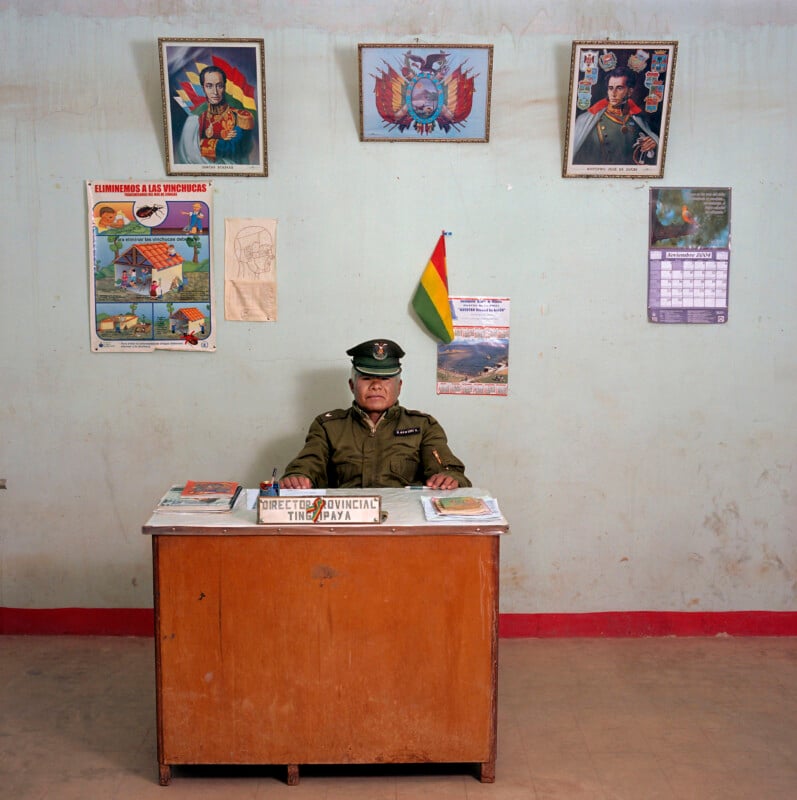
Constantino Aya Viri Castro
Police Officer Third Class
Tinguipaya, Bolivia
2005
Municipal police station lacking basic amenities such as a telephone, car, or typewriter.
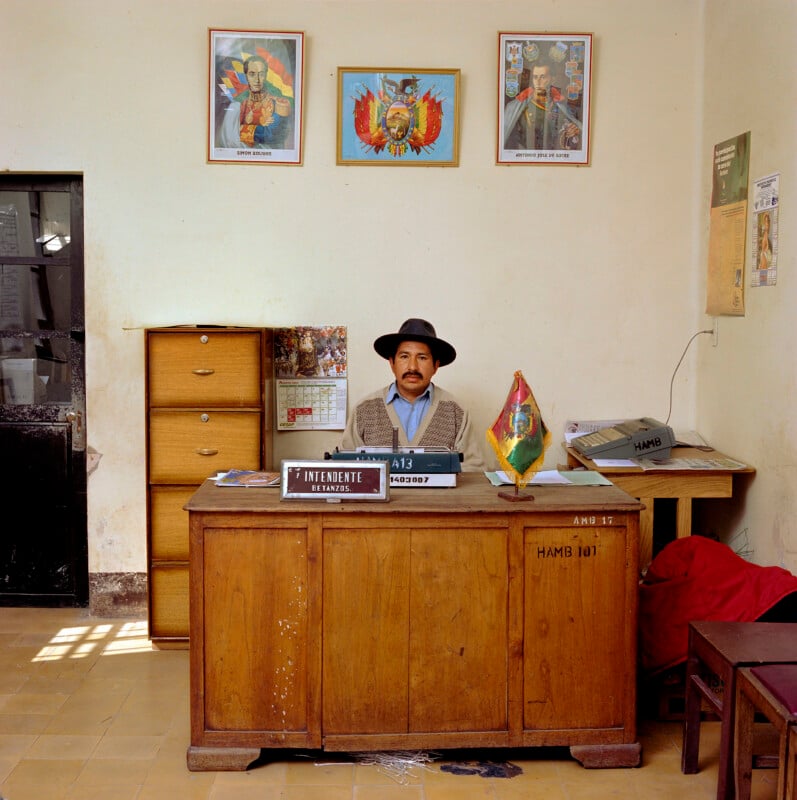
Rodolfo Villca Flores
Chief Supervisor, Market & Sanitary Services
Betanzos, Bolivia
2005
Office decorated with historical portraits of Simón Bolívar and Antonio José de Sucre.
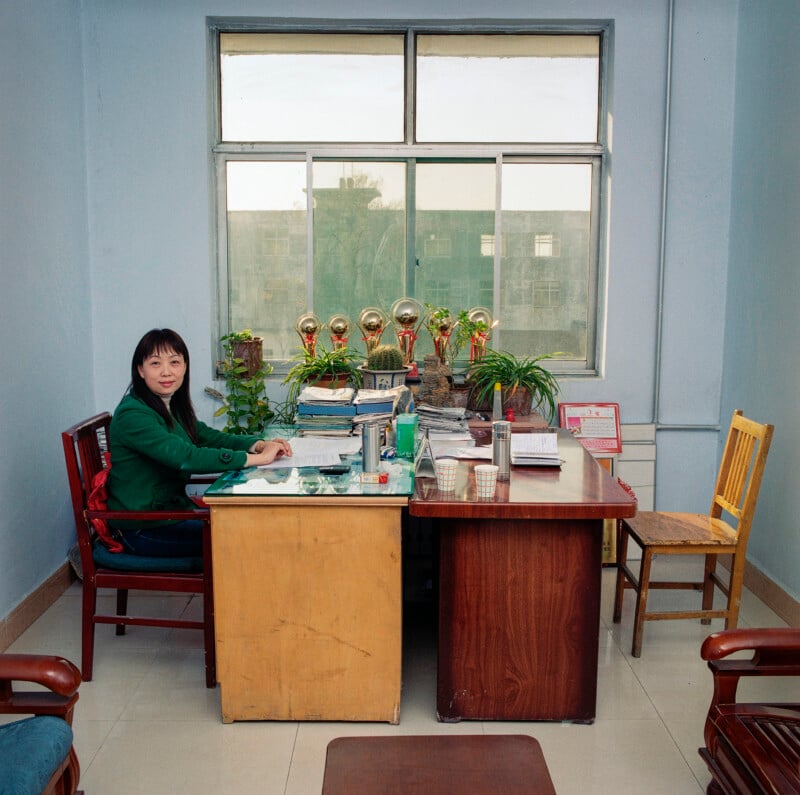
Yao Hong Yu
Vice Director, Publicity Office
Tianping, China
2007
Office featuring orderly rows of trophies and potted plants on the windowsill.
Roger Vacher
Narcotics Agent, National Police
Clermont-Ferrand, France
2006
Office uniquely personalized with posters of Bob Marley, Bart Simpson, and cannabis imagery.
Major Adolph Dalaney
Reconstruction Room, Traffic Police
Monrovia, Liberia
2006
Functional workspace featuring a chalkboard with a traffic diagram and a scriptural verse.
Sergej Michailovich Osipchuk
Lone Village Police Officer
Oktyabrsky, Siberia, Russia
2004
Sparse room featuring barred windows; operates without a departmental vehicle or bicycle.
Ivan Niwamanya
Chief Jailor, Principal Officer II
Jinja, Uganda
2013
Kirinya Main Prison (holding 922 inmates in a facility built for 336); acts as both jailor and arbiter of inmate conflicts.
Rudy Flores
Texas Ranger (State Law Enforcement)
Palestine, Texas, USA
2007
Office decorated with Western memorabilia, family photographs, and a metal Texas-shaped sign.
Official Perspectives and Critical Reception
The cultural resonance of Banning’s work lies in its dual nature: it is neither a pure condemnation of red tape nor an uncritical celebration of public service. Instead, it captures the psychological negotiation between individual identity and institutional duty.
Cultural critics and photography experts have long praised Banning’s ability to extract profound sociological truths from mundane settings. By positioning the viewer at the exact threshold where an ordinary citizen meets the state, the photographs force an uncomfortable yet fascinating confrontation. The desk acts as a barricade, a tool of organization, and occasionally a canvas for personal expression.
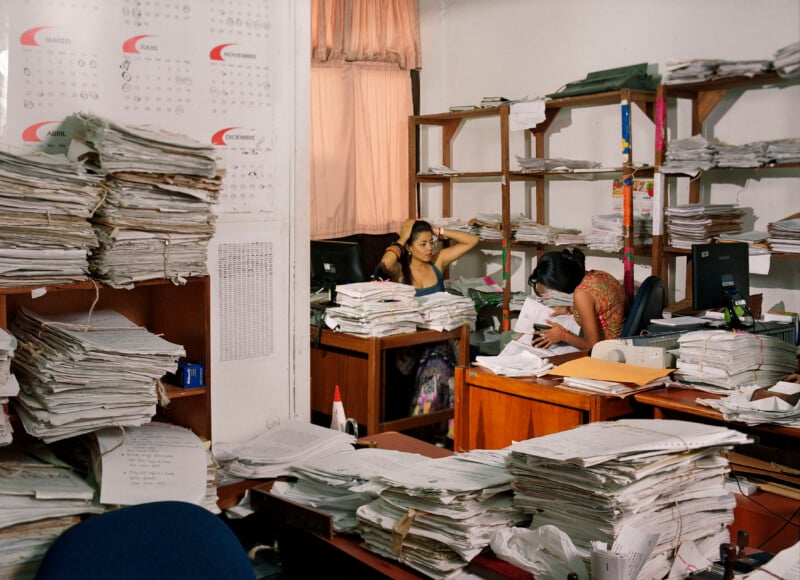
In some images, such as that of French narcotics agent Roger Vacher, personal quirks—manifested through counter-culture posters—violently clash with the austere expectations of the national police force. In others, like the haunting archives of Uganda’s Chief Magistrate’s Court or India’s Old Secretariat, the sheer volume of paper towers over the human occupants, symbolizing a crushing systemic weight that outlives any single employee.
Marty Stein, council agenda director for Houston, and civil servants from war-torn or economically developing regions alike find themselves rendered equal under Banning’s egalitarian lens. Every subject, regardless of whether they command a digital database or an overflowing room of handwritten paper ledgers, is granted the same compositional dignity.
Implications: What Bureaucratics Revisited Tells Us About the Modern State
As digital transformation, artificial intelligence, and automated governance rapidly reshape civil service across the globe, Bureaucratics Revisited arrives as a timely historical document and a philosophical meditation.
The Tangibility of Power: In an era where modern governance is increasingly abstracted into digital portals, cloud databases, and invisible algorithms, Banning’s work reminds us that state power has historically been—and in many places remains—physical, tactile, and paper-driven. The literal weight of files, ink, and stamps anchors abstract state authority to physical reality.
The Human Element in Systemic Inequality: The comparative view across countries underscores deep global inequities. While an administrator in Houston or Paris navigates structured digital ecosystems, officers in rural Siberia, Bolivia, or Uganda manage public order with virtually zero infrastructural backing—relying entirely on personal grit, improvisation, and local authority.
Institutional Personality: The project challenges the cliché of the faceless, robotic bureaucrat. By capturing offices adorned with family photos, religious iconography, pop-culture posters, or sparse survival tools, Banning demonstrates how human beings subvert, domesticate, and personalize the cold structures of the state to survive them.
Bureaucratics Revisited is available directly through Jan Banning’s official website, offering collectors, photography enthusiasts, and political sociologists an expansive look into the visible machinery of human civilization.