The New Shopping Season: How Brands Are Rewriting the Black Friday Playbook on Social Media

As economic pressures shift consumer habits and social commerce alters the retail landscape, Black Friday preparation is arriving earlier than ever. Modern shoppers are no longer waiting for the traditional post-Thanksgiving rush. Instead, they are actively scouting deals online and across social media platforms months in advance, transforming a singular day of frantic shopping into an extended, multi-week retail event.
Main Facts: The Social-First Retail Shift
Recent market data highlights a fundamental change in how consumers discover, research, and purchase holiday gifts. According to a Q3 2026 Sprout Social Pulse Survey, an overwhelming 78% of users plan to use social media as much or more than they did last year to guide their holiday purchases.

Most notably, social media has officially tied with physical brick-and-mortar stores as the top discovery channel for holiday gifts, with 46% of customers citing social platforms as their primary starting point. Facing economic headwinds—including rising prices and broader financial uncertainty—shoppers are increasingly turning to social feeds not just for inspiration, but to conduct rigorous deal research.
This behavioral shift has given rise to robust social commerce ecosystems where TikTok, Instagram, Pinterest, and Reddit act as digital storefronts. To capture consumer attention, brands must move beyond traditional advertising and build comprehensive, social-first campaigns well before November arrives.
Chronology: The Evolution of the Holiday Shopping Window
The transformation of Black Friday from a single day into an extended shopping season has accelerated over the past several years, driven by digital accessibility and shifting consumer anxieties.
- Late Summer to Early Fall (Q3): Shoppers begin preliminary holiday research. Economic concerns prompt early strategizing; recent surveys indicate that over a third (36%) of consumers plan to shop earlier specifically to avoid potential tariff-related price jumps, while 56% intend to reduce overall holiday spending due to economic conditions.
- Mid-November (Pre-Black Friday): Brands launch teaser campaigns, introduce early-bird loyalty specials, and activate micro-influencer partnerships to build hype and capture early intent.
- Black Friday Through Cyber Monday (The Peak): Omnichannel activations peak. Retailers synchronize their social media outputs, email marketing, chatbots, and physical store experiences to capture conversions across every touchpoint.
- The Post-Weekend Window (GivingTuesday and Beyond): Brands transition toward community-inspired posts, charitable partnerships, and loyalty program retention efforts to sustain engagement long after the immediate sales window closes.
Supporting Data: Consumer Sentiment and Campaign Drivers
Navigating today’s retail environment requires a data-driven approach to understand what truly motivates the modern buyer. The financial climate has made consumers more selective and cautious with their discretionary spending.
Key insights from recent industry reports outline the forces shaping the current holiday market:
- Price Sensitivity: 69% of survey respondents expressed concern over rising prices driven by tariffs, directly influencing early-season shopping behavior.
- The Power of Incentives: Promo codes shared by trusted creators are the single greatest external influence on social media shoppers, with 30% of consumers stating that influencer-driven discount codes make them more likely to purchase from a brand.
- Customer Service Expectations: Nearly a quarter (23%) of consumers report that the quality of a company’s social media customer service directly impacts their likelihood to buy. Furthermore, 27% plan to use social channels more heavily for holiday customer care, with 38% expecting a brand response within one to two hours.
- Employee Advocacy: Employee-generated content is emerging as a powerful conversion tool, with 40% of consumers regularly discovering products or services through content created by a brand’s own workforce.
Official Responses and Strategic Pillars
To cut through the digital noise and earn consumer trust, successful brands are deploying targeted strategies across five core types of social media activations:
1. Influencer Collaborations and Micro-Targeting
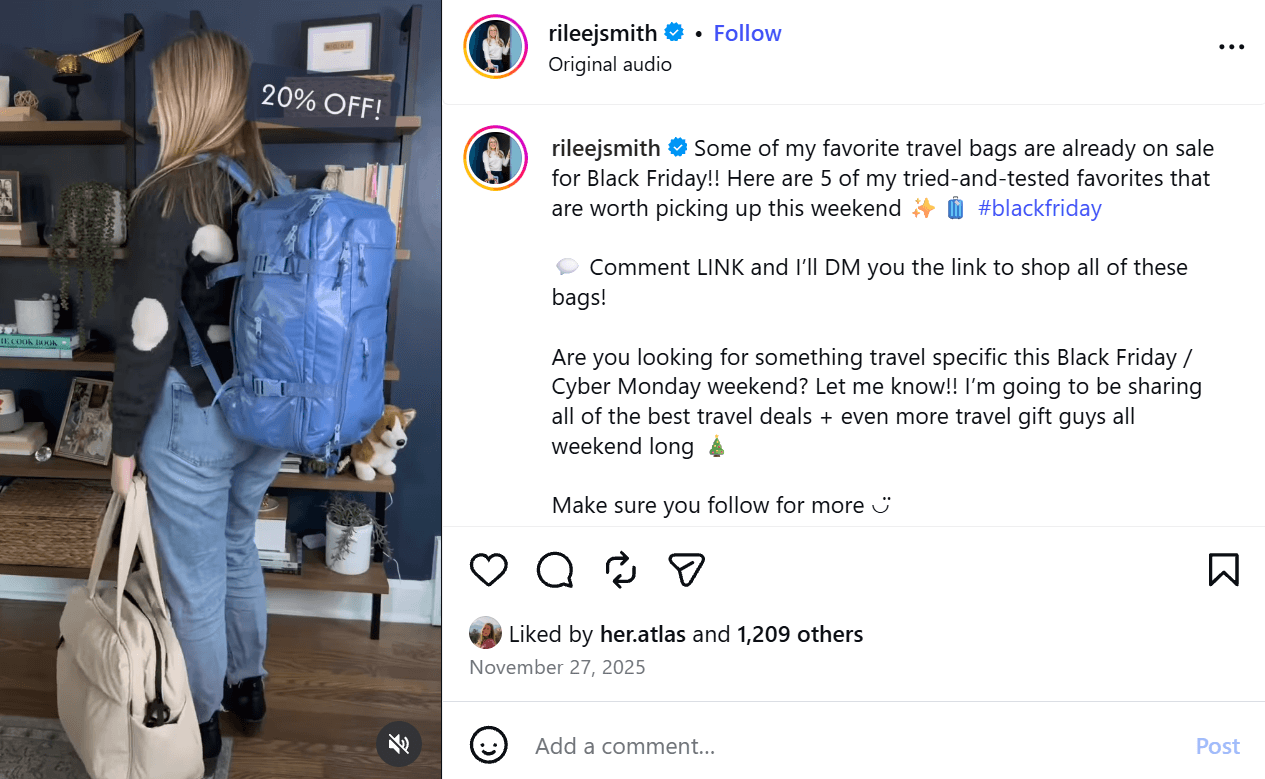
Partnering with content creators allows brands to reach high-intent niche audiences. Rather than prioritizing vanity metrics like raw follower count, marketers are focusing on discoverability and hyper-relevant content. For example, travel influencer Rilee Smith partnered with multiple bag brands to showcase functional holiday discounts in a single, high-performing Instagram video.
2. Giveaways and Contests
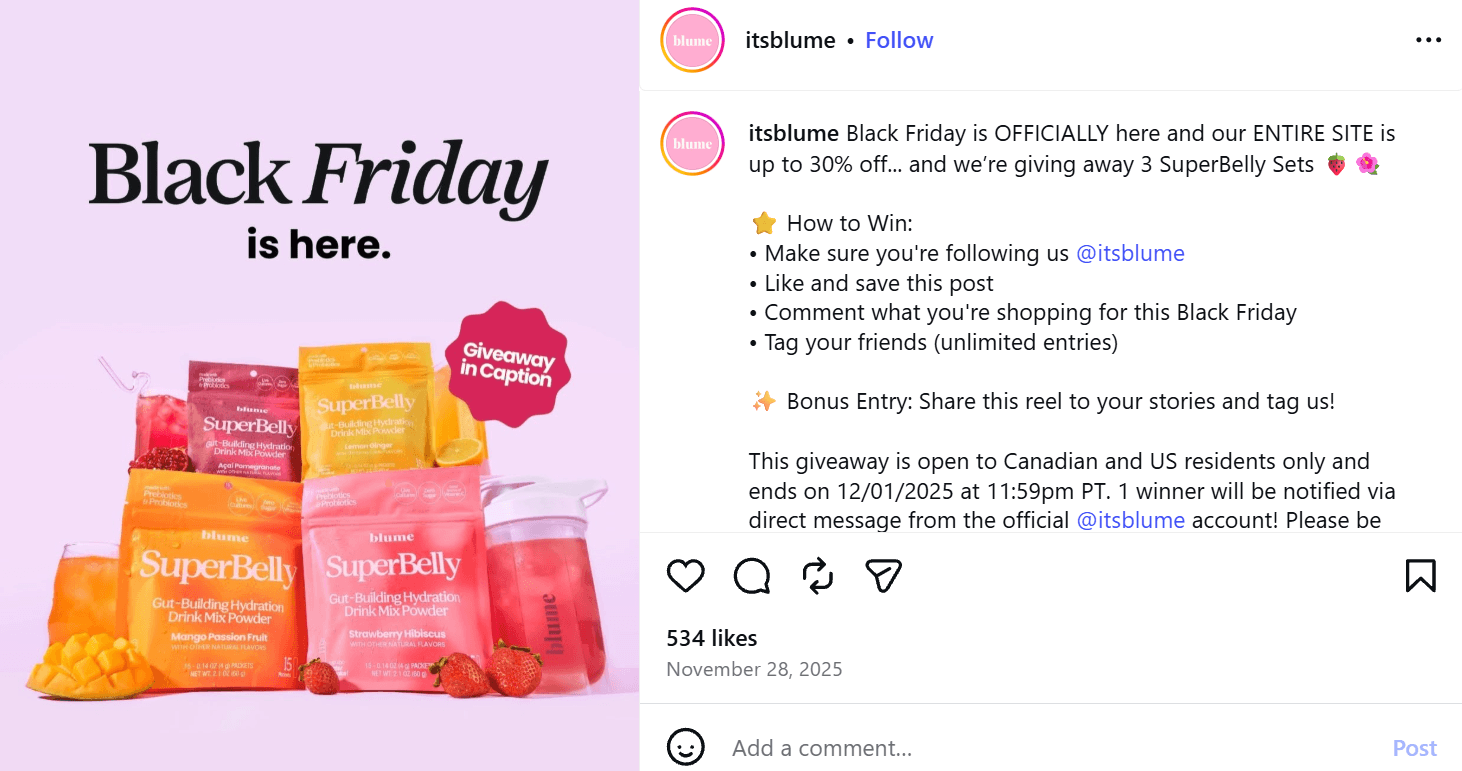
Interactive contests supercharge brand engagement and amplify awareness. Brands like Blume utilized Black Friday giveaways centered around flagship product lines—such as their SuperBelly collection—requiring specific user interactions to enter, thereby boosting both visibility and direct sales.

3. Loyalty Programs and Early Access
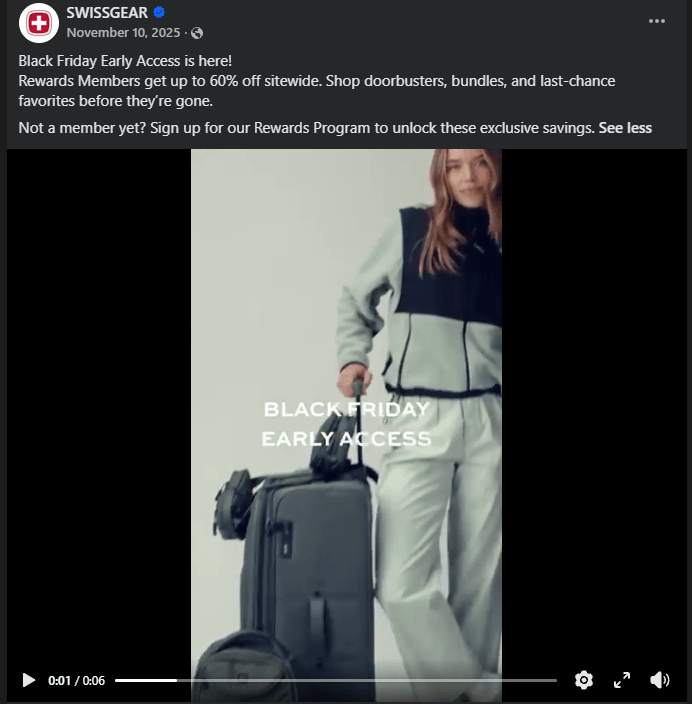
Rewarding brand loyalty with exclusive perks creates a sense of mutual value. Luggage brand SWISSGEAR offered rewards members exclusive early access to a 60% off Black Friday sale. This strategy appeals directly to budget-conscious shoppers looking for early-bird savings while reinforcing long-term brand affinity.
4. Omnichannel Activations
Because consumers frequently bounce between platforms like TikTok, Instagram, and Reddit—while also visiting physical retail locations—brands must maintain a cohesive presence. Gymshark’s annual "Blackout" campaign exemplifies this approach, seamlessly integrating TikTok teasers, Reddit updates, email campaigns, and physical store activations into a unified shopping experience.
5. Community-Inspired Posts and Brand Values
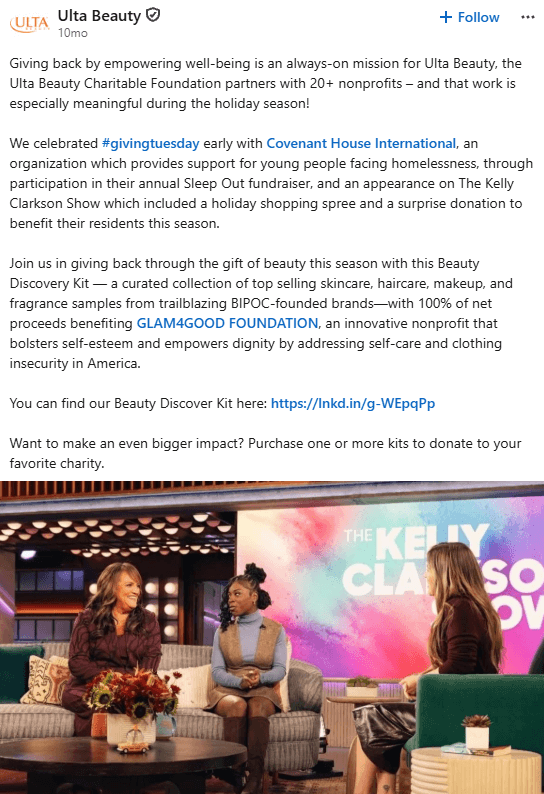
Aligning brand messaging with customer values fosters deep emotional connections. On GivingTuesday, Ulta Beauty highlighted charitable partnerships and special product bundles, demonstrating how social media can be leveraged for social responsibility alongside commercial success.
Implications for Marketers and Retailers
As the retail landscape grows increasingly crowded, executing a successful Black Friday strategy demands careful planning, advanced technological integration, and agility.

1. Optimize Profiles and Leverage AI Automation
Brands must refresh their social media profiles with holiday-specific visuals and update "link in bio" sections to direct traffic seamlessly to active promotions. Additionally, with customer service demands surging during Q4, utilizing AI-powered social media management tools is essential. Automation ensures that customer inquiries receive rapid, personalized responses, preventing service bottlenecks that can lead to cart abandonment.
2. Tailor Content Through A/B Testing
Marketers should kick off campaigns early to test different creative formats—such as comparing short-form video performance against static graphics. Data-driven optimization ensures that promotional dollars are allocated toward the most resonant content.
3. Measure Campaign Impact
Comprehensive campaign performance reporting is critical for evaluating reach, engagement, and conversion metrics. Extracting actionable data across accounts allows marketing teams to pivot strategies dynamically during the holiday rush and provides invaluable benchmarks for future retail cycles.
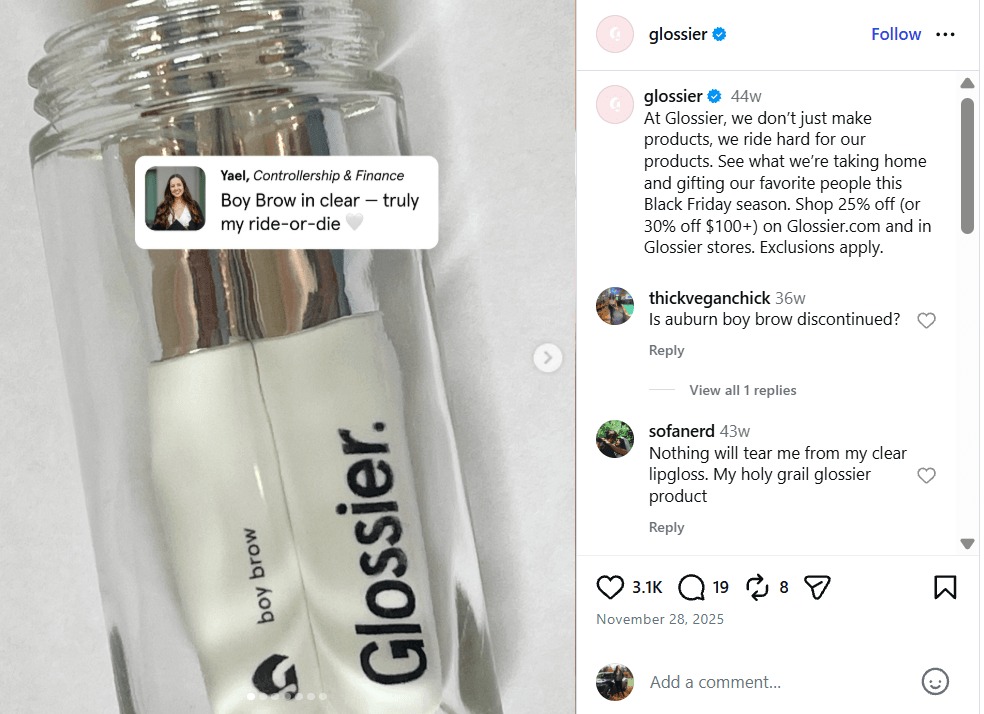
Ultimately, Black Friday social media campaigns must transcend one-off promotional discounts. By prioritizing authentic human connection, transparent communication, and community-driven storytelling, brands can turn seasonal shoppers into lifelong brand advocates.