The Pink Palace: Unveiling the Eternal Heartbreak and Haunted Legacy of The Don CeSar

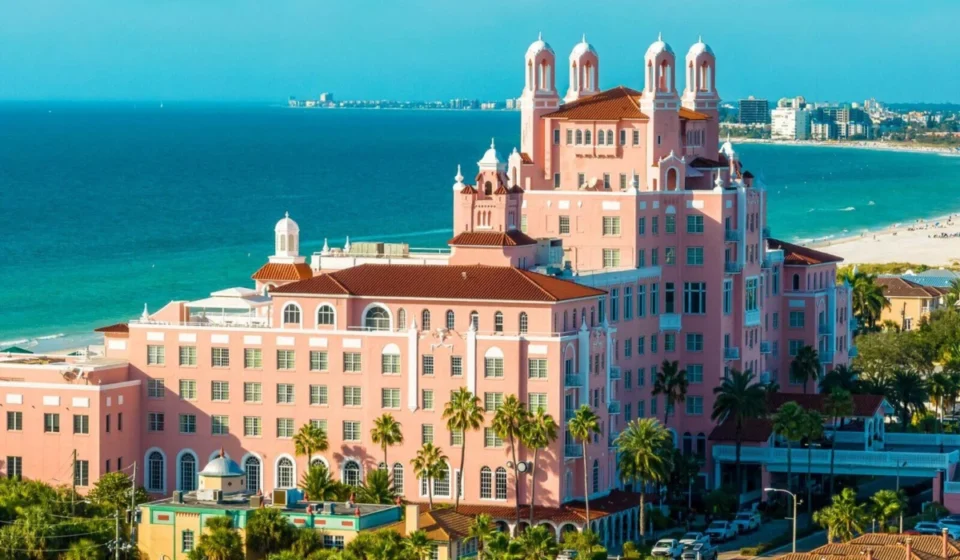
If walls could talk, the corridors of St. Pete Beach’s most iconic landmark would likely whisper secrets of Gilded Age longing, the sterile echoes of wartime surgery, and the enduring resilience of a structure that has cheated death more than once. Rising from the powdery white sands of the Florida Gulf like a mirage cast in coral-pink stucco, The Don CeSar is more than just a luxury hotel; it is a monument to a love story that defied the constraints of reality.
Known affectionately as the "Pink Palace," this Historic Hotels of America award-winning property serves as a beacon of glamour. Yet, beneath the veneer of modern luxury—the world-class spa, the proximity to the Dalí Museum, and the seamless service—lies a narrative woven with threads of tragedy, haunting legends, and an architectural survival story that borders on the miraculous.
A Gilded Age Romeo and Juliet
To understand the soul of The Don CeSar, one must travel back to the 1890s in London. It was there that Thomas Rowe, a man of modest means, first laid eyes on Lucinda de Guzman, a woman from an aristocratic family. Their connection was instant, sparked by their shared passion for the opera Maritana, a production in which the title character, Don César, escapes certain death to reunite with his beloved.
The couple’s romance blossomed in the shadows of secret meetings by a courtyard fountain. They dared to dream of a future together, planning to elope and escape the rigid class structures of the era. However, their plans were intercepted by Lucinda’s parents, who promptly hid her away, effectively severing the tie between the two star-crossed lovers.
Heartbroken, Thomas eventually immigrated to the United States, hoping to build a new life while never abandoning the hope of reconciliation. He wrote to Lucinda faithfully, but his letters were returned unopened. The final blow came in the form of a package containing Lucinda’s obituary and a poignant, final note from her deathbed:
"We found each other before, and we will do so again. This life is only an intermediate… Time is infinite. I will wait for you by our fountain to share our timeless love."
Devastated but undeterred by the finality of death, Rowe channeled his grief into an architectural obsession. He poured his fortune into constructing a magnificent hotel on the shores of Florida, a place where he could recreate the setting of their forbidden love. In the lobby, he installed a fountain as a tribute to their bond. He named the hotel "The Don CeSar" and the signature restaurant "Maritana," cementing their story into the very foundation of the building.
Chronology of a Resilient Landmark
The history of the "Pink Palace" is a rollercoaster of opulence and decay:
- 1928: The Don CeSar opens its doors during the height of the Roaring Twenties. It becomes a playground for the elite, hosting F. Scott Fitzgerald, Franklin D. Roosevelt, and baseball legends like Lou Gehrig.
- 1940: Thomas Rowe dies of a heart attack in the hotel lobby, right next to the fountain he built for Lucinda.
- 1942–1969: Following Rowe’s death and the mismanagement of the estate by his estranged wife, the hotel is sold to the U.S. Army. It serves as a hospital for soldiers, with operating rooms installed on the eighth floor.
- 1969–1973: The military vacates the property, leaving it in a state of utter dilapidation. It becomes a derelict structure, facing imminent demolition.
- 1973: The "Save the Don" movement succeeds, leading to a massive restoration. The hotel is reborn as a luxury resort.
- 2008–2022: The hotel undergoes several modernizations, including the addition of a world-class spa and extensive aesthetic renovations, cementing its status as a modern luxury destination.
The Hauntings: Fact or Folklore?
The proximity of the living to the spectral is a cornerstone of The Don CeSar’s allure. Local ghost tour operators and hotel staff have long recounted tales of a man in a white suit—presumably Thomas Rowe—pacing the halls, eternally searching for his lost love. Others report seeing two figures strolling the beach under the moonlight.

On platforms like Reddit, guests have shared unsettling experiences, such as the sensation of being watched or, in one vivid account, a guest feeling a sorrowful, hovering presence in their room. While these reports remain anecdotal, they contribute to the hotel’s "haunted" reputation.
However, the haunting isn’t limited to the romantic lore of Thomas and Lucinda. Historians note that if the theory of the "imprint of the past" holds true, the building’s history as a WWII military hospital may also contribute to the energy within its walls. Thousands of wounded, battle-weary soldiers passed through the hotel during the 1940s, and some locals believe the echoes of those turbulent years remain trapped within the hotel’s thick, pink-painted walls.
Official Perspectives: The Historian’s View
Julian Vazquez, the Lead Concierge and property historian at The Don CeSar, adopts a diplomatic approach to the supernatural. While he cannot officially confirm the presence of ghosts, he acknowledges the weight of the hotel’s history.
"We are stewards of a legacy," Vazquez notes. He focuses on the verifiable historical arc—from the Jazz Age opulence to the military repurposing and the eventual rescue by the community. When asked about the veracity of the romance, he confirms the details of the Rowe-de Guzman correspondence, noting that while the romanticized "haunting" may be a matter of interpretation, the underlying facts of the heartbreak are historically documented.
Some critics have suggested that the "Don and Lucinda" love story was a marketing invention from the mid-20th century, a way to add mystique to the property. Yet, the emotional resonance remains undeniable, even if the story has been embellished over the decades to satisfy the public’s appetite for a good tragedy.
The Implications of a Living Legacy
Today, The Don CeSar thrives not in spite of its history, but because of it. It remains a magnet for celebrities, from Marilyn Monroe in the past to modern stars like Paul Rudd, who recently utilized the hotel as a filming location.
The implications of such a storied past are clear: guests are not merely paying for a room; they are paying for a connection to a bygone era. Whether or not one believes in the "ghost of Thomas Rowe," the hotel functions as a repository of human experience. It is a place where one can sip a daiquiri under a flamingo-pink umbrella, listening to the rhythmic crashing of the Gulf, and feel the weight of nearly a century of stories.
As a visitor, I found myself waiting for a sign—a creak in the floorboards, a shadow in the corner, or the phantom scent of jasmine—to confirm the legends. I heard nothing but the gentle hum of modern vacationers and the distant tide. And yet, there is a strange, intangible power to the place. Perhaps the haunting isn’t in the paranormal sense at all. Perhaps the "ghosts" are simply the memories that the hotel refuses to relinquish, etched into the architecture by a man who loved so deeply he refused to let his story end with his death.
In the end, The Don CeSar stands as a testament to the idea that love, heartbreak, and resilience are the most enduring materials of all. Whether you come for the sun-drenched beaches or the whispers of the past, you leave with the realization that some stories, like the hotel itself, are designed to survive the ages.