
Finding a Needle in a Haystack: Rare Narbalek Wallaby Captured on Camera in Western Australia After a 50-Year Absence

Main Facts
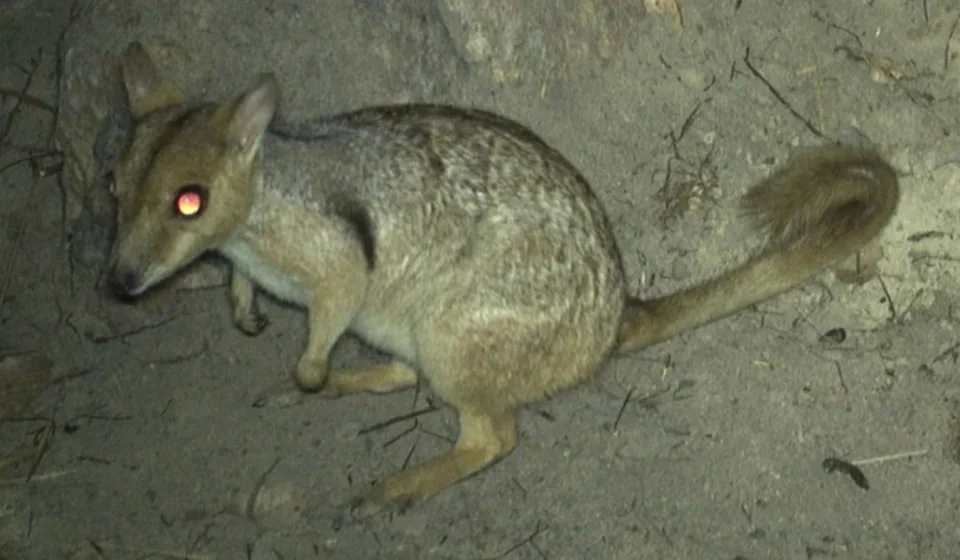
In a triumphant milestone for Australian conservation, the elusive and critically endangered narbalek—Australia’s second-smallest wallaby species—has been photographed in the wild in a remote pocket of Western Australia where it had not been officially detected for more than half a century.
Captured by motion-sensor trail cameras deployed by the Australian Wildlife Conservancy (AWC), the tiny, light-brown marsupial was documented at two separate, previously unknown locations on the mainland of Dambeemangaddee Country, situated within the rugged and expansive Kimberley region.
The discovery serves as a beacon of hope for a species widely believed to be teetering on the brink of extinction. Due to their secretive nature, tiny stature, and specialized habitat requirements, narbaleks are notoriously difficult to monitor. Wildlife biologists have likened the successful photographic detection to finding a microscopic needle in a vast ecological haystack.
Beyond merely capturing a rare animal on film, the breakthrough provides crucial data regarding the resilience of threatened populations in northern Australia. It proves that despite historical pressures, isolated pockets of narbaleks are still quietly managing to survive in areas previously unknown to researchers and conservation managers.
Chronology of the Discovery
The journey to rediscovering the narbalek in Dambeemangaddee Country is a masterclass in modern wildlife tracking, combining cutting-edge remote photography with meticulous field science.
Phase One: Strategic Deployment
The rediscovery began when field ecologists from the Australian Wildlife Conservancy turned their attention to the rugged, heavily weathered sandstone environments of the northern Kimberley. Recognizing that traditional surveying methods were ineffective for such a reclusive animal, the research team deployed a network of five motion-activated trail cameras strategically positioned across prospective habitats. These specialized cameras were programmed to operate continuously through the night, capturing heat-and-motion-triggered photographs of any nocturnal wildlife passing through narrow rocky corridors.
Phase Two: Photographic Elimination
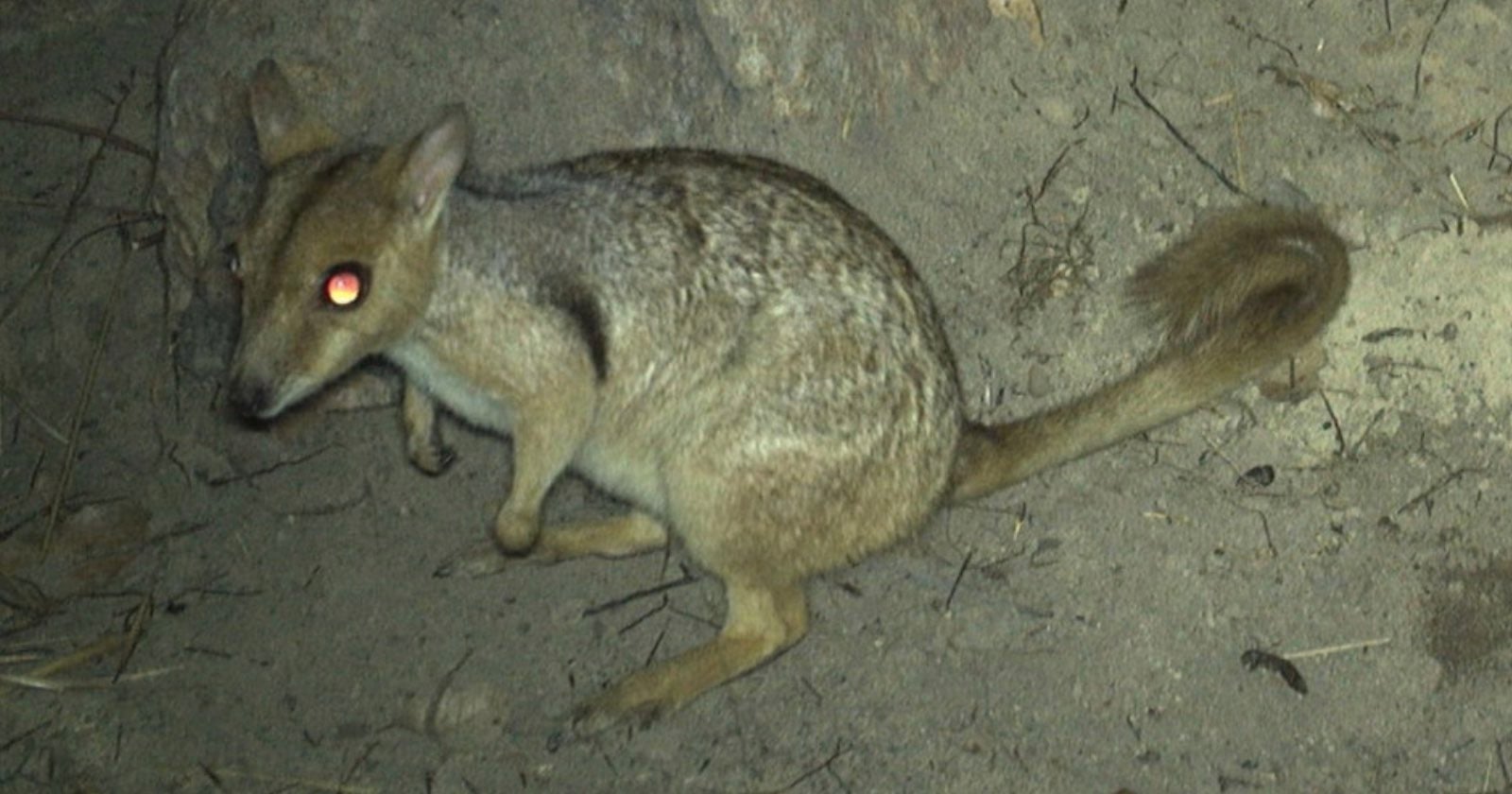
When researchers retrieved and reviewed the camera footage, they were greeted with crisp images of a small marsupial featuring large, glowing red eyes, pointed ears, and a long tail. However, identifying the animal visually presented a significant hurdle. In northern Australia, the narbalek shares its habitat range with two lookalike or genetically close relatives: the monjon (which looks almost identical) and the short-eared rock-wallaby (which shares remarkably similar DNA).
The initial set of photographs proved immediately valuable by allowing researchers to cross off one of the candidate species. The images clearly demonstrated that the animals inhabiting the site were not short-eared rock-wallabies, as the visual morphology of the captured creatures did not match.
Phase Three: DNA Confirmation
While the photographs successfully ruled out the short-eared rock-wallaby, distinguishing between a narbalek and a monjon purely through a camera lens proved impossible due to their near-identical physical appearance. To solve this scientific puzzle, the AWC research team executed the final step of their field protocol: environmental sampling.
Biologists collected fresh scat (fecal) samples left behind at the camera sites. Back in the laboratory, technicians extracted and sequenced the mitochondrial DNA from the samples. The genetic results provided the definitive proof needed: the DNA matched that of the narbalek, confirming beyond a shadow of a doubt that the rare wallaby was actively maintaining populations in these uncharted mainland zones.
Supporting Data and Species Profile
To understand the magnitude of this discovery, one must look closely at the biological profile of the narbalek (Petrogale concinna).
- Size and Classification: The narbalek is Australia’s second-smallest rock-wallaby species, surpassed in diminutive size only by the monjon. Adults typically weigh between 1.0 and 1.7 kilograms (2.2 to 3.7 pounds) and measure roughly 30 centimeters in length, excluding their long, bushy tails.
- Habitat Preferences: These marsupials are specialized inhabitants of sandstone labyrinths, escarpments, and complex rocky outcrops. These formations provide deep, cool caves and crevices that protect the tiny wallabies from extreme tropical heat and intense bushfires.
- Dietary Adaptations: Narbaleks are unique among macropods for their specialized diet. They are the only members of the kangaroo and wallaby family known to feed primarily on ferns, consuming the fronds, stems, and underground rhizomes, particularly following the wet season.
- Historical Range and Decline: Historically, the narbalek’s range stretched across the rocky top-end of northern Australia, from the Kimberley in Western Australia across the Top End of the Northern Territory. However, post-settlement pressures—including predation by introduced feral predators (like cats and foxes), inappropriate fire regimes that destroy their fragile fern-and-rock habitats, and competition with introduced herbivores—have caused catastrophic population declines.
For over 50 years, mainland sightings in this specific part of Western Australia had dried up completely, leading many conservation scientists to fear local extinction events across large portions of their historic range.
Official Responses
The conservation community has responded to the photographic evidence with immense enthusiasm and a renewed sense of purpose.
"This is very exciting and great news for the species," said Larissa Potter, a senior field ecologist with the Australian Wildlife Conservancy, in an official statement released following the confirmation.
Potter emphasized that the deployment of the trail cameras has fundamentally shifted our baseline knowledge of the animal’s current distribution. "Confirming the Nabarlek’s presence at two new sites on mainland Dambeemangaddee Country is a major step forward for our understanding of where the species occurs."
Furthermore, Potter pointed to the psychological and practical reassurance the discovery brings to wildlife management teams operating in harsh environments. "It’s also reassuring as it indicates that this threatened wallaby is persisting on the Kimberley mainland in places we didn’t previously know about."
Conservation partners and Indigenous ranger groups working collaboratively across the Kimberley have also lauded the findings. The integration of traditional Indigenous land management with Western scientific practices—such as motion-sensor monitoring and DNA metabarcoding—highlights a unified front in safeguarding Australia’s most vulnerable endemic fauna.
Implications for Conservation
The rediscovery of the narbalek in Dambeemangaddee Country carries profound implications for the future strategy of Australian wildlife management and biodiversity protection.
1. Rewriting Distribution Maps
For decades, conservation databases have operated under the assumption that narbalek populations were heavily fragmented or entirely eradicated from vast tracts of the Kimberley mainland. This discovery proves that existing distribution maps are incomplete. It underscores a vital ecological reality: remote, highly inaccessible terrains act as natural fortresses, sheltering micro-populations of endangered species far beyond the reach of human disturbance.
2. Refining Survey Methodologies
The success of combining motion-sensor night cameras with targeted scat-DNA analysis establishes a proven, non-invasive blueprint for monitoring other cryptic, hard-to-reach species. Traditional trapping methods can be stressful for tiny, fragile marsupials and often yield low success rates in complex rock formations. By utilizing remote cameras paired with genetic testing, researchers can survey vast, treacherous areas efficiently without disturbing the animals or degrading their delicate habitats.
3. Directing Conservation Funding and Threat Mitigation
Knowing where the narbalek survives is only the first step; protecting those specific pockets is the true challenge. The new data gives the Australian Wildlife Conservancy and Indigenous rangers targeted coordinates to focus conservation interventions. Moving forward, these areas can be prioritized for rigorous feral predator control programs (specifically targeting feral cats) and optimized, low-intensity fire management strategies designed to prevent destructive, hot wildfires from stripping the escarpments of the vegetation narbaleks rely on.
Ultimately, the ghostly face of the narbalek captured on a simple trail camera in the dead of night is more than just a remarkable wildlife photograph. It is a powerful reminder that nature still holds secrets, and that with vigilance, science, and cross-cultural collaboration, species pulled to the very edge of extinction can be given a fighting chance to pull back.
Related posts: