The Power of Two: How Dine Brands Global is Reshaping Casual Dining with the Applebee’s-IHOP Hybrid Model

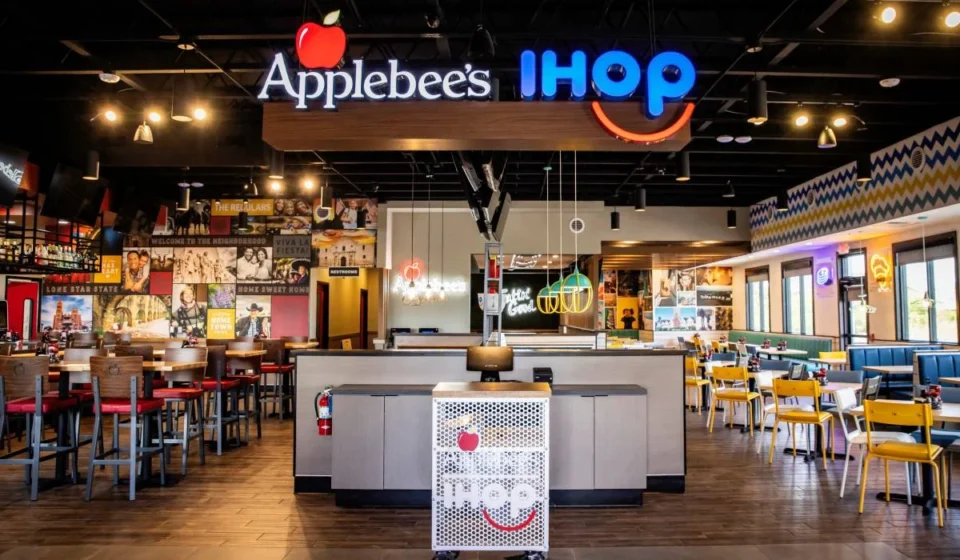
In a retail and hospitality landscape increasingly defined by convenience and versatility, Dine Brands Global, Inc.—the parent company behind two of America’s most recognizable restaurant chains, Applebee’s Neighborhood Grill + Bar and IHOP—is fundamentally altering its growth trajectory. The company has officially celebrated the opening of a new dual-branded location in San Antonio, Texas, marking a significant milestone in a strategy that has rapidly evolved from a "bold idea" into a cornerstone of the company’s domestic expansion efforts.
Located at 2607 W. Loop 1604 S., the new San Antonio site is the eighth of its kind in the greater metropolitan area. This rapid clustering of hybrid locations underscores a broader trend: the convergence of breakfast-focused IHOP and dinner-leaning Applebee’s into a single, cohesive unit. As the company approaches 50 such locations nationwide, industry analysts are watching closely to see if this "one-roof" model will serve as the blueprint for the future of casual dining.
A Chronology of Rapid Expansion
The journey to this San Antonio milestone has been remarkably swift. Less than two years ago, Dine Brands unveiled its first standalone U.S. dual-branded location in Seguin, Texas. The success of that pilot project served as a proof-of-concept that resonated immediately with both franchisees and consumers.
The rollout was not merely experimental; it was systematic. Following the success in Seguin, Dine Brands began identifying high-traffic markets where the two brands could leverage shared infrastructure and complementary dayparts. The rapid expansion to nearly 50 locations in under 24 months suggests a high level of operational confidence. By integrating the kitchens, back-of-house logistics, and staffing models of two disparate brands, the company has demonstrated that the hybrid model is not only feasible but highly scalable.
The San Antonio opening is particularly telling of the company’s regional strategy. By saturating a market like San Antonio with eight locations in such a short window, Dine Brands is creating a "network effect," where brand recognition is reinforced across multiple touchpoints, allowing the company to capture customer traffic from early morning through late night.
Supporting Data: Why the Hybrid Model Works
The economic rationale behind the dual-branded model is multifaceted, resting on the pillars of operational efficiency and consumer demand.
Operational Synergy
For franchisees, the dual-branded model provides a unique pathway to maximize return on investment. By operating under one roof, franchisees can optimize their square footage, reduce overhead costs through shared administrative and management staff, and streamline supply chain logistics. Instead of investing in two separate properties, operators can now offer a comprehensive menu that spans breakfast, lunch, dinner, and late-night snacks, essentially increasing the "utility" of the real estate.
Consumer Demand and Menu Innovation
Market research indicates that modern diners are increasingly seeking variety and convenience. The hybrid model solves the "what are we going to eat?" dilemma for groups with diverse cravings. A guest can order a classic stack of IHOP pancakes alongside an Applebee’s burger in the same sitting.
This flexibility is further enhanced by exclusive menu innovations designed specifically for these locations. Items such as the "Loaded Buffalo Chicken Omelette" and the "Ultimate Breakfast Burger" serve as bridges between the two brands’ culinary identities. These cross-pollinated offerings are not just novelties; they are strategic tools designed to increase the average check size and keep customers engaged with both menus simultaneously.
Official Responses: The Vision for the Future
The leadership team at Dine Brands views this transition as a pivot toward a more flexible, future-proof operating model. John Peyton, CEO of Dine Brands Global, has been vocal about the strategic necessity of this evolution.
"What began as a bold idea has evolved into a meaningful complement to our development and growth strategies," Peyton stated during the San Antonio opening. He emphasized that the move is fundamentally about providing guests with "more reasons to visit" while giving franchisees a robust tool to "strengthen their businesses over time."
The franchisee perspective is equally enthusiastic. Danny Hakim, Vice President of The Hakim Group—the franchise partner behind the new San Antonio location—highlighted the community-centric nature of the expansion. Beyond the business metrics, the opening was marked by a commitment to local engagement, including a ribbon-cutting ceremony where 100 guests were awarded "free pancakes for a year." Furthermore, the group’s $1,000 donation to the Stay Strong Foundation, a local San Antonio nonprofit, reflects the company’s commitment to embedding these hybrid locations into the fabric of the communities they serve.
Implications for the Casual Dining Industry
The success of the Applebee’s-IHOP hybrid has significant implications for the wider restaurant sector, which has struggled with rising labor costs, real estate constraints, and changing consumer habits.
1. The Death of Siloed Dining
For decades, restaurant chains have been defined by rigid categories—QSR (Quick Service), fast-casual, and casual dining. The dual-brand approach challenges these silos. By offering a casual, full-service environment that serves breakfast all day, Dine Brands is blurring the lines between dining segments. This suggests that the future of the industry may lie in "elastic" dining experiences that can cater to a customer’s needs at any hour.
2. Real Estate Optimization
In an era of expensive commercial real estate, maximizing the revenue per square foot is paramount. The dual-brand model allows Dine Brands to extract higher value from a single footprint. By keeping the kitchen active throughout the day, the company minimizes "dead time" that often plagues single-concept restaurants, which may see lulls between breakfast and lunch or mid-afternoon.
3. Franchisee Empowerment
Franchisees are the lifeblood of the restaurant industry, and the dual-brand model serves as a powerful recruitment and retention tool. It offers existing operators a way to diversify their portfolio without necessarily having to manage multiple, geographically distinct locations. This is an attractive value proposition for multi-unit operators looking to scale their businesses with lower risk.
Looking Ahead: The Path to 2026
The momentum behind the dual-branded model shows no signs of slowing. Dine Brands has publicly stated its target to open approximately 80 domestic dual-branded restaurants by the end of 2026. This aggressive growth target indicates that the company has moved past the "testing" phase and is now in the "scaling" phase.
As the company continues to iterate on this model, observers will be looking for further advancements in the guest experience. Will the digital integration—such as mobile apps that allow for seamless ordering from both menus—become more sophisticated? Will the physical design of these spaces continue to evolve to better differentiate the two brand identities while maintaining the efficiency of a shared kitchen?
For now, the Applebee’s-IHOP partnership stands as a compelling case study in corporate agility. By leveraging the immense brand equity of two established icons and marrying them with a modern, high-efficiency operational model, Dine Brands Global is proving that in the hyper-competitive world of American dining, the best way to grow is sometimes to bring your biggest assets closer together. The residents of San Antonio, and soon other markets across the country, are proving that the dining public is more than ready for the change.