
At the outskirts of Paris, within the sprawling, high-energy corridors of the Paris Nord Villepinte exhibition center, the biannual Maison&Objet design fair serves as the global barometer for the home décor and interior design industry. While the fair’s sheer scale can often feel overwhelming to even the most seasoned architect or buyer, a vital sanctuary of clarity exists: the "Rising Talent" showcase. By dedicating space to a single country’s emerging voices, the fair creates a focused, curated narrative. This September 2026, the spotlight fell squarely on South Africa, unveiling a collective of seven designers and studios whose work synthesizes the nation’s complex cultural heritage with a sophisticated, contemporary design language.
The Architectural and Cultural Pulse of a Nation
South Africa’s design scene has long been defined by its ability to reconcile the friction between tradition and modernity. The seven selected studios—hailing from Johannesburg, Cape Town, Durban, and beyond—presented a diverse array of furniture, textiles, and decorative arts. The common thread binding these disparate works was not a singular aesthetic, but a shared philosophy: that design should be a conduit for storytelling, environmental activism, and rigorous architectural inquiry.

The 2026 exhibition functioned as a microcosm of South Africa’s broader creative evolution. Visitors were met with pieces that challenged the traditional boundaries of "African design," moving away from purely decorative tropes to embrace structural innovation and deep-seated conceptual narrative. From the brutalist-inspired carvings of Cape Town to the intricate, rhythm-based patterns of Durban, the showcase offered a compelling answer to the question of what happens when indigenous wisdom meets global design discourse.

Meet the Visionaries: The 7 Rising Talent Award Winners
The selection process, overseen by a jury of industry stalwarts including Alan Hayward and Garreth Van Niekerk of Decorex Africa, sought to highlight individuals who are not merely producing objects, but actively shaping the cultural fabric of their home country.

Oageng Manana & Tshegofatso Ramothibe (Meetlo Studio, Johannesburg)
Meetlo Studio is a study in the translation of "customs and traditions" into the contemporary home. Their name, Meetlo, serves as both a title and a manifesto. Oageng Manana emphasizes that the studio’s work is rooted in the ancestral wisdom of indigenous communities, yet it remains firmly tethered to the functional requirements of modern living. Their "Abadimu" server—a piece dedicated to the ancestors—is a prime example of this duality. It features elaborate, hand-carved elements that do not sacrifice structural integrity. By keeping production entirely in-house, Manana and Ramothibe ensure that the narrative of each piece remains unadulterated, providing a rare level of creative control that manifests in the uniqueness of their output.

Ashleigh Lloyd (Studio Lloyd, Cape Town)
Ashleigh Lloyd has successfully pivoted from large-scale, high-impact hospitality commissions for resorts and lodges to a more intimate, residential scale. Her work is characterized by its resilience; she utilizes aluminum, stainless steel, and UV-protected synthetic rope to create sculptural lighting and seating. Her methodology is deeply political and social, focusing on the empowerment of women through the reclamation of "women’s work"—specifically crochet. By employing this tactile, meditative technique to create rigid, structural forms, Lloyd creates a profound tension. "Crochet, through its natural flexibility, offers a deeply human counterpoint to the rigidity of architectural lighting," she notes.

Simphiwe Mlambo (Cape Town)
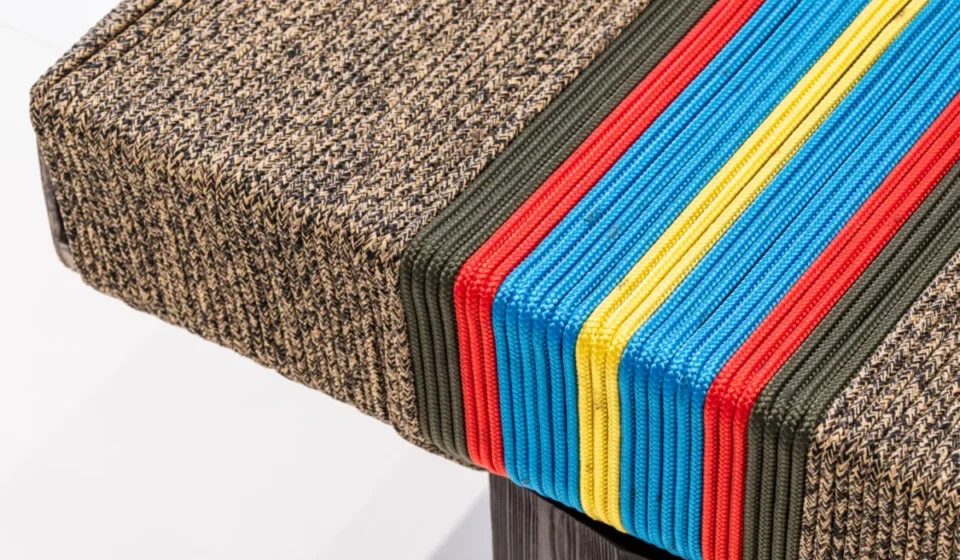
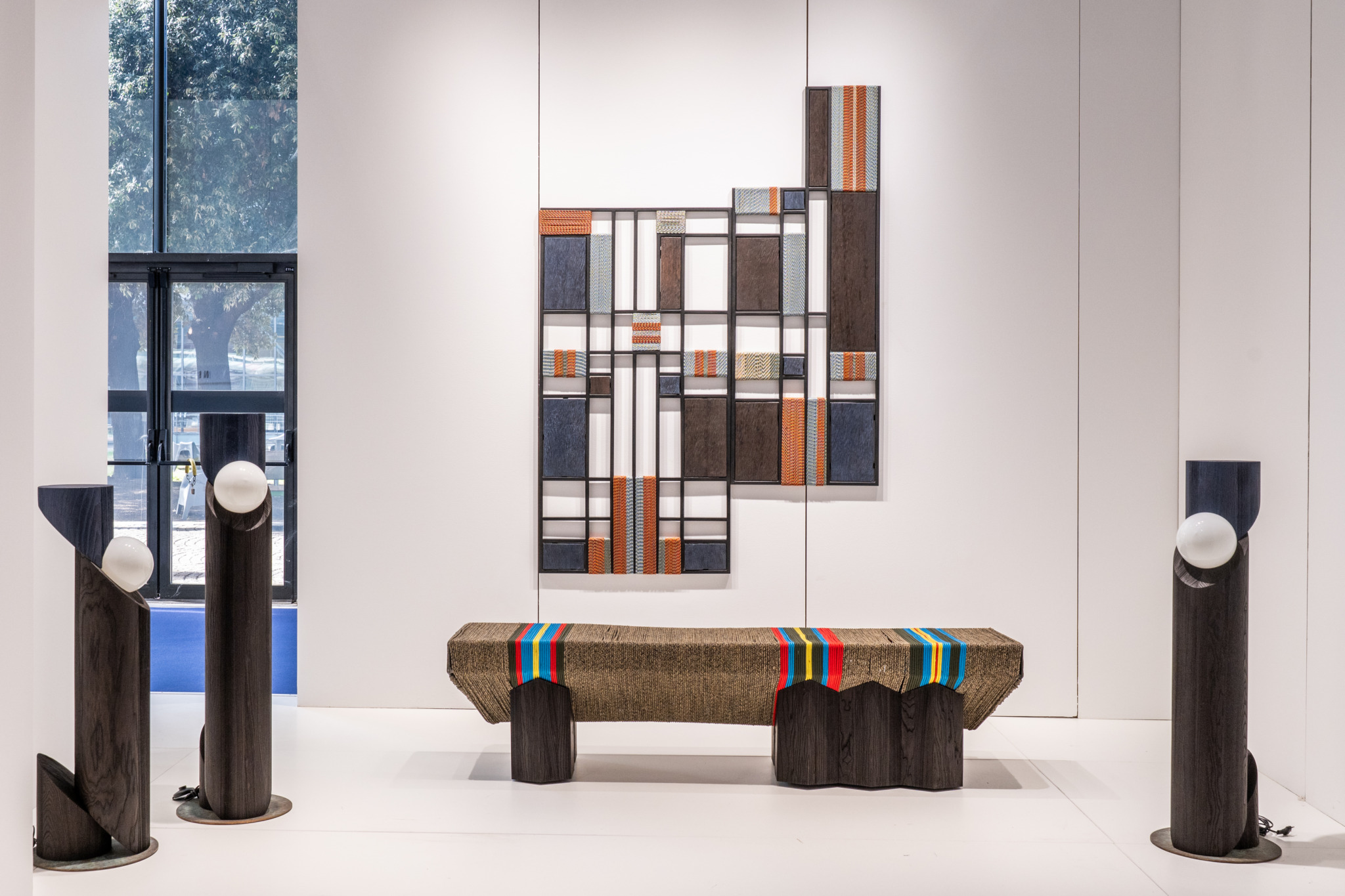
For Simphiwe Mlambo, the transition from an interior design graduate to a celebrated product designer has been fueled by his familial ties to the construction industry. His collection at Maison&Objet was a poignant homage to his grandmother’s craftsmanship, specifically the grass mats she used to weave. By deconstructing the form of her loom and the texture of her mats, Mlambo translates personal memory into modern furniture. The bench he presented serves as a sculptural interpretation of the loom, while his wall panels and lighting fixtures carry the echoes of the textures that defined his childhood. It is a masterclass in adapting traditional techniques for a contemporary, global audience without losing the "African-ness" of the original inspiration.

Tanisha Neill (NISH, Cape Town)
Tanisha Neill’s background as a professional dancer provides a unique entry point into the world of design. Her sense of rhythm, perspective, and spatial awareness is evident in every piece produced by NISH. Neill operates with a philosophy of material-led design, allowing the physical properties of wool, silk, and stone to dictate the evolution of her projects. Her latest collaboration with a collage artist—resulting in a stunning, hand-tufted rug—demonstrates her willingness to embrace fluidity. By layering pile heights, she recreated the depth of paper collages, proving that she is less a designer of fixed objects and more a conductor of creative processes.

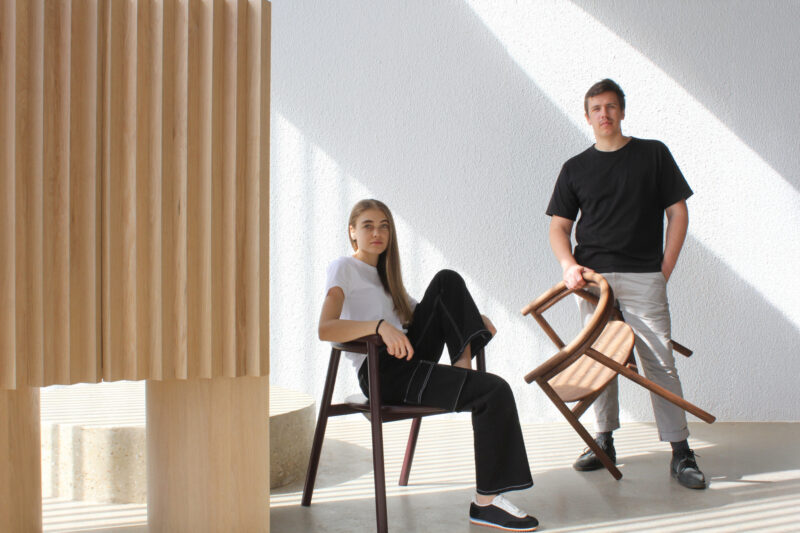
Martin Tallie & Zani Alberts (DEFT Studios, Port Elizabeth)
The story of DEFT Studios is one of the most compelling narratives of the 2026 fair. Emerging from the constraints of the COVID-19 pandemic, architects Martin Tallie and Zani Alberts pivoted to furniture design, teaching themselves the intricacies of woodworking along the way. This self-taught approach has become their greatest strength; unencumbered by the rigid "rules" of traditional furniture apprenticeship, they approach wood with the spatial logic of architects. Their étagère brune et claire is a testament to their obsession with pure geometry and structural honesty. As Tallie puts it, "We are designers, but we are definitely makers," highlighting a commitment to in-house production that ensures every piece is built to endure.

Karlien van Rooyen (Cape Town)
Karlien van Rooyen occupies a unique space at the intersection of neuroscience and free diving. Her ceramic and wooden objects are biological, almost primal, in their form. Inspired by neurons, lungs, and the organic textures of underwater coral, her work possesses a haunting, organic beauty. Her process is rigorous: 2D sketches are translated into three-dimensional forms, often using African teak. The wood, which bleeds a vibrant red when freshly cut, is fused and carved into monumental, brutalist shapes. Her work challenges the viewer to find the connection between the inner workings of the human brain and the natural formations of the deep sea.
Siyanda Mbele (Pinda Interior Design, Durban)
Siyanda Mbele’s work is a symphony of mathematical precision and cultural symbolism. With a background in engineering, Mbele founded Pinda (meaning "again" in isiZulu) to explore the beauty of repetition. His designs act as a bridge between the Nguni, Zulu, and Ndebele cultures and the modern interior. His presentation at the fair featured textiles adorned with diamond and triangle motifs—symbols of masculine and feminine unions in Zulu culture. By embedding these social, ritualistic narratives into the very structure of his furniture and rugs, Mbele ensures that his work functions as both a domestic object and a cultural archive.

The Mechanics of Recognition: Implications for the Industry
The success of these seven designers at Maison&Objet 2026 is not merely a personal triumph; it signals a tectonic shift in the global design market. For years, the "Rising Talent" category has served as a launchpad for future industry leaders. By partnering with Decorex Africa, Maison&Objet has effectively bridged the gap between African creative centers and European market access.

The implication is clear: the global design community is no longer looking for "African-inspired" trends—a term that has historically been used to describe colonial-adjacent, decorative reinterpretations. Instead, there is a clear appetite for designers who are rooted in the specificities of their local environment, whether that be through the materials they source, the histories they recount, or the technical challenges they solve.

A Legacy of Collaboration
The 2026 showcase was the result of an unprecedented collaboration between Maison&Objet and Decorex Africa. This alliance was instrumental in ensuring that the selection process was grounded in local expertise. The jury, comprised of researchers, architects, and established designers like Thabisa Mjo and Donald Nxumalo, provided a rigorous framework that prioritized authenticity and technical skill over superficial trends.

As the curtains closed on the September fair, the legacy of this South African showcase began to take hold. The designers involved have not only secured new international buyers and gallery representation but have also demonstrated that the future of design lies in the intersection of local memory and global technical competence. For the visitors—the architects and interior designers who spend days wandering the aisles of Villepinte—these seven studios provided a much-needed reminder: that even in a globalized industry, the most resonant work is that which speaks from a place of profound, undeniable truth.

As the world looks toward 2027 and beyond, the influence of this group will undoubtedly be felt in the upcoming seasons. They have set a high bar for what it means to be a "Rising Talent," proving that design is at its most powerful when it acts as a dialogue between the past and the future.