
The Serpent Uncoils: Bvlgari’s auruBOROS Transforms the High Line into a Living Canvas

For decades, the Bvlgari serpent—the Serpenti—has remained a confined icon, elegantly coiled around the wrists of royalty, the fingers of cinematic legends, and the necks of the global elite. It is a symbol of wisdom, vitality, and rebirth, synonymous with the Roman jeweler’s heritage. However, as of September 10, 2026, that iconic emblem has shed its constraints, breaking free from the velvet-lined confines of display cases to inhabit the raw, industrial landscape of New York City.
auruBOROS – Urban Memory and Collective Dream marks a watershed moment for the luxury house. As Bvlgari’s first-ever public art installation in the United States, the project is a centerpiece of the Serpenti Infinito initiative, a broader endeavor aimed at recontextualizing one of the world’s most recognizable motifs through the lens of contemporary art and urban intervention.
The Genesis of an Urban Myth: Main Facts
The installation is a collaboration between Bvlgari and the Berlin-based artistic duo Marco Canevacci and Yena Young of Plastique Fantastique. Known for their mastery of "pneumatic architecture"—structures defined by air, volume, and ephemeral presence—the duo has transformed the High Line, Manhattan’s elevated park, into a staging ground for a surrealist reimagining of the snake.
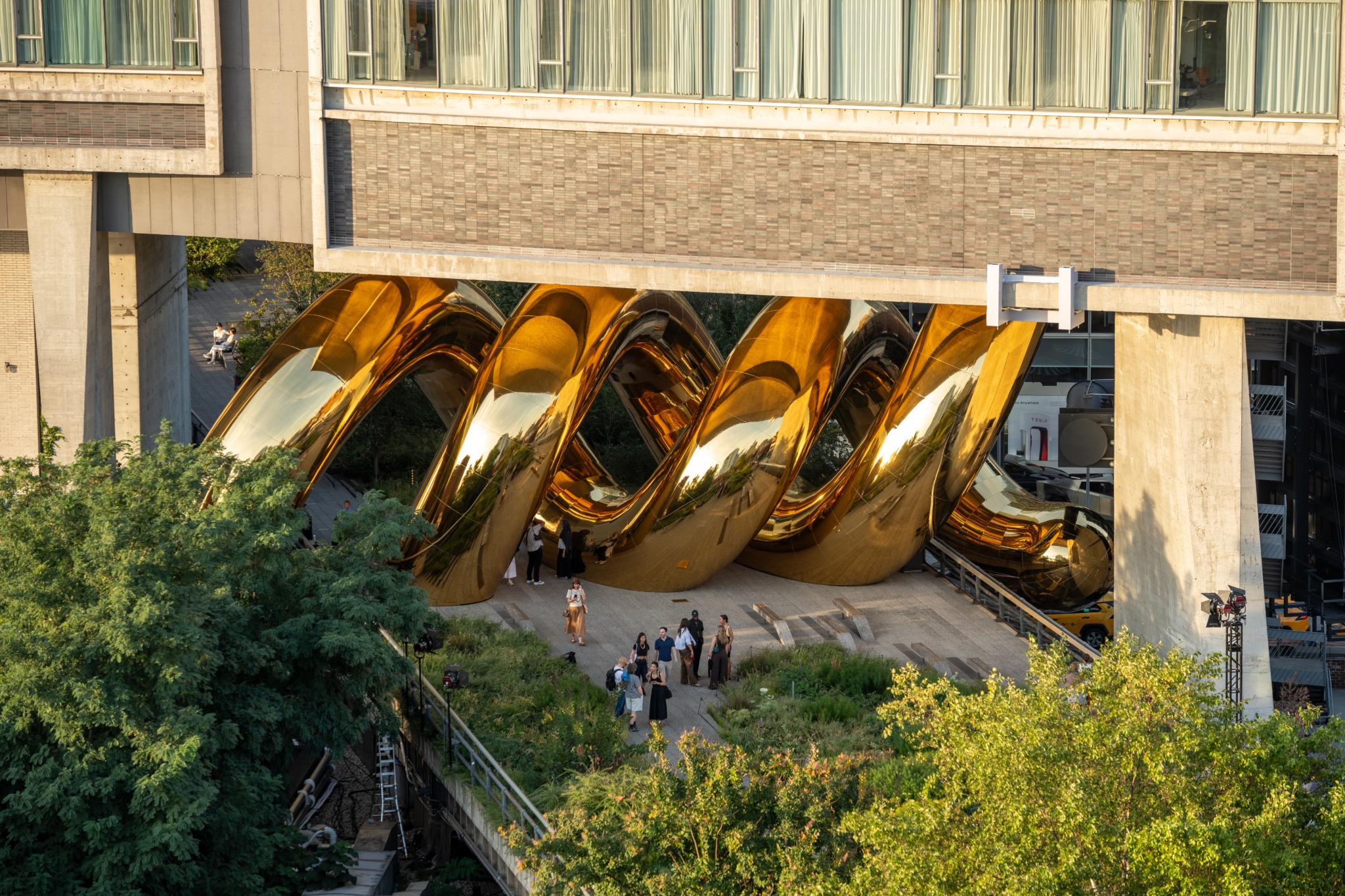
The sculpture, which sits at the intersection of Little West 12th Street, appears to emerge from the base of The Standard hotel before undulating across the elevated greenery of the park. It is a gleaming, golden intrusion into the city’s skyline, a metallic organism that defies the rigid, geometric nature of its surrounding architecture. While the Serpenti is traditionally associated with permanence and high-carat gold, auruBOROS offers a deliberate contradiction: it is a massive, seemingly monumental work that is, in reality, held together by air.
A Chronology of the Serpent’s Journey
The evolution of the Serpenti from a jewelry motif to a 21st-century public installation is a narrative of transition.
- 1940s–1950s: Bvlgari introduces the first Serpenti watches. The design, characterized by the flexible Tubogas technique, becomes an instant hallmark of the brand, blending engineering with high jewelry.
- 2024–2025: Bvlgari initiates the Serpenti Infinito project, a multi-year creative program aimed at engaging global artists to interpret the serpent’s historical significance.
- Early 2026: Marco Canevacci and Yena Young are commissioned to translate the Serpenti for a North American audience. The artists settle on the theme of the ouroboros—the ancient symbol of a snake eating its own tail—as the conceptual foundation.
- September 10, 2026: auruBOROS officially opens to the public on the High Line.
- September 20, 2026: The installation is scheduled for deconstruction, concluding its 11-day tenure in the city.
Supporting Data: The Physics of the Ephemeral
What makes auruBOROS particularly compelling is the interplay between the sculpture’s visual weight and its actual physical properties.
The Material Paradox
The sculpture relies on pneumatic technology, a hallmark of Plastique Fantastique’s design philosophy. By utilizing lightweight, high-tensile materials coated in a gold-tinted, reflective finish, the artists have created a structure that mimics the luster of 18k gold while possessing the density of a balloon.
The Environmental Variable
Data collected during the installation’s setup suggests that the sculpture acts as a giant optical instrument. Its reflective surface is designed to capture the "urban memory" of its surroundings. During the daylight hours, the sculpture acts as a mirror, absorbing the shifting colors of the New York sky, the movement of the High Line’s diverse visitors, and the greenery of the park’s wild-style gardens. When the sun sets, the sculpture interacts with the ambient artificial light of the surrounding Meatpacking District, creating a flickering, dynamic glow that shifts in real-time.

Official Responses and Artist Perspectives
In a conversation with Design Milk, Marco Canevacci and Yena Young provided insight into the philosophical shift they engineered for this project.
"The traditional ouroboros represents a closed loop—a cycle of life and death, beginning and end," the duo explained. "With auruBOROS, we chose to break that circle. We opened the serpent and invited it to enter the city. We wanted to see what would happen if a symbol of eternal, private luxury was forced to engage with the public, shifting, and chaotic nature of Manhattan."
Bvlgari representatives have noted that this installation is intended to demonstrate the house’s commitment to "fluidity." By moving from the wrist to the cityscape, the brand is signaling a transition toward a more experiential, art-forward business model. "The sculpture is not just a statue," a Bvlgari spokesperson stated. "It is an entity that experiences the city alongside our visitors. It captures the weather, the light, and the pulse of New York City."
The Implications of Luxury in Public Spaces
The placement of auruBOROS on the High Line raises significant questions about the role of luxury brands in public infrastructure. As cities increasingly become the backdrop for global marketing campaigns, the line between art and advertisement becomes blurred. However, auruBOROS succeeds by transcending mere branding.

The Democratization of the Icon
By placing a "jewelry" piece in a public park, Bvlgari is effectively democratizing the Serpenti experience. The thousands of tourists and New Yorkers who traverse the High Line daily are invited to interact with a version of the brand that requires no transaction or entry fee. This is a strategic pivot: luxury is no longer just about ownership; it is about the spectacle of the brand and its ability to enhance the collective urban experience.
Temporary Architecture as a Cultural Statement
The 11-day lifespan of the installation is a poignant commentary on the nature of modern luxury. In an era of disposable digital trends, the choice to build something monumental only to remove it a week later forces the viewer to engage with the work in the present moment. It emphasizes the "transient" nature of beauty—a core tenet of the Serpenti motif, which has been reinvented countless times over the last century to remain relevant to each generation.
A Synergy of Jewelry and Art
To coincide with the installation, Bvlgari has unveiled a new, limited-edition collection. This includes three Serpenti Tubogas high-jewelry pieces and an exclusive minaudière, both of which draw inspiration from the aesthetic of the auruBOROS sculpture. These pieces serve as a bridge between the monumental public art and the brand’s core business. By embedding the "spirit" of the High Line installation into wearable objects, Bvlgari allows consumers to own a physical manifestation of the fleeting event.
As the sun sets on the final day of the installation on September 20, the auruBOROS will be deflated, leaving behind only the memories of those who walked beneath its golden coils. Yet, its impact on the urban landscape—and on the way luxury brands interact with public space—will likely linger long after the air is released.

In its short time on the High Line, the sculpture has proved that even the most ancient symbols can find new life, provided they are willing to shed their skin and adapt to the ever-shifting rhythms of the city. Whether viewed as an architectural triumph or a masterclass in experiential marketing, auruBOROS stands as a testament to the fact that when art and luxury collide, the result is nothing short of transformative.