The Steakhouse Revolution: How Danny Grant’s Maple & Ash is Redefining Modern Luxury

In the competitive landscape of American fine dining, the traditional steakhouse has long been a bastion of stoic, masculine tradition—think dark wood, leather booths, and a menu that rarely deviates from the time-honored script. Yet, in 2015, two-Michelin-star chef Danny Grant dared to ask a disruptive question: "Chicago has plenty of steakhouses—why do we need another one?"
The answer arrived in the form of Maple & Ash, a concept that has since evolved from a local Chicago standout into a national powerhouse. With a record-breaking $35 million in annual sales at its flagship and a strategic expansion plan currently bringing its high-energy, "feminine and sexy" ethos to the East Coast, Maple & Ash is proving that the steakhouse of the future is built not just on prime cuts, but on cultural disruption, theatrical hospitality, and a deep, data-driven understanding of guest psychology.
The Genesis: Disrupting the Masculine Narrative
When Danny Grant, a Long Island native with a pedigree forged in the demanding kitchens of Paris and Italy, set out to launch Maple & Ash in Chicago, the culinary climate was saturated with legacy steakhouse concepts. The prevailing narrative of the early 2010s was one of rigidity; these were spaces designed for power lunches and traditional business dinners, often lacking in warmth or inclusivity.
"We wanted to use our pedigree, our team, and our culture to disrupt what that narrative was at the time," Grant explains. "When we initially started this, it was to appeal to foodies and to be a bit more feminine and sexy and less masculine."
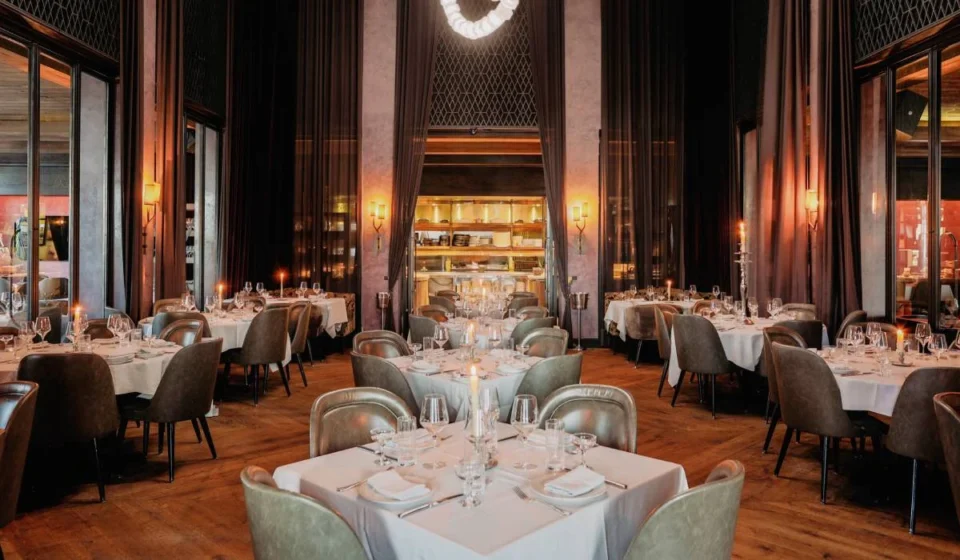
By moving away from the "old boys’ club" aesthetic, Grant and the Maple Hospitality Group created an environment that felt inherently modern. The interior design, helmed by Studio K, utilizes moody, mid-century modern elements, custom Benheim glass, and textured mirrored walls to create a space that feels like a high-fashion lounge as much as a dining room. This atmospheric shift was not merely decorative; it was a fundamental shift in the feeling of the steakhouse experience, making it accessible and alluring to a broader, more diverse demographic of diners.
A Chronology of Culinary Excellence
Danny Grant’s journey to the helm of a national hospitality brand is rooted in years of rigorous training and early acclaim.
- Early Career: Grant began his culinary education in New York before moving to Chicago in his early 20s. He spent five years under Bruce Sherman at the esteemed North Pond, followed by immersive stints in Paris and Italy.
- The Rise: His reputation solidified during his tenure at Nomi and later as executive chef for the Elysian Hotel’s Ria and Balsan. It was here that he earned Food & Wine’s "2012 Best New Chef" award and became the youngest U.S. chef at the time to receive two Michelin stars.
- Early Entrepreneurship: In 2013, Grant launched 1826 in Miami, which was quickly hailed as "Best New Restaurant in South Beach."
- The Launch of Maple & Ash: In 2015, Grant returned to Chicago, joining the predecessor to Maple Hospitality Group. He launched the first Maple & Ash, setting the foundation for what would become an award-winning portfolio, including Monarch and Kessaku.
- National Expansion: After cementing the Chicago flagship as the city’s highest-grossing independent restaurant by 2024, the brand expanded into Miami and Scottsdale.
- The East Coast Pivot: April 2024 marked the brand’s first major Northeast footprint with the opening of a Boston location. The company is now finalizing plans for a flagship in Midtown Manhattan.
Supporting Data: The Economics of Indulgence
The success of Maple & Ash is not merely anecdotal; it is backed by staggering financial performance. With an average check size of $160, the restaurant operates in a high-revenue, high-margin tier of the industry. In 2024, the Chicago location generated over $35 million in revenue, a figure that highlights the consumer demand for a "premium" experience that justifies a higher price point.
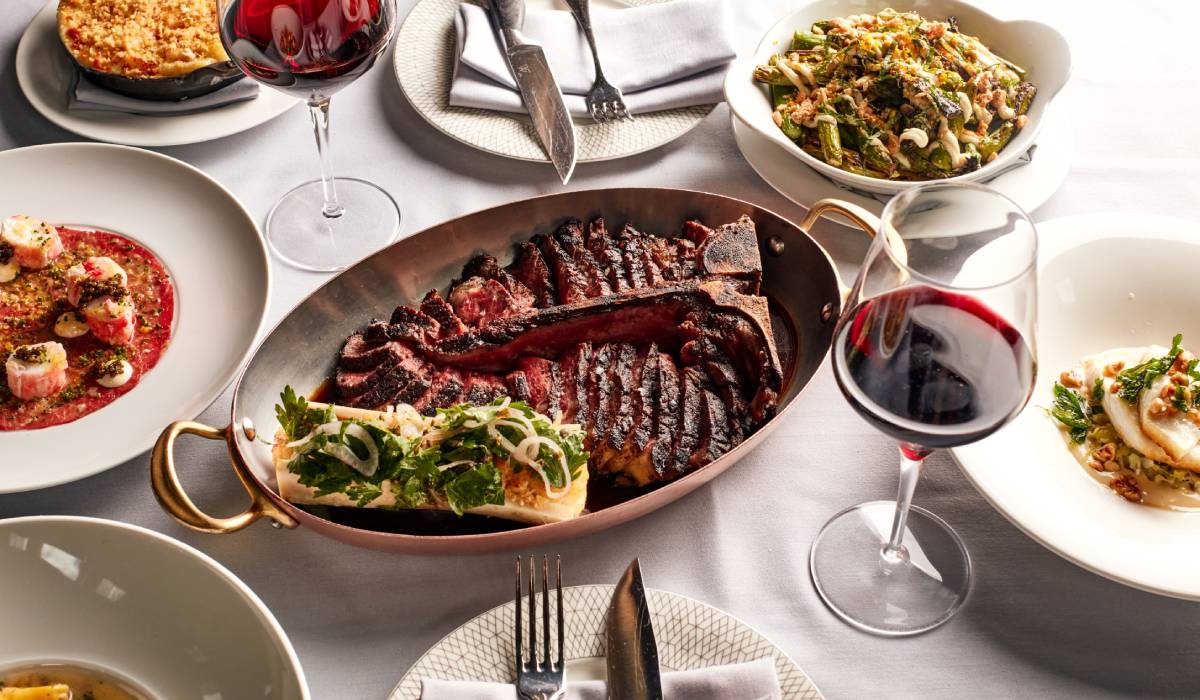
The menu architecture is a masterclass in luxury-forward pricing. The dinner program focuses on high-end staples—dry-aged steaks, wagyu, caviar, and wood-fired seafood towers—but adds a layer of "playful" luxury. Signature dishes like the "Pillows of Love" (ricotta agnolotti with shaved winter truffle) and the "Arm Candy" section—which allows guests to customize their steaks with luxury toppers like Alaskan King Crab Oscar or roasted bone marrow—encourage incremental spending.
The beverage program mirrors this maximalist approach. From "caviar-studded martinis" to a deep collection of rare bourbons and Japanese whiskies, the list is designed to facilitate a high-energy, celebratory atmosphere. Crucially, the brand also captures the "sober-curious" market with its "No F*@king Alcohol" section, proving that inclusive, high-end hospitality must cater to every type of guest, regardless of their preference for spirits.
The Philosophy of Trust and Scaling
For Grant, the most critical element of his business strategy isn’t the menu or the décor—it is trust. "First and foremost, get people to trust you," he asserts. "Gaining the trust of our guests is one of the most important and critical things of opening a new restaurant."
The "I Don’t Give a F*ck" Model
The brand’s signature $225 tasting menu, titled "I Don’t Give a F*ck," is the ultimate manifestation of this trust. By relinquishing control to the chef, guests engage in a curated journey of the restaurant’s most extravagant dishes. This isn’t just a meal; it is a display of culinary confidence that builds a bond between the chef and the diner.
Market Sensitivity
Grant acknowledges that a "one size fits all" approach to expansion is a recipe for failure. "I go into some markets and I bring a ton of dry-aged steaks. I go into others, I bring hardly any because it’s just not what they like," he says. His strategy for entering new cities like Boston and New York is rooted in a "listen-first" philosophy. While he brings the core DNA of the brand, he insists that the team must understand the local culture, rhythm, and expectations of the new market before fully committing to aggressive programming.
Implications: The Future of the Brand
As Maple & Ash prepares for its Manhattan debut, the industry is watching closely. Scaling a boutique, high-energy concept to a fifth major city is a notoriously difficult feat. However, Grant remains disciplined. He is not interested in endless, national proliferation; he envisions only two additional U.S. cities beyond New York before reaching a "domestic cap."
This restraint is perhaps the brand’s greatest strength. By prioritizing quality over ubiquity, Grant ensures that each location feels "bespoke" rather than "chain-like." He views the scaling process as a test of the first location’s foundation. "If you can’t do the first one right and make the first one amazing, then there’s no sense to even talk about location two, three, four," he notes.
The trajectory of Maple & Ash signals a shift in the fine-dining sector. As consumers increasingly value "theatrical" and "experiential" dining, the rigid, formal steakhouses of the past are finding themselves outpaced by concepts that offer a more vibrant, inclusive, and deeply personal connection. Danny Grant has not just opened a restaurant; he has created a repeatable, high-performing culture that understands that in the modern era, the most successful luxury brands are those that treat every guest interaction as a relationship to be nurtured, rather than a transaction to be closed.
As the company looks toward its next phase of growth, the "Maple & Ash" model stands as a compelling case study in how to evolve a legacy category by embracing the very things that legacy usually ignores: playfulness, flexibility, and a relentless focus on the guest’s emotional experience.