
For the jaded New Yorker, the concept of "getting away" usually involves a grueling commute—hours spent navigating the congestion of the BQE or the unpredictable cadence of Metro-North to reach the sanctuary of the Catskills or the Adirondacks. Yet, a revolution in urban escapism has been quietly taking root just eight minutes from the concrete canyons of Lower Manhattan. Since 2018, Collective Retreats has transformed a six-acre parcel on Governors Island into a portal for high-end glamping. This season, however, the site has received a transformative injection of personality: the arrival of the Urban Cowboy Tent.
A collaboration between Collective Retreats and the hospitality visionary Lyon Porter, this new offering represents more than just a place to sleep. It is a bold, maximalist reimagining of the camping experience that bridges the gap between the rugged wilderness and the curated aesthetic of a boutique lodge.
Main Facts: A Study in Tactile Design
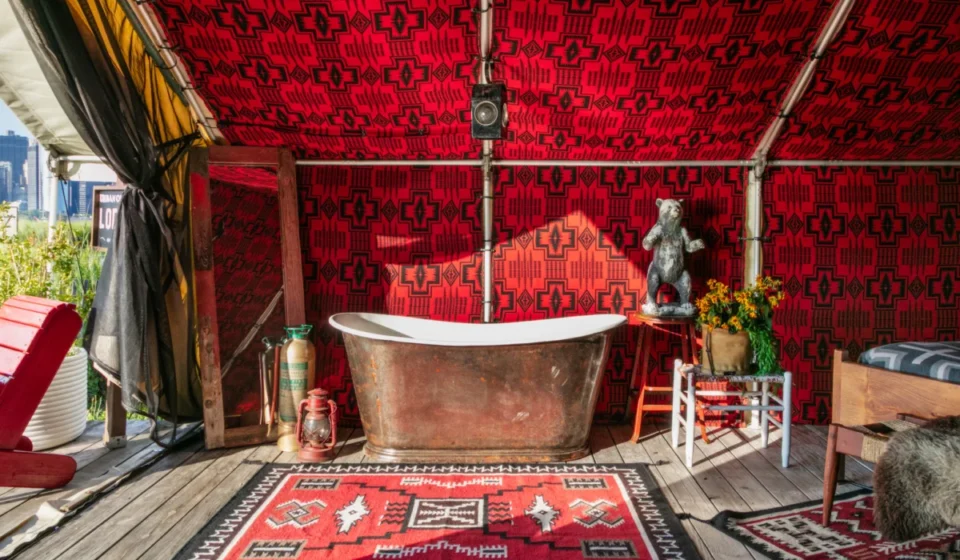
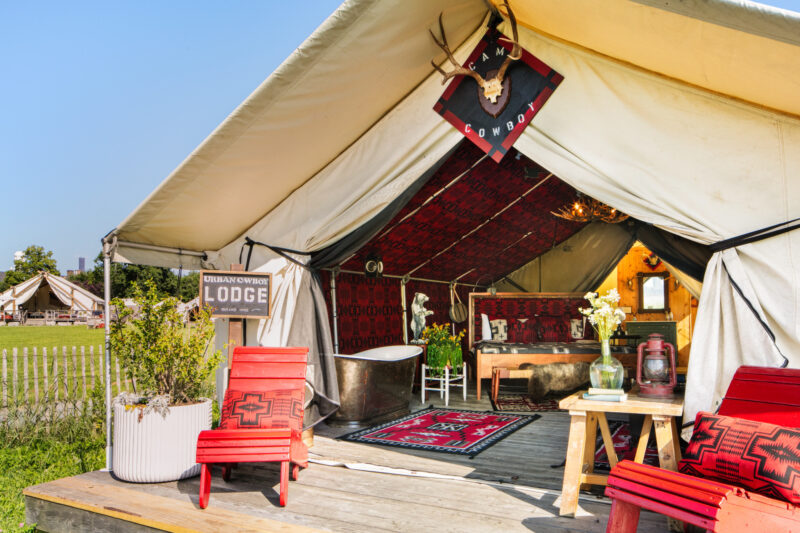
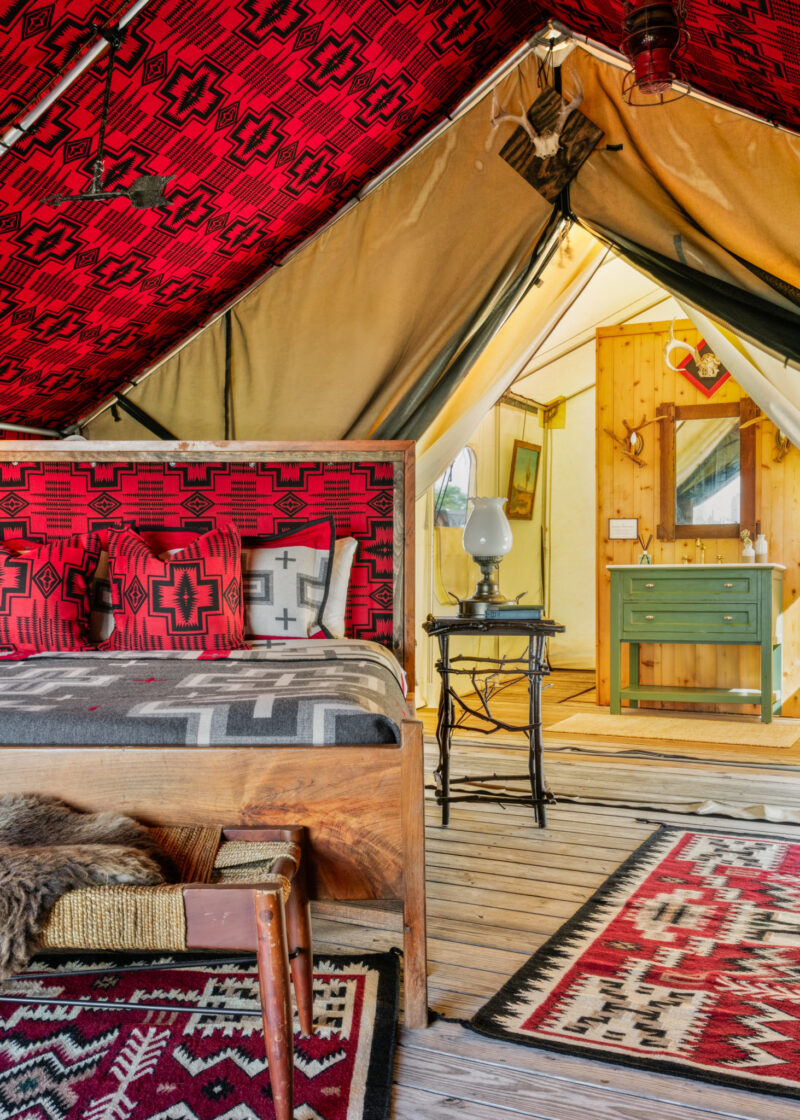
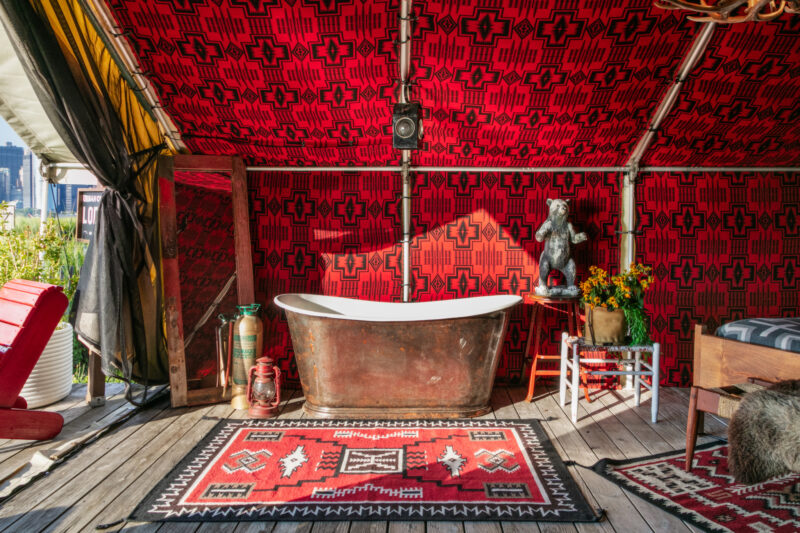
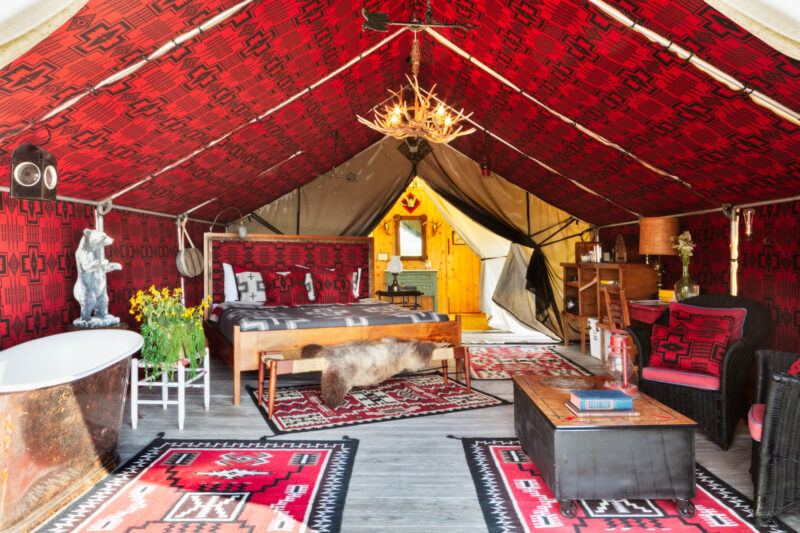
The Urban Cowboy Tent is not your standard nylon-and-pole affair. Spanning a generous 325 square feet, the structure functions as an immersive, interior-design-led environment. Clad in deep crimson Pendleton textiles and intricate El Paso Saddle Blanket rugs, the space feels less like a temporary shelter and more like a permanent, storied sanctuary.
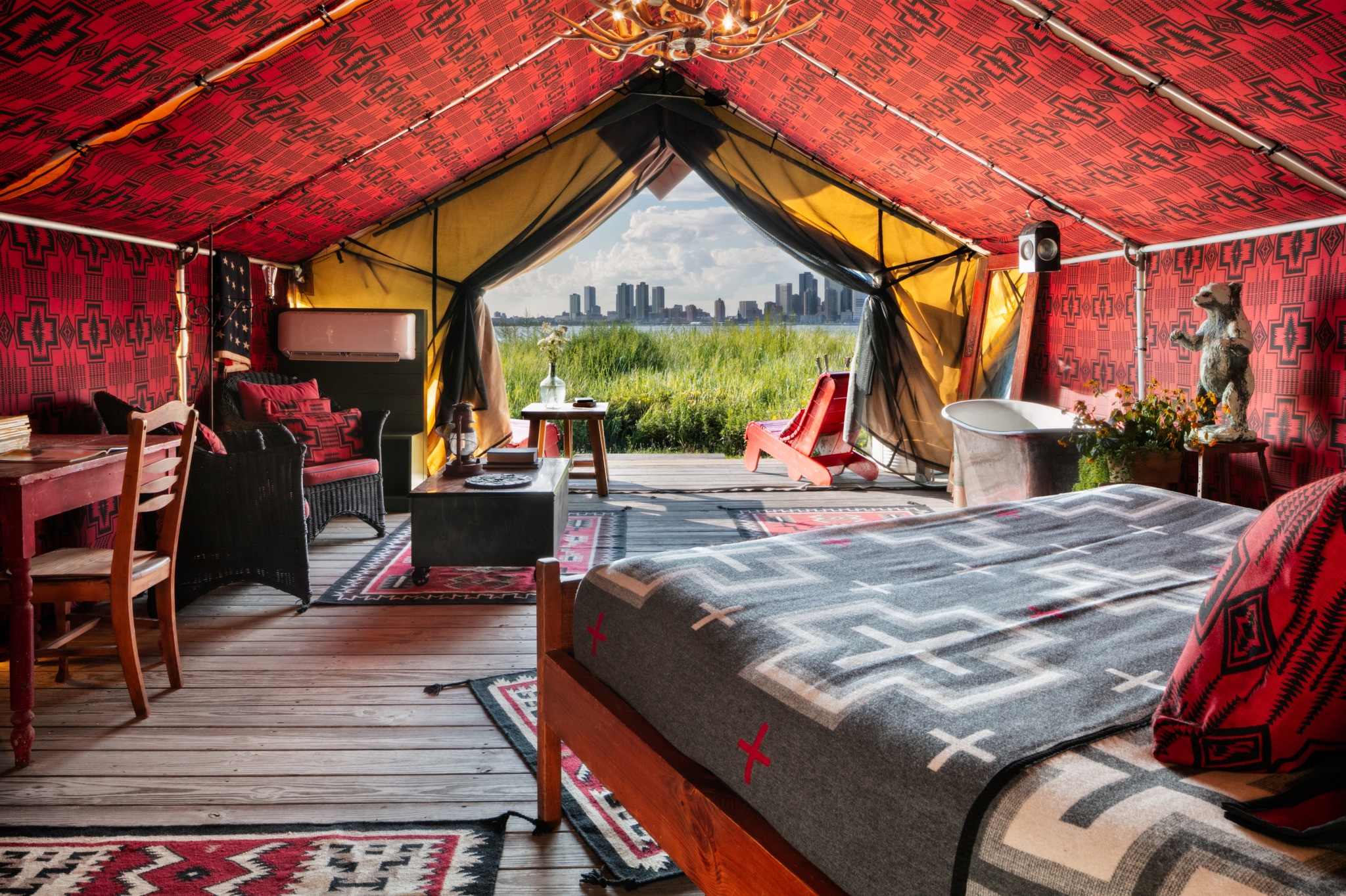
Upon entering, guests are greeted by a collection of custom and vintage furnishings that seem to whisper stories of another era. From repurposed boat oars to antique radios sourced from regional treasure troves like the Beacon Flea Market and Elephant Trunk, the tent is a testament to the power of "found" objects. The design is further elevated by the work of Kevin Jacob Design, whose contributions—including bespoke hand-painted stencils, rustic signage, and carefully mounted deer antlers—anchor the space in a nostalgic, cinematic version of the American West.
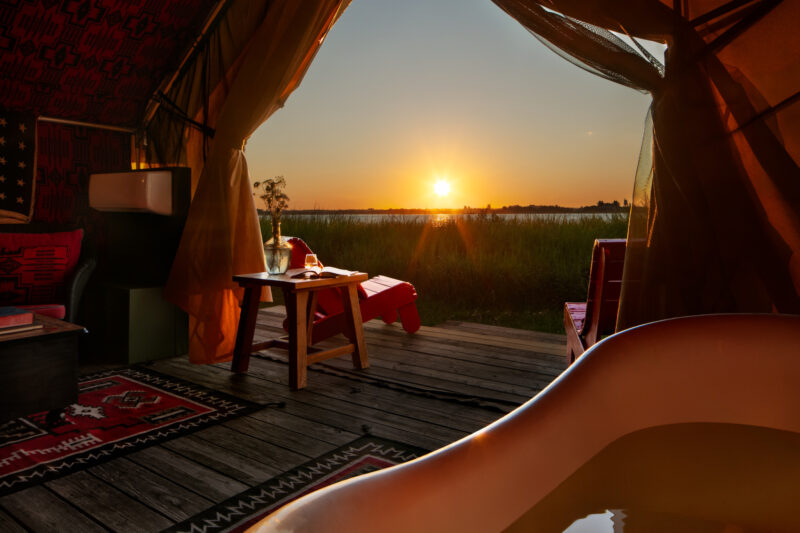
The tent’s most striking feature, however, is its juxtaposition of primitive aesthetics with high-end convenience. While the exterior evokes the rugged spirit of the frontier, the interior boasts modern essentials, including a climate-controlled HVAC system and a full ensuite bathroom. The centerpiece of this bathroom is a 500-pound, patinated cast-iron French soaking tub, strategically positioned to offer guests an unobstructed view of the sunset over the harbor, with the Statue of Liberty standing sentinel in the distance.
Chronology: From Upstate Dreams to Island Reality
The path to this collaboration began years before the first tent was pitched on Governors Island.
- 2018: Collective Retreats officially launches its seasonal site on Governors Island, introducing New Yorkers to the concept of "luxury glamping" within the city limits.
- 2020: Lyon Porter, co-founder of Urban Cowboy and creative director of Cowboy Creative, solidifies his partnership with the hospitality group Dovetail + Co. (the force behind Collective Retreats) to open the Urban Cowboy Lodge in the Catskills. The lodge becomes a critical and commercial darling, setting a benchmark for rustic-chic hospitality.
- 2026 (Early Year): Building on the success of their upstate synergy, Porter and the Dovetail + Co. team begin conceptualizing a "pop-up" experience that could bring the soul of the Catskills directly to the New York City harbor.
- September 2026: The Urban Cowboy Tent officially opens to the public, marking a new chapter in the island’s hospitality offerings and providing a tangible, maximalist alternative to the minimalist, tech-driven hotel culture of the city.
Supporting Data: The Economics of Character
The charm of the Urban Cowboy Tent lies in its authenticity, which is rooted in unconventional procurement. Lyon Porter’s approach to interior design favors "the hunt" over high-street shopping, a philosophy that keeps the aesthetic grounded and sustainable.
"One of my favorite found objects is the French cast-iron tub," Porter reveals. "An antique tub like this can typically cost around $11,000, but we found one for $400 that was just sitting in a Connecticut mansion’s yard. It weighs about 500 pounds and has this naturally rusted patina on the exterior with white porcelain inside. Those kinds of unexpected finds are what give the spaces their character."
This methodology serves as an economic blueprint for experiential hospitality: by investing in unique, salvaged pieces, the developers have created a high-value experience that feels distinct from the cookie-cutter luxury found in many modern hotel chains. The use of custom hand-painted stencils and signage also ensures that the tent feels like a one-of-a-kind installation rather than a replicable modular product.
Official Responses: A Philosophy of Disconnection
For Lyon Porter, the tent is a direct counter-response to the "screen-time" culture that dominates modern life. In an age where even vacations are often mediated through digital devices, Porter posits that the Urban Cowboy aesthetic provides an "enveloping, tactile alternative."
"An authentic Urban Cowboy experience is meant to be transportive," Porter says. He argues that by surrounding guests with rich textures, heavy woods, and the warm, moody lighting of a lodge, the space forces a physiological shift. "Despite being a stone’s throw from the city, the space’s whimsy helps guests feel worlds away."
The partnership with Dovetail + Co. is equally foundational. By leveraging the logistical expertise of a group experienced in high-end, outdoor-adjacent hospitality, Porter has been able to ensure that the "cowboy" experience doesn’t sacrifice the comforts necessary for a city dweller to truly relax. The goal is to provide a "third space" that exists between the home and the wilderness, offering the seclusion of the forest with the infrastructure of an urban hotel.
Implications: The Future of "Near-cation" Tourism
The launch of the Urban Cowboy Tent on Governors Island signals a broader trend in the travel and hospitality industry: the rise of the "near-cation." As travelers become increasingly conscious of the environmental and time-related costs of long-haul travel, the demand for high-quality, local retreats is skyrocketing.
1. The Death of the Generic Hotel Room
The success of this tent suggests that guests are increasingly valuing "maximalist storytelling" over minimalist efficiency. When a room tells a story through vintage art and salvaged materials, it creates an emotional attachment that a standard boutique hotel room—with its neutral palettes and mass-produced furniture—cannot replicate.
2. The Repurposing of Public Land
Governors Island’s evolution into a site for curated hospitality sets a precedent for how cities can utilize underused land. By offering a high-end experience that is seasonal and non-permanent, the city can generate revenue and cultural interest without the environmental footprint of traditional hotel development.
3. The "Tactile" Economy
The tent highlights a growing appetite for physical, non-digital experiences. In an era dominated by AI and digital interfaces, the return to "analog" luxury—heavy iron tubs, wool textiles, and hand-painted signage—serves as a grounding mechanism. This "tactile economy" is likely to define the next decade of luxury travel, where the true premium is not just the service, but the sensory environment.
4. A New Standard for Glamping
Historically, glamping was often criticized as being either too "rugged" (lacking amenities) or too "corporate" (looking like a plastic pod). The Urban Cowboy collaboration effectively navigates this divide. By merging the rugged identity of a cowboy lodge with the mechanical reliability of a modern hotel suite, the project sets a new standard for what glamping can achieve in an urban environment.
Conclusion: A Temporary Escape
The Urban Cowboy Tent on Governors Island is a rare project that manages to be both whimsical and functional. It invites the visitor to step out of the frantic rhythm of New York City and into a space that feels curated, lived-in, and intentionally slow.
As we look toward the future of hospitality, the success of this collaboration serves as a reminder that the most compelling travel experiences are often those that require the least travel at all. By recontextualizing the familiar—the view of the Statue of Liberty, the sunset over the harbor—through a lens of Western maximalism, Porter and the Collective Retreats team have managed to do the impossible: make New York City feel like the edge of the frontier.
Reservations for the Urban Cowboy Tent on Governors Island are currently open, with the site operating through the end of November 2026. For those looking to trade their smartphones for a soak in a 500-pound French tub, bookings can be secured via the official Collective Retreats website.