The Vertical Labyrinth: Why Getting Lost in Chongqing is the Ultimate Travel Experience

In the heart of Southwest China lies a metropolis that defies the conventional rules of urban geography. Chongqing, a sprawling municipality of over 32 million people, is not a city one simply visits; it is a city one must surrender to. Here, the traditional grid system is rendered obsolete by a mountainous topography that forces architecture, infrastructure, and human life into a three-dimensional dance. To arrive in Chongqing is to accept that you will be perpetually disoriented, and—as it turns out—that is precisely the point.
The Arrival: A Collision with the Unpredictable
My introduction to the city occurred on the eighth night of a two-week traverse through China. Arriving from the orderly, flat expanse of Beijing, the transition to Chongqing felt like stepping into a different dimension. As I exited the airport, the air felt thicker, charged with a frenetic energy that even late-night fatigue couldn’t suppress. I was immediately swarmed by a chorus of voices—unauthorized taxi drivers vying for my fare. It was a jarring, sensory-heavy initiation that stood in stark contrast to the regulated taxi queues of the capital.
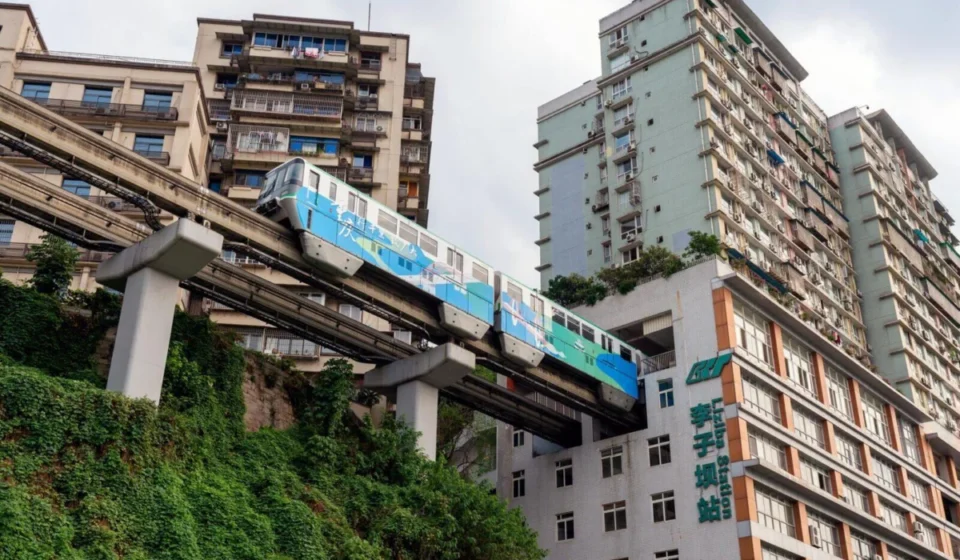
Chongqing, despite its immense population and viral fame on platforms like TikTok for its gravity-defying architecture and punishingly spicy cuisine, remained an enigma to me during the planning phase. Digital imagery, however high-definition, fails to convey the sheer electricity of the place. It is a city of wild construction, where trains hurtle through the midsections of residential apartment blocks and pedestrians navigate subterranean tunnels just to cross a suburban street.

Chronology of a Disorienting Journey
The logistical challenges began immediately. My attempts to communicate my destination—the iconic, behemoth Raffles City complex—to a local driver proved to be a comedy of errors. My high school Chinese was insufficient, and the city’s architectural homogeneity meant that every massive skyscraper looked, to my untrained eye, like the one I was seeking.
The ensuing drive was a masterclass in controlled chaos. The driver, maneuvering through the mountainous terrain with the precision and recklessness of a Formula 1 pilot, treated the narrow, winding roads as his personal circuit. We straddled lanes and seized every gap in traffic, a white-knuckle ride that concluded at a nondescript building. It was only after disembarking that I realized the reality of Chongqing’s geography: my hotel was not the massive Raffles City landmark, but rather a modest, $70-a-night establishment situated adjacent to it. In this city, "location" is a relative term.
The Mechanics of a Vertical Metropolis
To understand Chongqing, one must discard the notion of a single "ground floor." Because the city is built into the jagged slopes of the Yangtze and Jialing river valleys, the urban fabric is layered.

The Liziba Phenomenon
The most famous example of this spatial eccentricity is Liziba Station. A monorail track penetrates the seventh floor of a residential apartment complex, a sight that serves as a perfect metaphor for the city’s design philosophy. When I attempted to reach the station, the journey involved navigating a series of stairs that seemed to lead nowhere, only to emerge onto a street level that was, in reality, several stories above the "ground" where I had started. This is the Chongqing paradox: you can walk out of a building on the 10th floor and find yourself on a bustling street, only to look down and realize you are still perched high above the river valley.
Culinary Extremes: The Price of the Hot Pot
No account of Chongqing is complete without addressing the culinary firestorm that defines its culture. The city is the spiritual home of the Sichuan hot pot, a dish that is less of a meal and more of a test of human endurance.
Supporting Data: The Heat Index
The local cuisine is defined by its liberal use of Sichuan chili flakes and numbing peppercorns (mala). The broth is a deep, crimson sea of fat and aromatics. Local warnings—even from residents in other parts of China—suggest that the intensity of the spice is sufficient to cause genuine physical distress.

Our destination was Yuwei Xiaoyu Hotpot, a hole-in-the-wall establishment tucked away from the sanitized tourist zones. Here, the experience was visceral. We sat on plastic stools in a cramped corner, our feet brushing against exposed gas lines. The broth, split into a "safe" tomato side and an "infernal" spicy side, was served with thinly sliced beef arranged with artistic precision on golden plates.
The physical reaction to the meal was universal: a mix of endorphin-fueled euphoria and genuine physiological shock. As we sat for hours, surrounded by beer bottles and the rhythmic clatter of chopsticks, it became clear that the best food in China is rarely found in the polished restaurants of five-star hotels. It is found in the cramped, steam-filled rooms that look as though they haven’t been renovated since the nineties.
A Fantasy Realized: The Hongya Cave
As the night deepened, our group moved toward the Hongya Cave—a literal, eleven-story vertical mall built into the cliffside. The structure, reminiscent of the bathhouse from the Studio Ghibli film Spirited Away, is a masterwork of light and shadow. We descended through its labyrinthine passages, guided only by the wafting aromas of street food and the distant echoes of karaoke.

When we finally emerged at the riverbank, the view was transcendent. The Jialing River reflected the neon glow of thousands of lanterns, creating a shimmering, golden corridor. While the city’s transit system had officially closed at 11:00 p.m.—a rare moment of standard urban regulation in an otherwise untamable city—the spirit of the place remained vibrant.
Implications for Modern Urbanism
Chongqing represents the frontier of high-density living. With a population exceeding that of many entire countries, the city’s ability to function is a testament to its radical approach to infrastructure.
Official and Urban Planning Perspectives
Urban planners often point to Chongqing as a case study in "mountain-adaptive architecture." Unlike Western cities that seek to flatten the earth to suit the grid, Chongqing integrates the terrain into the development. The implications are significant: by utilizing vertical space and layering transportation networks, the city manages to house millions in a relatively compact footprint. However, this comes at the cost of accessibility. For the elderly or those with mobility issues, the city’s reliance on stairs and multi-level entrances creates significant barriers.

Conclusion: The Joy of Being Lost
My trip to Chongqing concluded with a long, aimless walk through the midnight streets. The subway was shuttered, and the prospect of finding a taxi in the maze of tunnels felt daunting. Yet, there was no anxiety. In most cities, being lost is a failure of planning; in Chongqing, it is the fundamental experience.
As I wandered through the neon-drenched night, listening to the sounds of a city that refuses to sleep, I realized that the "wrong turns" I had taken were actually the highlights of the trip. Chongqing demands that you let go of your map and your expectations. It is a city that does not want to be understood—it wants to be experienced. For the traveler willing to embrace the confusion, the reward is a glimpse into a future of urban living that is as exhilarating as it is impossible.