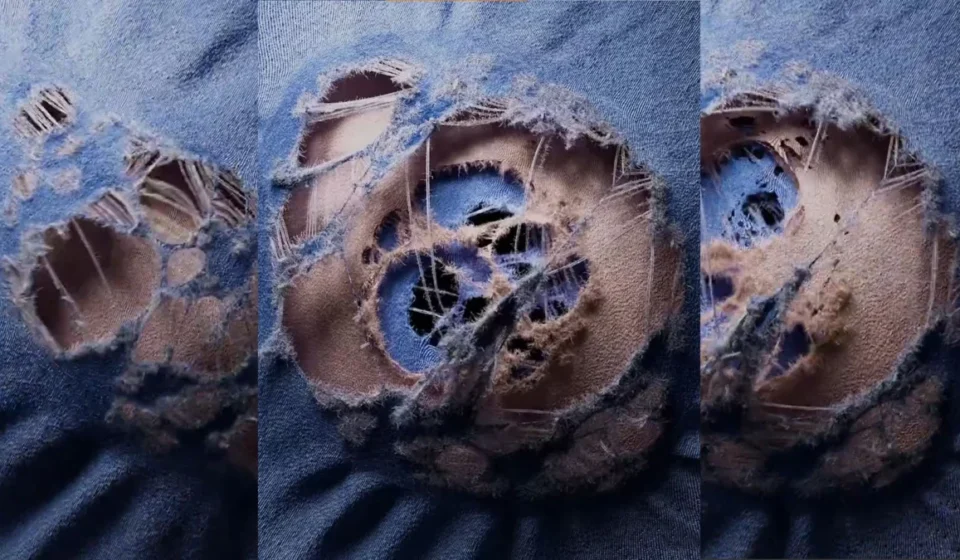
The Visceral Turn: Why 2026’s Digital Art Is Embracing the Unsettling Aesthetics of Trypophobia

The landscape of digital art in 2026 has taken a sharp, unexpected, and decidedly uncomfortable turn. Where once the industry prioritized the slick, polished perfection of clean minimalism—a hallmark of the "corporate Memphis" and high-end tech aesthetic—the current zeitgeist is obsessed with the visceral, the organic, and the downright unsettling. Specifically, we are witnessing a surge in trypophobia-inducing visuals: patterns of holes, cellular clusters, and fleshy, self-healing textures that trigger a primal, shiver-inducing response in the viewer.
This shift represents a fundamental pivot in how digital creators interact with their audience. It is a rebellion against the sterility of the digital age, a reaction to the oversaturation of AI-generated content, and a bold exploration of the "uncanny valley."
The Genesis of the Grotesque: Understanding the 2026 Trend
To understand why artists are suddenly gravitating toward imagery that makes the skin crawl, one must look at the convergence of two major cultural forces: the rise of "anti-design" and the backlash against AI-generated imagery.
The Anti-Design Revolt
For years, the design world was dominated by grid-based, minimalist layouts that prioritized readability and frictionless user experiences. Anti-design, however, tears up this rulebook. It embraces chaos, asymmetry, and raw, unfinished aesthetics. By intentionally violating the "rules" of good design, practitioners are attempting to reclaim a sense of humanity in an increasingly automated world. In this context, trypophobia-inducing textures—which mimic the patterns found in nature, fungi, and biological decay—serve as the ultimate antithesis to the sterile, geometric perfection of modern UI.
The AI-Food Imagery Catalyst
Perhaps the most peculiar driver of this trend is the influence of AI-generated food imagery. AI models, while capable of hyper-realism, often struggle with the internal logic of biological matter. This has resulted in a flood of "Lovecraftian" food renderings: cakes that look like human organs, vegetables with too many pores, and textures that feel biologically "wrong." Instead of rejecting this, the art community has leaned into it, elevating these unsettling textures into a legitimate, if divisive, artistic language.
A Masterclass in Materiality: The Work of Ruye
Amidst this broader cultural shift, individual artists are pushing the boundaries of what is possible with 3D software. A prime example is the recent work by Ruye, a Spain-based 3D artist and motion designer. Their latest piece—a mesmerizing animation of fabric that tears, breathes, and stitches itself back together—perfectly encapsulates the balance between beauty and revulsion.
Technical Execution: The Power of Houdini
The piece, which has captivated the digital art community, was not the product of a generative AI prompt, but rather the result of meticulous simulation within Houdini. Ruye utilized Vellum, Houdini’s sophisticated physics system designed for simulating soft-body dynamics, including cloth, hair, and deformable objects.
The structural integrity of the work relies on a sophisticated dual-layer approach:
- The Fabric Geometry: Managed as a high-fidelity mesh, the fabric reacts to external forces as if it possesses mass and elasticity.
- The Frayed Threads: Rendered as complex curves, these threads provide the fine detail that triggers the viewer’s sensitivity to organic decay.
- Octane Rendering: By utilizing Octane for the final render, Ruye achieved a lighting quality that emphasizes the depth and porosity of the fabric, making the "tearing" effect feel startlingly physical.
The "Living Fabric" Phenomenon
What makes Ruye’s work stand out is the timing of the "self-healing" sequence. The artist performed multiple simulations to ensure that the individual strands curl back into place with a rhythm that mimics muscle contraction. Viewers have frequently noted that the animation feels "alive." It is this blurring of the line between textile and organism that places the work at the vanguard of the current trypophobia-adjacent movement.
Chronology of a Trend: From Niche to Mainstream
The trajectory of this aesthetic shift has been swift. Tracking the evolution of this trend reveals how quickly digital movements move from the fringes of experimental design to the center of commercial application.
- Early 2025: The first inklings of "Biological Minimalism" appear in experimental digital art circles. Artists begin experimenting with procedural noise textures that simulate skin pores and cellular structures.
- Late 2025: The "AI-Food" controversy reaches a boiling point. As AI-generated images of "disturbing" food items go viral on social media, designers begin to intentionally replicate these "errors" as a stylistic choice.
- Q1 2026: High-fashion brands and experimental music labels begin incorporating these textures into their motion graphics, signaling a transition into the mainstream.
- Mid-2026 (Present): The trend hits a saturation point in digital art galleries and social media portfolios, where the "unsettling" aesthetic is now being used to evoke psychological depth in brand storytelling.
Implications for Future Design
The prevalence of these visceral textures has significant implications for both artists and the industry at large.
The Sci-Fi Potential
The utility of this aesthetic is already being explored in narrative media. In the realm of science fiction, the ability to create "living" textures that react to environmental triggers is a goldmine. Concept artists are currently looking at Ruye’s technique as a blueprint for creature design—specifically for depicting alien life forms that are not just reptilian or insectoid, but truly, disturbingly organic.
Furthermore, the "self-healing" fabric concept has sparked discussions in the costume design community. The idea of a material that can adapt or repair itself in real-time is the "holy grail" of functional sci-fi costuming. Whether it is a suit for a character like the Hulk or a piece of high-tech activewear, the ability to animate a textile that feels like a biological extension of the wearer is a massive leap forward.
The Psychology of Discomfort
Why are we drawn to this? From a psychological perspective, the "trypophobia" trend is a form of controlled exposure to the unsettling. In an era of intense digital safety, there is a certain thrill in witnessing imagery that triggers a mild, non-threatening disgust response. It is a way of "feeling something" in a medium that is increasingly becoming too clean, too predictable, and too perfect.
Looking Ahead: Tools of the Trade
For artists looking to engage with this trend, the barrier to entry remains the mastery of high-end simulation software. As evidenced by Ruye’s process, the "perfect" look isn’t something that can be achieved with a simple filter or a prompt—it requires an understanding of physics, material properties, and temporal logic.
As the industry moves forward, the demand for hardware capable of handling these complex simulations will continue to grow. Designers are increasingly pivoting toward workstations with high-tier GPU capabilities, as the render times for these organic, physics-heavy simulations are significantly higher than those for traditional, static 3D models.
Conclusion: The Human Element in a Digital World
The obsession with trypophobia-inducing visuals in 2026 is, paradoxically, a sign of human creativity fighting back. By embracing the "disgusting," the "frayed," and the "cellular," digital artists are proving that they are not merely operators of software, but architects of emotion.
Whether this trend remains a niche aesthetic or evolves into a broader design philosophy remains to be seen. However, one thing is clear: the era of the pristine, untouched digital image is on hiatus. In its place, we have something far more complex, far more unsettling, and, in its own strange way, far more human. As we continue to navigate the relationship between human intent and machine generation, these visceral textures serve as a reminder that the most compelling art is often that which refuses to be ignored—even if it makes us look away for a moment.