
In a move that fundamentally reshapes the landscape of global logistics and food delivery, Uber Technologies Inc. has announced its intention to acquire Germany-based Delivery Hero in a transaction valued at approximately $14.8 billion. This landmark agreement marks the most aggressive expansion in Uber’s history, effectively consolidating two of the industry’s most prominent players into a single, dominant mobility and delivery juggernaut operating across 99 countries.
The deal, which is expected to close in the second half of 2027, signifies a pivot toward massive scale in the international delivery sector. By absorbing some of the most recognized brands in the industry, Uber is positioning itself to control a significant portion of the global quick-commerce and food-delivery infrastructure.
Main Facts: The Scope of the Acquisition
The acquisition is not merely a regional expansion; it is a global consolidation. Under the terms of the deal, Uber will incorporate several of Delivery Hero’s most powerful subsidiary brands, including foodpanda, Glovo, PedidosYa, talabat, HungerStation, and South Korea’s Baedal Minjok.
On a pro forma basis, the combined entity would have generated roughly $236 billion in gross bookings during 2025. The specific portion of the Delivery Hero business being acquired spans 50 individual markets, which collectively generated approximately $42 billion in gross bookings last year. By integrating these assets, Uber aims to create a frictionless platform that combines its existing ride-hailing infrastructure with a massively expanded delivery network.
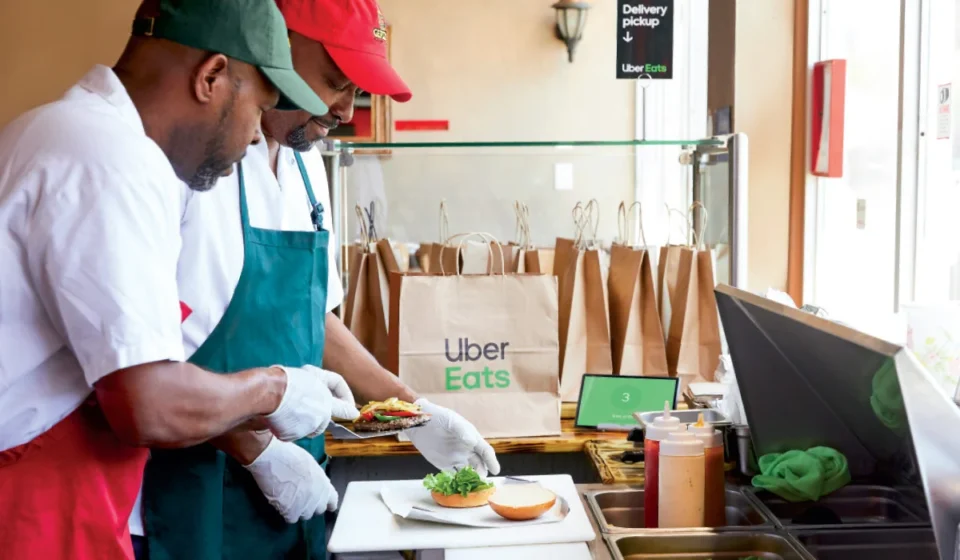
For consumers, this means a more unified experience across diverse geographies. For merchants and couriers, the primary value proposition centers on "order density"—a metric that, when maximized, significantly increases efficiency, reduces delivery times, and optimizes earning potential for the labor force.
Chronology: A Decade of Rapid Consolidation
To understand the magnitude of this deal, one must look at the historical trajectory of the food-delivery sector. Over the past fifteen years, the industry has evolved from a fragmented collection of local startups into a highly consolidated global market dominated by a few key players.
- The Early Growth Phase (2010–2018): Delivery Hero established itself as a powerhouse in emerging markets, focusing on regions often overlooked by U.S.-centric firms. Through aggressive growth and local brand acquisition, they secured a foothold in the Middle East, Southeast Asia, and Latin America.
- The Pandemic Acceleration (2020–2022): The global health crisis served as a massive catalyst for food delivery, prompting rapid investment. During this period, competitors like DoorDash began their own aggressive M&A strategies, acquiring Finland-based Wolt for $8.1 billion and the U.K.-based Deliveroo for $3.9 billion.
- The Current Era of Scale (2025–2027): With the market having matured, companies are no longer competing solely on brand presence but on technological dominance and operational efficiency. Uber’s acquisition of Delivery Hero represents the "final chapter" of this initial consolidation phase, moving from regional skirmishes to a singular, global standard for delivery.
Supporting Data: Why This Deal Matters
The numbers behind the deal are staggering, providing a clear picture of why both Uber and Delivery Hero view this as a necessary evolution.
Market Penetration
By reaching 99 countries, Uber effectively becomes the global default for "delivery-as-a-service." The acquisition of Delivery Hero’s 50 markets provides Uber with immediate entry into regions where it previously had a limited footprint or struggled to gain market share against entrenched local players.
Operational Synergies
The combined platform benefits from a massive increase in order density. In the economics of delivery, density is the holy grail. Higher density allows for "batching"—where a courier picks up multiple orders from the same area or merchant, significantly lowering the cost per delivery while increasing the driver’s hourly earnings.
Investment in Innovation
Uber has committed to a $2.3 billion investment in Germany over the next five years. This capital is earmarked for:
- Autonomous Vehicle (AV) Initiatives: Scaling R&D to lead in the future of driverless delivery.
- Corporate Workforce: Expanding the Berlin headquarters, which Uber has committed to maintaining at least through 2029.
- Automotive Partnerships: Strengthening ties with Germany’s industrial sector to integrate logistics technology into the next generation of transport.
Official Responses: The Leadership Perspective
The deal has been met with optimism from the leadership of both organizations, who view the partnership as a logical conclusion to their respective long-term strategies.
Uber CEO Dara Khosrowshahi
"Delivery Hero’s talented team has built an extraordinary business, with beloved local brands and leading positions across many of the world’s fastest-growing delivery markets," said Khosrowshahi in an official statement. He emphasized the human element of the merger, noting that the combination would "extend affordable, reliable delivery to many millions more people in many of the world’s most dynamic economies."
Delivery Hero CEO Niklas Östberg
For Östberg, the deal represents the natural maturation of the company he co-founded 15 years ago. "We are excited about this opportunity with Uber and the possibilities it offers for our employees, shareholders, and partners," Östberg stated. He highlighted the "shared commitment to innovation" as the cornerstone of the partnership, noting that Uber’s global infrastructure will provide the necessary scale to further evolve their expertise in "Quick Commerce"—the business of delivering goods in under 30 minutes.
Implications: The Future of the Delivery Economy
The acquisition has far-reaching implications that extend beyond the balance sheets of Uber and Delivery Hero.
For Merchants
The integration of advertising and commerce tools into the combined platform will likely allow restaurants and retailers to access a much larger customer base. Uber’s sophisticated demand-generation tools, when applied to Delivery Hero’s local markets, could dramatically increase the revenue-per-store for small-to-medium-sized enterprises that rely on these platforms for survival.
For Regulators
The sheer size of the combined entity will undoubtedly trigger intense regulatory scrutiny. Antitrust authorities in Europe and Asia will likely examine whether this consolidation creates a monopoly that stifles competition and harms local restaurants through higher commission fees. Uber’s commitment to maintaining local workforces and investing in German infrastructure is seen by analysts as a preemptive gesture to appease these regulators.
For the Labor Force
One of the most debated aspects of the delivery economy is the status of the courier. Uber’s promise to increase "earning opportunities" through higher order density is a key argument in favor of the merger. However, the company will face continued pressure to balance this efficiency with the working conditions and compensation models that have defined the "gig economy" debate for years.
For Competitors
The move puts immense pressure on rivals like DoorDash and Just Eat Takeaway. As Uber consolidates the global market, the remaining independent players will be forced to either seek their own mega-mergers or pivot to niche markets to survive against a competitor with virtually unlimited global reach and a massive, integrated advertising and logistics engine.
Conclusion
The $14.8 billion deal between Uber and Delivery Hero is more than just a business transaction; it is a definitive statement about the future of the global economy. By tethering mobility to delivery on a scale of 99 countries, Uber is signaling that the era of fragmented local delivery services is coming to an end.
As the industry moves toward 2027 and the expected closure of the deal, the world will be watching to see if this marriage of giants can truly deliver on its promises: more efficient deliveries for consumers, better margins for merchants, and a more sustainable, scalable model for the millions of couriers who power the system. If successful, the new Uber will not just be a platform for getting from A to B; it will be the global infrastructure layer for the movement of goods, services, and people.
Related posts: