Breaking the Frame: Redefining Queer Visual Language in Contemporary Photography

In the evolving landscape of contemporary art, the intersection of identity and medium has become a fertile ground for critical inquiry. For many practitioners, the camera—long associated with colonial surveillance, objective documentation, and heteronormative gaze—is a tool ripe for subversion. A recent, profound dialogue between curator GF and artist ÅJ sheds light on the radical potential of "queering" the photographic process, moving beyond mere representation to a fundamental reconstruction of visual semiotics.
The discourse centers on the exhibition The Queering of Photography, a landmark retrospective that synthesizes a decade of ÅJ’s experimental practice. By challenging the "conservative" nature of traditional photography—from its technical constraints to its display formats—this body of work serves as a manifesto for an alternative visual language.
The Problem with the "Correct" Image
For years, the professional photography industry has been dominated by a rigid set of expectations. Whether in the glossy pages of high-fashion magazines or the carefully curated layouts of photobooks, there is a prevailing "correctness" to the medium. As GF notes, "Even in booming areas of the industry, like the photobook, we see very little experimentation with form."
This sentiment echoes the philosophy of artist Elle Pérez, who has argued that one must "leave existing queer language to be able to make a new visual language." For ÅJ, this departure is not merely an aesthetic choice but an existential necessity. The photographic process is often governed by what they term "life logic"—the linear, heteronormative expectations of success and progression. By applying the subversion inherent in queer theory to the technical parameters of the camera—aperture, shutter speed, and focus—ÅJ seeks to dismantle the "exactitude" that has historically defined photography.
"What happens when you break from the medium’s conventions?" ÅJ asks. "What happens when an image is not correct? I find that reality exciting."
Chronology of a Decade: A Retrospective Ecosystem
The Queering of Photography is not a mere collection of prints; it is an ecosystem of five distinct yet interconnected projects. Each series documents a different stage of ÅJ’s decade-long inquiry into the materiality of the medium.
1. The Studio Subversion: Looking Out, Looking In
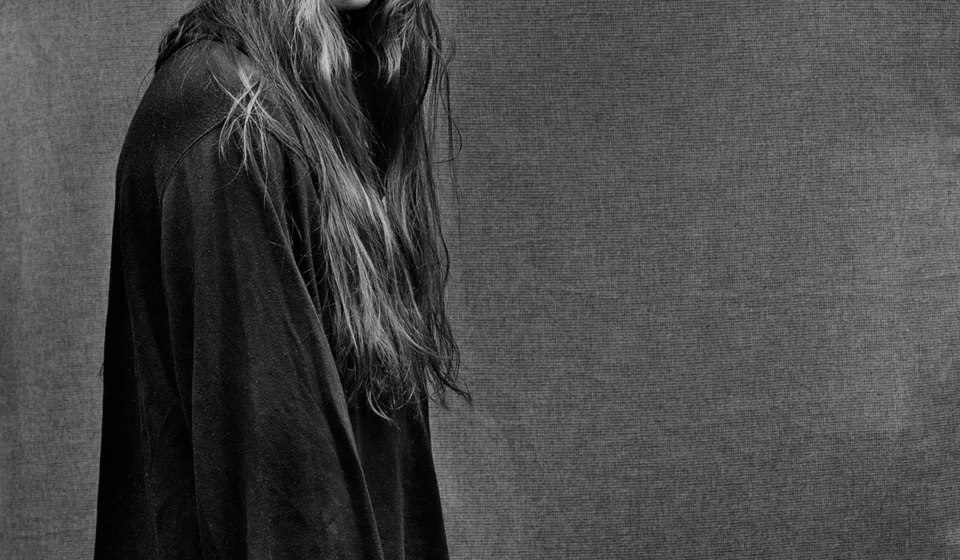
At the heart of the exhibition are the black-and-white portraits of Looking Out, Looking In. Utilizing the traditional studio backdrop, ÅJ adopts the visual language of the 20th-century portrait studio, only to disrupt it. By instructing sitters to engage in "mischievous tweaks of body, pose, and gaze," the artist forces a confrontation between the camera and the subject, subverting the power dynamic that typically leaves the sitter as a passive object of the photographer’s lens.
2. Classical Reimagining: Figural, Figurative
Created during an artist residency at the British School at Rome, this series focuses on the intersection of history and identity. ÅJ captures classical marble sculptures in Rome and Naples, but through post-production and compositional framing, transforms these inert statues into "queer creatures." By merging the cold, sterile surface of marble with the suggestion of human fluidity, ÅJ challenges the binary of stone/human and ancient/contemporary.
3. The Polaroid Aesthetic: Turn and Skin
The most visceral experimentation occurs in Turn and Skin. Turn utilizes a large-format camera fitted with a Polaroid back, producing distorted, kinetic imagery of turning faces. The resulting aesthetic—soft, unpredictable, and raw—defies the crisp, clinical focus of digital photography.
Even more radical is Skin, where ÅJ repurposes discarded test shots from Looking Out, Looking In. Through a process of emulsion lifting, the physical surface of the film is manipulated, turning discarded scraps into new, organic visual entities. As ÅJ notes, "Photographic materiality is here the skin and bone of queer representation."
Supporting Data: The Mechanics of Queer Methodology
The theoretical framework underpinning this work is best articulated in the chapter Measure: Paradigms of Exactitude from the text Queer Methodology for Photography.
The thesis posits that the "measures" of photography—how we calculate light and time—are deeply intertwined with our societal conditioning. In a heteronormative society, the "shutter speed" of life is often expected to be constant and predictable. By questioning these technical standards, ÅJ argues that we can "reimagine how [photography] is supposed to be produced."
This perspective is bolstered by the artist’s admiration for figures like Jesse Glazzard, whose work in zines breaks the "high/low" culture divide. By resisting the "accepted or expected" format of the photobook, Glazzard and ÅJ align themselves with a lineage of artists who prioritize the physical integrity of the work over the commercial dictates of the art market.
Official Responses and Theoretical Implications
The implications of this body of work extend far beyond the gallery walls. Critics and peers have noted that by allowing themselves to "queer the process," artists like ÅJ provide a roadmap for others to articulate queer voices without falling into the trap of "negation."
"Negation" in this context refers to the tendency of queer art to only define itself by what it is not—not straight, not binary, not traditional. ÅJ’s work, by contrast, is affirmative. It creates a new language rather than just rejecting the old one. The exhibition acts as a physical archive of this 10-year process, allowing viewers to engage with the evolution of these visual forms.
The "ecosystem" of the show is designed to be immersive. By placing five disparate projects in dialogue, the exhibition forces the viewer to oscillate between the rigid history of the studio portrait, the timelessness of the classical sculpture, and the ephemeral nature of instant film emulsion.
The Future of Queer Visual Discourse
As The Queering of Photography prepares to welcome its first major public audience, the industry is left to grapple with the questions posed by the work. Is photography, as it is currently taught and practiced, inherently conservative? Can the mechanical nature of the camera ever truly be "queered," or is the attempt to do so the most significant act of all?
ÅJ remains optimistic about the potential for future disruption. By treating the camera not as a recording device but as an instrument of inquiry, they have opened a door for a new generation of artists. As the exhibition demonstrates, the future of photography does not lie in the perfection of the image, but in the courage to let the process be as fluid, chaotic, and beautiful as the identities it seeks to represent.
In a field often obsessed with technical mastery and institutional validation, ÅJ’s work stands as a vital reminder: sometimes, the most important thing a photograph can do is refuse to be perfect. By embracing the margins of photographic conventions, this decade of work provides not just a visual history, but a radical methodology for the future.
Summary of Key Themes
- Subversion of Form: Resisting the standardized photobook in favor of chaotic, experimental presentation.
- Materiality as Metaphor: Using emulsion lifts and instant film to represent the "skin and bone" of queer identity.
- Historical Dialogue: Re-contextualizing classical sculpture and traditional studio portraits to strip them of their original heteronormative associations.
- Process as Philosophy: Challenging the "exactitude" of the camera to reflect a life lived outside of heteronormative linear expectations.