
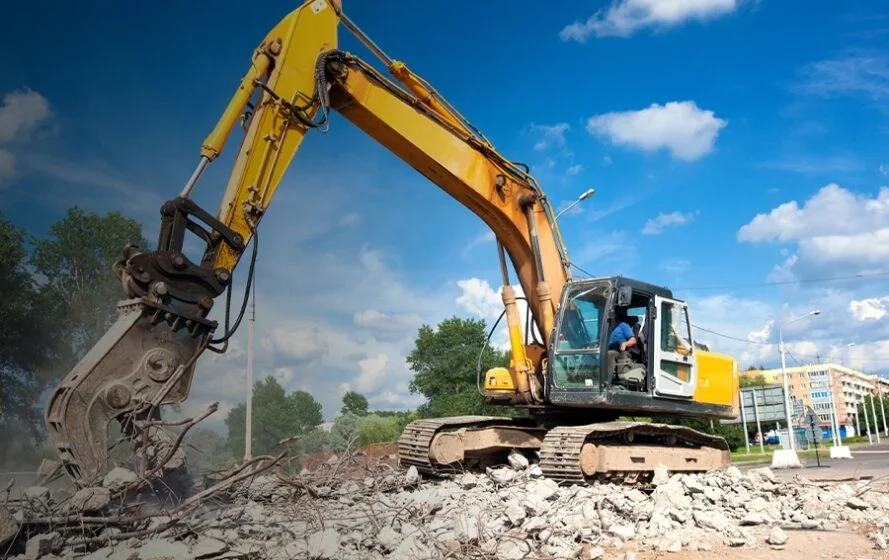
The Hidden Weight of Construction: Why Disposal Limits are Redefining Project Economics

In the high-stakes world of commercial construction, success is often measured by the precision of a project’s budget. Yet, there is a silent, often overlooked variable that frequently dismantles even the most robust financial plans: disposal weight limits.
For many contractors, waste management is treated as a downstream afterthought—a logistical detail managed only when the dumpster is full or the hauling invoice arrives. However, industry experts are increasingly identifying disposal weight thresholds as a primary upstream influence on project budgeting, material procurement, and operational strategy. When these constraints are ignored until the final phases of a build, the result is rarely just a minor inconvenience; it is often a significant budget overrun that erodes profit margins.
The Disconnect Between Volume and Legal Capacity
A fundamental misconception in the construction industry is the conflation of "volume" with "capacity." Construction managers often select dumpsters based on how much physical space they provide, assuming that if a container is not full, it is ready for transport. This is a dangerous oversight.
In reality, disposal capacity is dictated by stringent Department of Transportation (DOT) regulations, axle load standards, and municipal road safety rules. A thirty-yard dumpster may have the physical volume to hold tons of concrete, but once that material reaches the legal weight threshold for the hauling vehicle, the dumpster is effectively "full" in the eyes of the law, regardless of how much empty space remains at the top.
This disconnect between visual capacity and legal weight is the root cause of many unexpected project costs. When a container exceeds its legal weight limit, it cannot be transported. This triggers a cascade of expensive corrective actions: the load must be manually lightened, the waste must be split into multiple containers, or the contractor must face substantial overweight surcharges. For budgeting purposes, volume estimates alone are fundamentally insufficient; they ignore the physics of heavy debris and the legal realities of waste transport.
Dense Materials: The Silent Cost Drivers
Not all construction debris behaves the same under weight constraints. The "weight profile" of a project is determined by its material composition, and dense materials reach transport limits with startling speed.
Common construction materials—such as concrete, brick, tile, roofing shingles, and wet soil—are deceptively heavy. A container filled with even a moderate amount of these materials can hit the weight limit long before it reaches the rim. When these materials are present, the project requires a more sophisticated waste handling strategy. This might involve:
- Smaller, specialized containers designed to discourage overloading.
- More frequent haul cycles to keep individual loads within legal limits.
- Staged removal to prevent on-site accumulation of heavy waste.
Each of these adjustments carries a direct financial impact, increasing handling and transportation costs that are rarely accounted for in a "one-size-fits-all" dumpster budget.
Chronology of an Overweight Disaster
To understand how these costs manifest, consider the typical lifecycle of a commercial project.

Phase 1: Procurement and Design. In the initial planning stages, decisions are made regarding structural materials. If the design team opts for traditional heavy masonry over lightweight composites, the waste profile of the project is effectively locked in. Often, these material choices are made without consulting the site logistics team, meaning the financial burden of disposing of that material is not factored into the initial bid.
Phase 2: Execution. As the project moves into the demolition or construction phase, the waste begins to accumulate. If the site manager has not planned for weight-based disposal, they likely have a standard dumpster rental contract. When the first few loads are rejected or flagged for overweight surcharges, the project hits its first hurdle.
Phase 3: The Mid-Project Correction. Once the overweight issue is identified, the site manager is forced to pivot. They must hire more frequent hauling services, which disrupts the flow of the job site. This is where "soft costs"—such as labor inefficiency, equipment downtime, and schedule delays—begin to snowball.
Phase 4: The Final Audit. When the project reaches completion, the final invoices are tallied. Without a system that tracks weight-based metrics, the project manager is left with a pile of invoices that are higher than projected, with no clear way to attribute the costs or prevent them in the future.
Data-Driven Budgeting: Moving Beyond Flat-Line Costs
Traditional budgeting often allocates a flat line item for waste removal, typically based on a flat rate per pull or per dumpster. This model is obsolete in an era where disposal facilities charge by the ton rather than by the container.
Tipping fees, which vary significantly by region and material, add a layer of unpredictability to the budget. When weight estimates are inaccurate, forecasting total disposal costs becomes a guessing game. To mitigate this, modern construction firms are adopting "weight-aware" budget models that include:
- Material Density Analysis: Calculating the estimated weight per cubic yard for every phase of the project.
- Tiered Hauling Contracts: Negotiating rates that account for both volume and weight thresholds.
- Dynamic Contingency Funds: Specifically earmarking funds for disposal surcharges, rather than relying on a general project contingency.
Implications for Labor and Schedule Reliability
Weight constraints are not merely a matter of invoice totals; they have a profound impact on labor efficiency. When a site manager discovers that a dumpster is overweight, the work often comes to a standstill. Crews may be redirected to redistribute debris, or they may be forced to wait for a haul that should have been scheduled hours earlier.
Furthermore, these constraints impact the project timeline. If a site is in a dense urban environment, the ability to maneuver large trucks is limited. If a dumpster cannot be moved because it is overweight, the space remains occupied, blocking access for deliveries and other site operations. These delays have a ripple effect, pushing back completion dates and potentially triggering liquidated damages.
Strategic Material Planning: The Upstream Solution
The most effective way to manage disposal weight is to address it at the source: material selection. By prioritizing materials that are lighter or generate less waste, contractors can significantly reduce their downstream disposal burden.

For example, selecting high-performance, lightweight cladding instead of traditional heavy brick can reduce the weight of demolition waste by a significant margin years later. Similarly, focusing on packaging reduction—specifying suppliers who use reusable or minimal packaging—prevents the dumpster from being filled with bulky, lightweight waste that occupies valuable capacity.
In this sense, sustainability and budget discipline align. Reducing the amount of heavy waste generated is not just an environmental imperative; it is a financial strategy that keeps the project lean and compliant.
Documentation and Accountability
In a weight-sensitive environment, documentation is the final line of defense. Every scale receipt, haul record, and tipping fee ticket should be treated as a critical financial document. These records are the only way to verify costs and dispute unfair charges.
Construction managers who integrate a robust documentation review into their weekly project meetings gain a clear view of their disposal cost trends. When a project experiences a spike in weight-related costs, the records allow the team to pinpoint the source—perhaps a specific subcontractor or a particular material—and adjust accordingly. Weight transparency is the key to financial control.
Conclusion: Turning Waste into a Managed Variable
The integration of waste planning into the early stages of a project is a hallmark of high-level project management. When disposal weight is treated as a strategic input rather than a reactive cost, it transforms the construction process.
By coordinating between project managers, onsite crews, and waste disposal partners—utilizing resources and tools to maintain budget discipline—construction firms can turn weight limits from a source of anxiety into a manageable variable. The goal is to move away from the "dumpster as an afterthought" mentality and toward a model where every pound of material brought onto the site is accounted for until it leaves.
Ultimately, those who master the physics and economics of construction waste will find themselves at a distinct competitive advantage, delivering projects that are not only on time and within budget but also efficiently executed from start to finish. As urban projects continue to face tighter constraints and disposal fees continue to rise, the ability to account for the "hidden weight" of a project will be a defining trait of the modern, successful builder.