
The Regional Renaissance: Why Smaller Events Are the Future of Professional Engagement

In the current economic climate, the landscape of professional meetings is undergoing a seismic shift. For decades, the "bigger is better" philosophy dominated the events industry, with massive convention centers serving as the default cathedrals of networking and industry growth. However, as organizations grapple with rising fuel prices, tightened corporate travel budgets, and a growing emphasis on sustainability, the traditional mega-conference is facing an existential pivot.
Regional events are no longer just a fallback option; they are emerging as a strategic "secret weapon" for associations looking to foster genuine connection while navigating a volatile fiscal environment.
The Economic Drivers Behind the Shift
The transition toward regionalization is rooted in hard data. According to the ASAE’s inaugural State of Associations report, the industry is seeing a marked decline in attendance at large-scale national events. Nearly 41% of associations reported a drop in attendance figures in 2026, and for those organizations facing financial headwinds, nearly 69% identified the underperformance of large-scale meetings as a primary factor.
The cause is multifaceted. Beyond the general economic malaise, the cost of travel has become prohibitive. Data from the airline industry shows that airfares have surged by more than 20% over recent short-term reporting periods, while ancillary costs—car rentals, hotel room nights, and dining—have climbed by approximately 10%. For the average member, the decision to fly across the country for a three-day conference has moved from a "must-do" to a "maybe-if-the-budget-allows" proposition.
Amy Hissrich, ASAE’s vice president of international affairs, notes that associations are moving away from passive event planning toward proactive, data-driven strategies. "Associations are evaluating a broad mix of strategies to best serve their communities in a changing environment," Hissrich explains. "What we’re seeing is a series of cost-driven shifts where the business case for the event must align with a tangible need to serve members, provide upskilling, and advance the industry."
Chronology of a Disrupted Industry
To understand how we arrived at this moment, one must look at the timeline of the post-pandemic event cycle:
- 2022–2023 (The Hybrid Experiment): As lockdowns lifted, organizations rushed to offer virtual components to their live events. While this kept doors open, it often resulted in a "best of both worlds, mastered by neither" scenario.
- 2024 (The Cost-of-Living Crunch): Inflation began to erode the travel budgets of both individuals and corporations. Large-scale events saw a dip in participation from international attendees, particularly from regions like Canada, where travel barriers and costs became more acute.
- 2025 (The Strategic Consolidation): Organizations like Vision Expo made headlines by consolidating multiple large events into single annual gatherings, attempting to streamline operations and concentrate attendee interest.
- 2026 (The Rise of the Regional Model): We are now seeing the emergence of the "distributed event" model. Rather than forcing the membership to come to the mountain, organizations are bringing the mountain to the members via regional roadshows, local chapters, and hub-and-spoke systems.
Rethinking the "Big Tent" Mentality
Adrian Segar, a veteran meetings designer and facilitator, suggests that this shift is not just a defensive maneuver, but an opportunity to improve the quality of human interaction. "Having the opportunity to do local or regional events as opposed to nationals is actually a blessing," Segar asserts. "Because you can create much more successful events from everyone’s point of view—the sponsors, the planners, and the attendees."
The primary critique of the massive convention center model is that it often prioritizes scale over intimacy. In a hall of 5,000 people, the keynote stage becomes a barrier rather than a bridge. "There’s someone sitting three chairs away from me who I would love to meet," Segar notes. "But in that environment, I have no way of actually getting into a conversation with them. I don’t know who they are, and the format of the event doesn’t encourage that discovery."
Regional events break down these barriers by design. By shifting to smaller cohorts—perhaps 100 to 200 people—planners can move away from passive lecture-based formats and toward interactive, participant-driven programming.
Strategic Models for Regional Success
How can organizations transition to regional events without losing the prestige or value of their national brand? Several models are gaining traction:
The Roadshow Approach
Used effectively by the Association of Payment Professionals, the roadshow model takes a cohesive, high-quality event program and iterates it across several geographic hubs over the course of a few months. This keeps the core content consistent but allows members to choose the location most convenient to them.

The Hub-and-Spoke Model
This approach involves a central, high-profile broadcast or national meeting, surrounded by local "hubs" where attendees gather in person to watch, discuss, and network. Unlike traditional hybrid events where a lone remote attendee watches a screen from home, the hub model facilitates collective discussion. As Segar points out, "The hubs can digest the content amongst themselves. They can disagree with the speaker, analyze the data in real-time, and build relationships with the peers in the room."
Targeted Local Programming
Regional events allow for a focus on specific regulatory or economic environments. A national conference cannot easily address the unique local tax codes or state-specific legislative challenges of a member in Texas versus one in Maine. Regional events provide the granular context that drives real professional value.
Implementation: Don’t Just Shrink the Big Event
A common mistake in the shift toward regionalization is "copy-paste" planning. Organizations often attempt to take their massive, three-day national program and compress it into a one-day regional version.
"They’re thinking, ‘Okay, how do we scale down the regular thing we’ve been doing for years?’" says Segar. "And you don’t have to do that. You shouldn’t do that."
Instead, planners should leverage the intimacy of the space. Interactive techniques like "human spectrograms"—where attendees are invited to move around the room based on their professional interests, geography, or specific challenges—foster immediate connections. These exercises turn a room of strangers into a community in minutes, a feat that is nearly impossible to replicate in a massive expo hall.
Technology as an Enabler
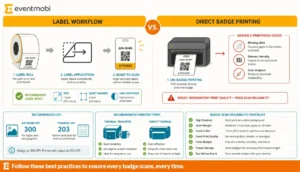
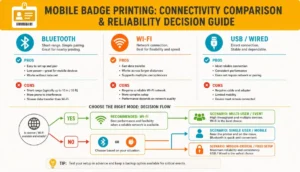
The operational hurdle for regional events has historically been logistics. Managing check-in, badge printing, and registration for a dozen small events is significantly more labor-intensive than doing it once for a large event.
This is where advancements like EventMobi’s BadgeON™ come into play. By utilizing wireless, portable badge printing technology, organizers can eliminate the need for heavy, wired, power-hungry equipment. The ability to easily ship, set up, and tear down a professional arrival experience in any venue—from a boutique hotel conference room to a local library or coworking space—is what makes the regional model logistically viable.
Implications for the Future
The move toward regional events is not a temporary reaction to high gas prices; it is a long-term evolution of the industry. As the workforce becomes more distributed and time-poor, the "return on investment" for an attendee’s time is the new gold standard.
The successful association of the future will likely be one that balances a mix of formats:
- National/Global Summits: Reserved for high-level networking, industry-wide strategy, and massive trade show visibility.
- Regional Hubs: Focused on localized education, deep networking, and community building.
- Digital Micro-Communities: Maintaining the connection between physical events through ongoing, year-round engagement.
"Each format has distinct strengths, cost structures, and operational considerations," Hissrich concludes. "One of the key lessons associations learned during the pandemic is how to thoughtfully balance those options to create experiences that best serve their members."
Ultimately, the goal is to make the event feel essential. By moving closer to the member, reducing the friction of travel, and prioritizing high-quality, peer-to-peer interaction over passive attendance, the regional model offers a sustainable path forward. It is a transition that requires more than just a change in venue; it requires a fundamental rethinking of what it means to gather in a modern, resource-conscious, and hyper-connected world.